Hedi Kaddour - Waltenberg
Здесь есть возможность читать онлайн «Hedi Kaddour - Waltenberg» весь текст электронной книги совершенно бесплатно (целиком полную версию без сокращений). В некоторых случаях можно слушать аудио, скачать через торрент в формате fb2 и присутствует краткое содержание. Год выпуска: 2009, Издательство: Vintage, Жанр: Современная проза, на английском языке. Описание произведения, (предисловие) а так же отзывы посетителей доступны на портале библиотеки ЛибКат.
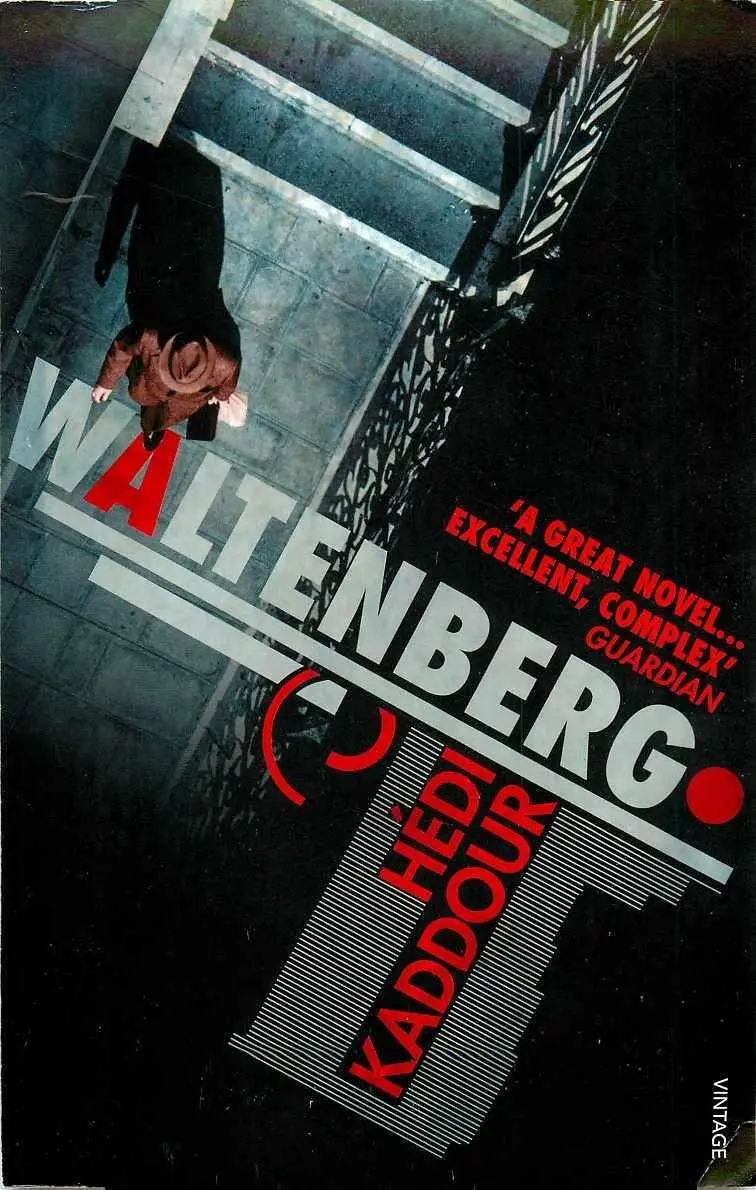
- Название:Waltenberg
- Автор:
- Издательство:Vintage
- Жанр:
- Год:2009
- ISBN:нет данных
- Рейтинг книги:3 / 5. Голосов: 1
-
Избранное:Добавить в избранное
- Отзывы:
-
Ваша оценка:
Waltenberg: краткое содержание, описание и аннотация
Предлагаем к чтению аннотацию, описание, краткое содержание или предисловие (зависит от того, что написал сам автор книги «Waltenberg»). Если вы не нашли необходимую информацию о книге — напишите в комментариях, мы постараемся отыскать её.
Waltenberg
Waltenberg — читать онлайн бесплатно полную книгу (весь текст) целиком
Ниже представлен текст книги, разбитый по страницам. Система сохранения места последней прочитанной страницы, позволяет с удобством читать онлайн бесплатно книгу «Waltenberg», без необходимости каждый раз заново искать на чём Вы остановились. Поставьте закладку, и сможете в любой момент перейти на страницу, на которой закончили чтение.
Интервал:
Закладка:
His skin was smooth, I wasn’t laughing now, I kissed him, and suddenly I loved him more than I had ever loved anyone before, he didn’t quite get it, for him love meant taking my breasts in both hands and gazing at me solemnly, I liked that too, though not as much as when he was on his back with that chair around his leg.
The staccato rat-tat-tat continues in bursts, riders are still falling in the clearing at Monfaubert, mown down by the chattering sewing-machine which has swung round towards them, but Captain Jourde can no longer react, regroup, respond, for the Captain is down, back propped against a tree, he has taken a burst in the chest.
He asks the lieutenant to sit him up, the lieutenant obeys, then walks into the throng of riderless horses and helmetless riders, some covered in blood and clinging for dear life to the pommel of their saddles, others screaming and thrusting and smiting, keep hold of this rage, keep the goal before you: destroy the Boches and their filthy dreams.
Captain Jourde is determined to die facing the enemy, but what he sees in front of him standing not two metres away is his own black mount, an Anglo-Norman thoroughbred, looks thin, has blood on its chest, it holds up one leg, which is also bleeding, the horse shudders, looks at the Captain who is saying to himself that the charge he led has failed, around him bullets whine, smack, slap, mew, ricochet, shatter a stone, a nose, the Captain’s hand claws at the grass.
The regimental log simply states that the Captain died in battle, the press prefers ‘on the field of honour’ or ‘for France’, it makes a great deal of difference to a good many women who henceforth enter into what is called ‘the heroic wakefulness of wives’.
Calmette, Caillaux, Henriette Caillaux and a woman of letters, after the war Max will be told that he’s an obsessive, there is more to History than one floozy’s flings, History is made by the mass of humanity, the prevailing laws, nations, passions, men of true greatness, great ideas or inter-imperialist contradictions, the hand of God, Max, or the wood that burns so that trees may turn green again, the act of righteous revenge which burns down the house which sets fire to the street, the act becomes a crime, then begets a new and more handsome street, war as a crime without punishment, undertaken to restore right: passions which at the last bring you back to the universal, or on the contrary the pure instinct of death, with nothing before it, especially not women, actually my dear Max, I challenge you to publish the name of that woman of letters who is supposed to have been loved at the same time by both Calmette and Caillaux, ‘I hold the roses close so that my arms are pricked’, the Swiss Ambassador talked about it in his correspondence, but he was Swiss.
Max gets under the skin of his friends on both the left and the right. He makes the Great War turn entirely on ‘a pair of frilly lace knickers’, it’s too anecdotal my dear Max, wait a minute, at least let me tell the end of the Caillaux story, this woman reporter, a colleague, a friend, has just met Madame Caillaux, seven years after it happened, she asked her: ‘When Calmette collapsed after you shot him, what was the first thing you felt?’ What was Madame Caillaux’s reply? I could give you three guesses but I’ll tell you anyway: ‘That I was not in love with my husband.’
Max is sometimes pretty odd, puts you in mind of Molière’s cunning valet, Scapin, the sort of man who ends up thinking that everything’s one big joke, that it was on Madame Poincaré’s account that Poincaré the warmonger wanted to be President and that Madame Caillaux prevented her husband making peace, Max has a very odd way with him, all that talk of knickers, also quite incapable of hanging his mackintosh or overcoat on a coat-stand, he always leaves it draped over a chair, a desk, any old place.
He says he does it out of nostalgia for the coat pegs they had in the trenches, that’s right, for more than a month one winter they used the feet of frozen corpses sticking out of the trench walls, bit of a bonus according to Max, German army boots, that didn’t matter, they made decent coat pegs, then when the thaw came they turned out to be French corpses, their own comrades, in a perfect state of preservation: German boots and French corpses, imagine.
And so people will forgive the knickers and restore full conversation rights — this is long after the war is over, in the mid-1920s, in the Brasserie de la Paix on the Boulevard des Italiens — you’ll have to tell another story, Max, so come on, let’s have it:
‘Out of the question!’
‘Come on!’
So Max tells the story of the Pieds Nickelés, their last cartoon adventure in book form published before the war, in which it wasn’t Poincaré who replaced Fallières, it was the famous gang comprising Ribouldingue, Filochard, and Croquignol, the Pieds Nickelés became ministers under Fallières, they had the same slogan as Poincaré, Republic, Duty, Country, a landslide for the Pieds Nickelés in the elections, men in frock-coats prevaricate, great junketings, big spending, gambling, living like kings only more so, Fallières gets worried and Ribouldingue comes up with: ‘If Fallières tries to stick his nose in our affairs, we’ll fettle Fallières, him and his bally heirs!’
Fallières went away, goatee, lips pursed and pop-eyed and opened a tobacconist’s shop, leaving the Pieds Nickelés in the Élysée Palace to drink, thieve, and have lots of fun in frock-coats, this was late in 1912. Fallières and bally heirs. Ribouldingue, Croquignol and Filochard! If they’d stayed in power instead of Poincaré, there would have been peace.
‘No Max, a true story, not this kid’s stuff!’
‘We would also have had peace if that serious incident involving France and England in April 1914 hadn’t been speedily resolved.’
‘Max, where did that come from? Your fifth beer? There was no such incident.’
‘No, as true as I live and breathe, if a Franco-British stand-off had happened no one would have wanted war, a major incident of some sort, say a great dinner at the Élysée Palace, April 1914, King George having to lead off from the drawing room into the dining room with Madame Poincaré on his arm, and behind them would come the President and Queen Mary.’
Max lines up sugar lumps, one for each person, sets them out in a square.
‘And a couple of hours before the dinner, Queen Mary is heard to say, “Me? Walk behind that woman? Never!” Panic, they toy with the idea of letting the Queen go first, with the President, but that would mean a king walking behind a president, Madame Poincaré threatens to boycott the dinner and the talk in the Queen’s entourage is of bigamy, of getting back on the boat, you get the picture, a major incident, within an inch, France loses her alliance with Britain, therefore would tread much more carefully with Poincaré no longer telling the Russians to just go ahead. At the time, he kept saying “I intend to force the Russians to be less feeble.”’
‘Max and his “ifs”! If, my aunt! Perhaps the French would have been more prudent, but the Austrians would have been more aggressive, I don’t buy it, put those sugar lumps away.’
‘However that may be, comrades, we did avoid a Franco-British incident, by a whisker.’
‘How?’
‘I didn’t think you were interested, you really want to hear about my incident?’
Max reaches for the sugar lumps again and lines them up in a single row.
‘Very well, it’s very simple, in the Élysée, enormous double swing doors separate the drawing room and the dining room, all that they had to do was open both doors wide so both couples could go through abreast, though it’s not as straightforward as that, both the ladies, the Queen and the President’s wife, speed up, each trying to put a clear length between her and the other, so that the procession reaches the table at a canter.’
Читать дальшеИнтервал:
Закладка:
Похожие книги на «Waltenberg»
Представляем Вашему вниманию похожие книги на «Waltenberg» списком для выбора. Мы отобрали схожую по названию и смыслу литературу в надежде предоставить читателям больше вариантов отыскать новые, интересные, ещё непрочитанные произведения.





Обсуждение, отзывы о книге «Waltenberg» и просто собственные мнения читателей. Оставьте ваши комментарии, напишите, что Вы думаете о произведении, его смысле или главных героях. Укажите что конкретно понравилось, а что нет, и почему Вы так считаете.