Hedi Kaddour - Waltenberg
Здесь есть возможность читать онлайн «Hedi Kaddour - Waltenberg» весь текст электронной книги совершенно бесплатно (целиком полную версию без сокращений). В некоторых случаях можно слушать аудио, скачать через торрент в формате fb2 и присутствует краткое содержание. Год выпуска: 2009, Издательство: Vintage, Жанр: Современная проза, на английском языке. Описание произведения, (предисловие) а так же отзывы посетителей доступны на портале библиотеки ЛибКат.
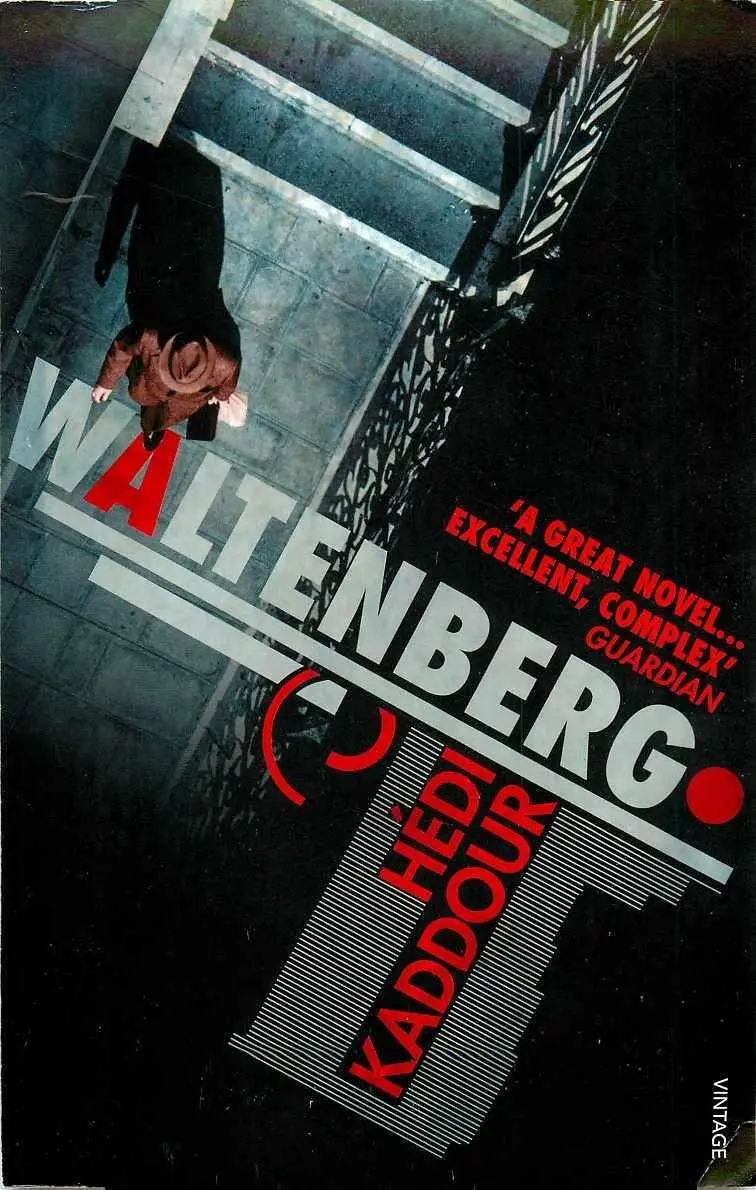
- Название:Waltenberg
- Автор:
- Издательство:Vintage
- Жанр:
- Год:2009
- ISBN:нет данных
- Рейтинг книги:3 / 5. Голосов: 1
-
Избранное:Добавить в избранное
- Отзывы:
-
Ваша оценка:
Waltenberg: краткое содержание, описание и аннотация
Предлагаем к чтению аннотацию, описание, краткое содержание или предисловие (зависит от того, что написал сам автор книги «Waltenberg»). Если вы не нашли необходимую информацию о книге — напишите в комментариях, мы постараемся отыскать её.
Waltenberg
Waltenberg — читать онлайн бесплатно полную книгу (весь текст) целиком
Ниже представлен текст книги, разбитый по страницам. Система сохранения места последней прочитанной страницы, позволяет с удобством читать онлайн бесплатно книгу «Waltenberg», без необходимости каждый раз заново искать на чём Вы остановились. Поставьте закладку, и сможете в любой момент перейти на страницу, на которой закончили чтение.
Интервал:
Закладка:
Max never liked Poincaré, he makes up all kinds of stories, yes, quite true, says Max, and I’ve changed my mind about Poincaré, I thought he wanted war and got it, I wanted a culprit, someone who’d betrayed his own side, Max, politics is primarily the art of betraying your own side, I know, says Max, and Poincaré is our collective sellout, remember Pio Baroja, hugely talented novelist, late 1916: ‘the French and the Germans are only fighting from cowardice; they are each under the thumb of a terrorist organisation and can do nothing about it.’
Max’s points his index finger at his comrades:
‘Robert, primary schoolteacher, Paul Robert, family holiday in the country, summer 1914, hot, only just arrived, 2 August, order for general mobilisation, had to leave his holiday cottage but the owner demanded payment of the full month’s rent. And Poincaré remains a terrorist.’
Three troops at full tilt, charging at German dreams. At first they ride recklessly towards the machine gun. Later they’re more careful. Charging dreams, their primary mission the Captain had said, the rumble of hooves, a rifle bullet in a horse’s flank, the horse twists its neck and withers, rears up, is still rearing up when its heart bursts, the sound of a lance piercing a body, the whistle of sabre blades as they charge those German dreams, another rider is down, the bottom half of his face flops on his neck, a slice of soft flesh, blood, spittle, the lower jaw gone, blue eyes, intensely blue.
They haven’t yet invented those marvellous operations for smashed jaws which will make the names of military surgeons famous, first remove a cutaneous flap two skin layers thick, from the top of the head, then bring it down and manoeuvre it over the lower part of the face, the quality of the skin taken from the scalp is far superior to that from the arm, which was previously used, the flap will be positioned over the damaged area, the patient can allow the hair of the flap to grow thus reconstituting an almost normal beard which will hide any scarring, though the effect is debatable from an aesthetic point of view. It’s better than nothing, the patient will say. In the clearing, the dragoons charge the machine guns which destroy their momentum.
Basically when I was with Hans, I was jealous. In the end I admitted as much to myself. At first I thought of it as a branch of gymnastics. Before Marie-Thérèse, when I woke up I’d feel washed-out but now the moment I stirred I could see her and felt alive, there she was before my very eyes, she’d be smiling at Hans, I knew she wanted to take him away from me, I’d hold out a cup of tea to her, I wanted to tip it all over her frock, pink Liberty print again, why didn’t she go, go away and wash and dry herself and change, and come back looking a fright, tipping the tea over her is so petty, if you really want rid of her throw it in her face, don’t worry whether it’s boiling hot or not, you’re dreaming you’re throwing tea in Marie-Thérèse’s face because you know you’ll never do it, whereas you could tip tea over the starchily creaking fabric at any time, and you tell yourself it’s petty, result: you do nothing.
Marie-Thérèse puts her hand on Hans’s forearm, like an old army friend. You could also take her to one side and threaten to kick her down the stairs if she touches him once more, you must smile at her, people are looking, they know everything and are enjoying it, dig your nails into her face, this new fashion is unspeakable, forehead uncovered on one side and on the other hair hanging down over the eyebrow, a sultry look for fast women, nails in the cheek, apparently if you use an ordinary lump of sugar to break the skin the scars never disappear.
What right did she have laughing like that? I knew she wanted to take him from me but I couldn’t do anything until she’d actually done it, people would have said I was hysterical; and Hans playing the innocent, my darling girl, I don’t understand why you don’t get on with her, she’d smile, she’d blush, she wanted to take him away from me.
Tell us what happened next, Max, not what really happened next, except for the death of that teacher Robert, tell us another story, Max, it’s true, instead make it the end of the story of the company officer who fought the duel, yes, the infantryman, I get confused with all these officers, cavalry Captain Jourde at Monfaubert, who was the infantry captain of Alain-Fournier who was himself a lieutenant at Saint-Rémy, those cavalry lieutenants at Monfaubert, the infantry CO with the name six and a half centuries old, the one Max later saw riding off to attack pillboxes with Lazare, the lad who liked sweets, yes Max’s major’s sister-in-law had told him the rest of the story of the duel when he saw her in Paris on a different leave, the lover who was no such thing, he had simply dreamed of being her lover, he used to send letters as if it had all really happened.
And very racy they were for a major’s very Catholic wife, words expressing the thing, compared with them Caillaux’s letters were elegant froth. But nothing had happened, nothing at all.
The major’s wife had never answered any such letters and had never met the man. The sister showed Max the letters, well she did not show them exactly, she said they were in the black box on the table. She left the room, I’ll be back in a moment, I want you to tell me if the letters are genuine, my sister always told me that nothing had happened, with me she just laughed about them, I never read the letters, she left them all with me for safe-keeping, except for the last one, but I never wanted to read them, Lieutenant, to read them was a sin.
Imagine that, my friends! the widow had never read them, that was her sister’s mortal sin: to have read them. She told me I cannot entirely rule out the idea that my sister lied to me, I feel the presence of the Devil, I myself have lied to my confessor, I told him I hadn’t found the letters, he wants me to hand them over so that he can destroy them, my sister is innocent, all she did was read them without telling her husband, she was afraid of being suspected of wrongdoing.
Maybe too the major’s wife wasn’t all that put out to find in the man’s letters a reference to doings no one had ever taught her — ‘darling, how I loved yesterday afternoon and the way you let me take that virginity of which even married women never speak, for they are only supposed to have one’ — yes, the letters were the most awful rubbish, and he signed them ‘Honoré, who loves you’, which he had crossed out and corrected and given what he’d said, he felt justified in putting ‘your darling Honoré, who loves you madly’.
Well, I’ll spare you the boring details, oh no, Max, details are what makes the paper they’re written on worth while, God is in the details, they’re the reporter’s first duty, I’m not sure the woman they were intended for understood them fully, they even mentioned such practices as a Cuban embrace and a crab’s claw, the man had smothered everything with a sentimental Musset-type sauce, a lot of rubbish words.
In less than a week, the woman was dead of a nasty bout of bronchitis.
The major had found one of these racy missives in the deceased’s writing desk and ‘darling Honoré’ had received a military sword full in the throat.
The major had saluted the witnesses, the man had died for something that really wasn’t worth it, died for a joke, dear friends, Max would say, and many died for another joke, a joke on an altogether larger scale, on the evening of 29 July 1914, between Moscow and Berlin, it wasn’t letters that were sent but telegrams, and these last official telegrams exchanged between the two empires bring war, one signed ‘Your uncle Willy’ and the other ‘Your loving Nicky’, war: a great big joke played by old men.
Читать дальшеИнтервал:
Закладка:
Похожие книги на «Waltenberg»
Представляем Вашему вниманию похожие книги на «Waltenberg» списком для выбора. Мы отобрали схожую по названию и смыслу литературу в надежде предоставить читателям больше вариантов отыскать новые, интересные, ещё непрочитанные произведения.







Обсуждение, отзывы о книге «Waltenberg» и просто собственные мнения читателей. Оставьте ваши комментарии, напишите, что Вы думаете о произведении, его смысле или главных героях. Укажите что конкретно понравилось, а что нет, и почему Вы так считаете.