Hedi Kaddour - Waltenberg
Здесь есть возможность читать онлайн «Hedi Kaddour - Waltenberg» весь текст электронной книги совершенно бесплатно (целиком полную версию без сокращений). В некоторых случаях можно слушать аудио, скачать через торрент в формате fb2 и присутствует краткое содержание. Год выпуска: 2009, Издательство: Vintage, Жанр: Современная проза, на английском языке. Описание произведения, (предисловие) а так же отзывы посетителей доступны на портале библиотеки ЛибКат.
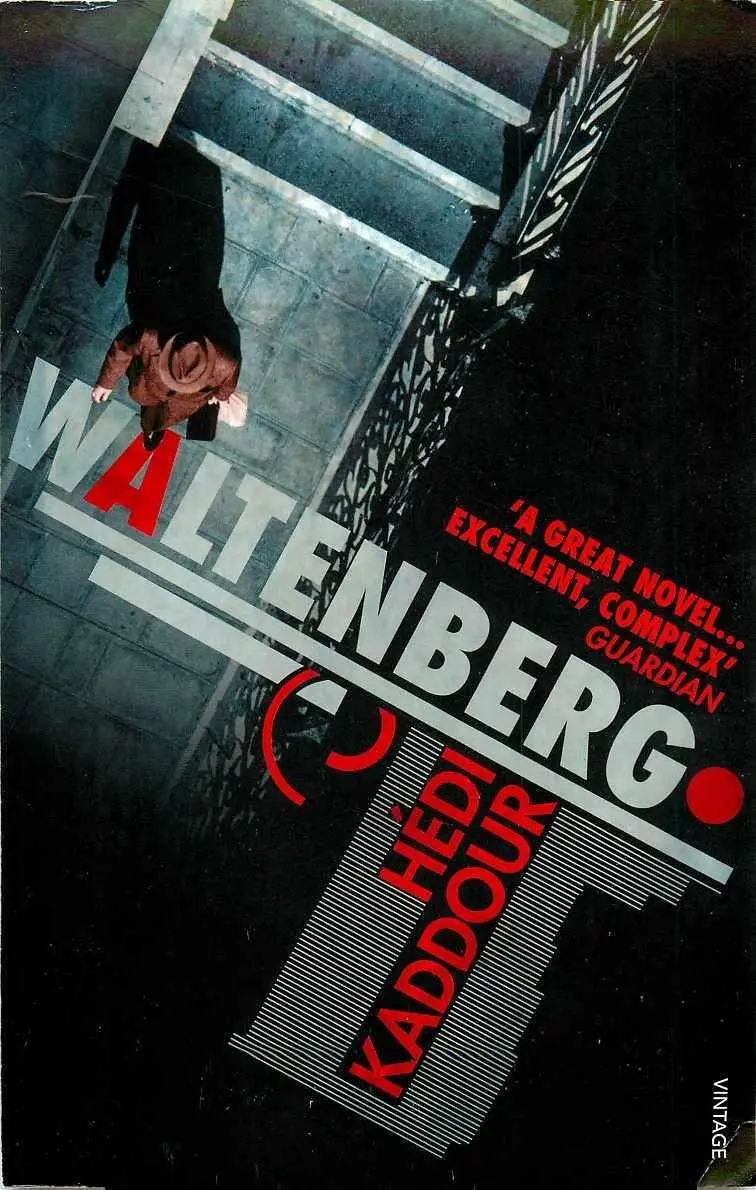
- Название:Waltenberg
- Автор:
- Издательство:Vintage
- Жанр:
- Год:2009
- ISBN:нет данных
- Рейтинг книги:3 / 5. Голосов: 1
-
Избранное:Добавить в избранное
- Отзывы:
-
Ваша оценка:
Waltenberg: краткое содержание, описание и аннотация
Предлагаем к чтению аннотацию, описание, краткое содержание или предисловие (зависит от того, что написал сам автор книги «Waltenberg»). Если вы не нашли необходимую информацию о книге — напишите в комментариях, мы постараемся отыскать её.
Waltenberg
Waltenberg — читать онлайн бесплатно полную книгу (весь текст) целиком
Ниже представлен текст книги, разбитый по страницам. Система сохранения места последней прочитанной страницы, позволяет с удобством читать онлайн бесплатно книгу «Waltenberg», без необходимости каждый раз заново искать на чём Вы остановились. Поставьте закладку, и сможете в любой момент перейти на страницу, на которой закончили чтение.
Интервал:
Закладка:
We even have photos dating from before the war in which Nicky and Willy, so fond of each other, are playing croquet, all very pally, with the façade of a château in the background, great game, croquet, very character-forming, they also go bicyle-riding, their majesties ride the first freewheel bicycles, freewheeling being designed to relieve the velocipedist’s legs, such a devastatingly droll expression, so ‘pre-war’: ‘to freewheel’.
The brasserie on the Boulevard des Italiens is enormous, noisy, hot, friendly, it is newly decorated, in the American style, large panels of dark wood, great stretches of light-coloured wall, it is the triumph of the panel and is echoed even in women’s dresses, one panel fore, one panel aft, tall mirrors everywhere, very bright electric light, 1920s styling, no fancy curlicues, huge chandeliers but not of dangling crystals, made entirely of huge, clear prisms, and real live sparrows which nest above them and chirrup from one chandelier to another.
At a table just behind them, a woman stares at Max, Max sees her from the front and also from the side in one of the mirrors, he can see himself in another mirror, he can pretend he’s not watching the woman, that he’s looking at something else, and he can see her while she watches him talking. At the same time he can observe his own face, which he doesn’t much care for, cauliflower ears, round head, flat profile, eyes slightly staring, a comic valet, the main thing is to keep talking, apparently when he becomes animated people don’t notice how ugly he is, from time to time the woman seems interested, at least more than she is by her own table companions.
Fantastic face, thinks Max, high cheekbones, large eyes, not French, and not because of the cheekbones and the abundant brown hair, it’s rather the way she is, it’s the face of someone who does other things in life than try to please men, she’s beautiful but she doesn’t give a damn, her bearing is both restrained and free, is she powerful? A banker maybe? She gave a start when Max said the only ones left standing will be the arseholes, a foreigner who speaks French fluently then, get up? No, wait until she gets up, very grande dame , distinguished, make contact, whisk her off in a taxi, in taxis all women become tarts, and this one isn’t likely to go at it in a half-hearted way, such a contemptuous way of looking at the people at her table, no not contemptuous, she wouldn’t be so obvious, but her mind’s not elsewhere either, she’s there all right but no one’s got her attention, in the back of the taxi, backside, lips, the lot, then get out and leave the taxi to her.
At Monfaubert, the dragoons thrust and slash and fall, and have gone much too wide on the left of the target of the charge, those dove-grey dreams of the Germans, riders carried by their momentum to the other end of the encampment, and the eight German dreams remain intact, it was easier on the Marne, two years before the war, Verzy, another war, a war fought with chamber pots, a charge through the streets of a small town, peasants panicking, the women especially, not afraid of animals, give the flat of the sword to a woman who’s thwacking your horse’s legs with a big stick, or the charge at Carmaux, it was miners that time, and ten or so dead.
In this clearing there are no chamber pots but there are rifles, bayonets and two, maybe three Spandau guns which have cut clear swathes in the first three troops, only just under half the riders have managed to traverse the enemy camp but without doing much real damage, too far to the left of those German dreams, the other half of the dragoons have been unseated, the relatively unscathed try to make it back to cover, a few Germans begin to gather their wits and shoot them down like rabbits.
There are also Germans lying on the ground, but their dreams are intact.
Then the lieutenant of the French dragoons who have been held in reserve in the woods orders his fourth troop to charge — to make the most of the enemy’s disarray — a support troop which is in turn decimated by the tap and rattle of the sewing-machine while fifty dragoons who survived the first charge have wheeled round at the far end of the field, their dander up once more, a gallop, less than seven hundred paces a minute, two charges by wounded riders in a pincer movement that encircles the Germans, now to recreate the shock which spikes the guns, a mass moving forward at great speed in a century of speed, a steel pincer which is about to bite on the steel of German dreams.
The first time he heard the sparrows, saw them in the chandeliers of the brasserie, Max thought it was some sort of joke. When questioned, the waiter answered that many customers had asked that the sparrows be allowed to come and go and tweet in the assembly-rooms, exsoldiers had asked.
‘Well now,’ Max had said, ‘I know another tall tale, another extremely poetical story, extremely, provided you give the word poetical a meaning different from the one it had before our war: the story of the Martins and the Thomases.
‘Max, they say you were with the dragoons the day they charged the Boches at Monfaubert, tell us about the charge.’
‘I wasn’t there!’
‘Where were you, then?’
‘Guess.’
‘Headquarters?’
‘Cheeky bastard!’
‘Don’t lose your rag, I give up.’
‘Yes, more to the east!’
‘I don’t see..
‘Everyone’s got it except you! Saint-Rémy! The place where Fournier was killed, I was there just before it happened, second lieutenant of dragoons, different regiment, I charged a flock of sheep.’
‘Max, stop messing about.’
‘I’m not, the Germans were firing at us, I never say Boches, I never write it either, I’ve got a friend who’s a Boche, we’ve been meeting up once a year since the Armistice, incidentally, do you write Boche with a capital or not when it’s a noun? The German artillery was firing at us, disgustingly accurate it was, we thought we were hidden by a small hill, a ridge, with something peculiar on the top, a man grazing his sheep, poor creatures have got to eat too, the shepherd must have been dead scared, we all were, but there he was, out with his sheep, brave man. We kept changing position, the Germans continued firing at us, the shepherd was in a blue funk, with your naked eye you could see him on the top of the ridge duck down each time a shell went screaming overhead, he tried to make his way back towards us, we shouted for him to stay up there, he couldn’t hear, we made signs telling him to stay where he was, he wasn’t in as much danger as us, but he changed position on his ridge when we did, staying in line with us, about three hundred metres away, a Frenchman who wanted to stay with the French, whatever the risk. We were taking a hammering from the German cannon, we kept moving to avoid their fire, and then the shells would find us again.
‘In the end the penny dropped, the shepherd was a scout, all the German gunners had to do was aim over the top of the sheep every time the shepherd stopped, he was giving them the line of fire. So we charged the sheep with lances, we liked the lance, at that stage we were about to make a better world with our lances, we carried carbines slung round our necks, but it was the lance we liked best, a joust.
‘The shepherd? We nabbed him, a spy who got two hundred francs a throw, he could have bought himself three overcoats at La Belle Jardinière for that, lined him up and shot him.
‘We got hammered in that sector, then we were withdrawn and replaced by fresh troops, infantry, they were ready for a scrap, the 288th, that’s right, Fournier’s lot, and the Germans were eager for a scrap too, that’s what Saint-Rémy was, a poxy wood and a war where you charged at sheep and writers died.’
Читать дальшеИнтервал:
Закладка:
Похожие книги на «Waltenberg»
Представляем Вашему вниманию похожие книги на «Waltenberg» списком для выбора. Мы отобрали схожую по названию и смыслу литературу в надежде предоставить читателям больше вариантов отыскать новые, интересные, ещё непрочитанные произведения.






Обсуждение, отзывы о книге «Waltenberg» и просто собственные мнения читателей. Оставьте ваши комментарии, напишите, что Вы думаете о произведении, его смысле или главных героях. Укажите что конкретно понравилось, а что нет, и почему Вы так считаете.