Hedi Kaddour - Waltenberg
Здесь есть возможность читать онлайн «Hedi Kaddour - Waltenberg» весь текст электронной книги совершенно бесплатно (целиком полную версию без сокращений). В некоторых случаях можно слушать аудио, скачать через торрент в формате fb2 и присутствует краткое содержание. Год выпуска: 2009, Издательство: Vintage, Жанр: Современная проза, на английском языке. Описание произведения, (предисловие) а так же отзывы посетителей доступны на портале библиотеки ЛибКат.
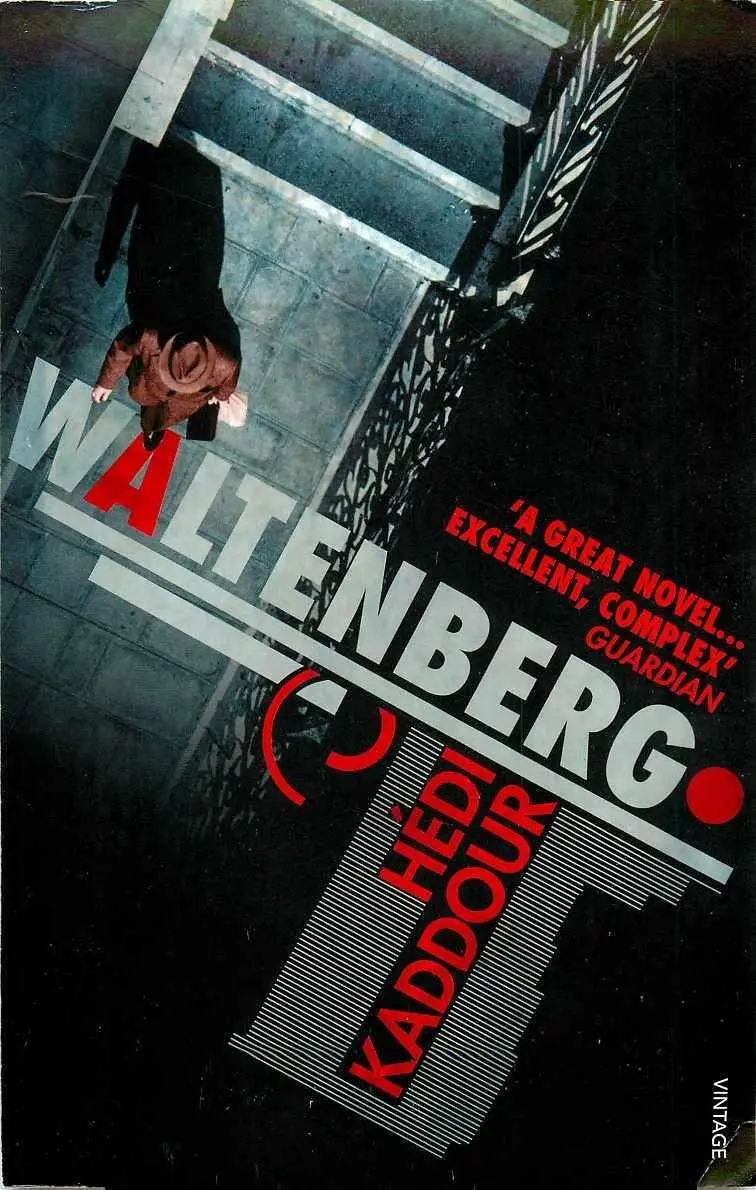
- Название:Waltenberg
- Автор:
- Издательство:Vintage
- Жанр:
- Год:2009
- ISBN:нет данных
- Рейтинг книги:3 / 5. Голосов: 1
-
Избранное:Добавить в избранное
- Отзывы:
-
Ваша оценка:
Waltenberg: краткое содержание, описание и аннотация
Предлагаем к чтению аннотацию, описание, краткое содержание или предисловие (зависит от того, что написал сам автор книги «Waltenberg»). Если вы не нашли необходимую информацию о книге — напишите в комментариях, мы постараемся отыскать её.
Waltenberg
Waltenberg — читать онлайн бесплатно полную книгу (весь текст) целиком
Ниже представлен текст книги, разбитый по страницам. Система сохранения места последней прочитанной страницы, позволяет с удобством читать онлайн бесплатно книгу «Waltenberg», без необходимости каждый раз заново искать на чём Вы остановились. Поставьте закладку, и сможете в любой момент перейти на страницу, на которой закончили чтение.
Интервал:
Закладка:
Lilstein would contradict Kappler furiously, admiring him nonetheless, Kappler went out of his way to provoke his fury.
Even today Kappler knows more about Lilstein than Lilstein knows about himself, he knows that Lilstein is aching to ask him:
‘Did you ever see her again?’
He knows all about that side of Lilstein that the years have covered over but that has not gone away, nothing ever goes away for good, everything that has continued to grow in Lilstein in a shadow which even Lilstein himself prefers to ignore, everything in him that is always ready to say no, the urge always to say no, the feeling that he has an inner strength that impels him not to align himself with a Minister who scratches his arse in front of his Department Heads.
On those evenings at Waltenberg, in the great drawing-cum-reading room of the Waldhaus, after that day’s Seminar debates, Kappler would smile as he talked to Lilstein who, at fifteen or sixteen, was taller, looked older than his age and was building a new world with violence and adjectives, you are a rebel, young man, you are not sufficiently docile to be a true revolutionary and build new worlds, you must learn discipline, as it is you are merely a rebel, and even though you may not have broken discipline you have wanted to, the idea of making some seditious gesture is always at the back of your mind, you claim you want to make a new world but your true gift is for the rebellious gesture, even when you do not act you enjoy the pleasure of the rebellious gesture, a guilty pleasure, I’m pretty sure that the first time you were sent to school your mama slipped your hand into the headmaster’s and left the room backwards, a headmaster so proud to have been entrusted with the progeny of two Doctor Lilsteins, man and wife, you weren’t the least upset when you saw your mother leave, rather you were curious about the new things that were happening, you didn’t cry, though you did bite the headmaster’s hand, I’m quite certain your brother told me about it, he laughed when he told me about that and the cuff the Headmaster gave you in return, freedom is useless if you can’t bite the hand that holds you, the rebellious gesture, in the name of freedom, the urge to do anything, even burn the place down, anything, a look all around the room from Kappler, anything except the innocence of these people! yes, it’s just bourgeois psychology, but remember: the taste for the rebellious gesture will always be part of you!
Kappler nodded towards the small groups of well-dressed people, like themselves, who were talking heatedly in the lounge of the Waldhaus, and Lilstein smiled with the satisfaction of having made a breakthrough, of seeing that Kappler was not far from sharing his own hostility to these people.
Not far from the corner where he and Kappler were talking, a man was sitting next to a woman in an easy chair, his name was Neuville and he was talking in a clear voice to a group of people who were standing, in his hand were several sheets of rolled-up paper, talking without being interrupted:
‘The unit designed to measure human work called the Neuville or the N unit is a universal unit representing the quantity of available physiological energy which can be expended by a normally constituted human being in one minute.’
Neuville did not talk as if he were addressing a public meeting, he spoke in a steady voice, slowly, without giving the impression that he was delivering a lecture, but rather that he was sharing the pleasure of such a satisfying definition, he was wearing a double-breasted tweed suit, loose-fitting, grey with a faint green thread running through it, the same kind of suit favoured by Lilstein’s father who, however, did not care for green thread on grey, but his mother said the green cheered it up and she had the last word, the man who was speaking in the steady voice had everything that life can offer, and to it he added a benevolence of word and look:
‘In measuring the quantity of available human energy, allowance is made for the appropriate amount of rest required when the human in question, under normal conditions, carries out the actions and makes the physiological effort demanded by the industrial tasks for which he has been fitted and trained, at a rate which is equal to three-quarters of the normal rate of physiological exertion during the course of a normal day’s work…’
A German woman stood drinking in Neuville’s words, from time to time the woman in the easy chair gave her a very blank look, Neuville went on:
‘… a level of exertion which must leave the worker still able to fulfil his familial and societal obligations, that is to expend each day the same amount of physiological energy without producing any deleterious effect on his health or individuality.’
Neuville, a man of clearly articulated speech, who used silences designed to enable the listener to ponder his words or examine his suit, like an actor who knows that no one will interrupt his monologue save to acquiesce. It was unbearable:
‘Taylor failed to take account of fatigue and the need to renew the strength required for working — only the Neuville Unit measures the phenomenon in its entirety.’
To Lilstein, it was intolerable, a hotel lounge is intended for conversation, these people listen to him before he’s even said anything, a servile bunch, shut this capitalist up, let him gather his lackeys around him somewhere else, Lilstein is sixteen, lashings of frustration to get out of his system, scandal, create a scandal, administer a public lesson to this mix of idealist visionary and evil bastard, he turns towards Neuville and hears him say:
‘To earn my crust when I was a young man in the USA, I worked behind the counter of a whiskey store.’
Now for the story of my success! Lilstein waits for the pause, in it he intends to ruin the speaker’s effect.
‘We sold three different kinds of bottle at three different prices, quarter dollar, half dollar and one dollar, it was my introduction to capitalism: for all three prices they got the same quantity of the same whiskey.’
Suddenly Lilstein tells himself that he can learn something from such cynicism and he too begins to listen.
One day, much, much later, Lilstein would say with the categorical certainty that only a man who has passed through Auschwitz then the Gulag can aspire to:
‘Capitalists are cynics.’
Smiles on the faces of the members of the Politburo’s Special Economic Committee. Lilstein continues:
‘They claim to lead crusades but basically they are cynics selling junk.’
More smiles. Lilstein goes on:
‘But the trick is that they put a value on that junk, while we, who reject cynicism, are stuck with junk which has no value at all.’
No smiles now, the men newly appointed to run the economy just wonder why they were being attacked like this, in the name of what other group could Lilstein be speaking, for wasn’t he a member of the group which had helped them up the ladder to their new responsibilities, Lilstein having even furnished them, thanks to his contacts, with invaluable information about capitalist products and techniques, why this observation about worthless junk? Was it an about-turn by Lilstein? A lurch in the direction of the reactionaries and fanatical advocates of heavy industry? Or was he in the process of reaching an understanding with some more advanced splinter group made up of irresponsible elements set on restoring capitalism on the specious argument that productivity is productivity? Or had he just been trying to be clever? He certainly had a reputation for never being able to resist a Witz, even of the sour variety. Difficult chap to keep a check on, just looks out for number one.
Long ago, in Waltenberg, the man talking about the Neuville system had added:
Читать дальшеИнтервал:
Закладка:
Похожие книги на «Waltenberg»
Представляем Вашему вниманию похожие книги на «Waltenberg» списком для выбора. Мы отобрали схожую по названию и смыслу литературу в надежде предоставить читателям больше вариантов отыскать новые, интересные, ещё непрочитанные произведения.












Обсуждение, отзывы о книге «Waltenberg» и просто собственные мнения читателей. Оставьте ваши комментарии, напишите, что Вы думаете о произведении, его смысле или главных героях. Укажите что конкретно понравилось, а что нет, и почему Вы так считаете.