Hedi Kaddour - Waltenberg
Здесь есть возможность читать онлайн «Hedi Kaddour - Waltenberg» весь текст электронной книги совершенно бесплатно (целиком полную версию без сокращений). В некоторых случаях можно слушать аудио, скачать через торрент в формате fb2 и присутствует краткое содержание. Год выпуска: 2009, Издательство: Vintage, Жанр: Современная проза, на английском языке. Описание произведения, (предисловие) а так же отзывы посетителей доступны на портале библиотеки ЛибКат.
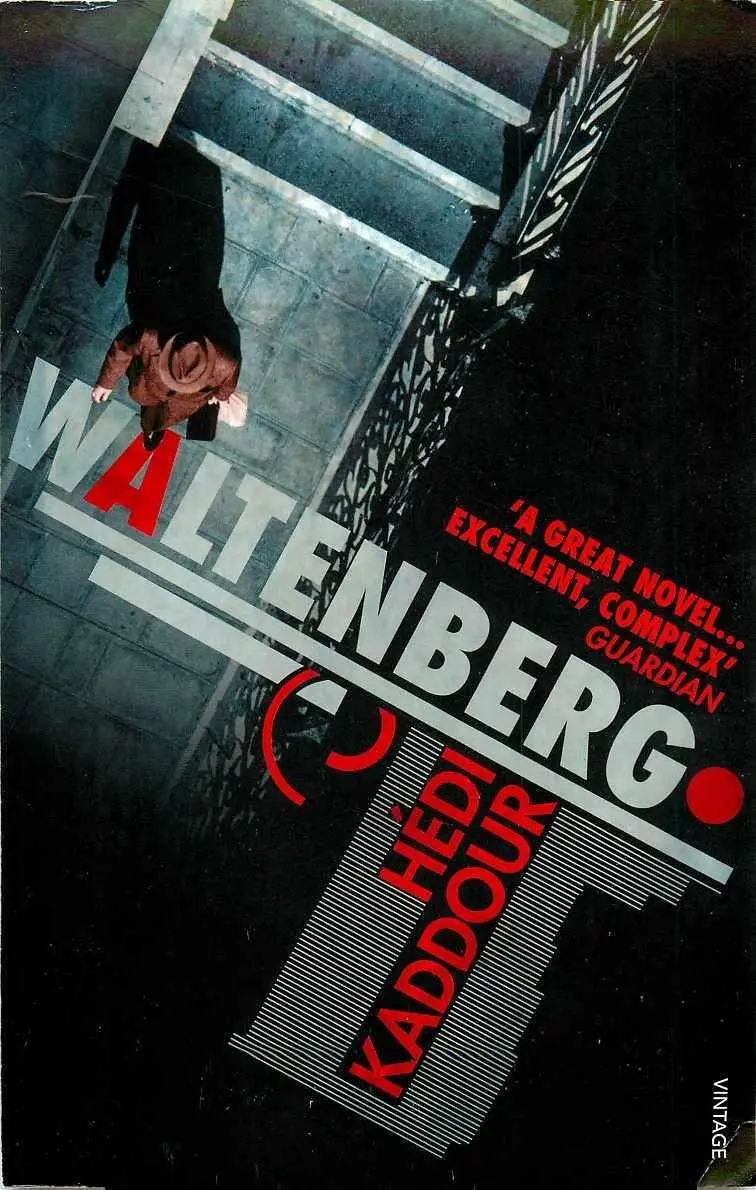
- Название:Waltenberg
- Автор:
- Издательство:Vintage
- Жанр:
- Год:2009
- ISBN:нет данных
- Рейтинг книги:3 / 5. Голосов: 1
-
Избранное:Добавить в избранное
- Отзывы:
-
Ваша оценка:
Waltenberg: краткое содержание, описание и аннотация
Предлагаем к чтению аннотацию, описание, краткое содержание или предисловие (зависит от того, что написал сам автор книги «Waltenberg»). Если вы не нашли необходимую информацию о книге — напишите в комментариях, мы постараемся отыскать её.
Waltenberg
Waltenberg — читать онлайн бесплатно полную книгу (весь текст) целиком
Ниже представлен текст книги, разбитый по страницам. Система сохранения места последней прочитанной страницы, позволяет с удобством читать онлайн бесплатно книгу «Waltenberg», без необходимости каждый раз заново искать на чём Вы остановились. Поставьте закладку, и сможете в любой момент перейти на страницу, на которой закончили чтение.
Интервал:
Закладка:
Later, Lilstein’s superiors, his colleagues, his instructors during his time in Moscow or the imprisoned comrades he knew in the camps, both the one run by the Nazis and the other one, all knew him as a quiet, meticulous man, he was always one step ahead of the game but a little fragile, always going slightly red in the face, he never looked as if he could lie, he was easily flustered, and his interrogators at the Lubyanka who sat him on a stool and grilled him in relays twenty-four hours a day before sending him to a special camp all knew that he was a decent sort, that he’d got snarled up in the system, but that he was a decent type.
Now a man who blushes when a question is put to him is obviously guilty, but no more so than anyone else, if they’d put their minds to it they could have taken him apart, broken him, made him cry, made him say anything, but they couldn’t go too far, especially not risk killing him, no one had given orders one way or the other, but everybody knew.
When Abakumov or his direct assistants failed to come in person and put their union seal on the work of the professionals, the professionals avoided doing too much, especially when the subject remained calm and blushed, though not too much. Lilstein had problems but went on being a decent sort, as if someone in the shadows had decided to anticipate the real enforcers and do Lilstein minor damage to save him from worse, some person or persons, or not anybody, perhaps nobody had taken charge of the matter, an empty box in the chart of the organisation’s hierarchy, an oversight which had as many consequences as, if not more than, any specific action taken by a person or persons.
As if oozing out from its own inner void through this one place, the organisation began to act by itself, outlining solutions ‘for a later date’, no, hardly solutions more like contingency plans for later on, Lilstein’s survival being one of these plans, without anyone in the organisation nor the organisation itself knowing exactly what ‘a later date’ meant, as if somehow a mechanism had been set in motion to save certain victims from the very worst.
As if the organisation knew, or felt, that some day it might well need to solicit the machinery of its own survival from the victims it had allowed to survive.
Now Kappler had known Lilstein before all that, the Lilstein who at Waltenberg in 1929 had been impelled by an inner force first to say no and then to work with the fall-out produced by his no, ’twas ever thus, he has always said no, even unto a mark of nought in science at the age of eleven so that his father would get the message, that medicine was out of the question, Kappler knew Lilstein as a revolutionary and the scion of celebrated doctors, a young man who said no to all-comers and wanted to scrap the world and start again, not because the world was suffering or made others suffer but because the world belonged to him.
‘An anarcho-materialist, young Lilstein, an anarcho-materialist is just what you are, it makes you likeable but it will bring you a lot of trouble unless you learn to discipline yourself.’
It was Kappler who told him to read Lenin and, through Lenin, Marx. Kappler hated Lenin yet he told Lilstein to read him when Lilstein was just sixteen years old, because he knew it would help him to survive, you learned Russian so you could read Dostoyevsky, you can use it now to read Lenin. Lilstein became one of the German communists who knew Lenin’s work best, in the original, and Kappler put him on his guard against his own personal sympathies, Rosa Luxemburg, no point reading her, Bukharin ditto, the sin of economism, Kappler admired Bukharin but he advised Lilstein against him:
‘I’m not saying you shouldn’t read him because I’m hoping you’ll come to him against my advice, at your age you only read what you’re told not to, but it’ll get dangerous pretty quickly, Trotsky’s dangerous too, utopia and militarism, his enemies say that he’s a snake, it’s not true but Trotskyism has lost its relevance, Lenin’s your man, young Lilstein, the complete works, with Stalin, and Marx through Lenin and Stalin, and Stalin’s going to be increasingly important, of course, not forgetting Engels and the rest of it, the permanent revolution, the worker’s democracy, the end of alienation, all of it is an adolescent dream, there are no free gifts in this world and if you really want to change it then it’s not pretty women you should be cuddling up to but the butcher.’
In 1929, Kappler telling Lilstein to do what he had never done himself, talking as he scrutinised the large potted papyrus near which they were sitting and Lilstein’s face against the delicate green of the papyrus leaves, a young god, more than a young god, gods do not possess the same will to shape the future, nor wear their soul on their sleeve, Kappler felt behind his words the swell of a gladness he had given up on long ago, a young man’s joy remembered from when the century was young, before the war, when Blériot flew across the Channel in 1909 we were all blissful Europeans, we harnessed forces and controlled explosions and converted them into machines worked by combustion, electric currents, even air-waves, decision-making was a grand affair, you aspired, you did the sums, you made the decision, you built, Hans wanted to build liners, calculate the fine lines of a hull, of airships some day, larger and larger airships, see the countryside from the skies, no more frontiers ever, and show it all to a woman who would have all the qualities of the new century.
And then one day, the end of joy, the autumn of 1914, the idea had begun to sink in, lights going out all over Europe and fifteen years later these discussions with a young man who dreamed as he once had, told his father he would not study medicine, was fervent about longdistance communications, about supplying the world with a vast invisible network of radiophony and telephony, millions of lines, of wireless beams, billions of words down these millions of lines, directly exchanged, uncontrolled and unexploited by money.
The young man also wanted the revolution, he’d get over that, perhaps he was right, at least he had the joy of it, he communicated its pulsation if not its contents to his elder. And for the first time since before the war, Hans felt his blood race once more, for the first time.
No, not the very first: at an earlier point there had been one occasion, shortly after the war, before Lilstein came on the scene. The last time to be honest that Hans had felt as fired up as when he sat talking to this young man in the lounge of the Waldhaus was in 1925, at the offices of the Frankfurter Zeitung in which he had just published a piece, October 1925, he’d received a postcard from the United States, it showed skyscrapers, with three words, in French:
‘How are you?’
Just that, no name, Kappler knew it was from her, no address, she no doubt thought that if she had found a way of reaching him he should be able to do likewise, the postmark said New York, he’d set about writing agreeable, ingratiating letters to all the people he knew in the United States, adding a brief enquiry:
‘Would you by any chance have any way of contacting a Madame Hotspur who wrote me a charming letter here at the paper without giving her address? I’d like to thank her, she may be living in New York.’
He had trotted off to consult Berlin’s collections of America’s leading newspapers to try to find some trace of Lena, he tripped from one paper to the next, maybe she was making a name for herself, research frenzy, go to America, cross the ocean and the States, he got answers to his letters, no information about Lena but replies containing good wishes for him and small requests which his amiable tone had prompted in his correspondents for information about Mr So-and-so whom the writer hadn’t seen for some time, about some girl who would soon be completing her finishing year in old Europe and would it be too much to ask Hans to meet her for a little chat?
Читать дальшеИнтервал:
Закладка:
Похожие книги на «Waltenberg»
Представляем Вашему вниманию похожие книги на «Waltenberg» списком для выбора. Мы отобрали схожую по названию и смыслу литературу в надежде предоставить читателям больше вариантов отыскать новые, интересные, ещё непрочитанные произведения.












Обсуждение, отзывы о книге «Waltenberg» и просто собственные мнения читателей. Оставьте ваши комментарии, напишите, что Вы думаете о произведении, его смысле или главных героях. Укажите что конкретно понравилось, а что нет, и почему Вы так считаете.