Hedi Kaddour - Waltenberg
Здесь есть возможность читать онлайн «Hedi Kaddour - Waltenberg» весь текст электронной книги совершенно бесплатно (целиком полную версию без сокращений). В некоторых случаях можно слушать аудио, скачать через торрент в формате fb2 и присутствует краткое содержание. Год выпуска: 2009, Издательство: Vintage, Жанр: Современная проза, на английском языке. Описание произведения, (предисловие) а так же отзывы посетителей доступны на портале библиотеки ЛибКат.
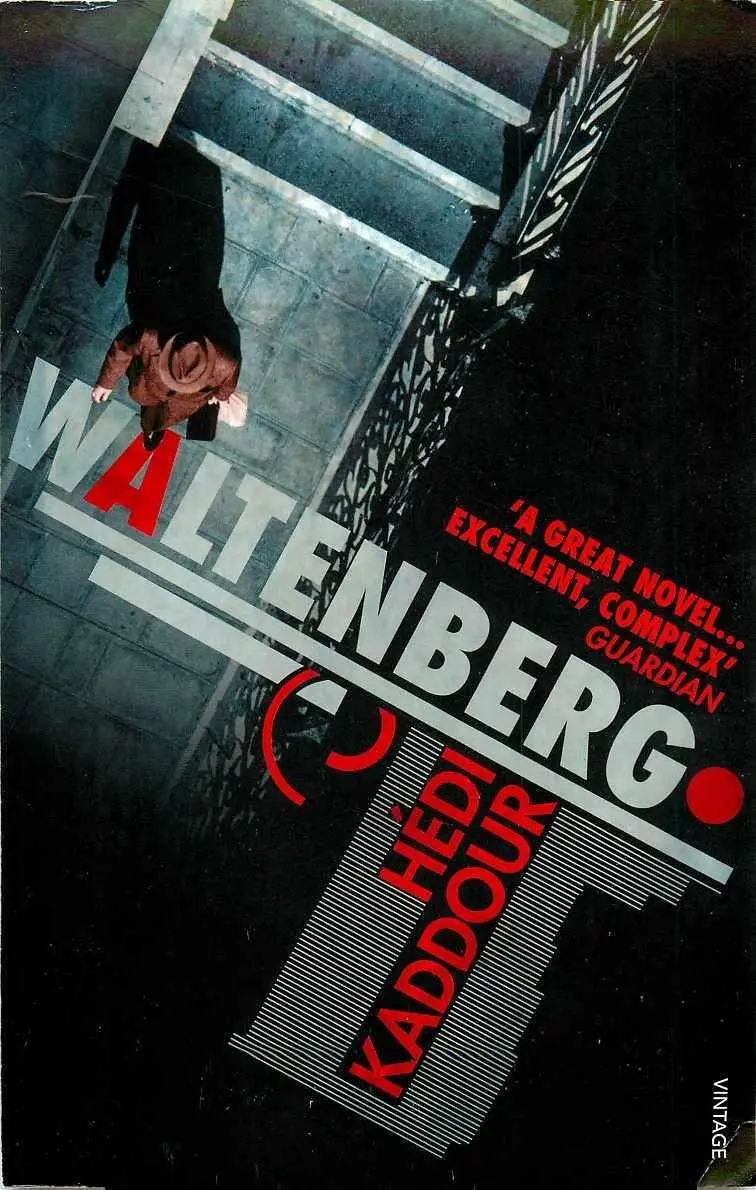
- Название:Waltenberg
- Автор:
- Издательство:Vintage
- Жанр:
- Год:2009
- ISBN:нет данных
- Рейтинг книги:3 / 5. Голосов: 1
-
Избранное:Добавить в избранное
- Отзывы:
-
Ваша оценка:
Waltenberg: краткое содержание, описание и аннотация
Предлагаем к чтению аннотацию, описание, краткое содержание или предисловие (зависит от того, что написал сам автор книги «Waltenberg»). Если вы не нашли необходимую информацию о книге — напишите в комментариях, мы постараемся отыскать её.
Waltenberg
Waltenberg — читать онлайн бесплатно полную книгу (весь текст) целиком
Ниже представлен текст книги, разбитый по страницам. Система сохранения места последней прочитанной страницы, позволяет с удобством читать онлайн бесплатно книгу «Waltenberg», без необходимости каждый раз заново искать на чём Вы остановились. Поставьте закладку, и сможете в любой момент перейти на страницу, на которой закончили чтение.
Интервал:
Закладка:
‘Three separate prices but it was always genuine whiskey, my first lesson in capitalism, everything is relative, as our young friend Tellheim would say.’
Lilstein had decided not to create a scene. Tellheim was a young physicist who’d been invited to this same Seminar in the spring of 1929 to give lectures on relativity, he spoke of lifts, two lifts moving in parallel over the façade of an immensely tall skyscraper, like the ones they have in America, when both start to move the passengers in Lift One drop various objects out of the window, umbrellas, hats, handbags, the objects fall, dropping away beneath them at a speed of 981 centimetres per second, that is at a speed which increases by 981 centimetres every second, assuming the absence of any kind of resistance.
Tellheim did not try to grab people’s attention, he just spoke of what he knew, that’s all, you felt you were there in the lift with him, you couldn’t stop yourself, and while Lift One starts going down in the normal way at the normal speed, Lift Two plunges into the void at a speed of 981 centimetres a second, impelled by the same force as the falling objects, which is to say the force of gravity, the passengers in Lift Two no longer feel their feet pressing down on the floor, their wallets cease to weigh anything in their pockets, and if they drop their hats, bags and brollies these objects remain suspended in mid-air before their very eyes, whether the hats be made of feathers or of lead.
And these passengers in Lift Two can see the objects dropped from Lift One floating just next to them, if you follow me, so that at exactly the same moment some passengers can see hats falling and others see them suspended in front of them, what does it take for a lift to be able to reach this speed? well, let’s say provided there’s no friction or resistance and that at the instant the lift started moving the cable snapped cleanly, a hypothesis that can easily be tested. Tomorrow evening, I’ll tell you about trains and how, to an observer standing on the platform, a train passes through the station less quickly than for an observer sitting in the train, and the day after tomorrow it will be the curve which is the shortest distance in the universe between two points.
Tellheim and Lilstein had become instant friends.
In the drawing-cum-reading room of the Waldhaus in 1929, the women were very beautiful, and they looked the men straight in the eye.
‘They’ve just discovered that ideas make eyes shine more brightly than kohl.’
This thought had been one of several to catch the fancy of the billiard players, but no one claimed to have said it first. Sometimes Lilstein watched the young French girls but his eyes lingered particularly on a tall red-haired woman who looked at him in the sweetest way, they’d gone cross-country skiing with some French girls, one of these had said to one of her friends:
‘In three years, he’ll be gorgeous.’
The other one had replied:
‘What’s wrong with him now?’
And whenever Kappler caught Lilstein looking at a woman he would repeat with a smile:
‘Anything — except the innocence of these people!’
Sometimes a friend of Kappler’s would join them, a French journalist with big ears, funny man, he was jealous of Lilstein and made scenes, shush! not a word, this is nothing to do with you, when he’s with you he becomes young again, all I do is remind him of old horrors in the mud of long ago and the new horrors I go in search of in this vast world of ours, do you know in what receptacles the Head of the Medico-Legal Institute in Paris keeps the brains that interest him after he’s completed an autopsy? chamber pots, and do you know why? He claims it’s because nothing else fits the shape of the brain as well. Strange. Every time I say ‘do you know?’ it’s to tell of some new horror. Do you know how French military posts in Morocco during the Riff wars were not so long ago supplied with water?
Kappler’s French friend would take his time, twisting his glass round and round, giving the impression that he believed the answer would not be long in coming from his listeners, his ears gave him a comical, genial look, the ladies would press him, he would add, take twenty-five downtrodden privates with an officer who fancies himself as Roland and is looking for an Oliver to die with, and hundreds of Saracens all around them, Berbers, they’re more chivalrous than Saracens except for one appalling habit, when they take prisoners they cut them open, stuff their innards full of rocks and camel dung, don’t even wait for their captives to die before tearing their tongues out, experts who study these things call this rural rites of execration, obviously these men from the Riff are on home ground, their land has been defiled, oh yes, the water, it comes by plane along with a couple of military medals, no, the planes don’t land, they drop supplies on the post. How do they manage to do that with water? The first time I heard it in a radio message I almost burst out laughing: ‘Under siege, send blocks of ice.’
Maybe Kappler was mistaken about Lilstein when he spoke of his ‘gift for the rebellious gesture’, and ‘guilty pleasure’. In those days, Lilstein gave short shrift to all that bourgeois psychology, those pronouncements about pleasure and innocence, but now he can see things he didn’t see when he was an adolescent or even before he met Kappler, a gobbet of chewed-up blotting-paper splatting against a blackboard in school for instance, the teacher points to the gobbet and asks who did that, it didn’t matter that the young Lilstein was innocent, he always turned bright red, he hadn’t done anything but he could easily have had the idea of throwing the gobbet, his head was permanently full of mischief, he never actually did anything but when a gobbet of spittle-sodden blotting-paper went splat against the blackboard, he always thought it was a quality jape.
And he would blush bright red. Or maybe he was guilty of something else, the maid’s armpits for example, he’d stare at them when she was dusting the chandeliers at home, and when the teacher pointed to the gobbet and asked who did that, Lilstein would turn red because he’d had the idea of the gobbet, because he was still thinking of the maid’s armpits and behind the maid’s armpits was another episode, the business of the grain of rice shot at the same maid’s backside with an air-gun; blushing was his handicap, the minute anyone started talking about things that shouldn’t be done he blushed crimson, it took him years to control it, sometimes he looked so guilty that he got sent out of the classroom and made to stand in the corridor.
There he would wait for the teacher on duty to come round, there was just a chance that the teacher might not appear and interrupt this really rather pleasant interlude in which crimes and punishments cancelled each other out in his imagination as he got his own back on the real culprit of a misdemeanour everyone got out of pretty easily, since being sent out of class was supposed to be the worst punishment going.
At breaktime, with his friends, Lilstein could silently enjoy being the character he’d just invented, which was that of someone who stood his ground and was consequently the moral superior of whoever it was who, by not owning up, had left him to face the full fury of the authorities.
And since the boy who had not owned up was generally class top dog, his kind was ultimately indebted to Lilstein for a portion of the cowed respect they extracted from their classmates with fist and foot.
However reassuring he found his status as an innocent but virile victim, Lilstein had finally come to see that a little emotion may also be taken as a sign that you are more innocent than those who remain stonily impassive, so that he who was forever blushing, you know, young and full-blooded, too tall for his age, is forever making up stories in his head, just you start talking about girls, you’ll see, to the roots of his hair, it’s unstoppable, or else make a few general remarks about spoiled brats.
Читать дальшеИнтервал:
Закладка:
Похожие книги на «Waltenberg»
Представляем Вашему вниманию похожие книги на «Waltenberg» списком для выбора. Мы отобрали схожую по названию и смыслу литературу в надежде предоставить читателям больше вариантов отыскать новые, интересные, ещё непрочитанные произведения.











Обсуждение, отзывы о книге «Waltenberg» и просто собственные мнения читателей. Оставьте ваши комментарии, напишите, что Вы думаете о произведении, его смысле или главных героях. Укажите что конкретно понравилось, а что нет, и почему Вы так считаете.