Hedi Kaddour - Waltenberg
Здесь есть возможность читать онлайн «Hedi Kaddour - Waltenberg» весь текст электронной книги совершенно бесплатно (целиком полную версию без сокращений). В некоторых случаях можно слушать аудио, скачать через торрент в формате fb2 и присутствует краткое содержание. Год выпуска: 2009, Издательство: Vintage, Жанр: Современная проза, на английском языке. Описание произведения, (предисловие) а так же отзывы посетителей доступны на портале библиотеки ЛибКат.
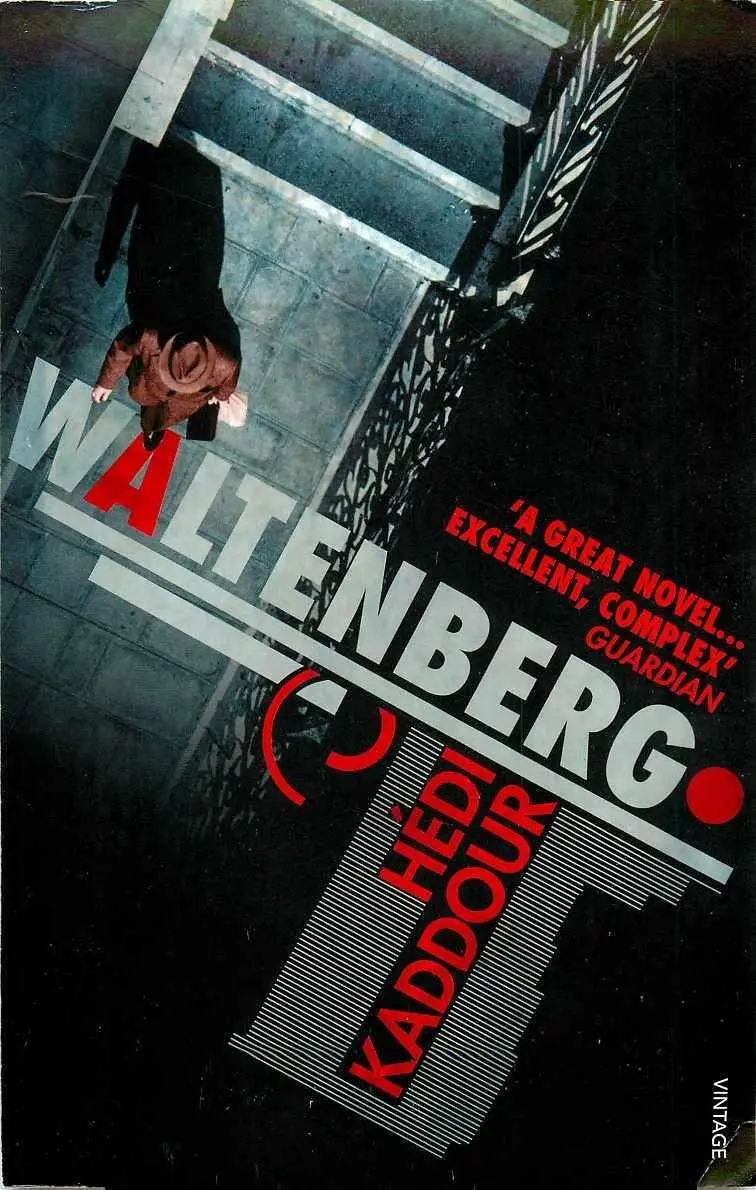
- Название:Waltenberg
- Автор:
- Издательство:Vintage
- Жанр:
- Год:2009
- ISBN:нет данных
- Рейтинг книги:3 / 5. Голосов: 1
-
Избранное:Добавить в избранное
- Отзывы:
-
Ваша оценка:
Waltenberg: краткое содержание, описание и аннотация
Предлагаем к чтению аннотацию, описание, краткое содержание или предисловие (зависит от того, что написал сам автор книги «Waltenberg»). Если вы не нашли необходимую информацию о книге — напишите в комментариях, мы постараемся отыскать её.
Waltenberg
Waltenberg — читать онлайн бесплатно полную книгу (весь текст) целиком
Ниже представлен текст книги, разбитый по страницам. Система сохранения места последней прочитанной страницы, позволяет с удобством читать онлайн бесплатно книгу «Waltenberg», без необходимости каждый раз заново искать на чём Вы остановились. Поставьте закладку, и сможете в любой момент перейти на страницу, на которой закончили чтение.
Интервал:
Закладка:
‘Not a night on the mountain, no berceuse for you, you don’t ski as well as a Swiss light infantryman.’
They resume their descent, they arrive at the Waldhaus when the sky has already turned cherry red, she turns to Lilstein:
‘You don’t ski that badly, actually we could have taken the detour across the Hirschkuh.’
He throws a snowball at her, she chases him, he falls, rolls over and over, he is on his back in the snow, she looks at him, standing over him, evening gathers, there’s no one about. They are there, listening to themselves breathe. She says:
‘Let’s go in, it’s going to turn cold.’
Frédérique’s daughter points to the woman in the woolly hat in the middle of the photo:
‘What happened to Erna? My mother lost track of her.’
‘It’s a long story, isn’t that right Max?’
‘She’s director of Merken’s study centre,’ says Max, ‘in Munich, conservative philosophy, whereas at Waltenberg she was very Red Front.’
Max looks around them:
‘You know we’ve got watchers all around us, Lilstein? Hobnail boots. Are they here on your account?’
‘There’s a fair chance they won’t do anything,’ says Lilstein.
‘What sort of chance?’
‘At least one in two.’
‘If they do nab you, it will present you with quite a dilemma; either they convert you and you become a CIA agent, or else you deny everything, then they’d be forced to send you back to the socialist paradise. And once there you’d be shot, young rebel, for attending a friend’s funeral without authorisation, for being soft-hearted.’
‘Still, a one in two chance of getting away with it, Max, maybe better, they’re shooting fewer and fewer people these days.’
‘Anyway, if you are suspect in the heart department, it will be a relief for the comrades in the GDR. Thriving are they? Will you tell me what you’re up to at the moment? A little interview on the sale, or should we say exchange, of dissidents for non-redeemable credits. And how do you get on these days with the Ivans?’
‘I’m not sure I know them any better than you do, Max.’
*
‘What is interesting,’ Lilstein had told you between two ritual mouthfuls of Linzer, ‘is that everyone will be there, in Grindisheim, you’ll bump into all kinds of acquaintances, people you met in Paris, Berne, Rome, even Singapore, not all of them, but a high proportion, from the diplomatic, journalists, intellectuals, fans of Herr Kappler, other writers, people who’ve come to be in the photos or because it would look peculiar if they didn’t turn up, and all those who’re called the Europeans, a lot of people, a whole way of life, there’ll also be large numbers of policemen, information-gathering agents, counterespionage people, the crème de la crème, it should be great fun, a mixture of the unflappable and the hysterical, it’ll be like a fair or a festival, a place to do deals in, it’s risky but you’ve got to be there.’
*
The CIA had also sent a large contingent to Grindisheim, along with one of its heads, rather young for his rank, name of Walker, pleasant and mild-mannered, in a battered tweed jacket with a rather loud handkerchief, orange and black, in the breast pocket. He never needed to repeat what he had to say. He’d confined himself to a role of observer by saying that the situation should stay under control. Concerning the suspect, there was nothing definite in any file but he wasn’t in the clear either.
‘That’s no good to us,’ the West German minister had commented. In the view of other Bonn officials, no action should be taken, a small chance that he really was a spy, but a very good chance of provoking a diplomatic incident which they wouldn’t be able to contain.
As time goes on in the large house in the centre of Grindisheim the tension mounts, they talk to each other with increasing frankness: ‘You don’t give a shit about creating a scandal, you want to nail him, spy or no spy that’s frankly not your problem, you just want to stir things up, you’re not interested in détente, you’re trying to scupper the agreements favouring détente, the new policy in the East and our good relationships with our allies.’
While they waited for a decision from the Chancellery, the watchers from the Federal Office for the Protection of the Constitution keep the subject under surveillance. In the main room of the house the PA continuously relayed messages from walkie-talkies, a whole network of them in a ring around the suspect and the people he talks to. He’d been given a code name, Blanchot, this gave rise to exchanges like ‘Big Loaf, Blanchot now with Granny’, Granny would say ‘understood, Blanchot under wraps’.
And in the cortege, men in mourning clothes or sometimes a woman, would take up positions according to instructions relayed by the command unit set up in the house.
A man has come up to Frédérique’s daughter, medium build, monkey-arse beard, he kissed the young woman, she begins to introduce him to Max.
‘Oh, I know Monsieur Poirgade very well,’ said Max.
A nod in Lilstein’s direction:
‘Monsieur Lilstein, import and export. Monsieur Poirgade, specialises in strategy. So, Poirgade, still with the Foreign Office?’
‘Still there, Monsieur Goffard.’
Poirgade and Frédérique’s daughter have moved off.
‘How amusing,’ said Max, ‘the Valréas baton picked up by the likes of Poirgade, when I say amusing ‘Are they engaged?’
‘At least that would explain why they made off like thieves. But Poirgade converted to women? Now that would be something. Still, why not? A pretty girl, and her address book full of the names of the old European aristocracy. You didn’t answer my question about the Ivans, young Lilstein.’
‘Look, Max!’
Lilstein’s hand points to the river, the sun is raising backlit mists all over the landscape, the movement of his hand is awkward, Lilstein turns away and looks at Max:
‘I don’t see Soviets very often these days, we’re getting old, Max, we are consulted less and less. I don’t read much from you at the moment either. Started keeping your distance? Thinking of retiring?’
Max’s reply is instant:
‘Never! I want to kick the bucket like Albert Londres, in harness, one day, in the middle of a story, a liner, a hole in the water, that’s the way a journalist should go, it would be grand!’
Max has just finished writing a long article about concentration camps, the collusion, the Nazis, and the collaborators who fled in 1945, their escape channels, the Italian monasteries, but he has problems, no one wants the piece, three chief editors already, all telling him:
‘Max, it’s too long, too detailed, time’s not right, everybody knows about this stuff, best wait for a more favourable moment, readers don’t give a damn.’
Max went back to the camps, Buchenwald, Birkenau, he also traced survivors, here and there throughout the world.
‘People who knew you, Misha, they were pleasant with me, an honest conversation, I talk to them so they trust me, when they trust me then they talk, good cordial talk, and rereading my notes I see they told me only what I’d said to them.’
One woman agreed to talk, she asked Max not to add any adjectives, there are the things they did to us, Monsieur Goffard, it was monstrous, they can be talked about but don’t write monstrous, just be direct, and then there are the things they made us do, for those the word is unspeakable and I’m not sure I’ll be able to speak to you about them, she tried to tell Max, she still felt guilty for a crust of bread she had hidden, for not offering her shoulder to someone on a forced march, for having stayed in the infirmary, she believed she owed her life to the death of others, she found great difficulty speaking, others told Max he’d be adding grist to the mill of Bolshevik propaganda, reminding the Poles about what the Germans had done to them or what they themselves didn’t want to know, a few photos, a few phrases, a row of women and kids on the left-hand page with an SS officer, and on the right a photo of the new Bundeswehr, the Soviets are very good at this type of montage, this isn’t the moment, it’s a very good piece about the Nazi camps, but later, when things have settled down, there are times, young Lilstein, when I can’t come up with any subject that’s suitable for the times.
Читать дальшеИнтервал:
Закладка:
Похожие книги на «Waltenberg»
Представляем Вашему вниманию похожие книги на «Waltenberg» списком для выбора. Мы отобрали схожую по названию и смыслу литературу в надежде предоставить читателям больше вариантов отыскать новые, интересные, ещё непрочитанные произведения.









Обсуждение, отзывы о книге «Waltenberg» и просто собственные мнения читателей. Оставьте ваши комментарии, напишите, что Вы думаете о произведении, его смысле или главных героях. Укажите что конкретно понравилось, а что нет, и почему Вы так считаете.