Hedi Kaddour - Waltenberg
Здесь есть возможность читать онлайн «Hedi Kaddour - Waltenberg» весь текст электронной книги совершенно бесплатно (целиком полную версию без сокращений). В некоторых случаях можно слушать аудио, скачать через торрент в формате fb2 и присутствует краткое содержание. Год выпуска: 2009, Издательство: Vintage, Жанр: Современная проза, на английском языке. Описание произведения, (предисловие) а так же отзывы посетителей доступны на портале библиотеки ЛибКат.
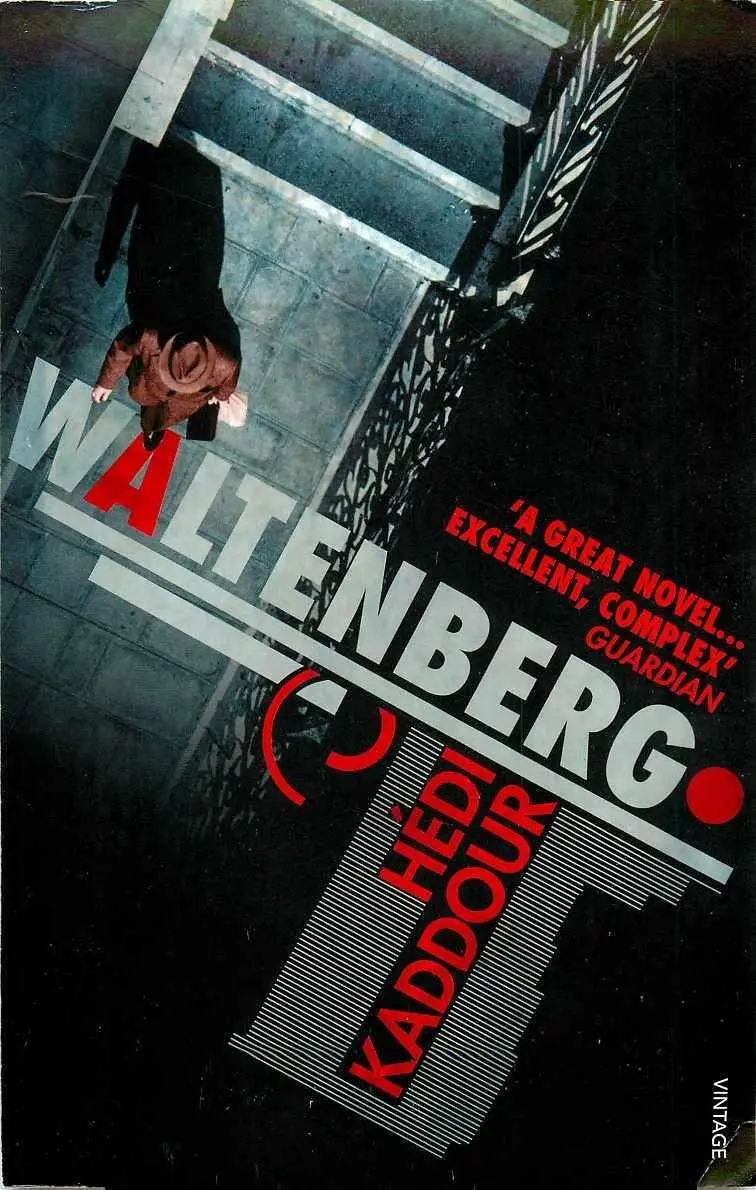
- Название:Waltenberg
- Автор:
- Издательство:Vintage
- Жанр:
- Год:2009
- ISBN:нет данных
- Рейтинг книги:3 / 5. Голосов: 1
-
Избранное:Добавить в избранное
- Отзывы:
-
Ваша оценка:
Waltenberg: краткое содержание, описание и аннотация
Предлагаем к чтению аннотацию, описание, краткое содержание или предисловие (зависит от того, что написал сам автор книги «Waltenberg»). Если вы не нашли необходимую информацию о книге — напишите в комментариях, мы постараемся отыскать её.
Waltenberg
Waltenberg — читать онлайн бесплатно полную книгу (весь текст) целиком
Ниже представлен текст книги, разбитый по страницам. Система сохранения места последней прочитанной страницы, позволяет с удобством читать онлайн бесплатно книгу «Waltenberg», без необходимости каждый раз заново искать на чём Вы остановились. Поставьте закладку, и сможете в любой момент перейти на страницу, на которой закончили чтение.
Интервал:
Закладка:
In the cortege, around Max and Lilstein are many people of their age, over fifty.
There are also some who are younger, often in twos. Readers? Max draws Lilstein’s attention to a woman, mourning suit, fair hair, fleshy, black toque, pearl-grey scarf, dark leather boots, she is alone and she is beautiful.
‘From some points of view, Hans would have really loved this cortege, do you fancy her, young man?’
‘She’s probably a representative of the association of thirty-year-old women who read novels. Max, she has no husband, reading is an exclusive occupation.’
‘Ah, sociology, but tell me, for you to have been allowed out of the GDR to come here, you must be a person of some standing?’
‘Or of no account whatsoever, Max, I never asked them for anything, they never asked me for anything.’
‘And at the frontier were the Vopos on strike?’
‘I came via Vienna and Switzerland, I don’t give a damn now, since he died I’ve been like you, sleepwalking.’
‘And your eyes are red-rimmed, young Lilstein.’
‘Two deaths in six months, Max, it’s hard, but at least I’ve been able to be here for this funeral.’
‘Yes, and Lena’s would have cost you dearer than the price of a wreath. If I’ve the strength I’ll tell you all, and also if you tell me a couple of things in confidence.’
*
Lilstein told you:
‘You know, young gentleman of France, in 1956 I’d arranged to meet Kappler, here, at Waltenberg, not in the Waldhaus, the Waldhaus was for you, the Kappler meeting was in the Konditorei, that same morning.’
You look at Lilstein, he takes his time to sit down, he casts an eye all round the large hotel lobby. Some distance away, a table is occupied by a group of about fifteen people. The men are dressed in cycling gear. They are very noisy.
‘They drive up here in Mercedes,’ says Lilstein, ‘with their bikes on the roof. They have a good meal and then they ride sedately down again. Their wives are left with the job of driving the cars back.’
He looks suddenly serious:
‘Authentic German athletes.’
He sits down, gives you an affectionate look:
‘You’ll see, when you’re at Grindisheim, a funeral is not an easy thing, all your failures come charging back to you at the double. In ’56, Kappler and I had known each other for more than a quarter of a century, since my first visit to Waltenberg in ’29. He knew a great many things about life, he smiled, he treated me like an equal, I was almost sixteen, he called me young Lilstein, and every time I call you young man, or young Frenchman, I recall Kappler’s voice.
‘In ’56, I tried to persuade him not to return to the Democratic Republic, I did not succeed, he returned, set up house at Rosmar, by the sea, he held out for a few years and then left again. He’d already tried it once late in ’46, it hadn’t worked. He didn’t know where to settle, he went backwards and forwards between East and West.’
He breaks off, gets up to greet the hôtelière who is heading for your table. You stand too. She has changed very little. She has put on weight but her face is unlined. Lilstein orders two glasses of white wine and two portions of Linzer, without even asking you. You sit down again, he resumes:
‘By the way, have you noticed? In the village they’ve knocked down the Konditorei; Waltenberg has changed a lot. The Waldhaus seminars are expanding, they’re going to set up a kind of forum for the great decision-makers of the Western world, they’re looking for willing helpers. You wouldn’t fancy making yourself indispensable to these people? They earn a lot of money but can’t write for toffee, it would make the perfect excuse for all your comings and goings, we might even be able to drop the guff about classified ads for bibliophiles.’
*
In the cortege, Max asked Lilstein if he knew the young woman with the pearl-grey scarf, she’s a few steps behind them, the face means nothing to Max but Lilstein isn’t so sure, might she look a little like Hans? A niece? A daughter?
‘He never had children,’ says Max, ‘nor any relatives of her age, he’d have told me, mistress maybe? I don’t see him committing suicide when he had a royal dish like her in his bed, or perhaps she’d stopped wanting to warm it for him.’
‘In that case, would she come to his funeral? Max, she really does look like him.’
‘No, the face is completely different.’
‘She looks at people just the way he did, as if she were constantly trying to force the world to give her a reason for living. In any case, she’s been looking this way as if she knew us, maybe I’m imagining things, Max, why suicide?’
‘Perhaps for the same reasons as Socrates?’
‘No one sentenced him to death, Max, on the contrary, we let him go back to the West as soon as he asked to go, we said nothing, he was immensely respected, a man who encapsulated his century.’
‘He wanted a lot more, young Lilstein, he wanted to see the GDR become the land he’d dreamed of, it was an awful lot to ask. He went back to you in ’56 as a gesture of provocation, at a time when you were committing your biggest foul-ups, and because he realised that the CLA. was using him, that famous association “for the freedom of culture”, he believed in it implicitly, a genuine realignment of intellectuals to further the freedom of culture, and then he found out that the meals, plane tickets, hotel bills, everything was paid for by the CIA, that didn’t bother people like Spender or Koestler, but it stuck in Hans’s craw, he slammed the door, went back to Rosmar, at the worst possible time, Budapest, to provoke, and also to punish himself, and it didn’t work, so he went back to the West, and when he’d got sick of you, of both you and them, he threw his death in your faces.’
‘Moral rigidity, that’s why he killed himself,’ says Lilstein, ‘because he couldn’t forgive himself for dreaming his dreams.’
‘Or because he’d run out of the kind of books he could read before going to sleep, or couldn’t remember the name of a friend he was at school with, or because some dog kept barking all night, or because he realised that he was beginning to sound querulous, like me, all those days when you could have worked but instead you let them be filled by stupid things, you can kill yourself for that, because you’ve had enough of living with your own remains, or because of something entirely trivial, you’re making me cross with your questions, he almost died once of a broken heart, in 1914, and he also wanted to kill himself when he left his house at Rosmar the first time, in 1934.’
‘We let him have it back, fully restored.’
‘Yes, but you stayed exactly the same, I mean your wonderful regime. Last year you and yours rode into Czechoslovakia to do a spot more restoration work, that also made his day.’
An argument carried on in an undertone in the nerve-centre of the Federal Office for the Protection of the Constitution: some wanted to lift the suspect immediately, in the middle of the funeral, must know how to make the most of an opportunity, the fact that it was a funeral will soon be forgotten, the fact that they got him will be all that’s remembered, I tell you the target’s a heavyweight, it’s been going on for years and years, we hold him responsible for the denunciation and deaths of dozens of our agents in the East, no, I’m not exaggerating, and even if those deaths were indirect, he is still objectively complicit in a number of murders because he undermines our position. Actually, replies a voice, I think it’s funny that you should use the word objectively the way the people on the other side do.
And the man who said objectively and has just attracted the remark about the people on the other side turns pale, because he is in fact from the other side.
Читать дальшеИнтервал:
Закладка:
Похожие книги на «Waltenberg»
Представляем Вашему вниманию похожие книги на «Waltenberg» списком для выбора. Мы отобрали схожую по названию и смыслу литературу в надежде предоставить читателям больше вариантов отыскать новые, интересные, ещё непрочитанные произведения.








Обсуждение, отзывы о книге «Waltenberg» и просто собственные мнения читателей. Оставьте ваши комментарии, напишите, что Вы думаете о произведении, его смысле или главных героях. Укажите что конкретно понравилось, а что нет, и почему Вы так считаете.