Hedi Kaddour - Waltenberg
Здесь есть возможность читать онлайн «Hedi Kaddour - Waltenberg» весь текст электронной книги совершенно бесплатно (целиком полную версию без сокращений). В некоторых случаях можно слушать аудио, скачать через торрент в формате fb2 и присутствует краткое содержание. Год выпуска: 2009, Издательство: Vintage, Жанр: Современная проза, на английском языке. Описание произведения, (предисловие) а так же отзывы посетителей доступны на портале библиотеки ЛибКат.
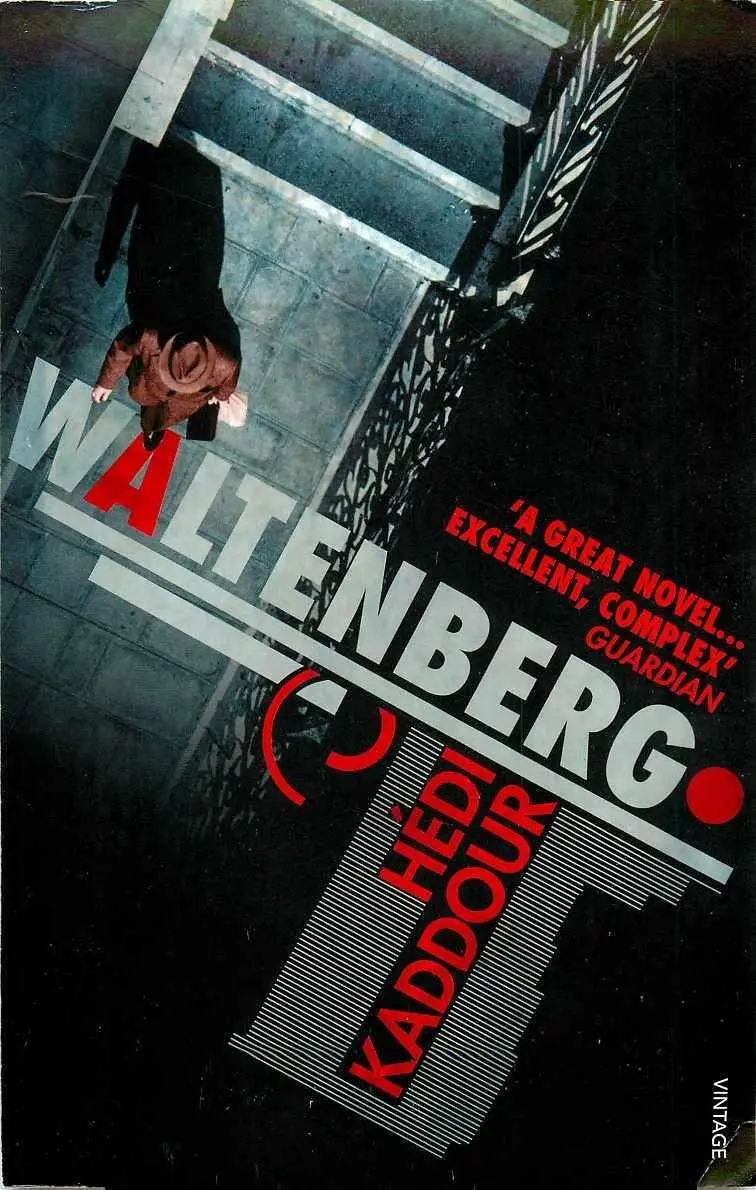
- Название:Waltenberg
- Автор:
- Издательство:Vintage
- Жанр:
- Год:2009
- ISBN:нет данных
- Рейтинг книги:3 / 5. Голосов: 1
-
Избранное:Добавить в избранное
- Отзывы:
-
Ваша оценка:
Waltenberg: краткое содержание, описание и аннотация
Предлагаем к чтению аннотацию, описание, краткое содержание или предисловие (зависит от того, что написал сам автор книги «Waltenberg»). Если вы не нашли необходимую информацию о книге — напишите в комментариях, мы постараемся отыскать её.
Waltenberg
Waltenberg — читать онлайн бесплатно полную книгу (весь текст) целиком
Ниже представлен текст книги, разбитый по страницам. Система сохранения места последней прочитанной страницы, позволяет с удобством читать онлайн бесплатно книгу «Waltenberg», без необходимости каждый раз заново искать на чём Вы остановились. Поставьте закладку, и сможете в любой момент перейти на страницу, на которой закончили чтение.
Интервал:
Закладка:
Lilstein leans towards Max, in a quick whisper, voice cautious or broken, or ironic:
‘Hans never recovered from his experience of real socialism.’
‘If anyone wrote anything like that in your amazing Democratic Republic, young Lilstein, they’d shunt him off to prison, you are a stirrer, you should be someone really important over there, you know what he left on his bedside table? A quote from a poet: “Do not let me into your Paradise, there I should suffer torment more terrible than anything Hell has to offer, I choose Hell, Hell is all I want.” Obviously you know the poet is the one who penned your national, democratic, people’s anthem, no less?’
‘And now, Max, the Germans are going to fight to find out who it really was that Monsieur Kappler did his talking to, “your Paradise”, I can just imagine the next few weeks in the papers.’
‘Is it true what they say? that you are now in charge of inter-German relations? that is, of selling your dissidents to the Federal Republic? Give me an interview on that subject, and I’ll tell you about Lena’s funeral?’
‘Max! A truce, a few hours!’
The young woman with the fair hair and the pearl-grey scarf has come up to Max and Lilstein:
‘Good morning, my mother isn’t well, she asked me to come instead of her, she knew you’d be here, I have a photo, you’re Max and you’re Lilstein, my mother told me: “You’ll have no trouble recognising Max Goffard, he’ll be more or less the same as in the photo, the one with the big ears, the other one is the tall adolescent who’s standing next to them, he must be about fifty-five now, he’ll certainly be there, by Max’s side.” I’m Frédérique’s daughter. My mother also said: “Give them my love, you must stick close to them, it’ll stop them getting into arguments during the funeral.” That’s all.’
There are five of them in the photo, skis on feet, plus-fours, Norwegian sweaters, Max is wearing a Basque beret, Hans and Lilstein have caps, Lena a soldier’s beret, Erna a woolly hat with a pompon, behind them the façade of a hotel, an immense double chalet, with flowers in the windows.
‘Period kitsch,’ says Max, ‘it was Frédérique who took the photo outside the Waldhaus, I took one too, of Frédérique and the other four, have you got it with you?’
‘I’ve seen it, my mother wouldn’t let me have it, she admitted that you were a crazy gang, all in love with each other and none of you knowing how you stood with the others. She also said the men weren’t very good at it.’
‘Young Lilstein lost sleep over it.’
‘Max wanted to move from Erna to Frédérique,’ said Lilstein with a smile, ‘and one evening there he was back in the corridor, all the doors closed, actually, not all of them: he had the luck for which Monsieur Kappler and I would have given our eye-teeth, but he didn’t seem any the happier for it.’
‘That’s not strictly true,’ said Max, ‘but you can understand why we were crazy: what beautiful creatures those women are! What became of your mother, young woman? You know, to us she is immortal.’
Lilstein does not listen to the answer the young woman gives Max, he is at Waltenberg with those beautiful skiing girls, forty years ago, with one of them, the slope of a coomb, a breath-stopping diagonal, having got up at four in the morning, there were about ten of them, I’d never have missed a session of the Seminar but she wanted to trek across country on skis, she had nothing else to do, she was there for the closing recital, needed fresh air, it was the guide who’d come and roused Lilstein, a cross-country with her, a whole day, as I got up I banged my forehead, under the eaves, a room with twin beds, thick waxed beam, just above the bed.
Max is launched into a series of wild questions, did your mother ever talk about Maynes? Or Merken? Splendid fellows! And that young philosopher who looked like a Boy Scout, Hans and I used to pull his leg, a young Catholic, took Madame Merken’s fancy, name of Moncel, nowadays he’s a very big name in theatre.
‘My mother knows less about him than I do,’ the young woman said, ‘I often bump into him, I’m an actress.’
She said this gravely, for Max’s benefit she adds:
‘I know Monsieur Kappler didn’t like the theatre.’
‘It wasn’t quite that, young lady, he was suspicious of theatre, for instance he couldn’t stand Lorenzaccio .’
Lilstein knocked his head, when you get out of bed in this room under the eaves you always forget to pay attention, afterwards he took more care, I got ready keeping out of that beam’s way, I went out, forgot my scarf, I went back up to my room, retrieved my scarf from the bed, I took care and I still knocked the back of my neck as I stood up, my brother grunted, without waking up, departure four thirty, still dark, three-quarter moon, incipient headache, headaches always made me slow-witted, I’m going to be with her for a whole day and already I’ve got a headache.
Max and Hans had been to see Lorenzaccio in Paris in the early fifties, as they came out afterwards Hans looked unhappily at Max, he hadn’t been able to stand the play.
‘And it was the Théâtre National Populaire too,’ resumes Max, ‘Gérard Philipe, Ivernel, big production, full house, enthusiastic audience, not at all the regular Comédie Française audience, more tweedy people, often with no tie, mix of middle-class, civil servants, clerks, workmen in their Sunday best like in Russia, a lot of young people, either in couples or in groups.’
Forefinger towards the face of Frédérique’s daughter:
‘You know, young lady, when people talk about the theatre-goer they are mistaken, the theatre-goer is never in the singular, but almost invariably a couple, formed, or about to be formed, or to split, who knows? The basic unit is the couple and what happens within the couple who go to the theatre, you act for couples, Hans and I were an exception, a pair of old friends. I told him to watch the couples, all those attractive women, I’d have preferred seats in the balcony so I could look down their cleavages, he said I had a dirty mind. He found the play very peculiar.’
Skis and sticks over one shoulder, hat pulled down, measured pace, two by two along the road, the clunk of steel-tipped boots, some use a ski-stick like a walking-stick, after half an hour they leave the road, a path already flattened in the snow, overlaid by a few centimetres of fresh frosted powder, the bracing air in the chest, the trachea, Lena is chatting to one of the young French girls, Lilstein is just behind her with an Englishman, the hardest part for me is to stay in contact with London, the Englishman is as tall as Lilstein, thick lips, hair already receding though he’s not yet forty, it’s Maynes, he makes a point of seeking Lilstein out, the path winds up gently towards the first col, they are making towards Davos, the guide has a sing-song voice, ‘not so fast’, ‘not so fast’, he stops two men who have gone on ahead, ‘halt!’, he tells them to go to the back, puts Lena and Lilstein at the front, with himself just behind them, it’s the first time Lilstein has ever wanted to kiss a mountain guide, he tells the guide our English friends are not best pleased, a woman has been put at the head of the group.
‘The theatre is a tough business to be in, Monsieur Goffard,’ says the young woman. ‘You shouldn’t speak ill of it.’
Max decides that she looks like her mother, the same modulation, low and categorical, in the young woman’s voice. She adds:
‘I prefer Monsieur Moncel even if he’s unfair about what I act in, with his Figaro reviews.’
‘Oh, he’s turned over a new leaf,’ says Max, ‘you were there for The Cherry Orchard, last year? Or when he went to see The Days of the Commune ? When the curtain comes down, the audience gives the Berliner Ensemble a standing ovation, La Weigel comes down off the stage, imagine, she’s there in the stalls, with Aragon, Elsa, the leading communists, the left-wing intellectuals. In the centre aisle a silence settles from the back, a man walks forward slowly, on the arm of a friend, a woman, he goes up to La Wiegel, it’s Moncel greeting Brecht’s widow! And everyone smiles at him, that too was a great spectacle.’
Читать дальшеИнтервал:
Закладка:
Похожие книги на «Waltenberg»
Представляем Вашему вниманию похожие книги на «Waltenberg» списком для выбора. Мы отобрали схожую по названию и смыслу литературу в надежде предоставить читателям больше вариантов отыскать новые, интересные, ещё непрочитанные произведения.









Обсуждение, отзывы о книге «Waltenberg» и просто собственные мнения читателей. Оставьте ваши комментарии, напишите, что Вы думаете о произведении, его смысле или главных героях. Укажите что конкретно понравилось, а что нет, и почему Вы так считаете.