Hedi Kaddour - Waltenberg
Здесь есть возможность читать онлайн «Hedi Kaddour - Waltenberg» весь текст электронной книги совершенно бесплатно (целиком полную версию без сокращений). В некоторых случаях можно слушать аудио, скачать через торрент в формате fb2 и присутствует краткое содержание. Год выпуска: 2009, Издательство: Vintage, Жанр: Современная проза, на английском языке. Описание произведения, (предисловие) а так же отзывы посетителей доступны на портале библиотеки ЛибКат.
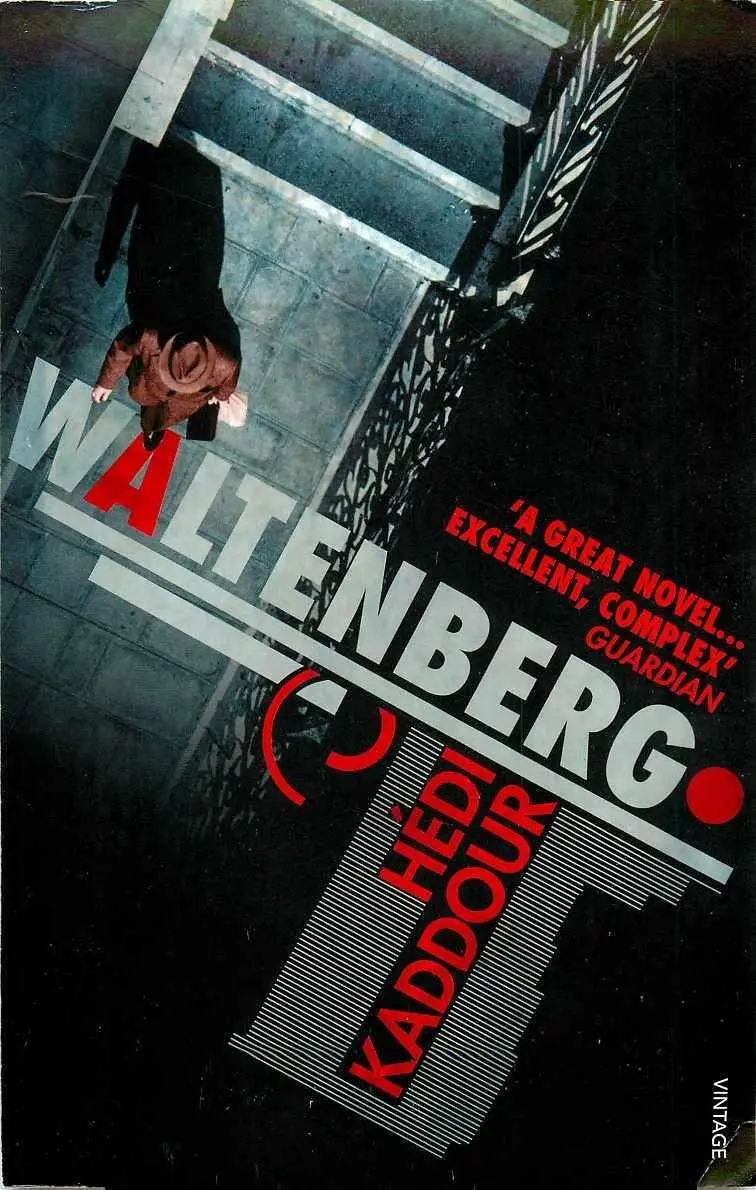
- Название:Waltenberg
- Автор:
- Издательство:Vintage
- Жанр:
- Год:2009
- ISBN:нет данных
- Рейтинг книги:3 / 5. Голосов: 1
-
Избранное:Добавить в избранное
- Отзывы:
-
Ваша оценка:
Waltenberg: краткое содержание, описание и аннотация
Предлагаем к чтению аннотацию, описание, краткое содержание или предисловие (зависит от того, что написал сам автор книги «Waltenberg»). Если вы не нашли необходимую информацию о книге — напишите в комментариях, мы постараемся отыскать её.
Waltenberg
Waltenberg — читать онлайн бесплатно полную книгу (весь текст) целиком
Ниже представлен текст книги, разбитый по страницам. Система сохранения места последней прочитанной страницы, позволяет с удобством читать онлайн бесплатно книгу «Waltenberg», без необходимости каждый раз заново искать на чём Вы остановились. Поставьте закладку, и сможете в любой момент перейти на страницу, на которой закончили чтение.
Интервал:
Закладка:
In which Henri de Vèze reads aloud a passage from Le Grand Meaulnes.
In which we learn what transpired long ago at Waltenberg between a boar and a young woman.
In which Lilstein warns you against the fine sentiments which can be so prejudicial to good moles.
One day the self stops spinning its own tales.
What sort of people ever get over it?
Charles JulietGrindisheim, October 1969
Someone has taken Max by the elbow, Max said nothing to begin with; they walked on together for a moment without speaking, in the main body of the funeral cortege. Sometimes, at a bend, they could see shiny reflections of the brass band, the black plumes of the horses. ‘You’re late, young Lilstein, where were you?’
‘Forty years ago your face was exactly as it is now, Max, you haven’t changed a bit.’
‘The face of a man who’d seen it all, young Lilstein, and you had the face of an angel, an opinionated boy and as beautiful as the angel who says no, you stand very straight, cheeks smooth, still very presentable in your fifties, and you take me by the elbow as Hans used to when we went for walks, I don’t mention it to make you let go of me, today I need the familiar gesture, is the friendly arm a new custom in the GDR?’
‘It’s the first time I’ve ever done it, I saw Monsieur Kappler do it when you used to walk together.’
‘He did it for my sake, to be more French than the French, I rather liked it, you still call him Monsieur Kappler?’
‘I admired you, at Waltenberg I didn’t agree with either of you but I admired you, you knew so many things, a whole culture…’
‘… which had been through Hell, four years of Hell, you saw Hans again, after his final return to Rosmar in ’56?’
‘Two or three times.’
‘That all? Doubtless what you call “negative talks”?’
‘He fulminated, Max.’
‘Like you when you were sixteen, young Lilstein. And eighteen months later you helped him return to the West?’
‘I told whoever it might have concerned that we shouldn’t try to stop him.’
‘And whoever it did concern muttered into his little goatee, wiped his little glasses, and said in that famous reedy voice so sei es, let it be so. What sort of angel are you, young Lilstein, that whoever it concerned should, in your presence, start talking like God the Father in the land of atheists?’
‘When Monsieur Kappler said he’d like to come back to us, the general secretary of the Politburo himself gave the green light, I said it was a mistake, that it wouldn’t be long before he was off again, and when he did want to go…’
‘You performed your self-criticism, comrade, as if the green light had been given by you personally.’
‘Max, how well you know us.’
‘It’s age, young man, as you know, I’ve seen it all. You took the blame for the Politburo secretariat’s mistake, I mean the mistake made by whoever it might have concerned, and then, as your reward, whoever it did concern allowed Hans to leave.’
‘We couldn’t have done otherwise.’
‘And in any case whoever it did or his little comrades would have made you carry the can, which you would have found more painful than a session of self-criticism.’
Early that morning, at seven o’clock, in a large house in the centre of Grindisheim, the Director of the Federal Office for the Protection of the Constitution had reminded them of the orders: during the funeral itself they were only to keep the subject under surveillance, surround him, but in no circumstances approach him, it was not yet known if these would be the final instructions, that decision would be taken at the top, in Bonn, in the Chancellery, we have thirty agents on the ground, I don’t want a shambles, Colonel Sebald will be coordinating all services, orders can come only from him and he will get his orders from me alone.
Around Max and Lilstein, the crowd walks slowly behind the antique hearse and the trade union brass band, banners, tubas, drums, and clarinettes. The band started with funeral marches, Chopin and Verdi, but as they proceeded the music became less gloomy, faces lifted. The procession was strung out along the tarmac road which rose in broad loops through the vine slopes of Grindisheim.
‘What sort of wine do they make in these parts, Max?’
‘Don’t you know? A German who doesn’t recognise wine on the vine bang in the middle of the Rhineland only a few days before they start the grape harvest?’
‘If it’s in a glass I can manage, but otherwise I’m a bit of a dunce.’
‘The leaves, my boy, the leaves: fleshy, ridged, veins like the veins on the back of the hand, pubescent, fruit very round, brown and russet blemishes, thick skin.’
‘Max, you learned that by heart.’
‘Just what you need! And the soil, young Lilstein, want me to recite that too?’
Max’s forefinger aimed at the sky, his eye on the head of the procession:
‘Listen to that, unusual, eh?’
The band is playing ‘Lilli Marlene’, very slow tempo.
Hans had written: ‘Since it is out of the question for me to make my final journey along the sea front of my native town, I wish my funeral to be held at Grindisheim, in the vineyard between the Rhine and the forest, I ask for a band, flowers, wreaths, sunshine and would like people to drink.’ The council chose the route, from the town hall to the cemetery, taking a wide detour through the terraces of the vine slopes with a few deviations into the forest higher up.
‘A sandy soil,’ says Lilstein.
‘A good point, and that gives?’
A wine tending to the sweet, as the guidebooks say, Max.’
‘Two good points. And if you give a certain clever little fungus its head?’
‘I’m not illiterate either, but that said, I prefer a wine that’s more sinewy.’
‘In that case we’ll have to go higher up. Hans would have approved of my feeding you little titbits about life and wine, like in the good old days. The ground just before you get to the forest, not so much loess and more slate, more wind, more cold, less mist, more sun, and more risk as well, but a definite flintiness in the back of the throat, just enough bitterness to make you want to drink more, you know, like life!’
Max and Lilstein are halfway up the slope, Lilstein looks down, then up towards the top: the crowd is now strung out over nearly a kilometre. The terraces are retained by walls of pink sandstone, large blocks mellowed by the late-afternoon sun. At some bends in the road there are fountains; Max has seen one date, 1853. With a gesture of his hand, he points to the cortege:
‘You know the old saying, young Lilstein, “One eye to weep, the other to measure the length of the cortege”?’
‘And the name of the grape, Max?’
‘Noblesse, poor yield, virile on the tongue, young Lilstein, one of my great memories is of a bottle I drank in 1922 at Weimar with Rathenau; he asked me to communicate to the French that by threatening to occupy the Ruhr we were handing Germany over to the extreme right, Riesling, young Lilstein, the best! Hans would never have agreed to his coffin being paraded past second-rate vines!’
As far as the Director of the Federal Office for the Protection of the Constitution was concerned, if someone in the cortege showed hostility of any sort towards the suspect, that person would have to be discreetly neutralised:
‘We must be the only ones able to create problems for the suspect.
He will doubtless exchange greetings with a number of people, do not become distracted by trying to identify them, that’s the job of another team; if a well-known member of parliament shakes his hand, don’t start thinking that the member of parliament in question is a traitor, our man has known many people for a very long time, and the traitor is perhaps somebody who pretends not to know him or knows that we know that they know each other and so goes out of his way to say hello to him, or even someone who knows that he is innocent and will say hello because he knows that our suspicions will fall first on those who keep their distance, and if you think we’re going to have problems working all this out, then you’ve understood where our target’s strength lies.’
Читать дальшеИнтервал:
Закладка:
Похожие книги на «Waltenberg»
Представляем Вашему вниманию похожие книги на «Waltenberg» списком для выбора. Мы отобрали схожую по названию и смыслу литературу в надежде предоставить читателям больше вариантов отыскать новые, интересные, ещё непрочитанные произведения.









Обсуждение, отзывы о книге «Waltenberg» и просто собственные мнения читателей. Оставьте ваши комментарии, напишите, что Вы думаете о произведении, его смысле или главных героях. Укажите что конкретно понравилось, а что нет, и почему Вы так считаете.