Hedi Kaddour - Waltenberg
Здесь есть возможность читать онлайн «Hedi Kaddour - Waltenberg» весь текст электронной книги совершенно бесплатно (целиком полную версию без сокращений). В некоторых случаях можно слушать аудио, скачать через торрент в формате fb2 и присутствует краткое содержание. Год выпуска: 2009, Издательство: Vintage, Жанр: Современная проза, на английском языке. Описание произведения, (предисловие) а так же отзывы посетителей доступны на портале библиотеки ЛибКат.
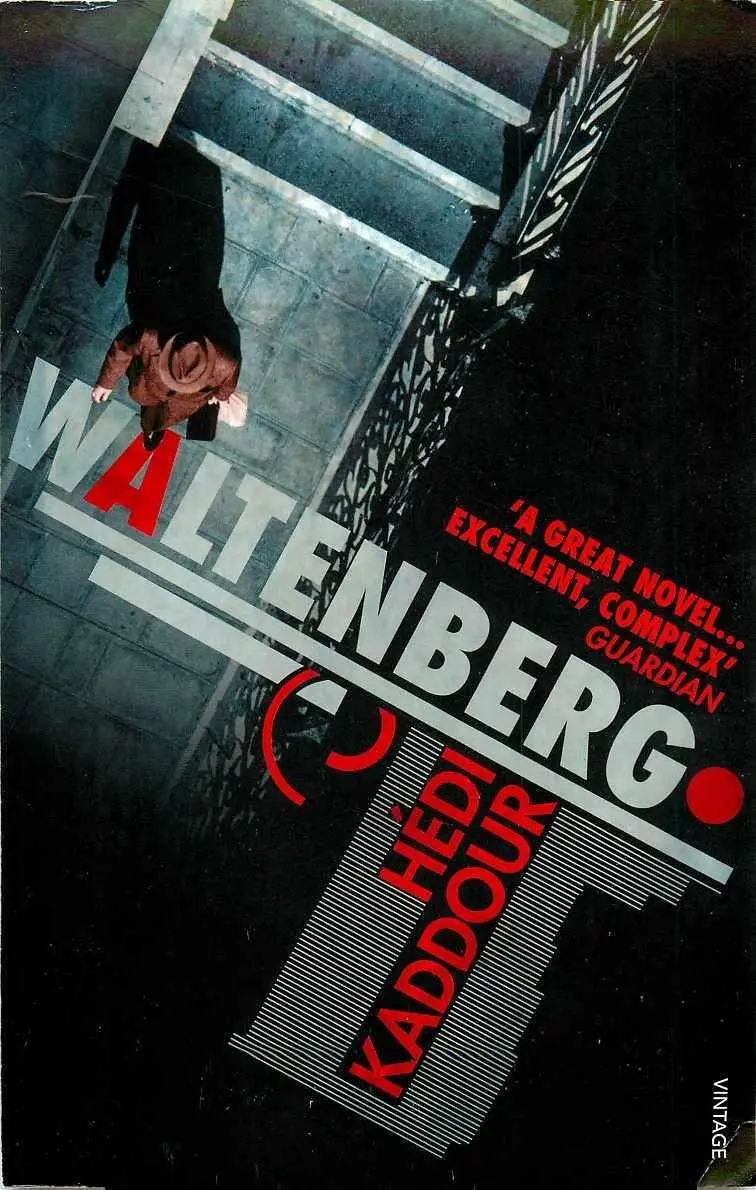
- Название:Waltenberg
- Автор:
- Издательство:Vintage
- Жанр:
- Год:2009
- ISBN:нет данных
- Рейтинг книги:3 / 5. Голосов: 1
-
Избранное:Добавить в избранное
- Отзывы:
-
Ваша оценка:
Waltenberg: краткое содержание, описание и аннотация
Предлагаем к чтению аннотацию, описание, краткое содержание или предисловие (зависит от того, что написал сам автор книги «Waltenberg»). Если вы не нашли необходимую информацию о книге — напишите в комментариях, мы постараемся отыскать её.
Waltenberg
Waltenberg — читать онлайн бесплатно полную книгу (весь текст) целиком
Ниже представлен текст книги, разбитый по страницам. Система сохранения места последней прочитанной страницы, позволяет с удобством читать онлайн бесплатно книгу «Waltenberg», без необходимости каждый раз заново искать на чём Вы остановились. Поставьте закладку, и сможете в любой момент перейти на страницу, на которой закончили чтение.
Интервал:
Закладка:
‘I pretended to be taking a breather, among the children there was a little girl called Frédérique.’
‘Loving and obedient?’
‘Frédérique, I would like to have a little girl by you.’
‘Hans, you know very well that motherhood interests young women not at all, or at best inadvertently.’
‘I’d settle for that, I’ll give anything, at once!’
‘So that you can demand everything?’
‘Are you going to remain single? Grow old alone?’
‘I intend to wait, Hans, we’re all waiting for Mr Right, like Natasha at the ball in War and Peace , we wait and suddenly he’s coming straight towards us, the handsomest of men, the most heroic, he comes to us and he asks us to dance, then he is killed in the war and we turn into ladies of property and live on our country estates, I shan’t have the patience to wait, I shall anticipate events.’
‘You’re going to travel?’
‘No, I think travel narrows the mind, but I do want to get away from my mother, work, read, write, walk, fight, weep, make the running, apparently you always find a man in the end.’
‘Who are you looking for?’
‘A teddy bear, Hans, a teddy bear, like before, he has to be strong as an ox, and artistic, but intelligent with it, I’ve no idea what he should look like, like you? Or nobody? Or he’ll just be someone I’ll miss where he’s not around.’
Further along, snatches of salon conversation are heard it seems that women belong to the men who love them most, true, but the man who loves a woman the most puts himself at her mercy and eventually suffers for it, there’s no getting away from that.
Max has observed that Lilstein looked unhappy, he said if you want to be loved you must hold your cards closer to your chest, it only takes one look and they can tell you’re a novice.
And Lilstein got systematically drunk, German-style, on French cognac, in a corner, without stirring, with reflections gyrating in the mirrors, sudden fascinations with the shape of a wineglass, a stool, words which stay inside, words which have diminishing success in getting themselves into the correct order.
Hans caught up again with Michael Lilstein at three in the morning, on the edge of coma, he took him back to his room, helped him be sick, at eleven a.m. Lilstein woke up, feeling nauseous, headache, dizziness in waves, he’s wearing only his pyjama top, remembers nothing, by his bedside Hans Kappler is fast asleep in a deep armchair, he must have stayed to keep an eye on him, Lilstein doesn’t dare get out of bed, he can’t see any of his clothes within arm’s reach.
*
The day they all left Max accompanied Hans down into the valley, as far as Klosters station. Max feared his every word. Hans said:
‘You mustn’t think I blame you, you’re more unhappy than I am.’ Hans is referring to what happened the evening before last, but he doesn’t mention Lena’s name, he says again:
‘Don’t think I blame you.’
He adds:
‘We must go on working together on our plans.’
Max didn’t understand what Hans meant by plans, Hans reminded him of another conversation, the one in the Jardin du Luxembourg, the sets and props for your novel, The Madwoman , you know you promised I could do them, the story of the one-legged man and his wife, you didn’t finish it that day in the gardens, you broke off to tell me about Ensor and some young writer, you told me the woman had been cared for, in ’17 she’d protested against the war and she’d been given treatment.
‘You’ll like it,’ said Max, ‘a very interesting episode, very scientific.’ A chance to talk about something other than the night before last: with a bit of luck Max might be able to spin it out until the train pulled in without any mention of him and Lena cropping up, 1917, a very scientific episode, the wife of a hero shouting denunciations of the war, she couldn’t be anything except mad, the most modern treatments were used, first the milk diet but there was a shortage of dairy products, balneotherapy, diuretics, sedatives, a lot of sedatives, then her temperature was artificially raised and she was given long, invigorating cold showers, it made her shake uncontrollably, they tied her down, she still shook, there was no improvement, so they proceeded to the final weapon, faradism, the latest thing in war psychiatry, electricity, her husband told me all about it, I never really understood if he was for or against, in any case he was invited to be present at the treatments, the purpose was to counter a neurosis of the ego, hence the resort to electric energy to free her by shocks from her negative ego, persuasive faradism.
According to the doctors, this was a way of linking modern technology to the permanent moral battle, the basic idea was the assumption that the patient maintained a degree of lucidity, a latent cooperative will which would be awakened by means of drastic therapy, they would have to eradicate her anxiety and emotional fragility, the egotistical emotivity which had taken possession of her when she had first seen her husband with one leg missing, a disorienting, self-destructive hyperactivity, Hans, what do you think of the vocabulary? It was a symptom of psychopathy but not inaccessible to aggressive treatment.
The whole of French medical opinion fought hard to force upon Hélène de Vèze the ability to turn back into the honourable wife of a soldier who had fought with valour, she had sought refuge in illness, she had to be made to reject illness, make it so horrible that she would have only one thought in her head, to escape the bright sparks on the ends of the copper wires, the sound of the discharges just before the treatments began, the humming of the coils, the thick copper and metal bracelets, the urging of the doctors, the pain.
Diseased organs are subjected to the same treatment, in cases of localised paralysis, current is applied to the hand which has stopped moving, the patient screams, proof that his hand exists, therefore that it can be made to function, he can reacquire as function what he feels as pain, and for the head, in mental cases, it’s the same, she had lost the feeling of victory and honour, the fact that she was Swiss made her less tough, same treatment.
It took four strong nuns to hold her down, she had fled the war into illness, four, five brawny nuns and a medic to force her to flee from illness and back to health, the faradaic current delivered by a pencil of copper wires, it was played over skin, belly, thighs, nails of hands and feet, not town electricity, too strong, too risky, they used a Faraday machine, progressive current, but it had to be forcibly felt, it had to shock, the patient should not be allowed time to get used to it.
She was a neurotic, all neurotics dissemble, they dissemble without knowing that they’re doing it, that is what their illness is, it was crucial not to allow the illness to erect defences against faradisation, hence the sizzling offensive, no warning given, as in war, surprise, shock, the woman held out for a long time, a foreigner, she was even used in demonstrations given to other patients, those awaiting the treatment, she resisted.
One of the doctors said that her resistance came from a deep-seated displacement of the maternal instinct. She had no child, she had no country, she could not have any feeling of a motherland; and at the same time she looked on her husband as her child, now the husband was a defender of the motherland, she blamed her husband for defending the wrong mother.
He was an extremely subtle doctor, the wrong mother, so they decided to apply the electric beams to areolas and nipples, not easy to take such a decision, it needed sturdy sisters who volunteered to restrain her, the question was raised whether male patients waiting their turn should be allowed to watch, in the end they were made to attend these sessions, that’s right, three sessions, results were inconclusive.
Читать дальшеИнтервал:
Закладка:
Похожие книги на «Waltenberg»
Представляем Вашему вниманию похожие книги на «Waltenberg» списком для выбора. Мы отобрали схожую по названию и смыслу литературу в надежде предоставить читателям больше вариантов отыскать новые, интересные, ещё непрочитанные произведения.











Обсуждение, отзывы о книге «Waltenberg» и просто собственные мнения читателей. Оставьте ваши комментарии, напишите, что Вы думаете о произведении, его смысле или главных героях. Укажите что конкретно понравилось, а что нет, и почему Вы так считаете.