Hedi Kaddour - Waltenberg
Здесь есть возможность читать онлайн «Hedi Kaddour - Waltenberg» весь текст электронной книги совершенно бесплатно (целиком полную версию без сокращений). В некоторых случаях можно слушать аудио, скачать через торрент в формате fb2 и присутствует краткое содержание. Год выпуска: 2009, Издательство: Vintage, Жанр: Современная проза, на английском языке. Описание произведения, (предисловие) а так же отзывы посетителей доступны на портале библиотеки ЛибКат.
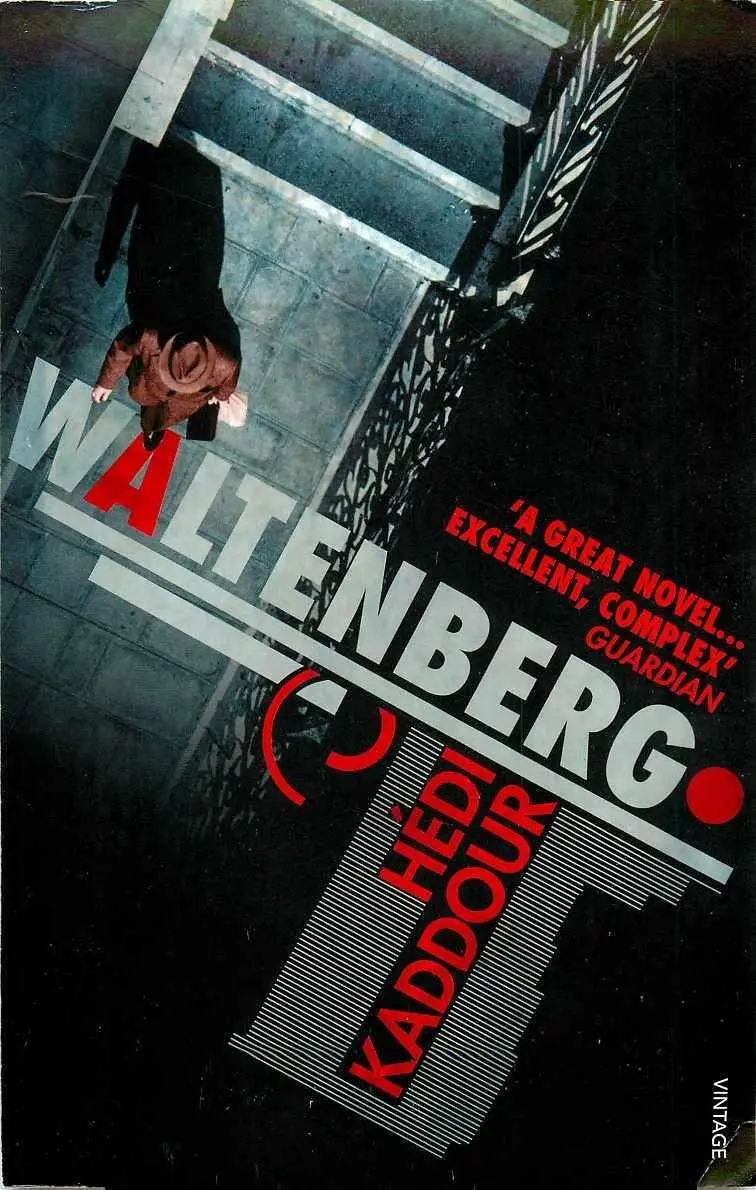
- Название:Waltenberg
- Автор:
- Издательство:Vintage
- Жанр:
- Год:2009
- ISBN:нет данных
- Рейтинг книги:3 / 5. Голосов: 1
-
Избранное:Добавить в избранное
- Отзывы:
-
Ваша оценка:
Waltenberg: краткое содержание, описание и аннотация
Предлагаем к чтению аннотацию, описание, краткое содержание или предисловие (зависит от того, что написал сам автор книги «Waltenberg»). Если вы не нашли необходимую информацию о книге — напишите в комментариях, мы постараемся отыскать её.
Waltenberg
Waltenberg — читать онлайн бесплатно полную книгу (весь текст) целиком
Ниже представлен текст книги, разбитый по страницам. Система сохранения места последней прочитанной страницы, позволяет с удобством читать онлайн бесплатно книгу «Waltenberg», без необходимости каждый раз заново искать на чём Вы остановились. Поставьте закладку, и сможете в любой момент перейти на страницу, на которой закончили чтение.
Интервал:
Закладка:
Regel’s friends were happy with this first round of voting, and in the second round, the final vote, they would all unite behind the name of Regel, and Regel would be elected.
Except that faculty rules did not allow for a second ballot, there could be a second ballot only if there were more than three candidates, a first round to test the water, a second round to select three names, but there were only three candidates, therefore the first vote was the sole and final vote, rules are rules, as everyone knew, except that Regel’s friends had forgotten it in their fine haste to raise the profile of their promising young colleague, Regel was not the victim of highhanded interference by the Minister, they called the Minister on the telephone and the Minister very legally refused them permission to organise a second ballot.
It was the stupidity of Regel’s friends which made Regel lose, he was the victim of the genial goodwill of his friends.
It’s what is called a three-cornered election, it cannot be made public, because the deliberations take place behind closed doors, but that was the truth of it, and it was that which sent Regel off his head, caused him to dance a jig in public, the young woman told Merken that it won’t stop his, Merken’s, enemies laying the blame at his door, or telling him that he’d connived with the brutal way Regel was treated, no, it’s just words, people who don’t like Merken have had their words ready for a long time, whatever he might do, Merken and young Frédérique are on one of the terraces on the north side of the Waldhaus, the discussion is animated.
They are alone. Where is Frédérique’s mother this morning? Surely not with Regel? No, but she is in a shaky state too, all through today’s discussions Madame de Valréas has behaved as she used to when she suspected her daughter of stealing her bras, she has not let her out of her sight, someone must have said something to her, Merken does not like idle whispers, at the back of them there’s always somebody but never anybody, a monster, with eyes proliferating cancerously by the million, millions of viper’s tongues and one singular vocal cord, gossip-mongering, ah what misery!
Frédérique protests, is it enough to make her miserable?
‘My dear Frédérique, it’s not for philosophy to save anyone, it does not have to take over the role of Christ after retrieving it from some ancient shelf, philosophy is there to return us to nothingness, everything else, lust for life … will to shape the future … just fairy stories.’
Frédérique resists:
‘That’s no reason to let ourselves get discouraged.’
Eulogy of despondency by Professor Merken, it gives us the strength to throw the inkwell at our looking glass, Merken wishes to withdraw, to return to the lounge, Frédérique detains him, she hadn’t wanted to make the professor angry, she can’t understand all this business about despondency, Merken remains on the terrace, all thought is despondency, the moment we cease behaving like dogs we become sad.
‘Did she make a scene?’
‘Frédérique!’
‘Did my mother make a scene?’
‘That’s not the point…’
‘Why “sad”? It’s insulting! Dogs? The bitch salutes you, Professor! Go sleep with the bitch!’
Frédérique leaving the terrace, departing in disarray, Merken catches up with her.
‘Frédérique, the situation…’
‘You’ve got nothing to lose! Everyone assumes I’m still running after you, you are sad, it’s all over, let me be!’
‘It’s not those people who are at issue, it’s deeper than that.’
‘I don’t like this sadness of yours, it’s out to get me.’
Frédérique is mistaken if she thinks it’s that easy, Frédérique will not listen to reason:
‘Picture it, Sir comes back from his walk, Sir meets up with his sweet Frédérique and Sir’s sad! What a shame!’
The poor man begs Frédérique not to shout, in vain.
‘Sad are you? When a man is sad it’s because he’s found another woman, you’re sad because you’re forcing yourself to stay here with me, you don’t like me making a noise any more, you didn’t always say that!’
‘Please, Gretchen, don’t shout, there’s no one else.’
Each of them says ‘no one’, Frédérique so that she can go on yelling, her anger feeding off her anger, and the poor man also says ‘no one’, he means his life in general, without anyone else but Frédérique.
‘Don’t shout, I need you.’
‘He needs me and he’s sad, though you’re really quite attractive with those creased trousers and the feather in your hat, come here, nearer, there’s nothing to be sad about, your cheeks are red, a pleasing mix of melancholy and the heat, and you’re unhappy, come along now, let’s have this little chagrin out in the open, let’s wrap it up in ribbon for the lady, let’s take a walk under the trees, the cool Alpine air blowing on your little chagrin.’
‘Frédérique, we’re becoming ridiculous.’
It’s Merken’s turn to try to walk off the terrace. Then Frédérique: ‘Has the Professor really got no more bullets left to shoot?’
‘Don’t be crude.’
‘And who started calling the other person “my little beaver”?’
She has shouted the last word.
It’s at this exact moment that La Valréas came out on to the terrace, she understood.
‘Frédérique, you will never convert the professor to your silly nonsense, stop pestering him with your revolution and stop shouting, young women nowadays are insufferable, they want everything, and they want it straight away, has she been annoying you?’
‘Certainly not, my dear.’
‘We were talking about Thought, mama, and about the sadness of the tasks it requires us to perform.’
Chapter 12. 1969, Twice as Strong
In which Lilstein tries to worm out of Max secrets of his private life.
In which the net tightens around the spy who is there at the funeral.
In which the man named Walker comes up with a muscular plan to capture the spy.
In which Max pieces together the life of his friend Lena in the years between the two wars and during a short period after it.
In which Lilstein again warns you to beware of noble sentiments.
In which a clear idea emerges of Lena’s talents as a singer of Lieder.
The girl that he loved
Walked into the night
With the man she loved
Victor Hugo, ‘La Fête chez Thérèse’Grindisheim, October 1969
In the hotel at Grindisheim, Max and Lilstein sit in a secluded corner, next to a sideboard on which the head waiter has just carefully set down a large bilberry tart, sprinkling it with sugar from an antique-style sugar-shaker, crystal cut-glass sides and silver spout, the dark surface of the sideboard, the silver, the transparencies of the glass, the ochre rim of the tart dish, the dark red of the bilberries, the golden sheen of the shortcrust pastry. Lilstein:
‘That tart might just reconcile me with this place, I loathe this new fashion for putting neon and plastic everywhere, they tear out old wood panelling to make way for it, you remember the Waldhaus, Max, the lounge-cum-library, Hans loved it, he used to arrange to meet Frédérique there, the french windows opened on to the terrace, the lake, the mountains, with the coffee and bilberry tart on low tables, they hadn’t started serving Linzer at that stage, the bilberries covered with icing sugar in the corner by the glass door, wooden floor, Hungarian marquetry, the settees, the worn club chairs, instead of all this formica rubbish!’
‘Misha, in those days you called it bourgeois comfort, you wanted to destroy it, you despised teak-lined walls, the engravings of William Tell, the wire-fronted bookcases full of Balzac, Goethe and Dickens.’
Читать дальшеИнтервал:
Закладка:
Похожие книги на «Waltenberg»
Представляем Вашему вниманию похожие книги на «Waltenberg» списком для выбора. Мы отобрали схожую по названию и смыслу литературу в надежде предоставить читателям больше вариантов отыскать новые, интересные, ещё непрочитанные произведения.









Обсуждение, отзывы о книге «Waltenberg» и просто собственные мнения читателей. Оставьте ваши комментарии, напишите, что Вы думаете о произведении, его смысле или главных героях. Укажите что конкретно понравилось, а что нет, и почему Вы так считаете.