Hedi Kaddour - Waltenberg
Здесь есть возможность читать онлайн «Hedi Kaddour - Waltenberg» весь текст электронной книги совершенно бесплатно (целиком полную версию без сокращений). В некоторых случаях можно слушать аудио, скачать через торрент в формате fb2 и присутствует краткое содержание. Год выпуска: 2009, Издательство: Vintage, Жанр: Современная проза, на английском языке. Описание произведения, (предисловие) а так же отзывы посетителей доступны на портале библиотеки ЛибКат.
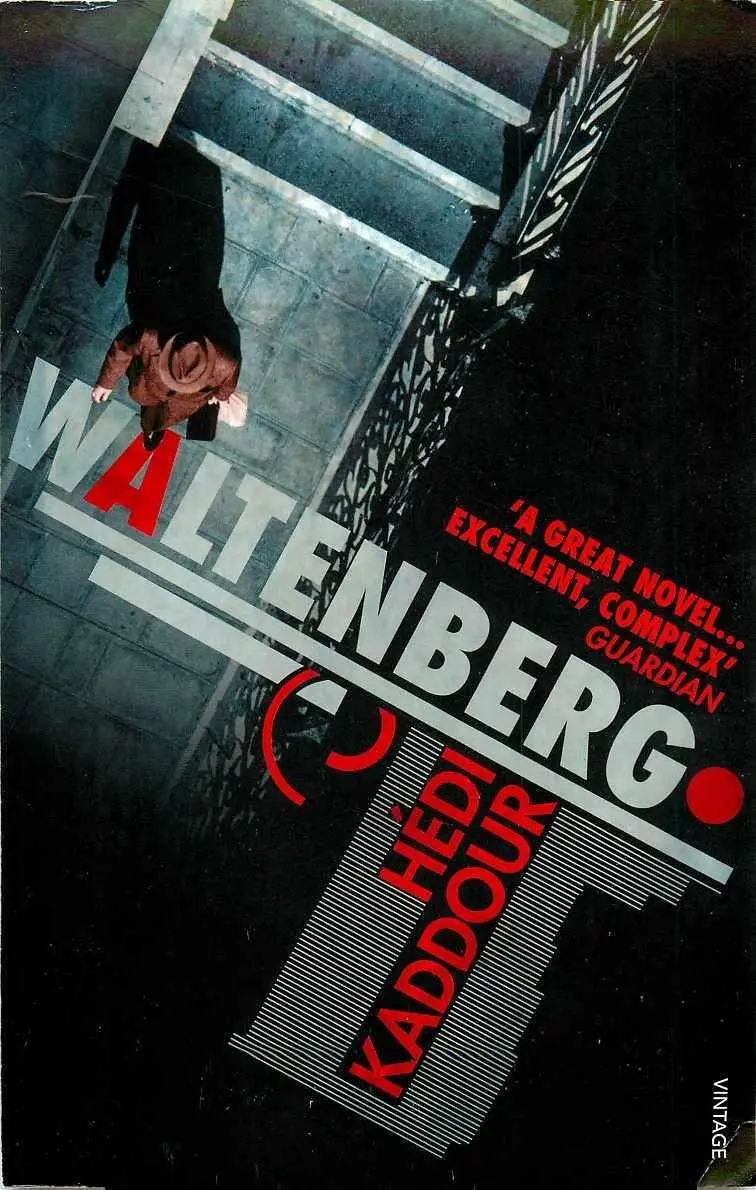
- Название:Waltenberg
- Автор:
- Издательство:Vintage
- Жанр:
- Год:2009
- ISBN:нет данных
- Рейтинг книги:3 / 5. Голосов: 1
-
Избранное:Добавить в избранное
- Отзывы:
-
Ваша оценка:
Waltenberg: краткое содержание, описание и аннотация
Предлагаем к чтению аннотацию, описание, краткое содержание или предисловие (зависит от того, что написал сам автор книги «Waltenberg»). Если вы не нашли необходимую информацию о книге — напишите в комментариях, мы постараемся отыскать её.
Waltenberg
Waltenberg — читать онлайн бесплатно полную книгу (весь текст) целиком
Ниже представлен текст книги, разбитый по страницам. Система сохранения места последней прочитанной страницы, позволяет с удобством читать онлайн бесплатно книгу «Waltenberg», без необходимости каждый раз заново искать на чём Вы остановились. Поставьте закладку, и сможете в любой момент перейти на страницу, на которой закончили чтение.
Интервал:
Закладка:
Then the same funeral director said:
‘I now call upon Monsieur Max Goffard.’
Three days earlier, the notary had summoned Max:
‘Your name is expressly mentioned in connection with one of your friend’s last wishes, Herr Kappler requested that you read out a brief passage from the Scenes from the Life of a Good-for-Nothing, he specifies, I quote, “Once Max has stopped protesting you might add that the passage from Eichendorff is to be read in German, he’ll like that very much, from the time we first met all our discussion were in French, now it’ll be my turn to listen to him speaking German and have a good laugh.” Herr Kappler only wants these two readings, Monsieur de Vèze and you.’
*
At the Waldhaus, Lilstein’s face is calm, you have both finished your portions of tart at the same time, like an old married couple. He gives you a kindly look, then he stares out at the cable cars and the village below the hotel, those large pale eyes come back to you, he yawns, a little laugh:
‘The advantage of big funerals like Herr Kappler’s on Friday next is that they allow the expression of deep feelings. In our line of business, that’s refreshing, I shall be burying one of my two greatest friends and I will have every right to be red-eyed, whereas in normal circumstances we must unfortunately avoid showing fine sentiments, our fondest hopes, gush can lead to disaster, I mean to the catastrophic dashing of illusions, I don’t want you to end up like that, I don’t like it when you’re discouraged, but I surely do not want you going in for displays of fine feelings, speaking for myself I have learned to show my feelings only at funerals, you can’t do our kind of work with an artichoke heart. Shall we order more wine?’
You don’t really want to take up Lilstein’s suggestion. White wine doesn’t particularly agree with you. But you’re feeling anxious. You say yes. Lilstein raises one hand, a young Waldhaus waitress arrives with the new drinks, sets them down, leaves, you want to look at her legs, Lilstein watches you, you reach out your hand to your glass to avoid catching his eye, good legs that waitress, you turn back to face Lilstein, his eye has not wavered, he smiles.
‘You must be wary of the finer feelings, young man. A woman I knew before the war, Austrian, fought against Nazism, old aristocratic family, became an administrator for the Soviets, she had fine feelings, one May Day she’d paraded in Red Square, tears in her eyes, a Marxist with an artichoke heart, you’ll see if I’m right, she worked for Red Army intelligence.
‘One day in 1937 or ’38, in Frankfurt, the leader of her network showed her a letter from Voroshilov, that’s right, already the absolute head of the Red Army, a handwritten letter, this happened by a small lake, in a public park, to the casual observer a women is reading a moving letter, she reads it, reads it again, tears in her eyes, her network boss averts his gaze modestly, a fine letter, “I wanted particularly to thank you in the name of the USSR and comrade Stalin for all the sacrifices you are making, for your devotion to the cause of proletarian internationalism and the cradle of socialism”, her network leader speaks to her again, must tear up the letter, small pieces, for the waters of the lake and the little ducks who at first think they are bits of bread and then swim off, dive and show their backsides.
‘But the big ducks haven’t moved, they can tell the difference between bread and bits of paper, Voroshilov in person, “I wanted particularly to thank you.” A few years later she comes face to face with Voroshilov, tears in her eyes, she thanks him in turn, that letter meant a great deal at a very difficult time, it was nothing, comrade, nothing out of the ordinary, oh but it was, those were very difficult days, Voroshilov has no wish to be reminded of those days in detail, but she carries on regardless, that letter was worth ten times more to me than all the gold in the whole wide world, it was the beating heart of the proletariat. Voroshilov smiles at her, she senses that he hasn’t understood, the penny drops, the letter was a sham, she cursed herself for being so gullible, Voroshilov turned on his heel, she can’t even lay the blame on her network head, he had been shot, so let’s be wary of fine feelings, even if they count for a lot, can you see yourself, in tears, on the little bridge just outside the village, holding a letter from my minister, the bastard?
‘Who was the network head shot by? Guess. As to her, she stopped doing good work, and she disappeared. I don’t want you to end up like that.’
*
When the funeral was over, collation in Grindisheim’s main hotel, Max and Lilstein have ordered tea, they have looked round for Frédérique’s daughter, haven’t located her.
‘Her mother was a very impressive girl,’ says Lilstein, ‘Hans was genuinely in love with her. She wanted to fall in love but didn’t want to make it the big thing in her life. Was she really Merken’s mistress?’
As far as Max was concerned, that was all tittle-tattle, people had it in for Madame de Valréas, for being so close to the Merkens, Huns, she’d entrusted Frédérique to them for a year at Heidelberg, La Valréas was official mistress to the great philosopher, people made the most of this to stoke up a scandal, Merken sleeping with the mother and the daughter, gossip.
At the time Frédérique scares the professor, but only when philosophy is involved, she can recite back to him an article of his, twenty pages, two hours after reading it, Max and Lilstein remember, superb intellectual equipment, very passionate tone of voice, very much at home in the 1929 Waldhaus Seminar, an idea a minute, she believed Merken was the greatest philosopher of his time, she held it against him for competing for a job with Regel, the Berlin chair, she would have preferred him to be above that sort of thing, at Waltenberg she spoke to him about reactions to the news from Berlin, on the whole people don’t care for this sort of wrangling over a job, they don’t like it to be talked about, they defend Regel who is made ill by the idea of not getting the job, they even say he’s more or less gone mad, Merken says it’s nothing to do with him, Frédérique knows that a majority of the professors prefer Regel, by appointing Merken the Minister would be ignoring this majority.
Merken doesn’t like the idea that one of his students should be so outspoken, this fuss over the job is trumped-up, and if Regel really is in as bad a way as people say it’s not because the Minister is about to do something high-handed, people like Regel have a permanent need to stand up to high-handed behaviour, it doesn’t mean they’re mad, they just like it, in fact Regel can’t say what really happened during the professors’ meeting which was held behind closed doors, that would be wrong with regard both to the institution and faculty rules, but truth still exists even if it cannot be made public, and the truth is that Regel did not come top of the list for the Berlin job, he ought by rights to have had the biggest vote but he only came second, it’s nothing to do with Merken, the fact is Regel’s friends were split, they wanted to use the ballot as a marker for another colleague, younger and more left-wing and very deserving.
It was very useful to have a junior colleague’s name put on this prestigious shortlist, yes, the result of the vote is published, but not the minutes of the discussion, not the line of argument developed by each member of the committee, so there was a third thief, the supporters of Regel split and some voted for the third thief.
One of Regel’s best friends, a political friend and holiday companion, made out a very solid case in favour of the deserving junior colleague, a member of the same union as he himself belonged to, but it was another of Regel’s best friends who felt it was his duty to report all this to Regel over the phone the moment the meeting was over, no one actually wanted to elect the young colleague, it was merely to put down a marker, so it is quite true to say that the majority was favourable to Regel, Merken knew this, he merely put his name forward as a matter of principle, so that there’d be a debate about ideas under cover of the election, but Regel’s friends split, the vote gave third place to the third thief, with Regel second and Merken heading the poll, although the majority were not for him.
Читать дальшеИнтервал:
Закладка:
Похожие книги на «Waltenberg»
Представляем Вашему вниманию похожие книги на «Waltenberg» списком для выбора. Мы отобрали схожую по названию и смыслу литературу в надежде предоставить читателям больше вариантов отыскать новые, интересные, ещё непрочитанные произведения.









Обсуждение, отзывы о книге «Waltenberg» и просто собственные мнения читателей. Оставьте ваши комментарии, напишите, что Вы думаете о произведении, его смысле или главных героях. Укажите что конкретно понравилось, а что нет, и почему Вы так считаете.