Abby Geni - The Lightkeepers
Здесь есть возможность читать онлайн «Abby Geni - The Lightkeepers» весь текст электронной книги совершенно бесплатно (целиком полную версию без сокращений). В некоторых случаях можно слушать аудио, скачать через торрент в формате fb2 и присутствует краткое содержание. Год выпуска: 2015, ISBN: 2015, Издательство: Counterpoint, Жанр: Современная проза, на английском языке. Описание произведения, (предисловие) а так же отзывы посетителей доступны на портале библиотеки ЛибКат.
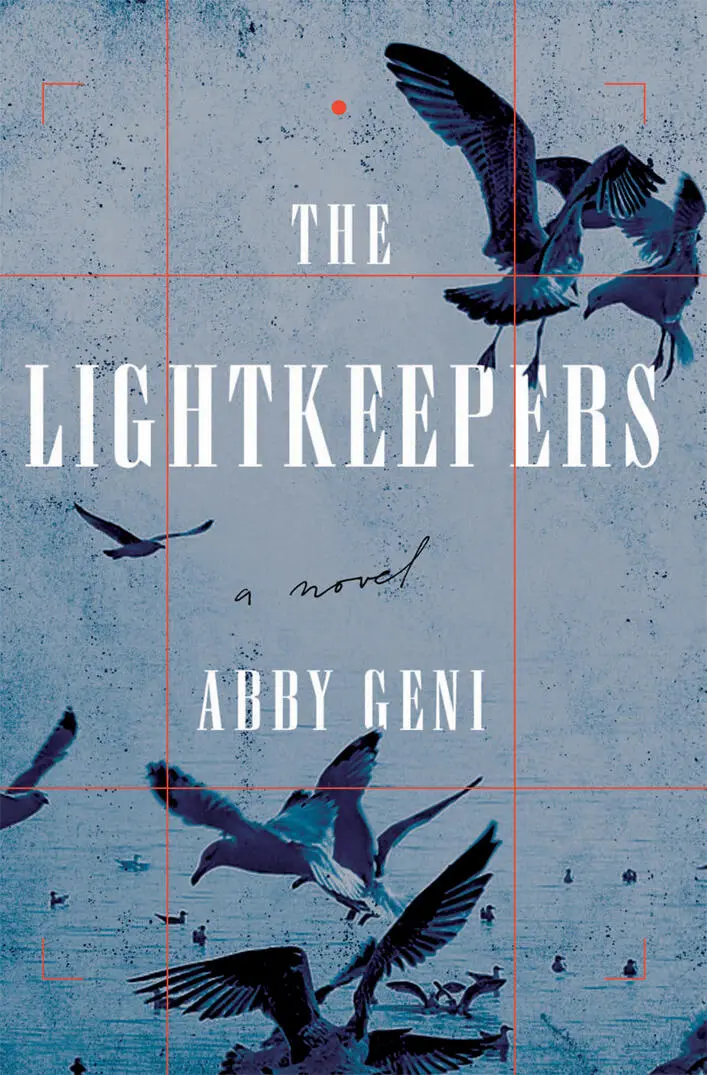
- Название:The Lightkeepers
- Автор:
- Издательство:Counterpoint
- Жанр:
- Год:2015
- ISBN:9781619027497
- Рейтинг книги:4 / 5. Голосов: 1
-
Избранное:Добавить в избранное
- Отзывы:
-
Ваша оценка:
The Lightkeepers: краткое содержание, описание и аннотация
Предлагаем к чтению аннотацию, описание, краткое содержание или предисловие (зависит от того, что написал сам автор книги «The Lightkeepers»). Если вы не нашли необходимую информацию о книге — напишите в комментариях, мы постараемся отыскать её.
, we follow Miranda, a nature photographer who travels to the Farallon Islands, an exotic and dangerous archipelago off the coast of California, for a one-year residency capturing the landscape. Her only companions are the scientists studying there, odd and quirky refugees from the mainland living in rustic conditions; they document the fish populations around the island, the bold trio of sharks called the Sisters that hunt the surrounding waters, and the overwhelming bird population who, at times, create the need to wear hard hats as protection from their attacks.
Shortly after her arrival, Miranda is assaulted by one of the inhabitants of the islands. A few days later, her assailant is found dead, perhaps the result of an accident. As the novel unfolds, Miranda gives witness to the natural wonders of this special place as she grapples with what has happened to her and deepens her connection (and her suspicions) to her companions, while falling under the thrall of the legends of the place nicknamed “the Islands of the Dead.” And when more violence occurs, each member of this strange community falls under suspicion.
The Lightkeepers
The Lightkeepers — читать онлайн бесплатно полную книгу (весь текст) целиком
Ниже представлен текст книги, разбитый по страницам. Система сохранения места последней прочитанной страницы, позволяет с удобством читать онлайн бесплатно книгу «The Lightkeepers», без необходимости каждый раз заново искать на чём Вы остановились. Поставьте закладку, и сможете в любой момент перейти на страницу, на которой закончили чтение.
Интервал:
Закладка:
He has tracked the romantic entanglement of Mick and Forest — its inception, its increasing fervor, their midnight trysts in the coast guard house. He has reported the date and duration of each assignation. He has written about their coded interactions in public. Galen has kept watch over all of them. He has recorded the progression of Lucy’s grief after the death of her lover. He has transcribed the details of Mick’s friendship with Miranda, Miranda’s friendship with Charlene. As a scientist, he makes sure that his notes are businesslike. No conjecture or emotion. Only actions and behavior, which can be quantified and documented for posterity.
August 12: Miranda injured. Camera broken beyond repair.
August 28: Lucy scuba dives.
October 3: Mick and Forest in the coast guard house for four hours.
Galen is a biologist. His work is a sacred trust: the study of life in all its forms. On the islands, life flourishes in a unique way, untempered and unrestrained. This is true for the people as well as the animals. Galen does not differentiate between his fellow scientists and the creatures they study. Observation and noninterference are the biologist’s central creed. He chronicles the behavior of the sharks and whales, the birds and seals, the biologists and interns. He never intervenes.
But Miranda, the mouse girl — she was something different. Something new. She had a quality he had never before observed. Once he asked her, “What is your nature, Miranda?” He asked it in hopes of provoking or startling her. But there was nothing, no reaction. Her eyes remained as flat as seal stones.
Galen leafs back through the pages. His private notebook is a green jewel, leather-bound. The past year has seen a lot of activity. In his hands, the book falls open naturally to a well-worn date in November. Galen has turned to this page often over the last few weeks and months. Too often, perhaps.
November 5: Miranda raped by Andrew.
He frowns. He runs his finger over the line of his own script. Then he flips forward to the note printed just a few days afterward.
November 8: Andrew murdered by Miranda.
Galen leans back in his chair. He lets his eyes slip closed as the scene plays out in his mind again. He has often considered the night Andrew died. He saw it happen, of course. He sees everything that happens here.
It was a foggy evening. Galen awoke to the sound of the front door. First Miranda left the cabin. Then Andrew left the cabin. Galen watched as the confrontation occurred.
An altercation. An argument. Raised voices, carried away on the wind, lost in the clatter of the sea. The fog. The slippery coast. Observing them, Galen could not hear what was being said. He did not need to. Andrew wanted more. Galen could see this in the boy’s posture. Andrew reached for her, groping toward her. His expression was mocking. He thought Miranda would be vulnerable on her own.
But Galen knew better. A wounded animal is the most dangerous kind. Miranda had been attacked once already. Galen took in her stance — her shoulders back, her chin lifted. Andrew did not try to run. He did not see the impact coming. He was unaware of the seal stone in Miranda’s pocket, carried with her always, heavy and certain. He did not know what Galen knew.
A crack to the head. A spray of blood. A splash.
Galen remembers it all. He remembers it well. Andrew’s hat fell off when the blow was struck. His ankle was broken, his lungs filling with water. Miranda stood on the shore for a while, watching the corpse floating on the tide. The shock seemed to leave her immobile. She needed a few minutes to gather her wits. Eventually she bent down and picked up the hat. She wrapped the bloody stone inside it. She took them both home and hid them, like a dog burying a bone. She tucked the evidence underneath her bed, a place she left infrequently over the ensuing weeks.
November 9: Andrew’s body discovered.
November 10: Corpse placed in cold storage in S.F., awaiting autopsy.
November 14: Mick and Forest in the coast guard house for two hours.
Galen sips his tea. The steam fills his lungs with a pleasant odor of cinnamon. Outside, the fog has begun to thin out. Rippling and pale, it seems delicate, like lace or cheesecloth. The air is different too — fresher, brighter, more awake. Galen can always feel it when the weather starts to change. In an hour or two, the sky will be clear, the sea smooth, the islands drenched in light.
After Andrew’s murder, Galen took no action. He waited. During the weeks that followed the boy’s death, he watched Miranda from a distance, in the manner of a hawk in flight, miles above the ground, unnoticed by its prey, peering down with telescopic vision. He tracked and recorded everything she did. He slept lightly, waking in the night, listening for her footfalls. He paid attention to her demeanor during meals, during conversations. He became aware of her constant letter-writing. He noticed the fact that these missives appeared to go unsent. Now, of course, after some investigation, he knows they were letters to a departed parent.
Gradually he began to understand Miranda’s behavior. She did not remember what she had done. The quarrel on the shore, the seal stone, the blow to Andrew’s head, the body in the black surf — all of it was gone.
Galen has had some experience with this phenomenon. The animal mind is one without memory. He has researched it. Most animals are able to recall the short term — the past few seconds or minutes — but anything further back is released from the brain like a balloon on the breeze. Animals retain impressions, rather than stories. They may avoid a dangerous place by instinct. They may shy away from an object that is associated with trauma. But they do not recall specific events. A shark, having devoured a seal, will swim away with a clean conscience, no echo of blood or pain. A gull might kill its own chick in a fit of fury, then mourn when discovering the little body later, unaware of its own guilt, lost in its own forgetting.
Perhaps Miranda has a similar mind. Perhaps that is her nature.
Galen turns his gaze to the window. The horizon is rumpled by waves. A few birds circle Saddle Rock. In some ways, he is sorry that Miranda has left the islands. He is sorry to have lost such a unique and compelling specimen.
He remembers when he first began to perceive a change in her gait. It was just a few weeks into her pregnancy. The signs of the transformation were subtle then, but Galen was watching closely enough to notice them. Her stride slowed. There was a new sway in her hips. Her skin seemed different too — younger, tauter. She developed the occasional spate of acne along her jaw.
Galen digested this information. He made sure he was not imagining things. Miranda’s waistline had not yet changed, but she was already a bit weary, a bit unfocused. Her hair thickened. Her posture began to shift. The pigmentation of her face changed, a mask of freckled brown overtaking her cheeks. Miranda seemed as unaware of these changes as she had been of her violence toward Andrew. So Galen kept track of what she herself was incapable of seeing. As usual, it fell to him to serve as the observant eye, the dispassionate heart, the long memory of the islands.
December 15: Miranda demonstrating increased appetite.
January 1: Miranda having nausea. She asked at breakfast if there was a stomach bug going around. No one answered.
January 28: Miranda kept indoors by fatigue.
Galen takes a final sip of tea, draining the dregs. He heads to the window, looking out at the hazy sky. Clouds stream above the horizon in layers of uneven density. Their mismatched hues echo off the water, the reflection further complicated by the choppy surf. The seascape is a quilt made of a thousand scraps of blue. Galen draws in a deep, contented breath. In a few minutes he will summon Forest. They will board the Janus . They will head out on Shark Watch. He feels certain the Sisters are out there. He holds his private notebook against his chest.
Читать дальшеИнтервал:
Закладка:
Похожие книги на «The Lightkeepers»
Представляем Вашему вниманию похожие книги на «The Lightkeepers» списком для выбора. Мы отобрали схожую по названию и смыслу литературу в надежде предоставить читателям больше вариантов отыскать новые, интересные, ещё непрочитанные произведения.











Обсуждение, отзывы о книге «The Lightkeepers» и просто собственные мнения читателей. Оставьте ваши комментарии, напишите, что Вы думаете о произведении, его смысле или главных героях. Укажите что конкретно понравилось, а что нет, и почему Вы так считаете.