Abby Geni - The Lightkeepers
Здесь есть возможность читать онлайн «Abby Geni - The Lightkeepers» весь текст электронной книги совершенно бесплатно (целиком полную версию без сокращений). В некоторых случаях можно слушать аудио, скачать через торрент в формате fb2 и присутствует краткое содержание. Год выпуска: 2015, ISBN: 2015, Издательство: Counterpoint, Жанр: Современная проза, на английском языке. Описание произведения, (предисловие) а так же отзывы посетителей доступны на портале библиотеки ЛибКат.
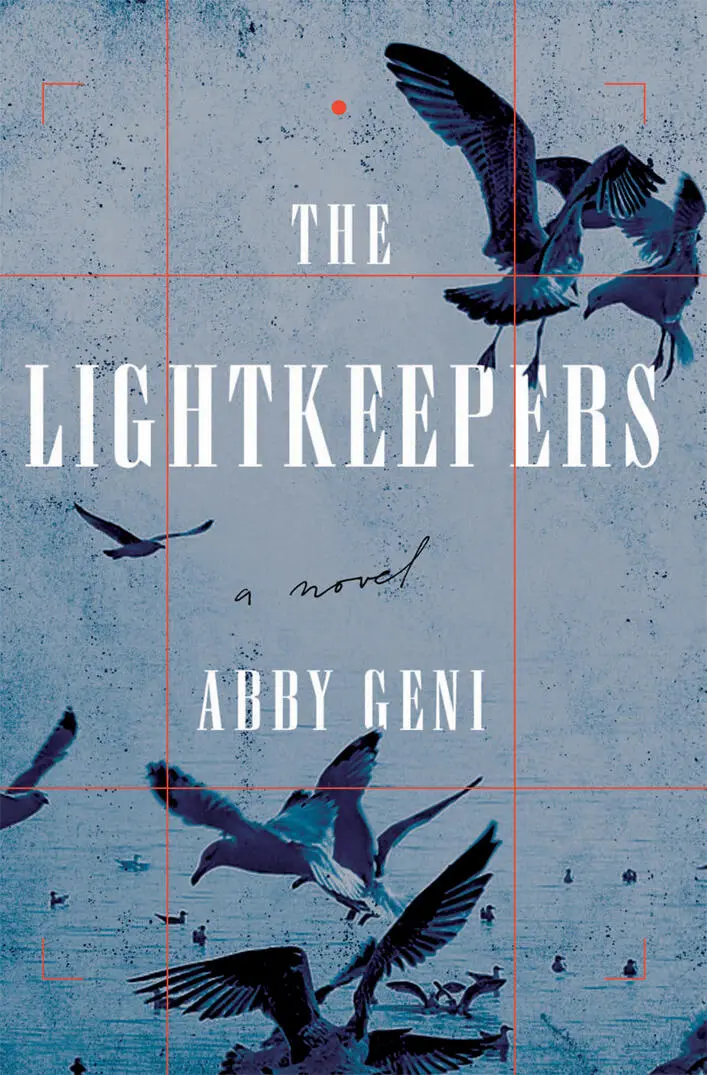
- Название:The Lightkeepers
- Автор:
- Издательство:Counterpoint
- Жанр:
- Год:2015
- ISBN:9781619027497
- Рейтинг книги:4 / 5. Голосов: 1
-
Избранное:Добавить в избранное
- Отзывы:
-
Ваша оценка:
The Lightkeepers: краткое содержание, описание и аннотация
Предлагаем к чтению аннотацию, описание, краткое содержание или предисловие (зависит от того, что написал сам автор книги «The Lightkeepers»). Если вы не нашли необходимую информацию о книге — напишите в комментариях, мы постараемся отыскать её.
, we follow Miranda, a nature photographer who travels to the Farallon Islands, an exotic and dangerous archipelago off the coast of California, for a one-year residency capturing the landscape. Her only companions are the scientists studying there, odd and quirky refugees from the mainland living in rustic conditions; they document the fish populations around the island, the bold trio of sharks called the Sisters that hunt the surrounding waters, and the overwhelming bird population who, at times, create the need to wear hard hats as protection from their attacks.
Shortly after her arrival, Miranda is assaulted by one of the inhabitants of the islands. A few days later, her assailant is found dead, perhaps the result of an accident. As the novel unfolds, Miranda gives witness to the natural wonders of this special place as she grapples with what has happened to her and deepens her connection (and her suspicions) to her companions, while falling under the thrall of the legends of the place nicknamed “the Islands of the Dead.” And when more violence occurs, each member of this strange community falls under suspicion.
The Lightkeepers
The Lightkeepers — читать онлайн бесплатно полную книгу (весь текст) целиком
Ниже представлен текст книги, разбитый по страницам. Система сохранения места последней прочитанной страницы, позволяет с удобством читать онлайн бесплатно книгу «The Lightkeepers», без необходимости каждый раз заново искать на чём Вы остановились. Поставьте закладку, и сможете в любой момент перейти на страницу, на которой закончили чтение.
Интервал:
Закладка:
I will tell people that my son’s father was a lightkeeper. I will share my memories. I have so many memories. The walks Mick and I took. The hours we spent together — him reading, me dozing with my feet in his lap. His terrifying attempts at cooking. His sweeping gestures, those massive arms zooming perilously through the air. I will describe Mick’s head-thrown-back guffaw. I will imitate the athletic bounce of his stride. I will tell stories of his hilarious clumsiness, machinery coming apart in his hands, tools crumbling into pieces. I will describe, too, his limitless capacity for kindness. In this way, I will be able to keep him with me. The ordinary ebb and flow of life on the islands, so unremarked and unremarkable, will crystallize, through telling and retelling, into stories — and will pass, over the years, into legend.
My photographs will stand as illustrations. Mick on board the Janus . Mick in the kitchen, frowning at a box of macaroni and cheese. Mick making a silly face to get me to laugh. It is a bit unsettling to think that these snapshots will enhance and inform my deception. I have always thought of photography as truth-gathering. I have imagined my pictures to be immutable and honest, as sure as the ground beneath my feet. But now I see that truth and photography are fundamentally at odds. A snapshot is a two-dimensional representation, like a painting or a sketch, carefully prepared, framed, and cropped. It is the world represented by the mind of an artist, rather than the world as it actually is. The photographer can cherry-pick what will be included in a collection of images; they can be selected or omitted with purpose, then assembled and arranged so that, as a whole, they might suggest any story at all.
My beloved work will strengthen the lie I must tell. I can include a snapshot of Mick blowing me an ironic kiss. I can exclude the picture of him doing the same to Lucy so she would not feel left out. I will keep the images of him writing in the daily log, standing in the lighthouse, operating the crane to pull up the Billy Pugh, cooking dinner, pointing ecstatically at an elephant seal, snoring on the couch, and roaring with laughter. I will throw away the snapshot of him waltzing around the living room with Charlene, singing at the top of his lungs. I will include my favorite picture of Mick — eyes aglow, smiling lovingly at the camera. I will exclude the following shot, which shows that Forest was there too, standing behind me all along.
40
THE FERRY IS late. When Captain Joe appears, I will glimpse his boat, a dark stain on a landscape of water. This will be deceptive, of course, an optical illusion; I will be able to see the ferry long before it is anywhere near the islands.
A few minutes ago, Galen and Forest left the cabin together. I watched them pass, gesticulating, engaged in one of their endless, circular arguments, never to be resolved. I kept my gaze on them as they headed toward East Landing. A single word floated to me on the breeze: Sisters . No sharks have yet been sighted, but it is only a matter of time. The Rat Pack must be in the neighborhood even now. The summer cycle is resetting itself, beginning anew. Galen and Forest were on their way to check the Billy Pugh, to make sure that the mechanism is in good shape for my departure. Forest will oversee my passage to the deck of the ferry. I will leave the islands as I came — suspended above the ocean inside a terrifying, pendulous cage.
Captain Joe has just appeared, like a soap bubble blown over the horizon. An empty sky one minute, a boat the next. Soon I will make my way to East Landing, where Forest will be waiting for me. I will pass through the gauntlet of gulls one final time. It will be my last moment to breathe in the salt air, to brave the guano and the bird lice, to remember where I have been and why I am leaving.
I have been thinking about Galen’s book — about the eggers and the lightkeepers. There was a whole chapter, too, on the Miwok Indians. Residents of California, they knew about the archipelago — though they were never foolish enough to voyage there. On clear days, the Farallon Islands were visible from the coast: a haunted silhouette, broken shards of stone. The Miwoks believed that the place was as much a spiritual locale as a physical one. They imagined it to be an earthly hell where the souls of the damned were sent to live in discomfort and loneliness.
After the past year, I must agree. In this place, loss is a geographical force rather than an emotional one. Loss is the magnetic pull of the islands. Long ago, Galen suffered a gut-wrenching tragedy. I am sure he will stay here until he dies — a lost soul dominated and defined by the death of his wife. Forest has gone through a similar bereavement. Lucy, too, has been widowed, in her way.
And I am more like the others here than I would ever have cared to admit. I remember the first time I saw the islands in a photograph. My response was a throb of recognition. I felt immediately that I knew the place somehow, as though from a past life or a dream. In that moment, it felt as though I’d been waiting forever to find the islands — as though, perhaps, they’d been waiting for me.
I understand now why I first voyaged here. It has taken me all year to come to terms with that choice. Since your death, I have been looking over my shoulder, looking backward. I have been stuck in time. I have been writing letters to you — letters to no one, a body in a cemetery, a woman I knew for only a small part of my life. Hundreds of notes, some sitting in the Dead Letter Office of various cities, others buried and burned and scattered on the wind. I have never once questioned whether writing them was sane or healthy. Now, though, I can see that it was neither. Each letter has been an anchor chain, dragging me back into the past.
I have distanced myself from my father. I have stayed away from the twins, my grandparents, my cousins. I have eschewed all the normal paths through life — no mortgage, no long-term relationships, no permanence, no love. I have kept only what could be carried on my back. I have slept in deserts, canyons, and jungles. I have lived like a vagabond. In a way, I have been looking for the archipelago since the day you died. Of course I recognized the Farallon Islands when I first saw them in that snapshot. This place is the final refuge for people like me.
Oddly enough, the baby has proven to be my salvation. The accidental baby. The baby who came out of the worst possible circumstances. Without that tiny, burgeoning creature, I might have decided to stay on the islands indefinitely. The idea has certainly crossed my mind. Despite the unceasing howl of the wind, the creeping cold, the meager food stores, the rodents, the falling-apart plumbing, the lack of reading material, the broken crockery — I have always felt at home here, more so than anywhere else. The wildness and isolation are mother’s milk to me.
I could easily have become a permanent resident. I could have begun the process of cobbling together more funding or applying for intern status, insinuating myself so completely into the ebb and flow that the others could not do without me. Lucy, Forest, Galen, and me — the saddest quartet in the universe. Eating our meals together. Tagging the birds together. Forgetting the bustle of the mainland, the toot of car horns, the murmur of strangers’ voices. I imagine the islands drifting farther and farther away from shore. The four of us would look askance at any visitors to our little lepers’ colony. Castaways by choice. All of us halved — all of us haunted.
Captain Joe is closer now. The ferry is no longer a smudge; it has taken on recognizable contours, a prow, a deckhouse. But it is still a miniature version of itself, a ship in a bottle. I can scarcely see the white tumble of the wake.
Читать дальшеИнтервал:
Закладка:
Похожие книги на «The Lightkeepers»
Представляем Вашему вниманию похожие книги на «The Lightkeepers» списком для выбора. Мы отобрали схожую по названию и смыслу литературу в надежде предоставить читателям больше вариантов отыскать новые, интересные, ещё непрочитанные произведения.











Обсуждение, отзывы о книге «The Lightkeepers» и просто собственные мнения читателей. Оставьте ваши комментарии, напишите, что Вы думаете о произведении, его смысле или главных героях. Укажите что конкретно понравилось, а что нет, и почему Вы так считаете.