Abby Geni - The Lightkeepers
Здесь есть возможность читать онлайн «Abby Geni - The Lightkeepers» весь текст электронной книги совершенно бесплатно (целиком полную версию без сокращений). В некоторых случаях можно слушать аудио, скачать через торрент в формате fb2 и присутствует краткое содержание. Год выпуска: 2015, ISBN: 2015, Издательство: Counterpoint, Жанр: Современная проза, на английском языке. Описание произведения, (предисловие) а так же отзывы посетителей доступны на портале библиотеки ЛибКат.
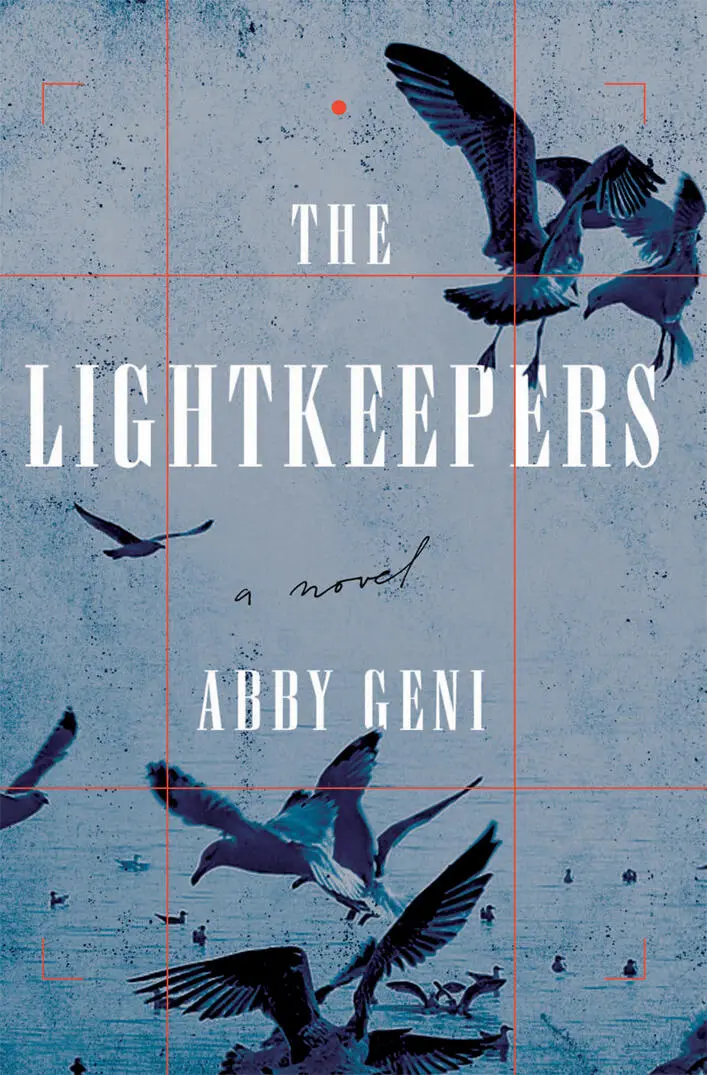
- Название:The Lightkeepers
- Автор:
- Издательство:Counterpoint
- Жанр:
- Год:2015
- ISBN:9781619027497
- Рейтинг книги:4 / 5. Голосов: 1
-
Избранное:Добавить в избранное
- Отзывы:
-
Ваша оценка:
The Lightkeepers: краткое содержание, описание и аннотация
Предлагаем к чтению аннотацию, описание, краткое содержание или предисловие (зависит от того, что написал сам автор книги «The Lightkeepers»). Если вы не нашли необходимую информацию о книге — напишите в комментариях, мы постараемся отыскать её.
, we follow Miranda, a nature photographer who travels to the Farallon Islands, an exotic and dangerous archipelago off the coast of California, for a one-year residency capturing the landscape. Her only companions are the scientists studying there, odd and quirky refugees from the mainland living in rustic conditions; they document the fish populations around the island, the bold trio of sharks called the Sisters that hunt the surrounding waters, and the overwhelming bird population who, at times, create the need to wear hard hats as protection from their attacks.
Shortly after her arrival, Miranda is assaulted by one of the inhabitants of the islands. A few days later, her assailant is found dead, perhaps the result of an accident. As the novel unfolds, Miranda gives witness to the natural wonders of this special place as she grapples with what has happened to her and deepens her connection (and her suspicions) to her companions, while falling under the thrall of the legends of the place nicknamed “the Islands of the Dead.” And when more violence occurs, each member of this strange community falls under suspicion.
The Lightkeepers
The Lightkeepers — читать онлайн бесплатно полную книгу (весь текст) целиком
Ниже представлен текст книги, разбитый по страницам. Система сохранения места последней прочитанной страницы, позволяет с удобством читать онлайн бесплатно книгу «The Lightkeepers», без необходимости каждый раз заново искать на чём Вы остановились. Поставьте закладку, и сможете в любой момент перейти на страницу, на которой закончили чтение.
Интервал:
Закладка:
I thought about just letting myself go, sobbing until I had no more tears left. I could not remember the last time I had cried that hard. Childhood, maybe. Tears for you. This seemed to be the right moment for it. I thought, too, about throwing myself right down Lighthouse Hill. Eight months pregnant or not, the world was a terrible place. Alternatively, I could stay up here forever. I could eschew food, drink, and sleep. Eventually the islands would claim me. If I lingered in the lighthouse long enough, I might become a statue, a part of the mountain stone.
A moment later, there was a scuffle. I turned and saw a lean figure, a cap of curls. Forest was mounting the slope. He stepped into the lighthouse. He showed no surprise when he saw me. He was beyond being surprised. His grief and shock were too big for that. All the smaller emotions had been crushed beneath the weight of his loss.
“Hi,” I said.
He was rubbing his fingers across his chest. With a jolt, I recognized that gesture. It was Mick’s. Forest was doing it without realizing it, the same turn of the wrist, the same accompanying sigh. There was a silence as we gazed together at the view. It was early afternoon, and the light was bold and garish, the shadows harsh. The islands never looked their best at this time of day. I preferred the morning and the evening, when the air was as sweet and golden as peach-skin.
Forest cleared his throat.
“Mick and I were together,” he said. “As you know.”
I had not been expecting this. After a beat, I did my best to feign amazement, my hands flying upward, mouth opening.
“I think it’s best if we don’t lie to each other,” he said.
I gazed at him in consternation.
“I found your camera, Melissa,” he said.
My face flushed. I could feel it happen, like water coming to a boil on the stove. I knew what he was referring to. I had kept that camera hidden beneath my bed, safe, I thought, from prying eyes.
“How — how did you—”
Forest shrugged. “I went through your stuff. I was hunting for a sweater of mine. I should apologize, I guess. I’m sorry.”
He did not sound sorry. His voice was absolutely flat.
“When?” I asked. “When did this happen?”
“A long time ago.”
“Oh,” I said faintly.
“They’re nice pictures,” he said.
I sat up a little straighter at the desk, trying to gather my wits.
“You have to understand,” I began. “When I took them, I didn’t mean to do anything wrong. I just woke up and looked outside. It was an accident, kind of. I know it must seem like I was spying. But I would never have shown them to — It really wasn’t a betrayal of—”
Forest shook his head. “I don’t care why you took them.”
Most of my blood seemed to be trapped in my head. I was sure that my face was glowing like sunrise.
“Mick wasn’t the father,” Forest said, gesturing toward my stomach. “He said he would lie for you, and I went along with it. So we’re on the same page now,” he ended, his voice getting thick. “You know, and I know.”
These words seemed to cost him everything he had. His head sank, his arms falling to his sides. It was strange seeing him like this. He looked and moved exactly like the Forest I remembered, but everything about his manner was different. His posture. His level of focus. The emotion radiating from him. I felt as though I were meeting him for the first time, on this sunny, breathy afternoon, after living under his roof for a year.
He passed a hand across his brow, like a man waking from a dream.
“I should go,” he said. “I can’t talk to you. I can’t talk right now.”
I nodded. Gripping the corner of the desk, I hauled myself to my feet. But Forest was already out the door. I watched him leave, silhouetted against the sea.
THAT NIGHT I got down on my knees and looked under my bed for the first time in ages. There were my watertight tubs of photographic equipment. There were my work boots. There were dust bunnies, and sweaters, and a hat, and a rock, and a few sad, bent coat hangers. At last I found the camera. I sat up again, the baby kicking irritably at my groin. I worked the button with my thumb, flicking the pictures along. The moon. The coast guard house. A gleam against a black window. A shimmer of bodies in motion. Two torsos touching and parting like dancers in a pas de deux. Faces turned toward each other, a line of darkness between them. Inches away.
Resolutely I got to my feet. I knew that Forest was in the kitchen. I could hear him talking to Galen, their voices rising up the staircase along with the smell of cinnamon tea. Moving quietly, I hurried down the hall. I eased into Forest’s room without turning on the light. I set the camera in his desk drawer. Before I slipped back out of the room, I took one last look at the image that was still visible on the screen. Two faces, iridescent profiles, poised on the verge of a kiss.
39
I SPENT MY LAST day on the islands indoors. It began raining at dawn, a gentle misting, the sort of drizzle that seemed likely to blow over. An hour later, however, the weather had taken a turn for the worse. The rain picked up, a steady, roiling gush. The landscape was blurred by curtains of silver. I could barely pick out the gray expanse of the ocean through that downpour.
Still, Galen was in an exhilarated mood. He had taken the boat out early, at sunrise, before the storm had settled in. He described the morning, which had still been fine then. The sea had been flat, opaque. He had been fired with a distinct impression of sharks nearby. He had felt them coming. It was getting to be their time, the warm weather drawing them back from their winter vacation homes. Any day now, the first kill might be glimpsed from the lighthouse.
After breakfast, the biologists elected to walk to the murre blind. The men bundled themselves up beneath ponchos and sweaters. Lucy had a swollen wrist; she had fallen on the rocks and caught herself at a bad angle. (I had helped her to bandage the joint. Lucy and I will never be friends — I will be glad to see the back of her when I leave the islands for good — but we get by. While I wrapped the gauze, she had gently guided my movements.) The three of them barged onto the porch. Through the window, I watched as the downpour swallowed them up.
Once they were gone, I decided to sneak into their rooms. To intrude on these private spaces, I knew, was a flagrant breach of confidence. Full-grown adults did not normally live in this kind of collegiate community, without privacy. As a rule, we did the best we could to maintain what boundaries we had.
But I was in a mood. I entered Galen’s sanctum first. I wanted to see his famous — infamous — collection before I departed. As I had suspected, his room was as tidy as his mind: immaculately organized, a place for everything and everything in its place. His museum of relics and specimens was all that I’d hoped for. A length of twine hung above his window, and rows of gleaming feathers were pinned there like beads on a chain. Shells of various sizes glimmered on the nightstand. There was a glass jar filled with what at first seemed to be buttons, but on closer inspection turned out to be dead beetles. The desk had been taken over by the half-assembled skeleton of a bird, an array of slim white bones. I knew there was more hidden in boxes and drawers, but I did not dare to pry too much. Galen might glean I had been there.
Still, I was curious. I poked through the wastebasket and got on tiptoe to examine the bureau top. Galen had told me that he had a broken teacup somewhere. It had been flung at the wall many years ago by a visiting researcher during a heated debate. Galen had swept up and saved the pieces as a souvenir. He had told me that he had a scrap of elephant seal skin. It had been torn off one male by another’s teeth during a battle over territory. Galen had peeled it from the rocks and carried it home, pinning it to his bulletin board. He had told me that he had a human rib bone — a relic, he believed, from the battling eggers, some poor man’s corpse. He had told me that he had the skull of a seal pup, a human tooth, and the talon of a falcon.
Читать дальшеИнтервал:
Закладка:
Похожие книги на «The Lightkeepers»
Представляем Вашему вниманию похожие книги на «The Lightkeepers» списком для выбора. Мы отобрали схожую по названию и смыслу литературу в надежде предоставить читателям больше вариантов отыскать новые, интересные, ещё непрочитанные произведения.












Обсуждение, отзывы о книге «The Lightkeepers» и просто собственные мнения читателей. Оставьте ваши комментарии, напишите, что Вы думаете о произведении, его смысле или главных героях. Укажите что конкретно понравилось, а что нет, и почему Вы так считаете.