Abby Geni - The Lightkeepers
Здесь есть возможность читать онлайн «Abby Geni - The Lightkeepers» весь текст электронной книги совершенно бесплатно (целиком полную версию без сокращений). В некоторых случаях можно слушать аудио, скачать через торрент в формате fb2 и присутствует краткое содержание. Год выпуска: 2015, ISBN: 2015, Издательство: Counterpoint, Жанр: Современная проза, на английском языке. Описание произведения, (предисловие) а так же отзывы посетителей доступны на портале библиотеки ЛибКат.
- Название:The Lightkeepers
- Автор:
- Издательство:Counterpoint
- Жанр:
- Год:2015
- ISBN:9781619027497
- Рейтинг книги:4 / 5. Голосов: 1
-
Избранное:Добавить в избранное
- Отзывы:
-
Ваша оценка:
The Lightkeepers: краткое содержание, описание и аннотация
Предлагаем к чтению аннотацию, описание, краткое содержание или предисловие (зависит от того, что написал сам автор книги «The Lightkeepers»). Если вы не нашли необходимую информацию о книге — напишите в комментариях, мы постараемся отыскать её.
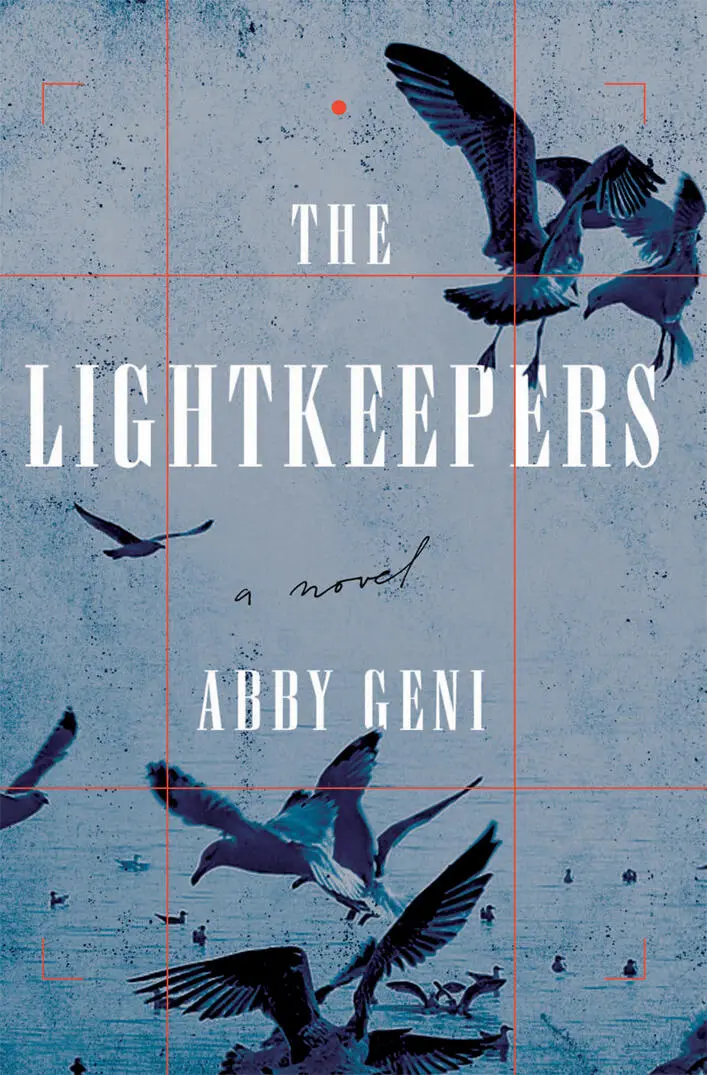
, we follow Miranda, a nature photographer who travels to the Farallon Islands, an exotic and dangerous archipelago off the coast of California, for a one-year residency capturing the landscape. Her only companions are the scientists studying there, odd and quirky refugees from the mainland living in rustic conditions; they document the fish populations around the island, the bold trio of sharks called the Sisters that hunt the surrounding waters, and the overwhelming bird population who, at times, create the need to wear hard hats as protection from their attacks.
Shortly after her arrival, Miranda is assaulted by one of the inhabitants of the islands. A few days later, her assailant is found dead, perhaps the result of an accident. As the novel unfolds, Miranda gives witness to the natural wonders of this special place as she grapples with what has happened to her and deepens her connection (and her suspicions) to her companions, while falling under the thrall of the legends of the place nicknamed “the Islands of the Dead.” And when more violence occurs, each member of this strange community falls under suspicion.
The Lightkeepers
The Lightkeepers — читать онлайн бесплатно полную книгу (весь текст) целиком
Ниже представлен текст книги, разбитый по страницам. Система сохранения места последней прочитанной страницы, позволяет с удобством читать онлайн бесплатно книгу «The Lightkeepers», без необходимости каждый раз заново искать на чём Вы остановились. Поставьте закладку, и сможете в любой момент перейти на страницу, на которой закончили чтение.
Интервал:
Закладка:
It is July. Mick died in July. I know this, not because I have checked a calendar, but because the night the helicopter came to remove Mick’s body, there were fireworks. I was lying down in my room for the whole of that encounter. I heard the whir of the rotor. I heard the angry, raucous response of the gulls. For a while, it was Armageddon out there, the blades whooshing, the birds in flight too. Voices downstairs. Footsteps. Doors slamming. I stayed where I was. Soon enough, the helicopter rumbled off. The gulls seemed upset for a long while afterward, shrieking and babbling.
I did not budge. The sky darkened outside. Weak and weary, I stared out the window. I had not found the wherewithal to eat or drink much of anything. At last, at moonrise, the gulls bedded down. The islands looked painterly in the waning light — coated with white bodies like gesso on canvas. The moon was a sliver, a fishhook. A few stars began to burn. I was debating whether I had it in me to head downstairs and attempt some dinner when there was a sound — a distant report.
I caught my breath. The noise was unmistakable. Cannon fire. For a moment I was reminded of the eggers and the lightkeepers — their epic, ancient battle. There was a flash of light. Another boom. The sound and the flicker were too far away to appear synchronized. It took me a while to realize what was happening. The fireworks were rising above San Francisco, thirty miles away. From my vantage point, they were tiny. I could have pinched them out between thumb and finger like the flame of a match. Three golden spheres burst in succession, as small as buttons. Red, white, and blue rockets whizzed in teeny arcs. A diminutive, glittering tree blossomed in the air, its leaves streaking downward like a weeping willow’s. It was as though I were watching the Fourth of July inside a snow globe.
The finale was impressive. Bright orbs overlapped one another, all the colors of the rainbow. A garden of miniature flowers bloomed and died in a matter of seconds. When it was done, I waited a while, hoping for more. The cannon fire continued for a minute or two in the darkness: all the aggressive noise of the fireworks, none of the celebratory light. Finally, only the smoke was left — gray, hollow shapes, drifting on the wind like ghosts.
I HAVE NOT cried for Mick. Instead, I have been wandering. I have trekked all over Southeast Farallon, visiting places I have not been in months. I have carried the weight of my belly across Dead Sea Lion Beach. I have visited the caves to the north. Rhino Catacombs. Orca Cove. Eerie places, with an eerie view. With the baby kicking in protest, I have strolled all the way to the Weather Service Peninsula. I have sat for hours on Marine Terrace, shielded beneath my hard hat, wrapped in my poncho, breathing through my mask, gazing in the direction of California.
Eventually, I am sure, I will once again see the archipelago for what it truly is — a wild place, nothing more. A place where the rules, comforts, and safeguards of modern life do not apply. For now, however, the islands seem less wild than malignant. Every gift comes with a terrible cost. A talent for photography arises from the loss of a mother. A baby can be found only after rape, violence, and death. The closeness of a friendship must be answered with loss. A love affair, too, must end in tears — as Forest and Lucy could attest to. These are not good thoughts. These are the sort of thoughts that keep a person in motion, striding up and down the slope.
Once or twice, I have seen Forest in the distance — a thin shape, moving fast. I have not spoken to him. This I know: there is nothing as lonely as grief. He and I are fellow mourners, each locked in a kind of mental isolation. Forest has barely been in the cabin at all. Instead, he has taken the Janus out on his own for no real reason, zooming around the islands, the sound of the engine ringing against the cliffs. He has not been present at meals. He does not join the evening queue outside the bathroom, all of us clutching our toothbrushes and glowering at one another. I have begun to suspect him of sleeping in the coast guard house. I do not hear his footsteps in the night. I no longer catch his dry cough in the mornings. It seems impossible for someone to be so absent in such a confined environment — yet Forest has all but disappeared.
The autopsy was concluded swiftly. They said that Mick had drowned. His lungs were full of seawater, his eyes decorated with pinprick hemorrhages. Foam around the mouth. All the telltale signs. By the time the gulls had finished with him, his body had been in bad shape. His funeral would have to be a closed-casket service, apparently. I tried not to think about it. I took some small comfort in the knowledge that drowning was supposed to be a pleasant way to expire. I had heard this fact somewhere, long ago, and I clung to it now like a lifeline. Drowning was an ethereal, ecstatic way to leave the world, more like dreaming than dying.
Still, I could not help but wonder exactly what had happened in the seconds that Mick was out of my sight — between the moment he stumbled and the moment he perished. It seemed impossible that I would never know for sure. He was a strong swimmer; he was a seasoned biologist, used to the myriad dangers of the islands. But none of that had helped him when it mattered. Maybe he had ruptured an eardrum when he hit the sea. Maybe he had opened his eyes in the cloudy water and found himself fatally disoriented, unsure which way was up. Maybe he had collided with something beneath the surface, a boulder or a reef. Maybe he had struck the surface at an angle that had knocked him unconscious at once. In truth, there were a hundred ways to die on the islands. It was amazing that we were not all six feet under — lost to the wind, the ocean, and the dreadful, human capacity for misadventure.
Last night, I dreamed about the ghost. It was a chilly evening for summer. I was curled in bed like a hedgehog, trying to keep warm. Then I felt a hand touch my shoulder. I sat up, disarranging the blankets, and saw her.
At the time, this did not shock me at all. She was wearing a long, floating dress. The moonlight caught the edges of it and turned it to silver. Her hair shrouded her face. I couldn’t read her expression. She drifted backward. I followed.
Her dress swirled as she paced down the long hall. She paused outside the room that Mick and Forest had shared. She pointed urgently with a long, white arm — as white as salt. Then she turned to me and lifted her chin. Her hair pooled away from her cheeks, revealing a round jaw, deep-set eyes, and a stubborn mouth. For the first time, I could see her face. It was like looking in a mirror.
38
ON A WARM July morning, I found myself in the lighthouse. This was foolish, I know. The path up the hill is hard to manage at the best of times, let alone while carrying the added burden of pregnancy. The gulls clearly viewed my approach as the first line of an advancing army. I slipped once, skinning my knee. I lost my temper and took a swing at one of the birds. He had been rattling around my hard hat, trying to disorient me, feathers opening and closing in front of my face like shutters. I threw a punch, smacking him in the wing and spinning him away, though he still hollered admonishments in my general direction. It felt good to lash out, to cause harm. If I could, I would have done the same to every gull on the islands.
Once I had attained the lighthouse, I paused to catch my breath. The view was as impressive as ever. The sea had a cloudy aspect, like split pea soup. Islets stuck out of the murky depths like oyster crackers. There were sea lions swimming to the north, churning the waves into froth. I sat down at the little desk. Someone had left a pair of binoculars there, cheap and plastic, the sort given to children on camping trips. I adjusted the dial and peered through the lens, staring to the east, looking for San Francisco. I could not see land, not exactly. There was a long, hazy stain. In that moment, it was hard to remember what the biologists — and the lightkeepers — had fought so hard to preserve in this awful, perilous place.
Читать дальшеИнтервал:
Закладка:
Похожие книги на «The Lightkeepers»
Представляем Вашему вниманию похожие книги на «The Lightkeepers» списком для выбора. Мы отобрали схожую по названию и смыслу литературу в надежде предоставить читателям больше вариантов отыскать новые, интересные, ещё непрочитанные произведения.












Обсуждение, отзывы о книге «The Lightkeepers» и просто собственные мнения читателей. Оставьте ваши комментарии, напишите, что Вы думаете о произведении, его смысле или главных героях. Укажите что конкретно понравилось, а что нет, и почему Вы так считаете.