Abby Geni - The Lightkeepers
Здесь есть возможность читать онлайн «Abby Geni - The Lightkeepers» весь текст электронной книги совершенно бесплатно (целиком полную версию без сокращений). В некоторых случаях можно слушать аудио, скачать через торрент в формате fb2 и присутствует краткое содержание. Год выпуска: 2015, ISBN: 2015, Издательство: Counterpoint, Жанр: Современная проза, на английском языке. Описание произведения, (предисловие) а так же отзывы посетителей доступны на портале библиотеки ЛибКат.
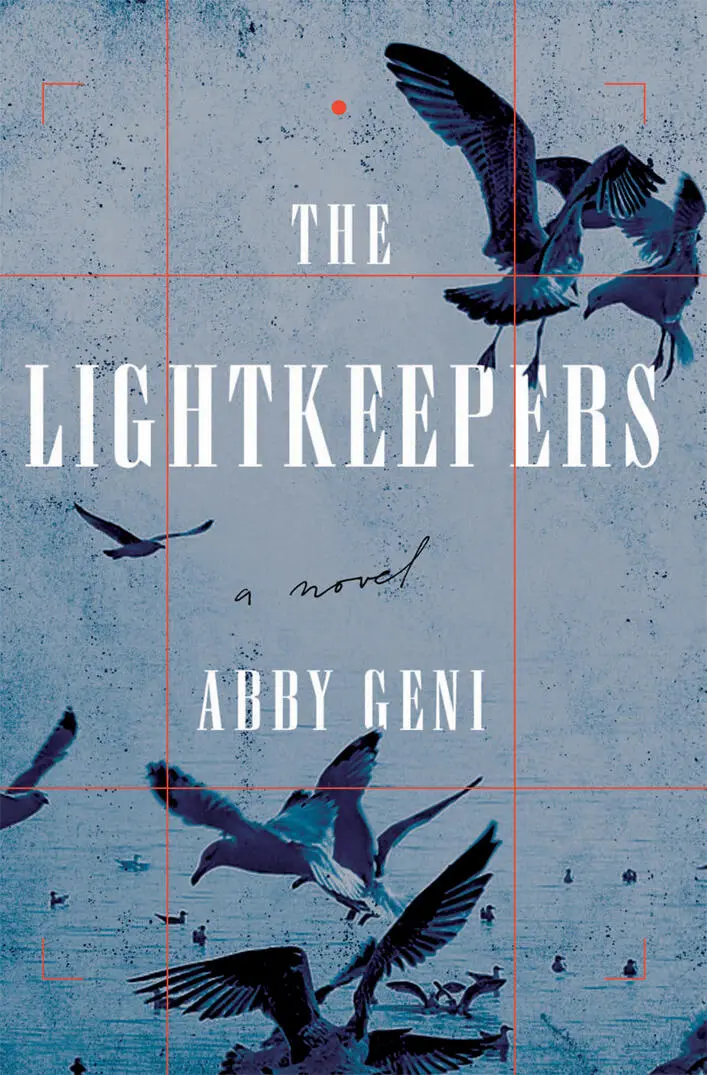
- Название:The Lightkeepers
- Автор:
- Издательство:Counterpoint
- Жанр:
- Год:2015
- ISBN:9781619027497
- Рейтинг книги:4 / 5. Голосов: 1
-
Избранное:Добавить в избранное
- Отзывы:
-
Ваша оценка:
The Lightkeepers: краткое содержание, описание и аннотация
Предлагаем к чтению аннотацию, описание, краткое содержание или предисловие (зависит от того, что написал сам автор книги «The Lightkeepers»). Если вы не нашли необходимую информацию о книге — напишите в комментариях, мы постараемся отыскать её.
, we follow Miranda, a nature photographer who travels to the Farallon Islands, an exotic and dangerous archipelago off the coast of California, for a one-year residency capturing the landscape. Her only companions are the scientists studying there, odd and quirky refugees from the mainland living in rustic conditions; they document the fish populations around the island, the bold trio of sharks called the Sisters that hunt the surrounding waters, and the overwhelming bird population who, at times, create the need to wear hard hats as protection from their attacks.
Shortly after her arrival, Miranda is assaulted by one of the inhabitants of the islands. A few days later, her assailant is found dead, perhaps the result of an accident. As the novel unfolds, Miranda gives witness to the natural wonders of this special place as she grapples with what has happened to her and deepens her connection (and her suspicions) to her companions, while falling under the thrall of the legends of the place nicknamed “the Islands of the Dead.” And when more violence occurs, each member of this strange community falls under suspicion.
The Lightkeepers
The Lightkeepers — читать онлайн бесплатно полную книгу (весь текст) целиком
Ниже представлен текст книги, разбитый по страницам. Система сохранения места последней прочитанной страницы, позволяет с удобством читать онлайн бесплатно книгу «The Lightkeepers», без необходимости каждый раз заново искать на чём Вы остановились. Поставьте закладку, и сможете в любой момент перейти на страницу, на которой закончили чтение.
Интервал:
Закладка:
LATER THAT NIGHT, as I drifted off to sleep, I found myself thinking about Galen’s book again. The eggers. The lighthouse. The sea. It occurred to me that the book had not used the term “lighthouse keepers.” I was glad of this. To do so would have implied that the primary task of those people had been to maintain a building, a human structure. Instead, the book had referred to them as the keepers of the light itself. There was something important in that. Something fundamental. My pillow was warm, the radiator grunting, the air thick with steam. Perhaps there were only two kinds of people in the world — the takers and the watchers — the plunderers and the protectors — the eggers and the lightkeepers. Just as I felt myself on the verge of an epiphany, the wind outside gave a deep sigh, and I slipped into sleep.
35
I HAVE NOT FELT the desire to write to you as often lately. I have not been aware of your absence in the same way I used to be.
After your death, the lack of you was all-consuming. I thought about it constantly. It was as though I’d lost something basic, like my sense of smell or my ability to laugh — the sort of thing I could live without but might not want to. I felt like a tuning fork that when struck rang out loneliness instead of music. I felt as though I’d been halved. These are the things I wrote in my letters to you — and mailed, every few days, to the Dead Letter Office.
Now, however, all that has changed. I am no longer halved. In my pregnancy, I am doubled. That is what occupies my mind nowadays. I can’t marinate in my loss anymore. I can’t dwell endlessly on your absence. Not when I am overwhelmed by the presence of the baby.
I think about it all the time. I think about him all the time, since I have become convinced that the fetus is a boy. There is a maleness about him, all elbows and knees. Sometimes, when I lay my hands on my belly, I will experience a kind of mental shock — the emotional equivalent of static electricity. A baby. A boy. The two words might well be synonyms, interchangeable. That is how sure I am.
At night, I often dream about him. There he is in a diaper and hat. There he is in my father’s lap — my father altered by his sudden elevation to grandfather, smiling in a peaceful way that I have not seen since you were here. I imagine my aunts, your twin sisters — I imagine them leaning over a basinet, faces soft. I see my son in the bath. Seated in a red wagon. On the playground. There he is, learning to go down the slide by himself, his mouth a startled O. I imagine the weight of him on my thighs, his head against my breastbone, warm and sleepy, as we turn the pages of a book together. I hear him cry, a piercing siren. I enjoy these dreams. They have given me the chance to get to know the baby before I meet him. He is here with me now. He is filling the absence you created twenty years and a thousand letters ago.
IT IS JUNE. Recently we had a rain-washed morning, full of thunder. The gulls were affected by the weather. For the first time since Bird Season began, their cries were hushed. The islands were eerily still. Through the window, I saw feathery shapes hunkering down, shivering, heads beneath their wings.
Galen and I lingered indoors. Together he and I lounged around all morning. Rain hammered on the roof. He read a book about blue whales, and I roamed the kitchen, hoping against hope that there might be a magical cache of delicious food hidden somewhere. Galen hummed a nautical ditty, and I ate stale saltines. Galen flipped through the daily log, and I napped on the couch.
The daily log is an interesting study in personalities. Forest’s notes, for example, are all business, a list of the sharks he has seen. He does not bother with complete sentences, telegraphing his information: Goof Nose in Mirounga Bay, 6 a.m. That kind of thing. Mick, on the other hand, tends to ramble on enthusiastically about seal behavior: Two new mothers this week. Babies nursing like crazy. Already gained a few pounds. Cutest damn things! Wish I could adopt one. Then there is Lucy, whose entries are surprisingly flowery. In her curlicued cursive, she lavishes praise on the gorgeous sunsets, the wild surf, and the aerial ballets of the double-crested cormorants. Though I enjoy reading the daily log, I usually skip Lucy’s entries. In life, she is a solid, matter-of-fact person. On the page, however, she can become pretentious, as though striving to appear deep and emotional. I would give anything to feel the power and glory of flying free against a purple and gold sky , she once wrote, apparently without irony.
As the morning wore on, the storm worsened. Rain plummeted in buckets. The air in the cabin was as hazy as evening. Finally Galen summoned me to the table. His smile was warm as he patted the chair beside him.
“How’s the book?” he said. “You’ve been reading it, I hope?”
“Yes,” I said. “The eggers.”
“And the lightkeepers,” he said. “That’s the important part.”
He narrowed his eyes at me appraisingly. Then he sat back. The rain picked up, a torrent gushing through the gutters like an airborne river. The thunder grumbled. Galen’s gaze was lifted to the ceiling. He began to speak. He told me the story of the lightkeepers in measured tones, apparently from memory.
They had flourished here, for a while. Once the eggers were gone, the men had brought their wives to the islands. They had brought their children. They had built our cabin, as well as the coast guard house — twin structures standing sentinel in a lonely wilderness. As Galen spoke, his hands flitted through the air. For a time, the lightkeepers and their families had thrived. It had been a lovely, peculiar life. Children playing at the foot of Lighthouse Hill. Climbing the two small trees. Skipping stones on the ocean. Making pets of the seal pups. I found it comforting to know that I was not the first pregnant woman to have lived on the islands.
The rain showed no signs of abating, as though a tap had been turned on in the sky. Galen’s expression darkened. Eventually, he said, the lighthouse had been modernized, remade with an automated mechanism. There was no longer a need for a permanent host of lightkeepers. The crew, along with their wives and children, packed up their belongings and headed back to civilization.
“Modernization is an unstoppable tide,” Galen said.
Times had changed and kept on changing. During World War I, the military had shown a brief interest in the islands. Later still, the place had been considered as a possible locale for a new prison or a refueling station for oil tankers.
I let my attention wander. I knew how the story ended. A nature preserve. A wilderness refuge. A home for biologists. Secure, pristine, and untouchable.
Galen tapped my arm. His expression was stern.
“They were our predecessors,” he said. “They were like us. Do you understand?”
“Noninterference,” I said sleepily. “Nonintervention.”
“Yes,” he said. “The lightkeepers took only what they needed. They studied and documented and made no changes. They protected this place.”
He prodded my arm again, driving the point home.
“That’s what we must do, always,” he said.
YESTERDAY I GAVE in and visited the murre blind. This was a result of the combined efforts of Mick and Galen, who had badgered me for a week straight, insisting that I had to see the murres fledging their chicks. Though it is June, we don’t have warm days here. Instead, we have afternoons of bright sun and sharp wind, the temperature changing by the moment. The climb made me nervous. Galen managed it on two legs, but I found myself on my hands and knees, crawling like a dog and scrabbling for purchase. My belly hung beneath me, a pendent mass. My heart was pounding as I reached the blind. Mick was right behind me — he had been back there the whole time, ready to catch me if I fell.
Читать дальшеИнтервал:
Закладка:
Похожие книги на «The Lightkeepers»
Представляем Вашему вниманию похожие книги на «The Lightkeepers» списком для выбора. Мы отобрали схожую по названию и смыслу литературу в надежде предоставить читателям больше вариантов отыскать новые, интересные, ещё непрочитанные произведения.












Обсуждение, отзывы о книге «The Lightkeepers» и просто собственные мнения читателей. Оставьте ваши комментарии, напишите, что Вы думаете о произведении, его смысле или главных героях. Укажите что конкретно понравилось, а что нет, и почему Вы так считаете.