Abby Geni - The Lightkeepers
Здесь есть возможность читать онлайн «Abby Geni - The Lightkeepers» весь текст электронной книги совершенно бесплатно (целиком полную версию без сокращений). В некоторых случаях можно слушать аудио, скачать через торрент в формате fb2 и присутствует краткое содержание. Год выпуска: 2015, ISBN: 2015, Издательство: Counterpoint, Жанр: Современная проза, на английском языке. Описание произведения, (предисловие) а так же отзывы посетителей доступны на портале библиотеки ЛибКат.
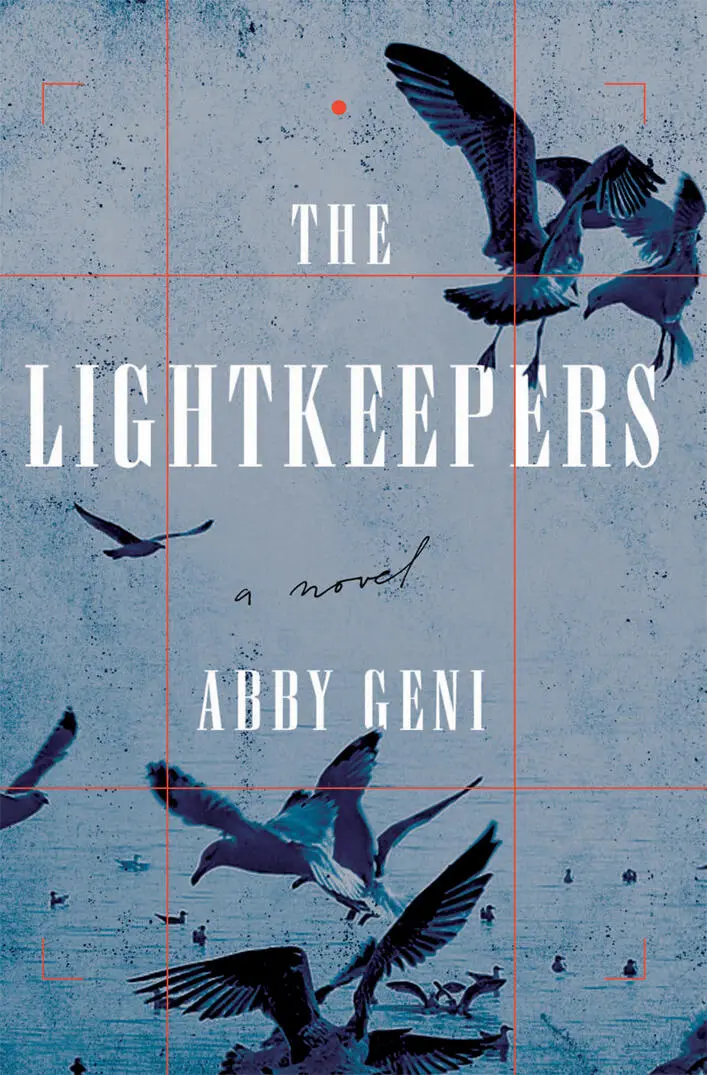
- Название:The Lightkeepers
- Автор:
- Издательство:Counterpoint
- Жанр:
- Год:2015
- ISBN:9781619027497
- Рейтинг книги:4 / 5. Голосов: 1
-
Избранное:Добавить в избранное
- Отзывы:
-
Ваша оценка:
The Lightkeepers: краткое содержание, описание и аннотация
Предлагаем к чтению аннотацию, описание, краткое содержание или предисловие (зависит от того, что написал сам автор книги «The Lightkeepers»). Если вы не нашли необходимую информацию о книге — напишите в комментариях, мы постараемся отыскать её.
, we follow Miranda, a nature photographer who travels to the Farallon Islands, an exotic and dangerous archipelago off the coast of California, for a one-year residency capturing the landscape. Her only companions are the scientists studying there, odd and quirky refugees from the mainland living in rustic conditions; they document the fish populations around the island, the bold trio of sharks called the Sisters that hunt the surrounding waters, and the overwhelming bird population who, at times, create the need to wear hard hats as protection from their attacks.
Shortly after her arrival, Miranda is assaulted by one of the inhabitants of the islands. A few days later, her assailant is found dead, perhaps the result of an accident. As the novel unfolds, Miranda gives witness to the natural wonders of this special place as she grapples with what has happened to her and deepens her connection (and her suspicions) to her companions, while falling under the thrall of the legends of the place nicknamed “the Islands of the Dead.” And when more violence occurs, each member of this strange community falls under suspicion.
The Lightkeepers
The Lightkeepers — читать онлайн бесплатно полную книгу (весь текст) целиком
Ниже представлен текст книги, разбитый по страницам. Система сохранения места последней прочитанной страницы, позволяет с удобством читать онлайн бесплатно книгу «The Lightkeepers», без необходимости каждый раз заново искать на чём Вы остановились. Поставьте закладку, и сможете в любой момент перейти на страницу, на которой закончили чтение.
Интервал:
Закладка:
“I’m not going back down that slope,” I hissed in his ear. “I’ll just stay up here forever.”
“Good idea,” he said.
The murre blind was a simple tin shack. Seabirds, as a rule, have good color vision, but they are not adept at recognizing shapes. A group of people standing on a nearby crest would have alarmed them. But a slate-colored hill, topped by a square, incongruous, slate-colored object, did not concern them at all. Mick helped me settle onto a folding chair. The blind smelled funny. Fish and seawater. I leaned forward, compressing my belly, and peered through the window.
The coast ended in an abrupt and dramatic cliff. The murres were packed along that edge, crushed together. There seemed to be no space between their bodies, no glimpse of rocky ground. They moved constantly. The mosaic of black and white feathers shifted like static on a screen. It was hard to pick out individual shapes. The occasional flash of lipstick red indicated an open beak. The noise was deafening. The square frame of the window made me feel as though I were looking through a viewfinder. The verge of the precipice was ruffled with feathers and beaks. Beyond that, the sea stood solid and imposing, a flat slab of gray.
After a while, I began to notice the chicks. Most of them were still at an intermediate stage, midsized, with a mangy appearance, their baby fluff not quite gone, their adult feathers not quite grown in. We had come to the blind to watch these chicks learning to fly. I had observed the process with the gulls already. I had seen that the necessary muscles were in place, and there was clearly an instinctive understanding of what to do, yet a stumble or two was inevitable on the way — a confused farce of trial and error. I had watched young gulls turning sideways in midair, landing on their heads, or simply flapping their wings while running across the rocks, their little faces illuminated with elation, quite sure that they were airborne.
With the murres, however, the matter turned out to be very different.
“There,” Mick said, pointing. “Right there.”
A pair of birds had taken their chick to the edge of the cliff. Before my eyes, a conversation took place, the parents instructing and the baby responding. (I could not, of course, hear their voices over the clamor; I just watched their beaks opening and closing like a silent film.) And then the chick was plummeting toward the sea. I cried out as the tiny body whizzed downward. Had the parents shoved it? Had the wind caught it at the wrong moment? Had the chick jumped of its own accord? I could not be certain. For a moment, things looked bleak. The chick was accelerating. Moving at that speed, it would not survive a collision with the water.
Then I saw a flutter. A wiggle. The chick flung out its wings. Mick whooped. Galen tugged a small green notebook from his pocket and scribbled something down. The chick flapped once, twice, and began to rise.
THAT EVENING, I made my announcement. I waited until dinner was over. We had just received a delivery from the mainland, and we spent the meal luxuriating in a wealth of salad and fresh fruit. Lucy made chicken with a rich pesto sauce. Dinner was punctuated by groans and the scraping of forks. When we had all eaten our fill — when everyone was leaning back in their chairs, eyeing the dirty dishes balefully — I got to my feet. I lifted my water glass and clinked it feebly with my knife.
“I have something to tell you,” I said.
Lucy was watching me steadily. I found it impossible to meet her gaze. Mick intervened. With incredible swiftness, he unzipped my sweatshirt. He yanked the fabric aside with the showmanship of a magician opening a curtain onstage. I was wearing only a thin T-shirt underneath. My belly was undeniable.
“We’re pregnant!” Mick crowed, laying a hand on that swollen globe.
In that instant, I saw that nobody was the least bit surprised. I was in my third trimester now. Everything about me was different — bulbous breasts, puffy rear end, indistinct jawline. Still, they all went through the motions. Galen congratulated me in a deep, booming voice. He got to his feet and laid his hands on my shoulders in a kind of solemn benediction. Forest kept a placid smile on his face. Lucy flashed me a bright, true grin. She gave me the first real hug I’d ever received from her.
“He’s going to be a great dad,” she whispered in my ear.
The evening that followed was strange. They were biologists, and I had become an interesting specimen. Forest occasionally shot me a look I could not interpret; it might have been amusement or discomfort. Lucy insisted on feeling the baby, laying icy hands on my stomach. She stood there for a long time, beaming, waiting until the fetus responded with a kick. Behind her eyes, there was a suggestion of something more than happiness. Relief, maybe.
The clock ticked in the corner. Someone had broken out a case of wine. I sipped grape juice with a sour aftertaste — a few weeks past its sell-by date, I guessed. As the hours passed, I remained quiet. I did not have to lie. I did not have to say anything at all. Mick sat beside me, shielding me, deflecting every question, filling the space with his big, benevolent presence.
At one point he reached over and took my hand. Not since your death had I felt so safe, so protected, so loved.
LATER THAT NIGHT, I was woken by a strange sound. At first I thought it was my seal pup — my lost-and-found pup — calling for me again. Crying for its mother one last time. It took me a while to come fully into consciousness. The keening went on, punctuated by heavy, sodden breathing. Gradually I realized that it was human. A wracked, heartbroken, anguished noise. Someone was sobbing.
I sat up in bed, palming the hair out of my face. For the life of me, I could not figure out where the sound was coming from. It could have been Lucy downstairs, weeping into her pillow. But it also could have been coming from the hall outside my door — from Galen’s room, maybe. The wind whirling around the cabin played tricks on my ears. The voice itself was not recognizable. Pain had distorted it, washing out the usual characteristics: age, gender, vocal quality. There was something universal, I realized, in the noise of a person crying. I did not dare get out of bed and try to locate the sufferer. What I was hearing was too intimate for that. I tilted my head to the right and left, trying to pinpoint the source. But I could not solve the riddle. The sound was coming from everywhere at once, as though the house itself were in tears.
36
THERE IS NO way forward except through words. Since you died, I have dealt with every tragedy and loss the same way — by writing. So I will write to you now. Even though my letters have begun to feel hollow, even though the act brings me less and less solace, I will write to you. There is no remedy for what happened today. But I will put the words on paper anyway, hoping against hope for comfort.
The first few hours of the morning were lovely. I woke late, wrapped in what felt like a quilt of sunlight. Captain Joe had recently made an appearance, which meant the fridge was stocked. I ate a bowl of cereal with strawberries and fresh, creamy milk. I found a gossip magazine crammed at the back of the bookshelf, where it had been hiding, undiscovered, for my entire tenure on the islands. I flipped through it with glee. The house was quiet. Only Galen was home. He and I maintained a companionable silence, moving around each other with the mute ease of goldfish in a bowl.
Around ten o’clock Lucy appeared at the front door, hard hat in place. In her poncho, she rustled across the room to where I lay on the couch.
“Get up,” she said, standing over me.
“Why?”
“I need help. Mick dropped a piece of equipment in the water. One of my best nets. It’s caught on a reef. We need all hands on deck.”
Читать дальшеИнтервал:
Закладка:
Похожие книги на «The Lightkeepers»
Представляем Вашему вниманию похожие книги на «The Lightkeepers» списком для выбора. Мы отобрали схожую по названию и смыслу литературу в надежде предоставить читателям больше вариантов отыскать новые, интересные, ещё непрочитанные произведения.












Обсуждение, отзывы о книге «The Lightkeepers» и просто собственные мнения читателей. Оставьте ваши комментарии, напишите, что Вы думаете о произведении, его смысле или главных героях. Укажите что конкретно понравилось, а что нет, и почему Вы так считаете.