Abby Geni - The Lightkeepers
Здесь есть возможность читать онлайн «Abby Geni - The Lightkeepers» весь текст электронной книги совершенно бесплатно (целиком полную версию без сокращений). В некоторых случаях можно слушать аудио, скачать через торрент в формате fb2 и присутствует краткое содержание. Год выпуска: 2015, ISBN: 2015, Издательство: Counterpoint, Жанр: Современная проза, на английском языке. Описание произведения, (предисловие) а так же отзывы посетителей доступны на портале библиотеки ЛибКат.
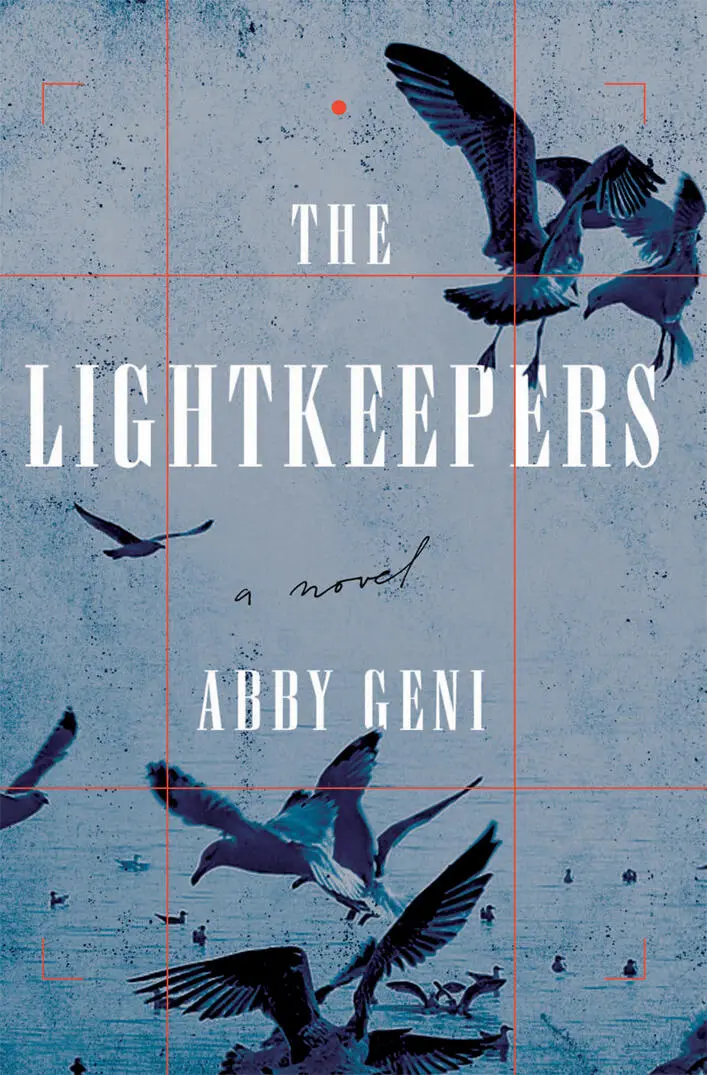
- Название:The Lightkeepers
- Автор:
- Издательство:Counterpoint
- Жанр:
- Год:2015
- ISBN:9781619027497
- Рейтинг книги:4 / 5. Голосов: 1
-
Избранное:Добавить в избранное
- Отзывы:
-
Ваша оценка:
The Lightkeepers: краткое содержание, описание и аннотация
Предлагаем к чтению аннотацию, описание, краткое содержание или предисловие (зависит от того, что написал сам автор книги «The Lightkeepers»). Если вы не нашли необходимую информацию о книге — напишите в комментариях, мы постараемся отыскать её.
, we follow Miranda, a nature photographer who travels to the Farallon Islands, an exotic and dangerous archipelago off the coast of California, for a one-year residency capturing the landscape. Her only companions are the scientists studying there, odd and quirky refugees from the mainland living in rustic conditions; they document the fish populations around the island, the bold trio of sharks called the Sisters that hunt the surrounding waters, and the overwhelming bird population who, at times, create the need to wear hard hats as protection from their attacks.
Shortly after her arrival, Miranda is assaulted by one of the inhabitants of the islands. A few days later, her assailant is found dead, perhaps the result of an accident. As the novel unfolds, Miranda gives witness to the natural wonders of this special place as she grapples with what has happened to her and deepens her connection (and her suspicions) to her companions, while falling under the thrall of the legends of the place nicknamed “the Islands of the Dead.” And when more violence occurs, each member of this strange community falls under suspicion.
The Lightkeepers
The Lightkeepers — читать онлайн бесплатно полную книгу (весь текст) целиком
Ниже представлен текст книги, разбитый по страницам. Система сохранения места последней прочитанной страницы, позволяет с удобством читать онлайн бесплатно книгу «The Lightkeepers», без необходимости каждый раз заново искать на чём Вы остановились. Поставьте закладку, и сможете в любой момент перейти на страницу, на которой закончили чтение.
Интервал:
Закладка:
“Yup.” She flexed her elbow. “The dislocation has been healing fine. No more sling for me! My concussion wasn’t too bad, either. Sometimes my head aches in rainy weather, but that should pass.”
“Great,” I said.
She tugged a pair of jeans off a shelf and looked them over with a grimace. After holding them to her nose, she tossed them into the garbage can.
“How is it?” I asked. “Being back on the mainland?”
“Oh, fine,” she said.
“Do you miss us?”
She lobbed a sweater at me. “Do you want this? It used to be my favorite, but I can’t see wearing it out in public.”
“Sure. Thanks.”
I waited for her to reciprocate, asking questions about us, about the islands, but she did not. Instead, she kept busy, moving around the room.
“Do you have to go right back?” I asked. “Can you stay for dinner?”
“The pilot’s waiting. My parents are paying him by the hour.”
Something about her was different. She looked as though she had been varnished. After a while, I realized that she had makeup on. It was subtle, but I could tell — a darkening of the lashes, the cheeks unnaturally rosy. There was an odor in the air, too. Lavender and incense. Charlene was wearing perfume.
Finally she spoke. “Is Galen around?”
“Sure. I think he’s at Dead Sea Lion Beach. I could go—”
“No, no.” She waved a hand airily. “I wanted to ask him something, that’s all.”
“You could leave him a note.”
“It’s nothing,” she said.
But she seemed somehow defeated. I wondered whether she had come all this way just to talk to Galen. I wondered why.
She upended a heap of socks onto the bed. They all appeared to be mismatched, and many had visible holes. She sorted through them, flinging pair after pair into the garbage can, her lip curling in disgust.
“Charlene,” I said.
“Hm?” she murmured, intent on her task.
“The day you got hurt,” I said.
“These are Mick’s,” she said.
“Why was I wearing Mick’s socks?”
“Were you alone on Lighthouse Hill?”
“Alone?” she asked, now starting on a collection of underwear.
“On the hill. When you fell.”
At last, Charlene gave me her full attention. Her hands were suspended in midair, holding a black cotton bra with a rip in the right cup. She gazed at me with the look I remembered, as focused and inquisitive as a bird.
“I need to know,” I said. “Was anybody with you?”
Her eyes were wide, the pupils dilated.
“I don’t remember anything about that whole day,” she said. “Nothing. My doctors said it’s not unusual with a head trauma.” She frowned. “Sometimes I get flashes. The hill, the rocks. The morning light. But when I actually fell—” She shook her head. “I don’t remember. That may never come back.”
“Right,” I said softly.
There was a silence, broken only by the chatter of the birds. I glanced toward the window in time to see a spray of feathers — a gull brushing the glass.
“That’s actually what I wanted to ask Galen about,” Charlene said. “Now that you mention it.”
“What is?”
In a convulsive gesture, she reached up with both hands and tugged at her red hair.
“I thought he might know what happened,” she said.
I gave her a searching look.
“He and I have talked on the phone a few times,” she said. “From the hospital, mostly. I kept getting the feeling that he knew more than he was letting on. I asked him directly once or twice, but he would never quite—”
She broke off.
“I was hoping he would be here,” she said.
“I see.”
A gull squawked outside — a chick, from the sound of it. Charlene seemed to recollect herself. She flashed me a smile that did not quite touch her eyes.
“It doesn’t matter,” she said. “I’m going to be fine.”
I was not sure how to respond; I had not fully followed her train of thought. But she did not seem to expect a reply. She knelt down, tugging a box from under the bed. I had the sense that she was avoiding my eyes.
Within the hour, I found myself accompanying her to the helicopter, both of us in hard hats and ponchos. Charlene would shed her flea collars and mask as soon as she was safely away from the islands. The pilot saw us coming, and the rotor began to spin above my head, lazily at first, then with greater intensity. It was enough to disturb the gulls, who took flight, a geyser of wings and beaks. Their cries were deafening. I was carrying one of Charlene’s suitcases, while she struggled with the other. The pilot threw open the helicopter door. Charlene screamed something, and he screamed back, but the avian clamor was such that I did not catch a word.
Then Charlene turned to me. She tugged down her mask so I could see her face, which wore an amiable expression. She leaned in and planted a kiss on my cheek. I wanted to say something to her, some final words of affection. But before I could come up with anything meaningful, I felt a hand on my belly. Charlene’s touch was gentle, yet she moved unerringly, pushing through the layers of sweaters I was using to cover up my bump. Her palm was warm.
“Congratulations,” she whispered.
She withdrew her hand.
“You should leave too, Melissa,” she said. “You should leave soon. It’s not safe for you here.”
34
MICK AND FOREST are no longer able to make their nightly jaunts to the coast guard house. Until recently, these evening trysts did continue. Waking in the night, I would hear voices outside my window. I’m not sure how often the two of them engaged in these perilous nights of love. Sometimes it seemed that they were out there every day, and sometimes it was more like twice a month. Now and then, waking to the sound of Mick’s soft chuckle, I would smile to myself and reach for my camera. Each time, though, I resisted the urge to snoop. Somewhere under my bed, piled among the debris I had accumulated — jeans too tattered to wear without revealing the color of my underwear, a seal stone I had found on the shoreline, books falling apart under the influence of mildew, watertight tubs filled with precious caches of undeveloped film — there was a digital camera full of glorious images. On the evening that I’d taken those photos, I had promised myself that I would leave well enough alone. I would give Mick and Forest the privacy they so obviously craved.
Now, however, the situation is different. Bird Season means that Southeast Farallon is a battleground, strewn with enemy combatants. Mick and Forest would have to be crazy to sneak to the coast guard house under these circumstances. In the darkness, they could step off the path into the nesting areas. Within seconds, they would have attracted the rage of the gulls. I can picture the scene. The crunch of an eggshell. The squawk of birds. Mick and Forest might try to run. The gulls would take to the air. It would become a free-for-all. Birds would come whizzing in from every corner of the islands — the avian version of a feeding frenzy. Mick and Forest would be found in the morning, bare skeletons, their flesh picked clean.
Over the past few weeks, there has been friction between the two men. This is hardly surprising. They are lovers who cannot indulge in lovemaking. (I still don’t understand why they can’t do their business, safely and discreetly, in the comfort of their shared bedroom.) At mealtimes, they will often engage in little bouts of grouchiness. A discussion about who should pass the salt will devolve into a war of polite, irritated words, both men flashing hard, fixed smiles. Once or twice, I have even caught them arguing — really arguing — when they think they are alone.
All of us are tense. Perhaps it is the loss of Charlene — her geniality and ease. Perhaps it is the aggressiveness of the birds seeping into our own behavior. There have been more spats and disagreements than usual. Galen and Mick have quarreled over the proper procedure for tagging the storm-petrels. Lucy and Forest have fallen into door-slamming over whose turn it is to do the dishes.
Читать дальшеИнтервал:
Закладка:
Похожие книги на «The Lightkeepers»
Представляем Вашему вниманию похожие книги на «The Lightkeepers» списком для выбора. Мы отобрали схожую по названию и смыслу литературу в надежде предоставить читателям больше вариантов отыскать новые, интересные, ещё непрочитанные произведения.












Обсуждение, отзывы о книге «The Lightkeepers» и просто собственные мнения читателей. Оставьте ваши комментарии, напишите, что Вы думаете о произведении, его смысле или главных героях. Укажите что конкретно понравилось, а что нет, и почему Вы так считаете.