Abby Geni - The Lightkeepers
Здесь есть возможность читать онлайн «Abby Geni - The Lightkeepers» весь текст электронной книги совершенно бесплатно (целиком полную версию без сокращений). В некоторых случаях можно слушать аудио, скачать через торрент в формате fb2 и присутствует краткое содержание. Год выпуска: 2015, ISBN: 2015, Издательство: Counterpoint, Жанр: Современная проза, на английском языке. Описание произведения, (предисловие) а так же отзывы посетителей доступны на портале библиотеки ЛибКат.
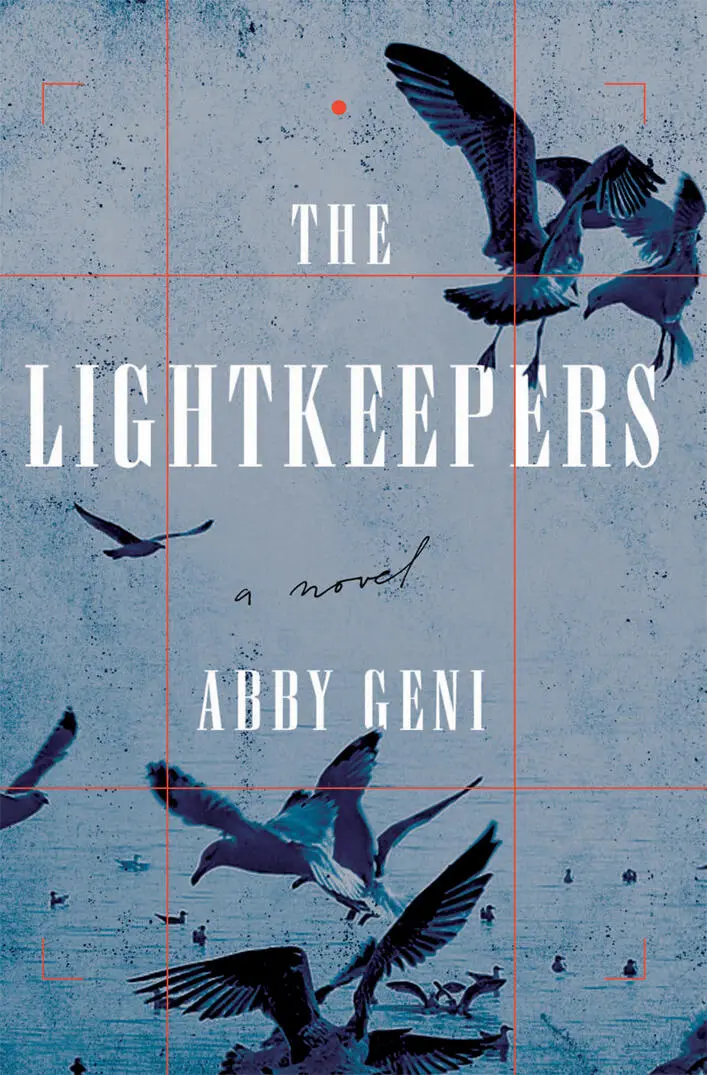
- Название:The Lightkeepers
- Автор:
- Издательство:Counterpoint
- Жанр:
- Год:2015
- ISBN:9781619027497
- Рейтинг книги:4 / 5. Голосов: 1
-
Избранное:Добавить в избранное
- Отзывы:
-
Ваша оценка:
The Lightkeepers: краткое содержание, описание и аннотация
Предлагаем к чтению аннотацию, описание, краткое содержание или предисловие (зависит от того, что написал сам автор книги «The Lightkeepers»). Если вы не нашли необходимую информацию о книге — напишите в комментариях, мы постараемся отыскать её.
, we follow Miranda, a nature photographer who travels to the Farallon Islands, an exotic and dangerous archipelago off the coast of California, for a one-year residency capturing the landscape. Her only companions are the scientists studying there, odd and quirky refugees from the mainland living in rustic conditions; they document the fish populations around the island, the bold trio of sharks called the Sisters that hunt the surrounding waters, and the overwhelming bird population who, at times, create the need to wear hard hats as protection from their attacks.
Shortly after her arrival, Miranda is assaulted by one of the inhabitants of the islands. A few days later, her assailant is found dead, perhaps the result of an accident. As the novel unfolds, Miranda gives witness to the natural wonders of this special place as she grapples with what has happened to her and deepens her connection (and her suspicions) to her companions, while falling under the thrall of the legends of the place nicknamed “the Islands of the Dead.” And when more violence occurs, each member of this strange community falls under suspicion.
The Lightkeepers
The Lightkeepers — читать онлайн бесплатно полную книгу (весь текст) целиком
Ниже представлен текст книги, разбитый по страницам. Система сохранения места последней прочитанной страницы, позволяет с удобством читать онлайн бесплатно книгу «The Lightkeepers», без необходимости каждый раз заново искать на чём Вы остановились. Поставьте закладку, и сможете в любой момент перейти на страницу, на которой закончили чтение.
Интервал:
Закладка:
After that, I turned away from the window. Mick later told me that the birds had picked the seal’s body clean. There was nothing left but bones.
32
A FEW DAYS AGO, I sat down with Mick. It was a breezy afternoon in May. The others were away on Bird Watch, as usual. Lucy had taken Forest and Galen with her to the murre blind. They had brought the video camera to film the birds in secret — the ultimate voyeurs. They would not be back until nightfall.
I brewed a pot of tea. I poured two cups. I handed one to Mick, who was sitting on the couch, watching me with eyebrows raised.
“I’m pregnant,” I said.
He paused before he replied, taking a long, contemplative sip.
“I know,” he said.
I stared for a moment, then sat down beside him.
“ I didn’t know,” I said.
He shrugged. “Well, I’m smarter than you.”
He took another pull of tea, inhaling the steam. I hadn’t touched mine, though I drew some comfort from the warm mug in my palms.
“You’re pretty far along, aren’t you?” he said. “I’d say you’re into the second trimester. The jawline — the breasts — and you’ve got the mask of pregnancy on your face. The pigmentation of the skin, right here.”
He reached toward my cheek. I batted his hand away.
“I’ve been watching you for weeks,” he said. “I’ve got three sisters and about a dozen nieces and nephews. You were never going to be able to hide it from me. The way you walk. The way you get up from a chair.”
“You’re the first one I’ve told,” I said.
“Really?”
“Really.”
My conscience gave an uncomfortable squirm. I had sent home several postcards in the past month, all of them bland, frivolous, and mendacious. Perhaps it was unforgivable that I had left my father in the dark. If anyone deserved to know — to be prepared — it was Dad. He was my only real family, after all.
But I had not told him, because I could not tell him. There were no words. The words were unready, unripe. I could never find them on my tongue or the tip of my pencil. They were somewhere else, floating, slippery, half-formed.
I felt a splash of hot liquid across my arm. My mug of tea had begun to tilt. The room seemed to pivot. The ceiling was twisting like a cap coming off a bottle. I thought I was going to faint. A moment later, Mick had his arm around me. He shoved my head between my knees, his hand on the back of my neck.
“Breathe,” he said. “Nice and easy. That’s right.”
“Sorry,” I gasped. “I haven’t actually said it out loud before.”
Spots danced in front of my eyes. Mick rubbed my nape.
“Congratulations,” he said. “I guess.”
“Thanks,” I whispered.
I inhaled in rhythm with the movement of his hands. His fingers tracked up and down my spine, guiding my breath.
“I know what happened,” he said.
“What?”
“I know who the father is, I mean.”
“Goddamn it, Mick.”
“It was Andrew, right?”
I punched him. I used all my strength. The blow was wild, glancing off his upper arm. Mick observed the action with the bemusement of a cat watching the flight of a bumblebee. He dusted off the place where I had struck.
“I’m sorry,” he said. “I know you’re in a tough spot. I’m sure it’s been hard.”
I stared down at my lap.
“But I did the math,” he went on. “I know it wasn’t me.” He held up a finger. “Definitely wasn’t Forest.” A second finger. “Sure as hell wasn’t Galen.” A third finger. “So that just leaves—”
A silence fell. The weight of the fetus was heavy on my spine. These days, it was all but impossible to find a comfortable pose. The baby’s girth could not be contained; it was always pressing on my bladder or lodged beneath my diaphragm, crumpling my intestines. Kamikaze Pete broke the stillness. With a shriek, he rose outside the window, his wings beating inches from the glass.
It was an awful word: father . It was an unanswerable idea. Under the circumstances, I could not lie. I could hardly blame an old boyfriend for my situation. I couldn’t make up a story about going to a bar — a stranger, a one-night stand. My only hope was to stall and evade. I had practiced a few noncommittal responses in preparation for this conversation. That’s for me to know and you to find out. Oh, let’s not get into it. It’s my little secret. Pathetic quips. Useless and unconvincing. I had not been able to think of a decent solution for the quandary of the baby’s father. Despite all my fretting, all my planning, I hadn’t come up with anything good.
“I’m sorry,” Mick said again, softer this time.
“Thanks,” I said.
“So tell me. Let’s hear the whole story.”
“I don’t think so.”
“Come on,” he said. “The curiosity has been killing me.”
Outside, the roar of the gulls ticked up a notch, as though someone had adjusted the volume on a vast outdoor speaker.
“We don’t talk about the past here,” I said.
The words had a hollow sound to my ears, but Mick nodded. His expression became solemn, as though I’d given the correct passcode.
“Let me get you some more tea,” he said.
He got to his feet. With that, the subject was closed.
A WEEK LATER, on a rainy afternoon, Galen left a book on my bed. There was a Post-it note on the cover in his distinctive, meticulous script: For Miranda. It was a volume I had not seen before, which made me suspect he had been hoarding it. Galen has a cache of goodies in his room — seal stones, bird skeletons, shark teeth, who knows what else. This area is off-limits to the rest of us. We are all aware that there are treasures behind that cracked wooden door. Galen keeps oddities, trophies, and relics. He keeps animal skulls, feathers, and tiny mouse skins. Once, long ago, he told me that his collection even contains a few mementos from the human side of things as well. Love letters. Forgotten items of jewelry. Interesting hats.
I turned the book over in my hands. It seemed to focus on the history of the Farallon Islands. I flipped through it idly. I was not sure why Galen wanted me to read it, but I was not about to disobey an order from him, however indirect.
I settled in bed, on my side, so the baby’s weight would not be balanced on my spine. At first — I will be honest — I wasn’t really paying attention. The radiator clunked. A drizzle pattered the windows. I leafed through the pages without much interest. It seemed that the islands had always had a dubious reputation. The Miwok Indians of California had viewed the place as a sort of earthly perdition, where the damned were sent to dwell forever in perpetual hardship.
I yawned.
The next chapter was about Bird Season — about the eggers. I pricked up my ears a little, reading with greater urgency. The story began with a man who had the unlikely name of Doc Robinson. In the 1800s, the gold rush was on. Doc Robinson came to San Francisco, like everyone else, to make his fortune. But he was an uncommonly wily fellow. In between panning for nuggets and having his heart broken over the plethora of fool’s gold, he noticed something no one else had yet perceived: there weren’t enough chickens in California. All the beloved foods that were made with eggs — pastries, omelets, mayonnaise — were absent from daily life.
Even then, Bird Season on the Farallon Islands was notorious. The archipelago was as yet untenanted — a bare, stripped sculpture of stone, a nautical hazard, a spooky silhouette against the dusky horizon. Passing sailors had returned to the mainland with tales of more birds than there were stars in the sky. Hundreds of thousands of eggs, there for the taking. (The gulls had not yet achieved their current supremacy. The ruling force, throughout the summer months, had been the murres.) Doc Robinson had heard these stories. It did not concern him that the murre eggs looked nothing like chicken eggs. They were not smooth, ivory, palatable orbs. Instead, the murres laid green-blue spheres the size of softballs, with leathery, freckled hides. Often their eggs were marked by what appeared to be letters in an unknown alphabet. It would not do to cook them outright: the whites were translucent, the yolks as red as blood, and they tasted fishy. Unappetizing, to say the least.
Читать дальшеИнтервал:
Закладка:
Похожие книги на «The Lightkeepers»
Представляем Вашему вниманию похожие книги на «The Lightkeepers» списком для выбора. Мы отобрали схожую по названию и смыслу литературу в надежде предоставить читателям больше вариантов отыскать новые, интересные, ещё непрочитанные произведения.








Обсуждение, отзывы о книге «The Lightkeepers» и просто собственные мнения читателей. Оставьте ваши комментарии, напишите, что Вы думаете о произведении, его смысле или главных героях. Укажите что конкретно понравилось, а что нет, и почему Вы так считаете.