Abby Geni - The Lightkeepers
Здесь есть возможность читать онлайн «Abby Geni - The Lightkeepers» весь текст электронной книги совершенно бесплатно (целиком полную версию без сокращений). В некоторых случаях можно слушать аудио, скачать через торрент в формате fb2 и присутствует краткое содержание. Год выпуска: 2015, ISBN: 2015, Издательство: Counterpoint, Жанр: Современная проза, на английском языке. Описание произведения, (предисловие) а так же отзывы посетителей доступны на портале библиотеки ЛибКат.
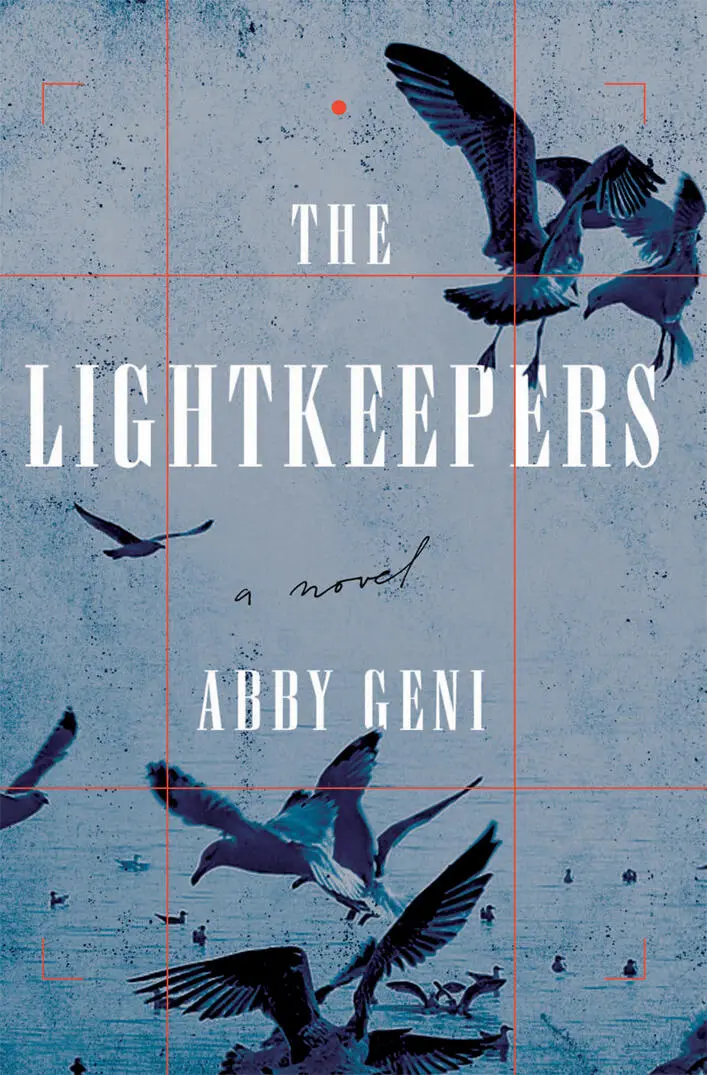
- Название:The Lightkeepers
- Автор:
- Издательство:Counterpoint
- Жанр:
- Год:2015
- ISBN:9781619027497
- Рейтинг книги:4 / 5. Голосов: 1
-
Избранное:Добавить в избранное
- Отзывы:
-
Ваша оценка:
The Lightkeepers: краткое содержание, описание и аннотация
Предлагаем к чтению аннотацию, описание, краткое содержание или предисловие (зависит от того, что написал сам автор книги «The Lightkeepers»). Если вы не нашли необходимую информацию о книге — напишите в комментариях, мы постараемся отыскать её.
, we follow Miranda, a nature photographer who travels to the Farallon Islands, an exotic and dangerous archipelago off the coast of California, for a one-year residency capturing the landscape. Her only companions are the scientists studying there, odd and quirky refugees from the mainland living in rustic conditions; they document the fish populations around the island, the bold trio of sharks called the Sisters that hunt the surrounding waters, and the overwhelming bird population who, at times, create the need to wear hard hats as protection from their attacks.
Shortly after her arrival, Miranda is assaulted by one of the inhabitants of the islands. A few days later, her assailant is found dead, perhaps the result of an accident. As the novel unfolds, Miranda gives witness to the natural wonders of this special place as she grapples with what has happened to her and deepens her connection (and her suspicions) to her companions, while falling under the thrall of the legends of the place nicknamed “the Islands of the Dead.” And when more violence occurs, each member of this strange community falls under suspicion.
The Lightkeepers
The Lightkeepers — читать онлайн бесплатно полную книгу (весь текст) целиком
Ниже представлен текст книги, разбитый по страницам. Система сохранения места последней прочитанной страницы, позволяет с удобством читать онлайн бесплатно книгу «The Lightkeepers», без необходимости каждый раз заново искать на чём Вы остановились. Поставьте закладку, и сможете в любой момент перейти на страницу, на которой закончили чтение.
Интервал:
Закладка:
Even now, I can’t explain what was driving me. The inclination had come with the force of an edict from heaven. There was no gainsaying it. Maybe it had to do with the indignity of Oliver’s captivity in this wild place. Maybe it had to with Lucy herself — her ignorance, her cruelty. Maybe it had to do with the prodigal seal pup that had been returned to me, against all odds, by the islands — the pup who had, in turn, revealed to me the tiny creature incubating in my own belly. That fish-fetus swam in a private tank, a bath of amniotic fluid. Squirming in the warm darkness. Wiggling its anemone fingers. Sharing my breath and blood.
Slowly I stretched out both hands, my palms hovering above the water. After a moment, Oliver took the initiative. His tentacles were as slippery as earthworms. I could not restrain a grimace. The suckers hurt a little, which surprised me; I had imagined them to be smooth and hard, like suction cups. Instead, they seemed to be made of a thousand tiny feelers. I did not rush him. I allowed him to explore my skin. The furious red began to leave his flesh. He wrapped a wet arm around my pinkie. It was an oddly intimate gesture, his grip as gentle as a baby’s.
Then I felt a pull. He was hoisting himself upward, levering himself against my fingers. He was heavier than I had anticipated — the weight and solidity of a softball. The tentacles slithered around my wrists, braided across my skin.
A few minutes later he was in the plastic bucket. I had my coat on, heading for the sea. The air was tinged with salt. Oliver bobbed awkwardly around, sloshing back and forth with each stride. Occasionally the centrifugal force would roll him over in a pinwheel of tentacles. I was moving fast, though there was not a soul to be seen. For the moment, I had Southeast Farallon to myself. I was glad of it. When Lucy noticed, in a day or two, that her pet had disappeared, I would do my best to feign innocence. Oh, the octopus? Gosh, the last time I saw him, he was in his tank.
At the shoreline I slowed down. The stones were slippery, coated with algae. Up close, the water was laced with shadows. I braced myself against a boulder. The sea lapped quietly. I picked up my bucket, tipped it slightly — and Oliver came flying out, lunging through the air, his tentacles akimbo. A rainbow of droplets followed him. He landed in the surf with an undignified smack. I laid a hand on my belly, that taut, fiery orb. This posture had become habitual to me.
Then I felt something new. There was an answering caress from inside my body. A brush. A shift. I did not recognize the sensation. A butterfly seemed to have grazed its wings against the dark interior of my womb.
I froze. I did not breathe until the feeling came again. The touch was as gentle as a snowflake landing. But I knew what was happening now. It was the baby’s quickening. It was the first palpable movement. It was proof of life.
I did not cry. I was done crying. I could still see the octopus, caught in the swell of a wave. Before my eyes, he sucked in a mouthful of water and plunged downward. A wisp of red. A flicker of tentacles. An ocean that was no longer empty.
BIRD SEASON
31
LIFE IS NOT what I thought it was. I am not what I thought I was. A photographer, a nomad, a motherless daughter. A letter-writing woman, shedding a wake of paper and words across the world like the trail of an airplane. An artist with a camera for a brain: cold, clear, calculating. A woman in black.
Galen had asked me: What is your nature, Miranda?
Something happened to me the day I made contact with the seal pup. The day I broke the rule of noninterference. The day I crossed to the other side of the camera and photographed myself. The day I remembered I had a body.
For five months, I missed the fact of my own pregnancy. Yet I do not believe this was entirely my fault. Many of the traditional signs of the condition eluded me altogether — nausea, tender breasts, acne. The symptoms I did experience were hardly definitive. There was a plausible justification for each one.
In short, I do not think I am to blame. I do not think I am insane. I simply did not understand my own nature. Not until now.
The body and the mind are meant to be woven together: thought into emotion into sensation into senses into flesh. But for most of my life I have been rootless, unmoored, a ghost. All thought, no physicality. I have been a person made of artistic sensibility and grief. I have imagined that my mind is paramount, my body secondary — the former an intricate instrument, the latter only a vehicle. My flesh has not factored into my identity. The subtle clues of the physical transformation of pregnancy were lost on me. The weight gain, the hot flashes — these things might have been happening to someone else. The hunger and exhaustion were dim and distant.
I was only able to see myself clearly, at last, through a lens. If I had not stepped onto the side of the camera where animals live — where nature flourishes in all its strangeness and glory — I might never have discovered my own reality.
What is your nature, Miranda?
I do not feel the need to write to you as often. Not anymore. I do not feel a desire to take photographs either. It has been weeks since I ventured across Southeast Farallon with a camera in my hand. At the moment, I have no interest in the life of the mind. Ideas, field of vision, light, death, beauty, ghosts, imagination, shadows, love — these are little things. Unimportant things.
For the past five months, without my knowledge or consent, my body has created a brand new living thing. While my mind was focused on images, and tragedy, and letter-writing, my body has been engaged in miracles.
These new thoughts arrived at the same time as the birds.
THERE IS NO describing Bird Season, not really. In the whole world, there are fifty thousand western gulls. Right now, more than half of that number are here on Southeast Farallon — most of them directly outside my window. And it doesn’t stop there. There is a great murre city tucked behind a high hill. In order to see it, you have to scale the rock face and look down from above. The murres are lovely creatures, finely sculpted. They have the tuxedo coloring of penguins — black backs, white bellies — but penguins can be comical, whereas the murres are nothing short of elegant. Above their rookery, Lucy has built a blind, inside which she can crouch. She scavenged the wood and metal from the coast guard house. She even brought up a couple of kitchen chairs from our cabin. There are a hundred thousand birds in the murre colony. In addition, there are forty thousand auklets on the islands. Twenty thousand cormorants. Four thousand pigeon guillemots.
This information is not news to me. I’ve been hearing about it for weeks from an overexcited Lucy, who looks forward to Bird Season each year like a small child waiting for Christmas. (With the arrival of her beloved avians, she has all but forgotten about her missing pet. The octopus’s tank was emptied and put away without much comment.) I have been aware that the islands will be home, throughout the spring and summer, to a phenomenal host of birds. Still, my expectations were ludicrously inadequate. I imagined that the scene would be something like a peace rally: a throng of feathery bodies cohabiting genially, swapping egg-laying tips and gossip in warbles and chirps. I envisaged a sea of nests packed together like tents at a campground.
The reality has proven to be very different. I’m not sure that anything could have prepared me, but my naïveté certainly didn’t help.
The islands are now white. The birds have stained the stones pale with their guano. Saddle Rock, which I can see from my bedroom window, looks like an ice floe bobbing in the water. The trees are coated with slime. The stench is overpowering, the breeze hung with curtains of ammonia. The air itself is toxic.
Читать дальшеИнтервал:
Закладка:
Похожие книги на «The Lightkeepers»
Представляем Вашему вниманию похожие книги на «The Lightkeepers» списком для выбора. Мы отобрали схожую по названию и смыслу литературу в надежде предоставить читателям больше вариантов отыскать новые, интересные, ещё непрочитанные произведения.



Обсуждение, отзывы о книге «The Lightkeepers» и просто собственные мнения читателей. Оставьте ваши комментарии, напишите, что Вы думаете о произведении, его смысле или главных героях. Укажите что конкретно понравилось, а что нет, и почему Вы так считаете.