Abby Geni - The Lightkeepers
Здесь есть возможность читать онлайн «Abby Geni - The Lightkeepers» весь текст электронной книги совершенно бесплатно (целиком полную версию без сокращений). В некоторых случаях можно слушать аудио, скачать через торрент в формате fb2 и присутствует краткое содержание. Год выпуска: 2015, ISBN: 2015, Издательство: Counterpoint, Жанр: Современная проза, на английском языке. Описание произведения, (предисловие) а так же отзывы посетителей доступны на портале библиотеки ЛибКат.
- Название:The Lightkeepers
- Автор:
- Издательство:Counterpoint
- Жанр:
- Год:2015
- ISBN:9781619027497
- Рейтинг книги:4 / 5. Голосов: 1
-
Избранное:Добавить в избранное
- Отзывы:
-
Ваша оценка:
The Lightkeepers: краткое содержание, описание и аннотация
Предлагаем к чтению аннотацию, описание, краткое содержание или предисловие (зависит от того, что написал сам автор книги «The Lightkeepers»). Если вы не нашли необходимую информацию о книге — напишите в комментариях, мы постараемся отыскать её.
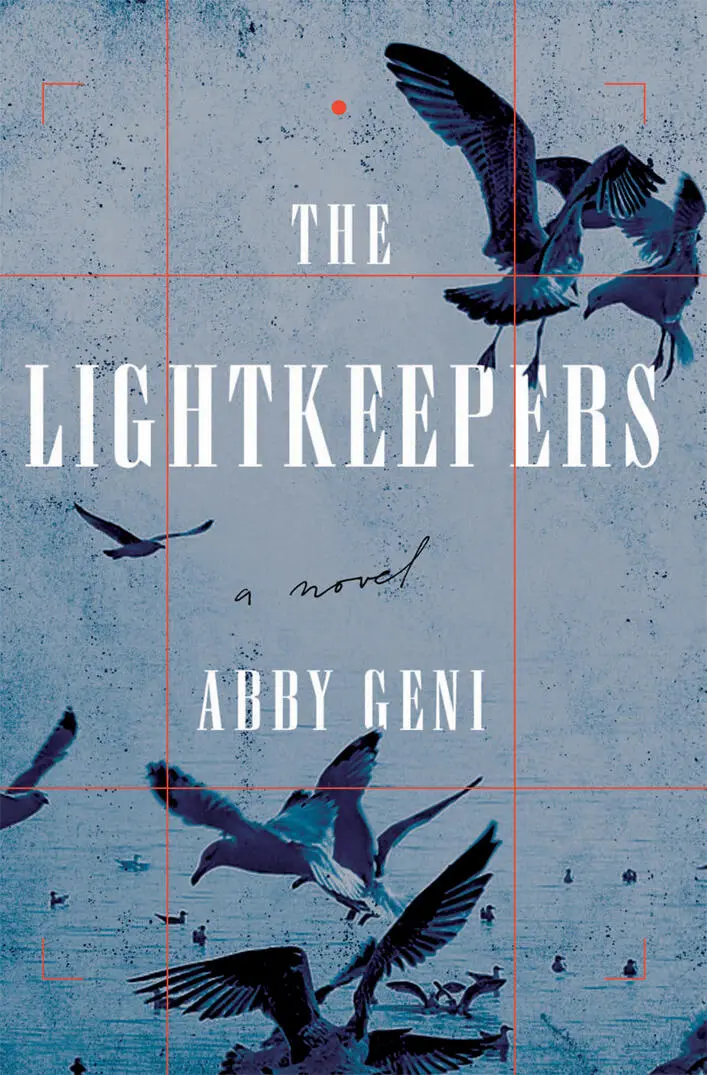
, we follow Miranda, a nature photographer who travels to the Farallon Islands, an exotic and dangerous archipelago off the coast of California, for a one-year residency capturing the landscape. Her only companions are the scientists studying there, odd and quirky refugees from the mainland living in rustic conditions; they document the fish populations around the island, the bold trio of sharks called the Sisters that hunt the surrounding waters, and the overwhelming bird population who, at times, create the need to wear hard hats as protection from their attacks.
Shortly after her arrival, Miranda is assaulted by one of the inhabitants of the islands. A few days later, her assailant is found dead, perhaps the result of an accident. As the novel unfolds, Miranda gives witness to the natural wonders of this special place as she grapples with what has happened to her and deepens her connection (and her suspicions) to her companions, while falling under the thrall of the legends of the place nicknamed “the Islands of the Dead.” And when more violence occurs, each member of this strange community falls under suspicion.
The Lightkeepers
The Lightkeepers — читать онлайн бесплатно полную книгу (весь текст) целиком
Ниже представлен текст книги, разбитый по страницам. Система сохранения места последней прочитанной страницы, позволяет с удобством читать онлайн бесплатно книгу «The Lightkeepers», без необходимости каждый раз заново искать на чём Вы остановились. Поставьте закладку, и сможете в любой момент перейти на страницу, на которой закончили чтение.
Интервал:
Закладка:
Then there is the noise. As long as the birds are awake, they are screaming. A mating pair will holler back and forth for hours. Lucy says that the gulls are communicating, coordinating important matters like who should hunt and who should sit on the eggs — but to me it sounds like some kind of otherworldly battle cry. They shout to tell predators that they are guarding their territory. They shriek some manic version of a lullaby at their own eggs. Each pair of gulls spends most of the day wailing. There are thousands of pairs on Southeast Farallon.
Our routine has changed, as you can imagine. Our presence here is unnatural at the best of times, and we always have to be careful. But during Bird Season, even the smallest of actions can have devastating consequences. At night, I have been told in no uncertain terms to be careful which lights I use. Several of the avian species are nocturnal. By flicking on the overhead bulb in my bedroom, I would be shining a spotlight on their shadowy forms, telling predators where to find them. Instead, I must now use a paltry reading lamp. In the daytime, our movements have been restricted to specific pathways carved through the crush of nests. Every square inch of rock seems to have been claimed. One wrong movement could result in a crunch, an egg oozing its contents onto the grass. Just observe, don’t interfere — that has always been our mantra. It is a hard rule to obey during the present chaos and clamor.
There is also a new uniform to be worn on the grounds. Flea collars around the ankles (to fend off the bird lice). A mask over the mouth and nose (to ward off the smell). Thick leather gloves (to repel slashing beaks). And a hard hat, of all things (more on this later). It’s also sensible to put on a poncho, since the birds will use any method in the book to combat a perceived threat. They will void their bowels with the gusto and precision of bomber jets.
Lucy is now the undisputed queen of the islands. Each morning, she barks out orders, and we all jump to obey. A thousand things have to be done. For thirty years, people have been studying the seabirds here. This legacy is not to be trifled with. Lucy visits the murre blind every day. But there are also the storm-petrels, which have to be banded, despite the fact that they are nocturnal fliers and avian acrobats. Lucy has been staying up until two in the morning, lurking on the cliff edge and holding out a fine mesh net, trying to nab these deft fliers in midair. Bag and tag. Catch and release. Observe and record. The rhinoceros auklets must be tallied, too, which means that Galen and Forest can be found along the shore in the afternoons, shoving their hands into burrows and grabbing out indignant birds. The puffins, meanwhile, have beaks that are shaped like wire cutters and could, in a pinch, be used as such. In the wrong mood, they are quite capable of lopping off a finger.
But the gulls are the worst of all. They kill for food. They kill for pleasure. They kill for no good reason. They are expert assassins. They soar around the islands with bloody beaks and a mad glint in their eyes. It took me a while to discover what Lucy meant when she wrote P.I.H . in the daily log. This stands for “pecked in head,” the gulls’ special method of dispatch. Six chicks dead, found P.I.H. at Rhino Catacombs. Southeast Farallon is littered with little corpses. Broken wings and caved-in skulls are common, the remains of murres and puffins covered in maggots and the juice of gull regurgitation. Downy infants, newly hatched, nestle alongside decomposing carcasses. It is a dreadful sight. This is why the auklets and storm-petrels are nocturnal — and why they dig burrows rather than building nests. In daylight, in the open, they would not stand a chance against the killing machine of twenty-five thousand gulls.
The breeding season seems to fill the gulls with an unstoppable bloodlust. They will attack each other with as much fervor as they do the pigeon guillemots and cormorants. I have seen the gulls engaging in cannibalistic orgies, tearing at a neighbor’s throat and wolfing down its eggs. They do not even limit their assaults to other birds. Packs of young males will go after seals, wheeling around a sleek, gray head and screaming, chasing an animal the size of a motorcycle into the sea. They would happily wipe out the biologists, too, if they could only get a clear shot — hence the hard hats. Mick told me recently about a gull that followed him up and down the shore, working itself into a frenzy. After painting his shoulders with guano and yelling furiously in his ear, the bird grew so outraged that it slammed into Mick’s hard hat at full speed. It broke its own neck and fell to earth, stone dead.
THE OTHER DAY I was in my room, staring out the window. Lucy and the men were on the grounds on Bird Watch, but I had abstained, pleading injury. I had not yet worked up the courage to tell the others about my pregnancy. Instead, I had blamed my bad ankle, even going so far as to wrap it in gauze.
To protect myself and my baby, I have been spending a lot of time in the house. The noise is muffled there, at a remove. I do my best to ignore the thunder of wings, pretending that the chorus of clucking and cackling has a soothing quality, like an atonal symphony. On top of everything else, there is one lunatic gull that has claimed the entire front porch as his personal nesting area. Most birds manage to hold on to, at most, a few bare inches of rock. But this gull is bigger, stronger, and crazier than the rest. We call him Kamikaze Pete. He does not eat or sleep; he just fights, all day long. There is a permanent smudge of bloody crimson on his face. Each time I step onto the porch, Kamikaze Pete appears out of nowhere, walloping my shoulders with his wings and pecking with such ferocity at my hard hat that it makes me see stars. We have all taken to using the back door of the cabin for our entrances and exits.
Now, seated at the window, I caught sight of an elephant seal moving among the nests. The animal appeared to be an adult female, albeit underweight and undersized. She was at some distance from me, making her way toward the water. The image was odd, like a boulder rolling down a snowy hillside. She had a pattern on her shoulder: a birthmark in the shape of a star. I watched her shuffle toward the sea, dislodging the birds, who rose around her with exasperated squawks.
Almost all the elephant seals are gone. The females, pregnant, have moved on. The males, with no harems remaining, have abandoned their precious territory. The pups have taken the leap too, diving into the surf, chasing fish, tumbling and playing, vanishing into the blue. The animals that linger are the ones who cannot leave. The frightened, the sick, the lame — the seals who are unwilling or unable to brave the ocean. This is no place for them. This is no place for anything weak.
The female was already in trouble. I watched her lumbering awkwardly, favoring one of her flippers. Perhaps she had a deformity. Perhaps she had been injured. A few gulls were soaring above her, tracking her. They had not yet worked up enough courage — or ire — to attack. But it was only a matter of time. The seal limped among the nests, and her pursuers screamed and circled.
One gull dived. Another followed suit, closing its wings and plummeting. The seal picked up her uneven pace. The birds began to shriek in a kind of ecstasy. My heart was in my throat. There was nothing I could do to stop this.
Something happened — a flash of beaks — too quick for me to follow. The seal bellowed in pain. Her face was bloodied. The birds dove again, their beaks glinting in the light like bullets. They were aiming for her eyes. They snatched the whiskers off her snout, clumps of fur from her head. She could not defend herself. She could not reach the water. She screamed again, and I saw a gull rising with something in its mouth. A dark, glistening orb, trailing a skein of blood.
Читать дальшеИнтервал:
Закладка:
Похожие книги на «The Lightkeepers»
Представляем Вашему вниманию похожие книги на «The Lightkeepers» списком для выбора. Мы отобрали схожую по названию и смыслу литературу в надежде предоставить читателям больше вариантов отыскать новые, интересные, ещё непрочитанные произведения.












Обсуждение, отзывы о книге «The Lightkeepers» и просто собственные мнения читателей. Оставьте ваши комментарии, напишите, что Вы думаете о произведении, его смысле или главных героях. Укажите что конкретно понравилось, а что нет, и почему Вы так считаете.