Abby Geni - The Lightkeepers
Здесь есть возможность читать онлайн «Abby Geni - The Lightkeepers» весь текст электронной книги совершенно бесплатно (целиком полную версию без сокращений). В некоторых случаях можно слушать аудио, скачать через торрент в формате fb2 и присутствует краткое содержание. Год выпуска: 2015, ISBN: 2015, Издательство: Counterpoint, Жанр: Современная проза, на английском языке. Описание произведения, (предисловие) а так же отзывы посетителей доступны на портале библиотеки ЛибКат.
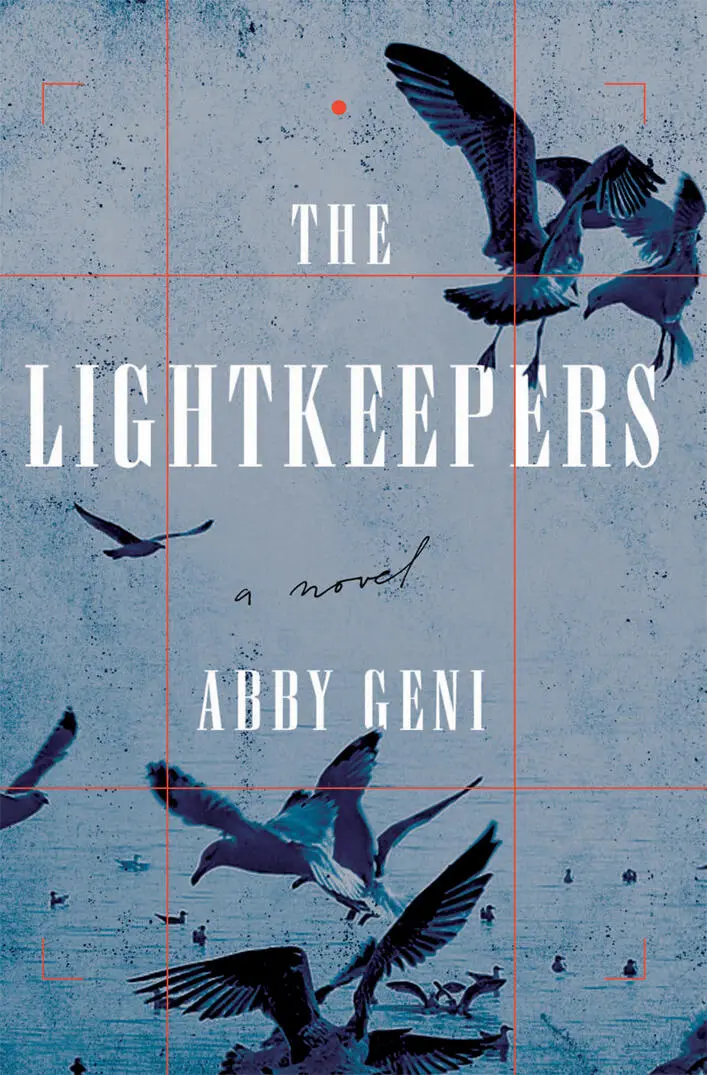
- Название:The Lightkeepers
- Автор:
- Издательство:Counterpoint
- Жанр:
- Год:2015
- ISBN:9781619027497
- Рейтинг книги:4 / 5. Голосов: 1
-
Избранное:Добавить в избранное
- Отзывы:
-
Ваша оценка:
The Lightkeepers: краткое содержание, описание и аннотация
Предлагаем к чтению аннотацию, описание, краткое содержание или предисловие (зависит от того, что написал сам автор книги «The Lightkeepers»). Если вы не нашли необходимую информацию о книге — напишите в комментариях, мы постараемся отыскать её.
, we follow Miranda, a nature photographer who travels to the Farallon Islands, an exotic and dangerous archipelago off the coast of California, for a one-year residency capturing the landscape. Her only companions are the scientists studying there, odd and quirky refugees from the mainland living in rustic conditions; they document the fish populations around the island, the bold trio of sharks called the Sisters that hunt the surrounding waters, and the overwhelming bird population who, at times, create the need to wear hard hats as protection from their attacks.
Shortly after her arrival, Miranda is assaulted by one of the inhabitants of the islands. A few days later, her assailant is found dead, perhaps the result of an accident. As the novel unfolds, Miranda gives witness to the natural wonders of this special place as she grapples with what has happened to her and deepens her connection (and her suspicions) to her companions, while falling under the thrall of the legends of the place nicknamed “the Islands of the Dead.” And when more violence occurs, each member of this strange community falls under suspicion.
The Lightkeepers
The Lightkeepers — читать онлайн бесплатно полную книгу (весь текст) целиком
Ниже представлен текст книги, разбитый по страницам. Система сохранения места последней прочитанной страницы, позволяет с удобством читать онлайн бесплатно книгу «The Lightkeepers», без необходимости каждый раз заново искать на чём Вы остановились. Поставьте закладку, и сможете в любой момент перейти на страницу, на которой закончили чтение.
Интервал:
Закладка:
In that moment, I wanted to be among the elephant seals. I wanted to be close to them, to photograph them while I still could. I grabbed my digital camera and went out in the mist. I followed the roar of their voices, the scent of their musk. A group of them had settled on Marine Terrace, reshaping the shoreline with their bodies. In the fog, they were lumped like clouds, as soft as pillows.
The pattern of their lives has begun to change. The females nurse their babies for a month. At the end of this time, they mate with the alpha male of their harem. Then they return to the ocean without a backward glance. Pregnant, they leave the islands. They leave their pups alone. There is something ruthless about these mothers. Their business on the Farallon Islands is pure biology. Birth, suckle, breed, depart. No emotion. They do not form lasting pair bonds; they attach themselves to the strongest male, receive a deposit of sperm, and move on. They do not teach, protect, or nurture their progeny. They offer milk, and when the milk is gone, they leave.
The juveniles will never see their mothers again. They must learn to swim, hunt, and thrive on their own. They must learn what it is to be an elephant seal without guidance. Over the next few weeks, the babies will remain on land, deserted, figuring out the pulse and swell of the tides, gradually growing hungry enough to risk that first vital dive into the briny blue. They will depart into the sea, following the schools of fish, following the deep rhythms of their own instincts, discovering their true nature, leaving the archipelago in their wake. Next winter, the ones who survive will return to the Farallon Islands to begin the cycle all over again.
On Marine Terrace, I set up my tripod. I had Gremlin with me, one of my digital SLR cameras. The most expensive and flashy of the group. The fog had wiped away the horizon and obscured the border between the ocean and the rocks. The elephant seals seemed ghostly. Their cries were disembodied in the mist. The air was strangely warm. I wondered if the fevered whirl of their mating had heated the coastline. I removed my sweatshirt. I peeled off the cardigan beneath.
Then I heard it. A high, desperate keening. The sound was coming from behind me. It was a seal pup. On land. Somewhere near the cabin. At once I was in motion. I pushed through the damp air, squinting against the haze.
“This way,” I shouted. “Come here. Come to me.”
A dark shape appeared. The baby moved with an irregular gait, lurching and snuffling. As it drew closer, it lifted its muzzle and wailed.
I had dreamed so often of this moment. I could not help but believe. Probably it was not the same lost pup I had seen on my walk with Mick all those weeks ago. Probably it was not the poor creature who had been haunting me ever since, inhabiting my nightmares. I knew the odds. But there was no way to be certain. All the babies looked alike, black and smooth. I bit my tongue to keep from laughing. I did not want to startle it away. The sensation was like wings beating in my chest. I forced myself to believe it was the same lost pup, finally found.
I did not touch it. I was not supposed to touch it. My hands floated in space, encircling its sleek head, miming a caress. Its expression appeared to be pleading. As it approached, I backed away, moving in slow, gentle increments.
“Follow me,” I whispered. “Come on, now.”
The baby obeyed. I led it toward the water. With each step I took backward, the animal bounced forward, as though we were dancing. I stopped at the crest of the hill. My tripod stood skeletal against the mist. On the other side lay a pile of sleeping elephant seals. Gray females. Mountainous males. Inky pups. I waited for the baby to see them — to smell the milk — to hear their throaty breathing — to lunge down the hill — to return to its family at last.
But it did no such thing. It stayed with me, panting at my side. It gazed up at me with what I felt to be adoring eyes. I laughed aloud. I could not help myself. The sound rose out of me like bubbles in soda, bursting into the open air.
“Go on,” I said. “Go home.”
My pointing figure meant nothing to it. A shooing motion meant nothing to it. The wind was as warm as bathwater. The seal pup snuggled down on the rocks as though it intended to linger beside me forever.
I decided to take a picture.
In general, I do not traffic in self-portraits. The human figure is a subject that has been done to death. There is nothing new to say about our hands, our faces, our bones, our eyes, our gestures, our capacity for emotion and expression, the play of light and shadow on our skin, the fragility of our newborns, the strength of our musculature, the inevitable encroachment of our aging process, the finality of our dying. The story of the human body has been told and retold. As a rule, I photograph animals. I photograph landscapes. I leave people outside the frame.
This is doubly true for myself. I am the artist, not the artwork. I do not want to fall into the trap of seeing myself from the outside. I don’t care what I look like. It doesn’t matter what I look like. It only matters how I look at the world.
As I slipped behind the tripod and set the timer, I felt a shiver of apprehension. I was breaking the rules — my own code as a photographer, as well as the biologist’s creed of noninterference. I was about to stand on the wrong side of the camera. I was about to intervene, no longer passive, no longer detached.
Yet this moment seemed to be a powerful exception. Something remarkable was happening here: woman and stone and animal and ocean and fog. I returned to the seal pup, gazing into its eyes. It squeaked, and I made sounds in return. I did not pose; I tried not to pose. The camera clicked in the distance. The baby waddled closer to me. It lifted its whiskery snout. I extended a hand, and we made contact — a damp, warm touch, as intimate as a kiss. I gasped. I had not expected this. I was glad for the curtain of fog, concealing my transgression from view.
I don’t know how long we stayed like that. It might have been minutes. It might have been hours. The sea crashed. The heap of elephant seals snored behind me. The camera snapped image after image. The pup nuzzled its maw against my palm. Its breath on my skin. Its milky scent. The sleepy wells of its eyes.
28
IN THE MORNING, I scanned through the photographs I had taken. I was not expecting anything astonishing. I was not expecting to be struck by a bolt of lightning. I was looking for composition, depth of field, beauty. It is strange to think that a moment like that — quiet, contemplative, alone — can change everything.
But you knew that already, didn’t you? You learned that yourself on an icy road in D.C., all those years ago.
I had just woken up. Bundled in the blankets, I held my camera in my lap. The biologists were scattered through the cabin — chatting in the kitchen, running water in the bathroom, making toast. The smell of coffee filled the air.
The photographs were better than I could have hoped for. The seal pup and I seemed iconic, emblematic. Behind our bodies, the mist was as painterly as brushwork. At first, flicking through the pictures, I focused on the pup. I was hoping for a snapshot that showed it in profile, its canine snout and flippers in full view. I wanted to see its silhouette printed like a shadow puppet on the air. My thumb worked the button, skipping forward, watching the baby move and maneuver on the screen.
Then, somewhat reluctantly, I turned my attention to my own shape. My outstretched fingers. The twist of my hips. The fall of my curls.
I cannot explain how it struck me. I felt hot and cold at the same time. Even before I understood what I was looking at, I had begun to cry. I leaned forward, my nose nearly touching the screen. A wet sob escaped my throat.
Читать дальшеИнтервал:
Закладка:
Похожие книги на «The Lightkeepers»
Представляем Вашему вниманию похожие книги на «The Lightkeepers» списком для выбора. Мы отобрали схожую по названию и смыслу литературу в надежде предоставить читателям больше вариантов отыскать новые, интересные, ещё непрочитанные произведения.












Обсуждение, отзывы о книге «The Lightkeepers» и просто собственные мнения читателей. Оставьте ваши комментарии, напишите, что Вы думаете о произведении, его смысле или главных героях. Укажите что конкретно понравилось, а что нет, и почему Вы так считаете.