Abby Geni - The Lightkeepers
Здесь есть возможность читать онлайн «Abby Geni - The Lightkeepers» весь текст электронной книги совершенно бесплатно (целиком полную версию без сокращений). В некоторых случаях можно слушать аудио, скачать через торрент в формате fb2 и присутствует краткое содержание. Год выпуска: 2015, ISBN: 2015, Издательство: Counterpoint, Жанр: Современная проза, на английском языке. Описание произведения, (предисловие) а так же отзывы посетителей доступны на портале библиотеки ЛибКат.
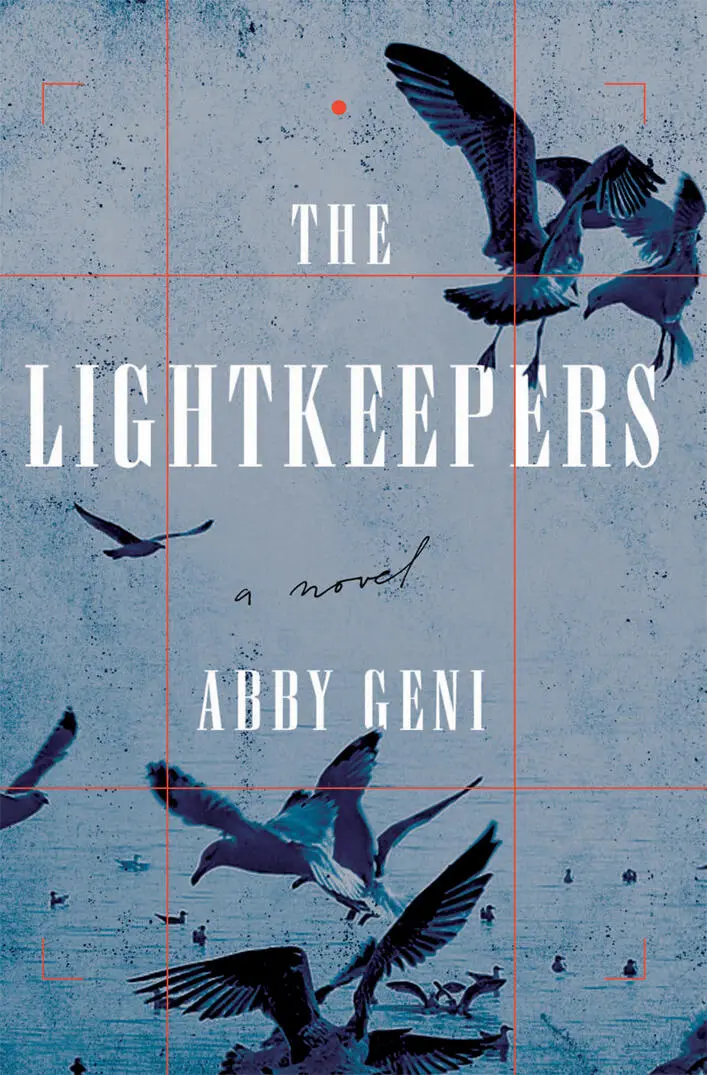
- Название:The Lightkeepers
- Автор:
- Издательство:Counterpoint
- Жанр:
- Год:2015
- ISBN:9781619027497
- Рейтинг книги:4 / 5. Голосов: 1
-
Избранное:Добавить в избранное
- Отзывы:
-
Ваша оценка:
The Lightkeepers: краткое содержание, описание и аннотация
Предлагаем к чтению аннотацию, описание, краткое содержание или предисловие (зависит от того, что написал сам автор книги «The Lightkeepers»). Если вы не нашли необходимую информацию о книге — напишите в комментариях, мы постараемся отыскать её.
, we follow Miranda, a nature photographer who travels to the Farallon Islands, an exotic and dangerous archipelago off the coast of California, for a one-year residency capturing the landscape. Her only companions are the scientists studying there, odd and quirky refugees from the mainland living in rustic conditions; they document the fish populations around the island, the bold trio of sharks called the Sisters that hunt the surrounding waters, and the overwhelming bird population who, at times, create the need to wear hard hats as protection from their attacks.
Shortly after her arrival, Miranda is assaulted by one of the inhabitants of the islands. A few days later, her assailant is found dead, perhaps the result of an accident. As the novel unfolds, Miranda gives witness to the natural wonders of this special place as she grapples with what has happened to her and deepens her connection (and her suspicions) to her companions, while falling under the thrall of the legends of the place nicknamed “the Islands of the Dead.” And when more violence occurs, each member of this strange community falls under suspicion.
The Lightkeepers
The Lightkeepers — читать онлайн бесплатно полную книгу (весь текст) целиком
Ниже представлен текст книги, разбитый по страницам. Система сохранения места последней прочитанной страницы, позволяет с удобством читать онлайн бесплатно книгу «The Lightkeepers», без необходимости каждый раз заново искать на чём Вы остановились. Поставьте закладку, и сможете в любой момент перейти на страницу, на которой закончили чтение.
Интервал:
Закладка:
“I can be someone new here,” I said.
For the first time, Galen smiled. “I suppose that’s true. You can be Melissa or Mel. You can be a little mouse girl.”
“Yes.”
“We can all be someone else on the islands,” he said.
He shifted his weight. I heard a cry outside the window. It sounded like a seal pup.
“Do you want to sit?” Galen said.
“What?”
“Or a glass of water?”
“No. Why?”
“Never mind.”
The octopus turned himself upside down in his tank. There was something arboreal about him in that position — his tentacles scrolling along the screen above him, shifting like tree branches in strong wind. Galen was watching him too. He stepped closer to the glass and bent down. Then he glanced at me. His expression was calculating, his eyes obscured by grizzled brows.
“Every animal acts according to its own nature,” he said.
“I know what you mean,” I said. “An octopus always wants to escape.”
“No,” Galen said. “That’s not what I mean. The octopus doesn’t want to escape. The octopus tries to free itself because that is its nature. The shark hunts because that is its nature. The female elephant seal abandons her young because that is her nature. This is what I was telling you before. Weren’t you listening?”
I realized I had taken a book down from the shelf, a hardcover volume decorated with a photograph of a squid. I was holding it against my chest like a shield.
“It is always a mistake to anthropomorphize an animal,” Galen said. “We can observe its behavior. We can catalog its actions. We can keep a record of what it eats, how it mates, where it urinates and defecates, how it plays, where it finds shelter. We can study its actions all day long. All year long. But we will never know what it thinks. We will never know what it wants. Even among humans—”
He paused, running a hand through his hair.
“We believe we understand one another,” he said. “As a species, I mean. But how can anyone ever know what’s in another person’s mind? How can we be sure?”
He paused again. Beyond the window, the surf boomed. The islands seemed to be waking up — no longer peaceful, no longer still. A strange expression flickered across Galen’s face. It could have been a grin or a grimace.
“I’m a biologist,” he said. “That’s what I am. If an animal is violent — if an animal is injured — if an animal acts according to its nature—”
He laughed. The sound surprised me, high-pitched and ringing. It chimed through the living room like a struck gong.
“What do you think of that?” he said.
I was lost. But his mood had lightened, and that was a good thing.
“I’m sure you’re right,” I said.
It was an empty phrase, but he appeared to take it at face value. He straightened up, towering over me, his chalky hair nearly brushing the ceiling. Then he turned to me once more, and I saw a smile playing around his mouth.
“What is your nature, Miranda?” he said.
I sucked in a breath. I had been waiting for an opening like this.
I knew what he was hinting at. I knew what to do. Galen had broken the first rule of the islands: he had talked about the past. Now it was my turn. In a way, it would be a relief. He had laid the groundwork for me.
I began to speak, stammered, and cleared my throat.
“My mother,” I said. “I lost my mother.”
“You did?”
“When I was fourteen.”
My voice came out louder than I had intended. Galen’s demeanor changed, his expression growing softer, more open.
“She was hit by a car,” I said. “A truck, actually.”
“I’m sorry,” he said. “That must have been hard.”
“It was. I mean, it is. Still. It changed everything. It changed me.”
“Of course.”
Galen made a gesture I could not interpret, his finger orbiting in space.
“Is that why you came here?” he said.
“I think so.”
“I see,” he said. “I see.”
The wind had begun to moan outside. The cry of the elephant seals was entangled with the thunder of the ocean. I was breathing hard. I had the feeling that Galen was making up his mind about something. He nodded several times, as though agreeing with a private train of thought.
“That expression is interesting,” he said. “You lost your mother. I lost my wife.”
“Yeah.”
“You’ve lost them. You’ve misplaced them. That’s exactly how it is. Something you always had with you, something you were so accustomed to that you never even thought about it. Like your keys or your wallet. I still find myself wondering, ‘Where is she? She was just here a minute ago.’”
I looked down at my hands.
“And now Charlene,” he said. “I’ve lost her, and so have you.”
I heard the distant rumor of the storm-petrels singing. The noise outside was almost symphonic — the deep bass of the sea, the wind wailing like a violin, the treble of the seals, the piccolo of the birds. Wild music.
“I remember the first time I met my wife,” Galen said. “She was so young. So wide-eyed. It was a blind date, of all things. Our friends had matched us up. She and I were walking to the restaurant together. A fine summer night. This little Italian place I liked. All of a sudden she blurted out, ‘Tell me the story of your life.’” He chuckled. “That was her way of making conversation, I guess. ‘Tell me the story of your life.’ I didn’t answer. I told her it was an impossible question.”
I nodded.
“I could answer it now, though,” Galen said. “When you’ve lost someone, that is the story of your life. It’s the only story you’ve got.”
All at once, I was so tired I could barely breathe. I found myself slumping, sagging. A weight seemed to have settled on my shoulders.
“Go to bed, Miranda,” he said.
I lifted a hand to restrain a yawn.
“Go on,” Galen said gently. “I think we’ll both be able to sleep now.”
27
TODAY IS THE first of March. The new month started on a high note. The radiophone squawked into life in the early morning. Galen went to answer it. He came back beaming. The call had been from the hospital. Charlene was out of the woods. Her concussion was healing nicely. Her cuts had been sewn up. The doctors had run a final test, verifying beyond a shadow of a doubt that there was no brain damage. The dislocated elbow had been reassembled and placed in a sling. Galen told us these things over our standard breakfast of macaroni and cheese. There were cheers, glasses clinking, toasts to our brave little intern.
Galen had spoken to Charlene personally — her voice distorted by static and distance. She had told him that her parents had flown in, renting a hotel room in San Francisco with a nice view of the water. She would stay in their company, pampered and cared for, until she was strong enough to make the journey home to Minnesota. There she could finish her convalescence in peace. This idea brought me comfort. I liked picturing Charlene, her head still bandaged, arm in a sling, surrounded by her parents and siblings. In my mind, her relatives were all as red-haired and genial as she was — a crimson poppy-field of a family. I imagined Charlene in an armchair, being served tea and toast. Charlene being grilled by her brothers and sisters about her time on the islands. Charlene reveling in the glittering pull of the television set, the gush of hot water from the taps, the grease of a freshly ordered pizza.
I went to the window. I gazed out at the sea. All around me, the islands seemed to be growing progressively wilder by the day. Charlene had left this place behind. She had crossed the horizon line. She had crossed over. She was so far away now that I wondered whether I would ever see her again.
Читать дальшеИнтервал:
Закладка:
Похожие книги на «The Lightkeepers»
Представляем Вашему вниманию похожие книги на «The Lightkeepers» списком для выбора. Мы отобрали схожую по названию и смыслу литературу в надежде предоставить читателям больше вариантов отыскать новые, интересные, ещё непрочитанные произведения.












Обсуждение, отзывы о книге «The Lightkeepers» и просто собственные мнения читателей. Оставьте ваши комментарии, напишите, что Вы думаете о произведении, его смысле или главных героях. Укажите что конкретно понравилось, а что нет, и почему Вы так считаете.