Abby Geni - The Lightkeepers
Здесь есть возможность читать онлайн «Abby Geni - The Lightkeepers» весь текст электронной книги совершенно бесплатно (целиком полную версию без сокращений). В некоторых случаях можно слушать аудио, скачать через торрент в формате fb2 и присутствует краткое содержание. Год выпуска: 2015, ISBN: 2015, Издательство: Counterpoint, Жанр: Современная проза, на английском языке. Описание произведения, (предисловие) а так же отзывы посетителей доступны на портале библиотеки ЛибКат.
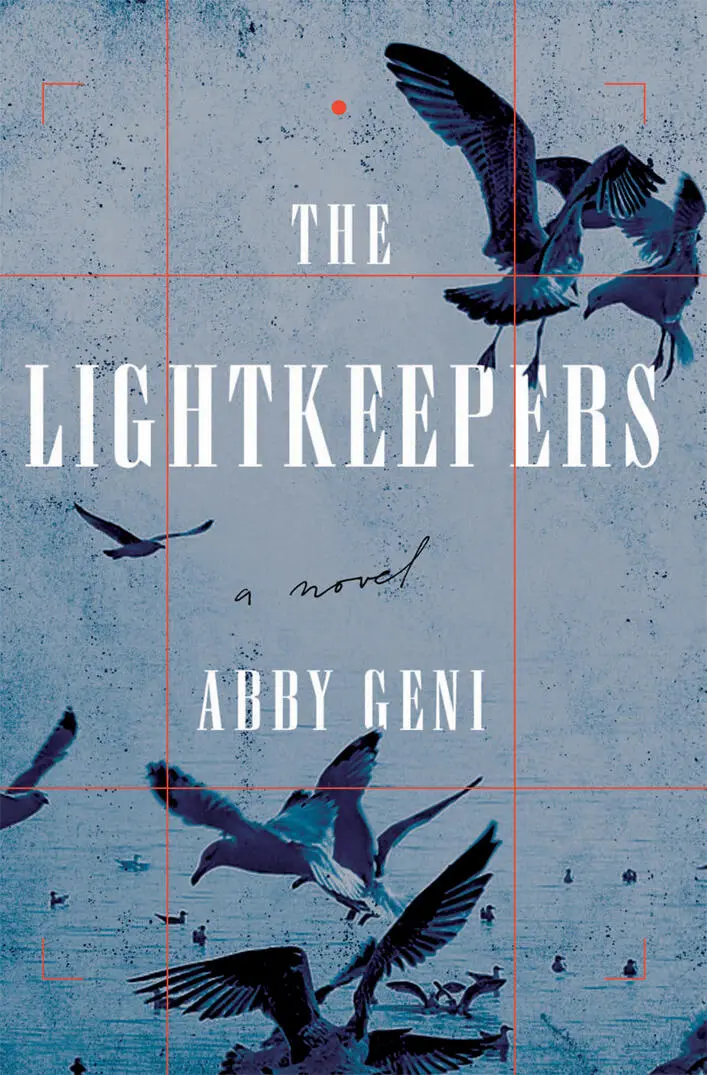
- Название:The Lightkeepers
- Автор:
- Издательство:Counterpoint
- Жанр:
- Год:2015
- ISBN:9781619027497
- Рейтинг книги:4 / 5. Голосов: 1
-
Избранное:Добавить в избранное
- Отзывы:
-
Ваша оценка:
The Lightkeepers: краткое содержание, описание и аннотация
Предлагаем к чтению аннотацию, описание, краткое содержание или предисловие (зависит от того, что написал сам автор книги «The Lightkeepers»). Если вы не нашли необходимую информацию о книге — напишите в комментариях, мы постараемся отыскать её.
, we follow Miranda, a nature photographer who travels to the Farallon Islands, an exotic and dangerous archipelago off the coast of California, for a one-year residency capturing the landscape. Her only companions are the scientists studying there, odd and quirky refugees from the mainland living in rustic conditions; they document the fish populations around the island, the bold trio of sharks called the Sisters that hunt the surrounding waters, and the overwhelming bird population who, at times, create the need to wear hard hats as protection from their attacks.
Shortly after her arrival, Miranda is assaulted by one of the inhabitants of the islands. A few days later, her assailant is found dead, perhaps the result of an accident. As the novel unfolds, Miranda gives witness to the natural wonders of this special place as she grapples with what has happened to her and deepens her connection (and her suspicions) to her companions, while falling under the thrall of the legends of the place nicknamed “the Islands of the Dead.” And when more violence occurs, each member of this strange community falls under suspicion.
The Lightkeepers
The Lightkeepers — читать онлайн бесплатно полную книгу (весь текст) целиком
Ниже представлен текст книги, разбитый по страницам. Система сохранения места последней прочитанной страницы, позволяет с удобством читать онлайн бесплатно книгу «The Lightkeepers», без необходимости каждый раз заново искать на чём Вы остановились. Поставьте закладку, и сможете в любой момент перейти на страницу, на которой закончили чтение.
Интервал:
Закладка:
You fumbled in your pocket and came up with a coin to toss in his cup. I had my camera with me — a black and gray Olympus OM-1, barnacled with buttons and dials. It was an early single-lens reflex instrument, the best of its time, loaded with 35-millimeter film, heavier than my purse. Using it was a wonderfully tactile experience: the grind and swivel of the image coming into focus, the clack of the shutter, the resistance of the film advance lever. I leaned over the man’s prone form. He was missing a shoe, and his bare foot was swollen. The toenails resembled bear claws.
You laid a hand on my arm.
“Don’t,” you said.
I looked at you in surprise. You led me away.
Later, you tried to explain. It had worried you to see me like that — gazing with such detachment at another human being so obviously in distress. It had unnerved you that my first instinct had been to try to capture him on film.
“I’m not sure about this,” you said, tapping my camera.
At the time, I found this unfair. I believed I had done nothing wrong in pointing my lens at a man asleep in public. I had not hurt anyone.
Now, of course, I know better. You were right. You were so often right. More than any other art form, photography requires coldness and dispassion. Perhaps I had those qualities as a child; perhaps I developed them over the decades that followed, the years without you. This work demands a mind that sits apart.
Trauma and pain are the foundations of art. I believe that. When tragedy strikes, however, a muralist or a watercolorist has the opportunity to be a human being in the moment and an artist afterward. Faced with the death of a loved one, a sculptor or portraitist can first grieve, suffer, and heal — then create. Most artists go through life this way. They can react normally to the trials and tribulations of the human experience. They can pass through the world with compassion and comradeship.
They can make their art later. Outside, elsewhere, beyond.
But photography is immediate. It does not offer the luxury of time. Faced with blood, death, or transformation, a photographer has no choice but to reach for the camera. An artist first, a human being afterward. Photography is a neutral record of all events, a chronicle of things both sublime and terrible. By necessity, this work is made without emotion, without connection, without love.
WE HAD TO wait a long while for the helicopter. Everyone did the best they could in the meantime. Mick held a bag of frozen peas to Charlene’s head, alternating between the bump on her brow and the black eye. Forest did some exploratory palpating of her dislocated elbow. It was red and puffy, but not so swollen as to indicate a broken bone. Lucy made sure there were no other, unseen injuries, checking Charlene’s stomach and legs as the men kept their eyes averted. Charlene herself moved in and out of consciousness; she might frown when the ice touched her forehead or grumble something inaudible, but a moment later she would be out cold again.
There was not much I could to do help. I found myself tapping my fingers on my thigh, wishing I had my camera. I wanted to get a few shots of Charlene’s limp fingers, her bruised skin. This moment was ripe for capture. But I knew better than to go fetch Jewel or Gremlin. It would have seemed heartless to the others.
Finally Galen put his foot down. He summoned us all into the kitchen and insisted that we eat something.
“You’ll feel better,” he said. “This is not a request.”
Leaning against the kitchen counter, consuming a peanut butter and jelly sandwich, I did not attempt to contribute to the conversation. I listened to the biologists, who seemed fairly unfazed. Everyone ate heartily. In steady, tranquil voices, they debated what might have happened to Charlene.
“Did anybody see her this morning?”
“She did say something about going up Lighthouse Hill.”
“I remember! The elephant seals—”
“She must have lost her footing.”
“The fog was bad. I got turned around at Breaker Cove.”
“Me too! I was at Dead Sea Lion Beach, and—”
“Did anyone notice if Charlene had her binoculars with her? Maybe she dropped them. They’re a good pair.”
“She shouldn’t have gone up alone.”
Still, I said nothing. Galen’s glance flicked my way. He was frowning. There was tension in the air, running beneath the casual conversation.
WHEN THE HELICOPTER arrived, I was in my bedroom. I watched through the window as Forest and Galen hurried across the grounds. The helicopter glinted in the sun. It had the look of an aerial ambulance, a red cross painted on the door. Awash in déjà vu, I watched it settle on the helipad.
Two figures emerged from inside, hefting a stretcher between them. I had been expecting more federal agents — more badges, more clipboards, more holsters tucked discreetly out of sight — but these men were clearly medics. They wore hospital green. I had been expecting, too, to see the same doctor who had attended Andrew. Now, though, I realized that he must be a medical examiner, specializing in the dead. This time the mainland had sent along two older gentlemen, one with gray hair, one black. Galen and Forest approached them and shook hands. The group made its way toward the cabin.
With some trepidation, I left my bedroom. There was a bustle at the front door. Lucy was heading outside for a little bird-watching. (Later on, she would justify her actions, claiming that she’d seen an albatross landing near Indian Head. More likely the incident had reminded her of the loss of Andrew. She couldn’t stick around for that.) I stepped into the living room in time to see the doctors negotiating their stretcher down the front hallway. One bent over Charlene, checking her pulse and peering beneath her eyelids. Mick was hovering against the wall, chewing on his fingernails as though he intended to gnaw them right off his hands. Forest and Galen were standing at attention. They had the demeanor of athletes on the bench during a key game.
With great efficiency, the medics hefted Charlene from the surf-board onto the stretcher. They held a conference, standing close together. Their aspect was unhurried. They clearly did not perceive Charlene to be in any immediate danger. The black-haired doctor tugged a notebook from his pocket. He stared at Mick, frowned at Galen, and examined me as though taking my measure.
“Sit,” he said.
“What?”
He pointed. “Sit there.”
I sank onto the couch. It was not a time to argue. The doctor peered at me a moment longer, then turned to Forest and beckoned him over.
“I need to know everything,” he said. “When did the accident happen?”
Forest began to speak in cool, thoughtful tones. On balance, I was glad to be seated. I felt dislocated, outside myself. Tiny details seemed of immense importance to me. The hum of the radiator. The scratch of the medic’s pen on his pad. Outside, the sea was breaking against the shoreline. The spray was wild, casting up a mist that glittered with rainbows like a sprinkler in the sunlight.
A sound caught my attention. The second doctor — a gray-haired fellow with a generous paunch — had left his post at Charlene’s side. He was approaching Galen. There was a diffident quality about him. I gave him a long glance, summing him up: gentle, bespectacled, a teddy bear of a man. Though he kept his voice low, I could hear every word.
“You look familiar,” he said. “Have we met?”
“I don’t think so,” Galen said.
“I’m good with faces. Are you from San Francisco originally?”
For a moment, I thought Galen wasn’t going to answer. Then, unwillingly, he said, “Yes, I am.”
“Are you married?” the doctor said.
Galen blushed. There was no mistaking it. He went pink all the way up to the tips of his ears. Seated on the couch, I shifted in surprise. I had never thought that Galen could be capable of such a human response.
Читать дальшеИнтервал:
Закладка:
Похожие книги на «The Lightkeepers»
Представляем Вашему вниманию похожие книги на «The Lightkeepers» списком для выбора. Мы отобрали схожую по названию и смыслу литературу в надежде предоставить читателям больше вариантов отыскать новые, интересные, ещё непрочитанные произведения.












Обсуждение, отзывы о книге «The Lightkeepers» и просто собственные мнения читателей. Оставьте ваши комментарии, напишите, что Вы думаете о произведении, его смысле или главных героях. Укажите что конкретно понравилось, а что нет, и почему Вы так считаете.