Abby Geni - The Lightkeepers
Здесь есть возможность читать онлайн «Abby Geni - The Lightkeepers» весь текст электронной книги совершенно бесплатно (целиком полную версию без сокращений). В некоторых случаях можно слушать аудио, скачать через торрент в формате fb2 и присутствует краткое содержание. Год выпуска: 2015, ISBN: 2015, Издательство: Counterpoint, Жанр: Современная проза, на английском языке. Описание произведения, (предисловие) а так же отзывы посетителей доступны на портале библиотеки ЛибКат.
- Название:The Lightkeepers
- Автор:
- Издательство:Counterpoint
- Жанр:
- Год:2015
- ISBN:9781619027497
- Рейтинг книги:4 / 5. Голосов: 1
-
Избранное:Добавить в избранное
- Отзывы:
-
Ваша оценка:
The Lightkeepers: краткое содержание, описание и аннотация
Предлагаем к чтению аннотацию, описание, краткое содержание или предисловие (зависит от того, что написал сам автор книги «The Lightkeepers»). Если вы не нашли необходимую информацию о книге — напишите в комментариях, мы постараемся отыскать её.
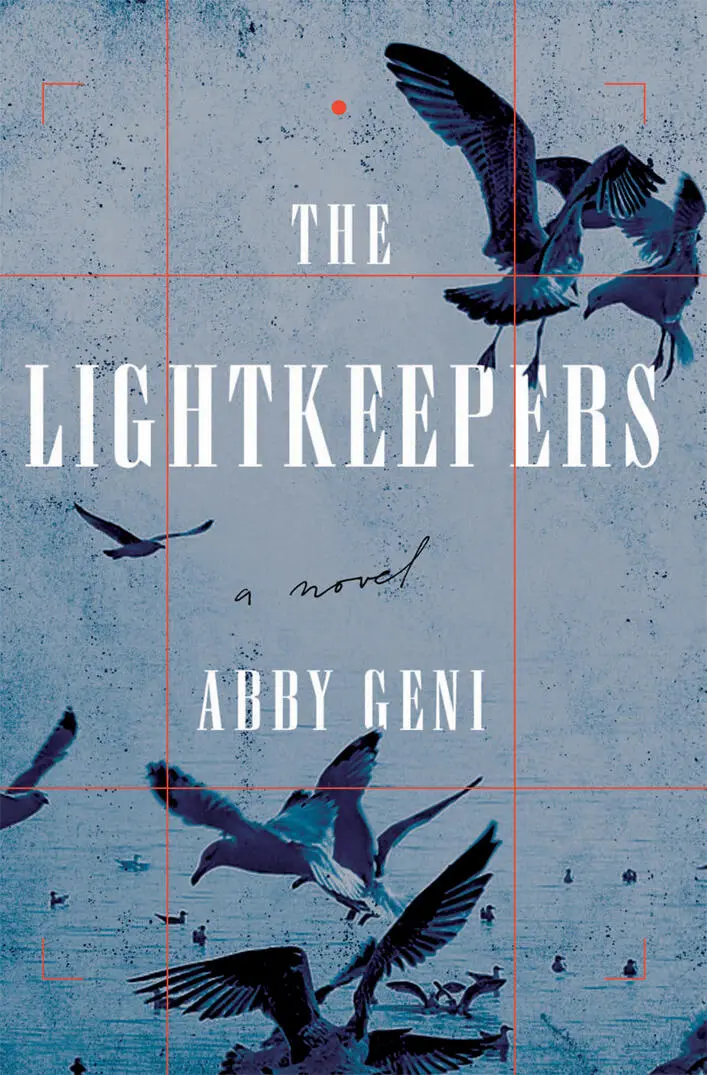
, we follow Miranda, a nature photographer who travels to the Farallon Islands, an exotic and dangerous archipelago off the coast of California, for a one-year residency capturing the landscape. Her only companions are the scientists studying there, odd and quirky refugees from the mainland living in rustic conditions; they document the fish populations around the island, the bold trio of sharks called the Sisters that hunt the surrounding waters, and the overwhelming bird population who, at times, create the need to wear hard hats as protection from their attacks.
Shortly after her arrival, Miranda is assaulted by one of the inhabitants of the islands. A few days later, her assailant is found dead, perhaps the result of an accident. As the novel unfolds, Miranda gives witness to the natural wonders of this special place as she grapples with what has happened to her and deepens her connection (and her suspicions) to her companions, while falling under the thrall of the legends of the place nicknamed “the Islands of the Dead.” And when more violence occurs, each member of this strange community falls under suspicion.
The Lightkeepers
The Lightkeepers — читать онлайн бесплатно полную книгу (весь текст) целиком
Ниже представлен текст книги, разбитый по страницам. Система сохранения места последней прочитанной страницы, позволяет с удобством читать онлайн бесплатно книгу «The Lightkeepers», без необходимости каждый раз заново искать на чём Вы остановились. Поставьте закладку, и сможете в любой момент перейти на страницу, на которой закончили чтение.
Интервал:
Закладка:
THE ELEPHANT SEALS are giving birth. Throughout the month of January, the females have appeared by the dozen. I am enraptured by them. Unlike their male counterparts, they are beautiful in the traditional manner of seals: smooth and rotund, their faces vaguely canine, their black eyes filled with pinniped intelligence. I have photographed more births than I can count. The pups are charcoal-colored when they arrive, slimy and blind. More blood on the rocks. They uncurl their bodies, sticky with amniotic gel, teeth flashing. The females sing to them in booming, grating voices. They are imprinting themselves on their newborns. They are telling each pup which scent and voice belong to its mother.
The elephant seals have altered the architecture of the islands. They have made the coastline soft. They doze in heaps, the gray mountain of their bodies jeweled with small, dark shapes — the pups slumbering and keening and nuzzling. Nearby, the alpha males lord it over their domain. Each is the master of forty or fifty females. They parade up and down the shore, inflating their noses to make a cry that sounds like a drumbeat. The members of their harems snipe at one another good-naturedly. They spend their days nursing. Their milk is some of the richest in the animal kingdom. The babies gain ten pounds a day. I have photographed this too — coming back to the same family each morning, watching the infant swelling like a balloon.
The pups have to be careful. The rookery is not a safe place. The roar of the elephant seals is louder than the ocean. The babies must navigate through a landscape of identical figures, picking their mother’s individual call out of the chorus. More than a few have died. Some have traveled the wrong way across the grounds, leaving the pod behind, lost and gone forever. Some have drowned, too little and helpless to swim. Though the females are watchful and conscientious, the males are too aggressive — or too large — to pay attention. A few pups have been killed by their fathers, who are massive enough to crush them beneath their immense bulk without realizing it.
I still dream of the lost seal pup Mick and I saw on the grounds. I still follow it through the mist. I still listen to it crying for its mother.
The other day I was on Marine Terrace with Jewel, my large-format camera. I was attempting to capture yet another birth. The labor of an elephant seal is not an arduous process. The mother naps between contractions. The baby emerges without undue fuss. With my head beneath the black cloak, I found myself thinking about guillotines. My brain — my eyes, my visual cortex, my artistic sensibility — was separated from my body by a fall of cloth. I was gazing through the viewfinder, framing an image of the new mother lolling on her back, nipples exposed, her infant pressed against her, drinking assiduously. Then I straightened up. I removed the cloak from my head. I felt cleaved somehow, as though I had been decapitated, as though my mind had been separated from my flesh and organs, floating on the air.
Still, our work continues. Lucy has been captivated by the local population of pigeon guillemots. These birds look exactly like their landlocked counterparts — the gray, ordinary pigeons found scarfing up peanuts on the National Mall — but they are actually seabirds. They forage for food by diving to the ocean floor, plummeting up to 150 feet underwater in search of a meal. Lucy has been nattering on about “alcids” and “two eggs, rather than one” and “incubating for four weeks.” She has been hurrying all over the grounds with a handful of bands. She has been sighing a lot about how hard it is to tag the birds alone, how much Andrew loved this work.
Mick, of course, is busy with the elephant seals. The weather is still too wild to take trips in the boat. It may be a while before Captain Joe can safely visit the islands. In the meantime, Mick is trying to identify his favorite pinnipeds by their signature markings. The other day he came dashing into the cabin, almost too excited to speak. He had glimpsed a double birth — twins — a rarity. He and Charlene were so pleased that they went into the kitchen and celebrated with glasses of Perrier.
And I have been snapping images of everything. A creative surge has overtaken me; I eat, sleep, and breathe photography. Curtains of rain lashing the shore. Clouds strewn like pebbles above the horizon. A flock of puffins spinning over Lighthouse Hill. The image of a guillotine still lingers in my mind. The sensation of weightlessness has remained. There is a wonderful violence to the act of photography. The camera is a potent thing, slicing an image away from the landscape and pinning it to a sheet of film. When I choose a segment of horizon to capture, I might as well be an elephant seal hunting an octopus. The shutter clicks. Every boulder, wave, and curl of cloud included in the snapshot is severed irrevocably from what is not included. The frame is as sharp as a knife. The image is ripped from the surface of the world.
LAST NIGHT, THE clock had just chimed midnight when I shuffled down the stairs. Recently, I have often found myself thirsty in the evenings — almost painfully parched, as though all the blood in my veins has been replaced with sand. Yet that same weightlessness persists. It was a cold, blustery night. I did not bother to turn on any lamps. A draft curled around my feet as I stood in the kitchen. I shivered. I was not all the way awake. It took me a while to realize that someone was speaking. At first I thought it was the wind or an elephant seal barking. I reached for the faucet, fumbling in the darkness. Then a single word caught my ear: “Dead.”
I set my glass on the countertop and strode out of the kitchen, my head cocked, listening hard. There was, after all, a light in the living room. As my eyes adjusted, I could see that Charlene’s bedroom door was outlined with a glimmer of gold. A voice was coming from inside, floating through the wall.
“Andrew,” Charlene said.
My breath caught. The darkness in the room was overpowering. The sky outside was overcast. No moon, no stars. Only the glow from Charlene’s room could be seen. It might have been the only light in the whole world. No one else should have been awake, let alone cloistered in some secret conference, discussing matters best left alone. For a moment, I stayed on the razor’s edge, willing myself to walk away.
Instead, I gave in. Stepping closer — moving carefully over the creaky floorboards, past the octopus’s cage — I eavesdropped. Charlene’s tone was soft enough that I could catch only phrases, here and there.
“The night he died—”
“At first I wasn’t sure—”
“Andrew coughed—”
“He wasn’t alone out there—”
It did not take me long to put the pieces together. I shook my head. I knew now what story Charlene was telling. She had told the same tale to me over the Christmas holiday. I remembered her eager expression, her dancing hands. I had not been a good audience. Anything to do with Andrew was not worth a second thought, in my opinion. I had shown no inclination to analyze the matter, to ponder and speculate. Now it seemed that Charlene had chosen to confide in someone else.
I wondered who she was talking to. I wondered who else was in that room, seated on the bed, as silent as a cloud. I never caught the sound of another voice. I listened to the rise and fall of Charlene’s words as I might have listened to music, following the chord progression rather than the notes. Then I began following the rise and fall of the wind and the tide instead. The breeze howled. The waves crashed. In the distance, the storm-petrels were crying — their day just begun, the flock gathering, preparing to do what was necessary, ready for their nocturnal journey.
Читать дальшеИнтервал:
Закладка:
Похожие книги на «The Lightkeepers»
Представляем Вашему вниманию похожие книги на «The Lightkeepers» списком для выбора. Мы отобрали схожую по названию и смыслу литературу в надежде предоставить читателям больше вариантов отыскать новые, интересные, ещё непрочитанные произведения.












Обсуждение, отзывы о книге «The Lightkeepers» и просто собственные мнения читателей. Оставьте ваши комментарии, напишите, что Вы думаете о произведении, его смысле или главных героях. Укажите что конкретно понравилось, а что нет, и почему Вы так считаете.