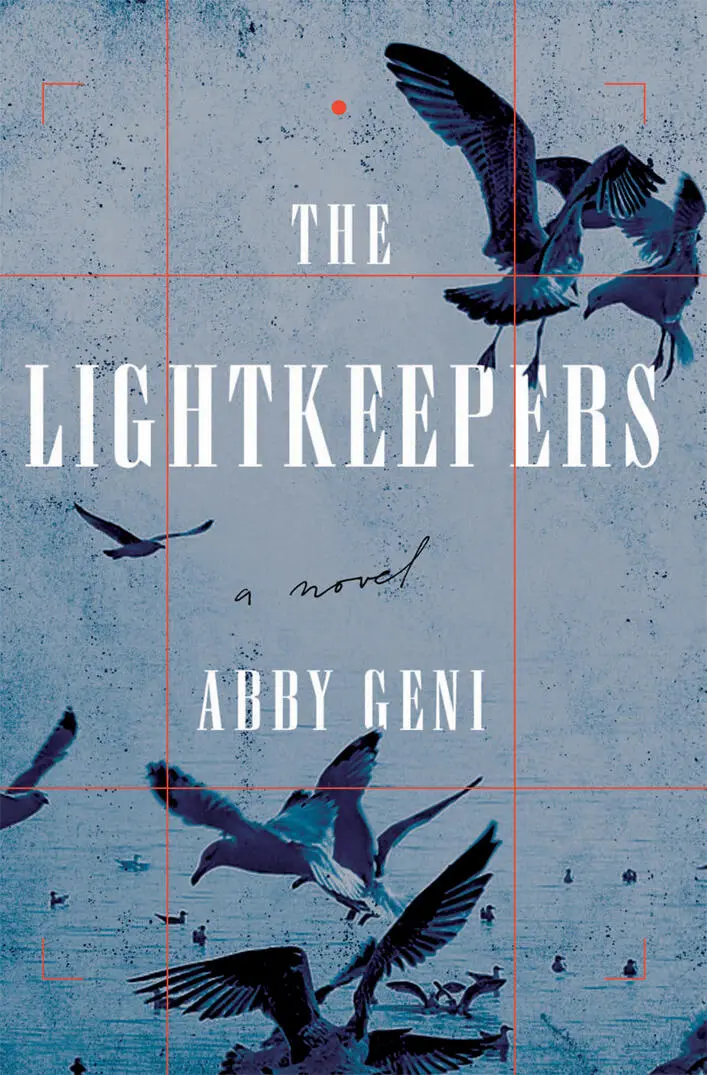
Abby Geni - The Lightkeepers
Здесь есть возможность читать онлайн «Abby Geni - The Lightkeepers» весь текст электронной книги совершенно бесплатно (целиком полную версию без сокращений). В некоторых случаях можно слушать аудио, скачать через торрент в формате fb2 и присутствует краткое содержание. Год выпуска: 2015, ISBN: 2015, Издательство: Counterpoint, Жанр: Современная проза, на английском языке. Описание произведения, (предисловие) а так же отзывы посетителей доступны на портале библиотеки ЛибКат.
- Название:The Lightkeepers
- Автор:
- Издательство:Counterpoint
- Жанр:
- Год:2015
- ISBN:9781619027497
- Рейтинг книги:4 / 5. Голосов: 1
-
Избранное:Добавить в избранное
- Отзывы:
-
Ваша оценка:
The Lightkeepers: краткое содержание, описание и аннотация
Предлагаем к чтению аннотацию, описание, краткое содержание или предисловие (зависит от того, что написал сам автор книги «The Lightkeepers»). Если вы не нашли необходимую информацию о книге — напишите в комментариях, мы постараемся отыскать её.
, we follow Miranda, a nature photographer who travels to the Farallon Islands, an exotic and dangerous archipelago off the coast of California, for a one-year residency capturing the landscape. Her only companions are the scientists studying there, odd and quirky refugees from the mainland living in rustic conditions; they document the fish populations around the island, the bold trio of sharks called the Sisters that hunt the surrounding waters, and the overwhelming bird population who, at times, create the need to wear hard hats as protection from their attacks.
Shortly after her arrival, Miranda is assaulted by one of the inhabitants of the islands. A few days later, her assailant is found dead, perhaps the result of an accident. As the novel unfolds, Miranda gives witness to the natural wonders of this special place as she grapples with what has happened to her and deepens her connection (and her suspicions) to her companions, while falling under the thrall of the legends of the place nicknamed “the Islands of the Dead.” And when more violence occurs, each member of this strange community falls under suspicion.
The Lightkeepers
The Lightkeepers — читать онлайн бесплатно полную книгу (весь текст) целиком
Ниже представлен текст книги, разбитый по страницам. Система сохранения места последней прочитанной страницы, позволяет с удобством читать онлайн бесплатно книгу «The Lightkeepers», без необходимости каждый раз заново искать на чём Вы остановились. Поставьте закладку, и сможете в любой момент перейти на страницу, на которой закончили чтение.
Интервал:
Закладка:
Or perhaps it was the ghost. I have dreamed about this too. Andrew slinking along the shoreline in the moonlight. A shimmer in the air beside him. A woman’s figure. Her body solidifying out of the mist and rain — out of nothing. I have seen the haze of her nightgown. I have seen the swing of one pale arm.
MICK CAME BACK today, along with Lucy and Forest. This caught me off guard. It is hard to keep track of time on the islands. Calendars, clocks — these things seem so arbitrary. An artificial construct. There is a timelessness about this place. The seasons are measured not by a variation in the weather but by a variation in the animals. Winter is when the whales and seals breed. Summer is Bird Season. Autumn belongs to the sharks. Night does not follow day, not really — that would imply that one occurs before the other. Instead, day and night are a great wave, beginning at the base, the bright dawn, and sweeping up through the long golden afternoon to crest in the evening and crash down again into darkness, where the cycle begins anew. Time on the islands has become, for me, self-contained and unchanging.
And so, this morning I missed any number of clues that something was going on. To begin with, I slept through the early call on the radiophone. (Before Andrew, I had always awoken with the birds. Now, though, After Andrew, I was as fatigued and somnolent as a teenager.) During breakfast, I didn’t happen to glance out the window and see the ferry approaching the islands. I didn’t observe Galen slipping out to meet the boat when it dropped anchor. I didn’t even hear the voices carrying on the wind from East Landing, where Lucy, Forest, and Mick had been deposited by the Billy Pugh, breathing in the salt air with smiles on their faces. During all this time, I was lying on the couch, leafing through a book on pinnipeds. When I heard a clatter, I shot a look at Oliver the octopus, who was floating in his tank, his skin a delicate mauve.
There was a crash, and the front door flew open.
“Woo-hoo!” Mick shouted. “Home at last. Thank the lord!”
I had forgotten how very big he was. In two strides, he had crossed the room. I found myself being swung in a circle like a rag doll. The walls pivoted around me. When he set me down, I stumbled and almost fell. Mick laughed and planted a kiss on the top of my head.
“I missed my little mouse girl,” he said. His gaze wandered down my frame, drinking me in. As he stared at my torso, I saw his brow furrow quizzically for a moment. Then, however, Charlene came hurrying out of the kitchen in an apron, her arms sudsy and glistening from washing dishes.
“Hey, you!” she cried. “I thought to myself, either there’s a herd of elephants in the cabin, or Mick is back.”
THAT EVENING, LUCY took Oliver out of his tank. She played with him, transferring him from hand to hand, wetting the floor. She seemed to be lost in pure delight, as if she had missed him terribly during her time away. She, Forest, and Mick were all in this state — so happy to be back on the islands they were almost weightless. The mainland had been a fine respite, but they had all talked about the shell shock of returning, however briefly, to civilized life. Forest had been on the islands for five years, Mick almost as long. Lucy, a little younger, had come here straight out of college, a year or so ago, dragging Andrew in her wake. Since their arrival, all of them had voyaged home to the mainland now and again. Each time was the same. They would be baffled by the sheer quantity of land, our blue planet replaced by a carpet of grass and concrete. They would be unsettled by commonplace things. Fire hydrants. Central heating. A car horn. The gleam of jewelry. The sugary odor of a bakery on the breeze. The squeal of a bicycle braking. They would find themselves out of step, out of place: waking too early, eating at the wrong time of day, overloaded by the simple fact of a telephone ringing. They would return to the islands like elephant seals reentering the ocean. Back in their natural habitat. Back where they belonged.
I was sitting on the couch, the others distributed around the living room, all of us watching Lucy as she lifted the octopus high. She rolled him down one arm, giggling at his confusion. Oliver flashed through a rainbow of colors. His suckers wriggled and groped, trying to find purchase on her sleeve.
I turned to Mick, who was seated at my side.
“I don’t understand,” I said. “I thought you weren’t supposed to interfere with the animals here. Not ever. Isn’t that the biologist’s credo?”
I meant this to be an aside, a private exchange. But the room was quiet, and everyone turned to look at me. Lucy flushed.
“I study birds ,” she snapped. “Does Oliver look like a bird to you?”
“No,” I said.
“He’s a pet,” she said. “Pets are different.”
She glared at me a moment longer, then stomped over to the aquarium and plunged the octopus into the water with a vicious movement. He sank, ballooning outward, changing shape. His tentacles glittered with bubbles.
22
IN A PLACE like this, it should be hard to keep secrets. Southeast Farallon is small, and the cabin is smaller still. All of us live on top of each other. We all know about Lucy’s crying jags. We are all aware of Galen’s nocturnal restlessness, pacing his room with quick footsteps. We all know when Mick engages in a late-night snack, banging around the kitchen at three in the morning. Until recently, I had begun to think that I knew everything there was to know about the islands.
But as it turns out, there has been a secret right under my nose for months.
Last night I woke to the sound of voices. It is January, the heart of Seal Season, and the archipelago is never quiet, regardless of the hour. The males boom, the females grunt, and the pups squeal all night long. Their constant noise sets my nerves on edge. It is a perpetual reminder of mating and birthing and suckling. I do not want to think about these things. I do my best to tune out the roar. Now I lay awake, assuming I’d heard wrong, mistaking animal sounds for human speech.
Then it came again. A man’s voice. Someone was outside the window.
My heart began to pound. I sat upright, tugging the blinds aside. It was a bright, moonlit night. The landscape was a jumble, the familiar contours transformed into a lurid black-and-white photograph. Gradually I saw that there were two figures moving on the slope. They had been talking, but they were quiet now.
The scene continued to clarify as my eyes adjusted. It was a bit like watching the shape of an undersea stone coming clear through the ruffled surface of water. The silhouettes belonged to Mick and Forest. I recognized the former’s bulk and the latter’s delicate slimness. They were heading away from the cabin. They were whispering together. Forest laughed, a high-pitched sound, something I had never heard him give before. Then he leaned in. Before my eyes, the two men kissed.
It registered as an electric shock. There was no mistaking what was happening: it was a passionate, abandoned, drowning-without-each-other sort of lip-lock. There had been a line of radiant blue separating their frames, but now they merged. Forest went up on his toes. They swayed back and forth.
I reached for my camera. It was an automatic reflex. Tomcat, one of my digital SLR instruments, was settled, as always, on the night table. I kept it there for emergencies — a shark attack, a whale sighting, the return of the ghost. I did not think. I merely acted, lifting the camera to my eye.
Mick’s face came into focus, all snowy planes. Forest was harder to track. I kept zooming in on the back of his head. Their hands met in space, fingers reaching. I still had not adjusted to the firework display of stars on the Farallon Islands. Cassiopeia and Orion blazed above the horizon like configurations of torches. Mick and Forest paced with a practiced step across the granite. They were moving toward the coast guard house. Mick was almost skipping. Something — a bird calling, a seal barking — made them pause and gaze to the left, toward the ocean. At the door of the coast guard house, they engaged in a funny little pantomime, each attempting with exaggerated politeness to give way and allow the other to go first.
Читать дальшеИнтервал:
Закладка:
Похожие книги на «The Lightkeepers»
Представляем Вашему вниманию похожие книги на «The Lightkeepers» списком для выбора. Мы отобрали схожую по названию и смыслу литературу в надежде предоставить читателям больше вариантов отыскать новые, интересные, ещё непрочитанные произведения.












Обсуждение, отзывы о книге «The Lightkeepers» и просто собственные мнения читателей. Оставьте ваши комментарии, напишите, что Вы думаете о произведении, его смысле или главных героях. Укажите что конкретно понравилось, а что нет, и почему Вы так считаете.