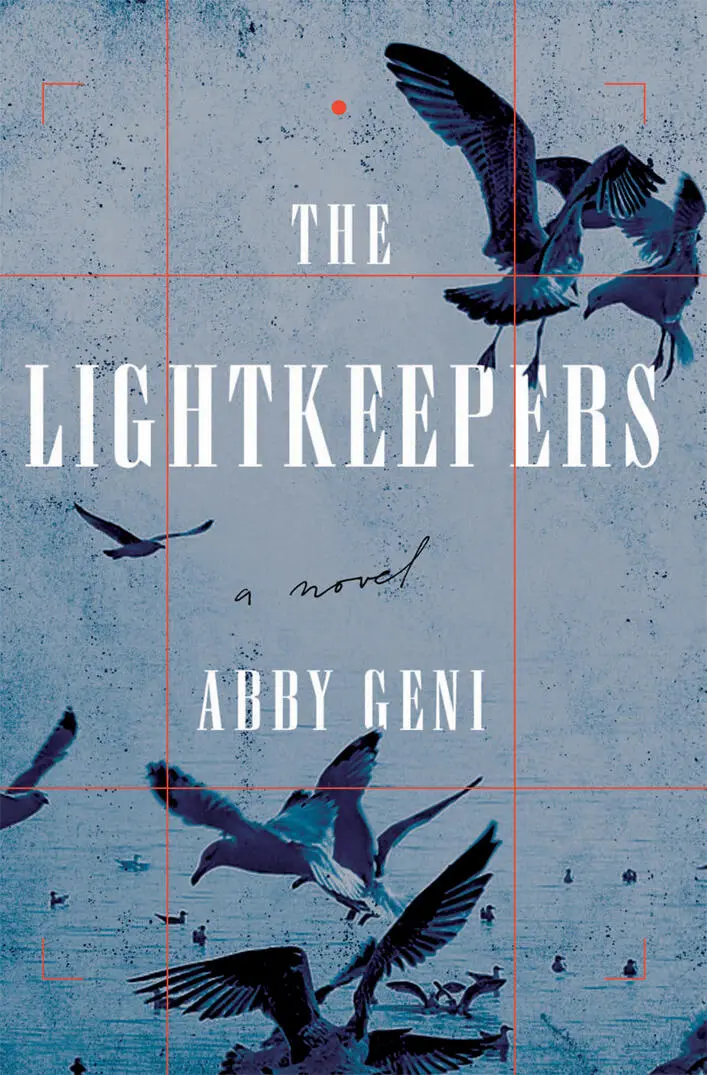
Abby Geni - The Lightkeepers
Здесь есть возможность читать онлайн «Abby Geni - The Lightkeepers» весь текст электронной книги совершенно бесплатно (целиком полную версию без сокращений). В некоторых случаях можно слушать аудио, скачать через торрент в формате fb2 и присутствует краткое содержание. Год выпуска: 2015, ISBN: 2015, Издательство: Counterpoint, Жанр: Современная проза, на английском языке. Описание произведения, (предисловие) а так же отзывы посетителей доступны на портале библиотеки ЛибКат.
- Название:The Lightkeepers
- Автор:
- Издательство:Counterpoint
- Жанр:
- Год:2015
- ISBN:9781619027497
- Рейтинг книги:4 / 5. Голосов: 1
-
Избранное:Добавить в избранное
- Отзывы:
-
Ваша оценка:
The Lightkeepers: краткое содержание, описание и аннотация
Предлагаем к чтению аннотацию, описание, краткое содержание или предисловие (зависит от того, что написал сам автор книги «The Lightkeepers»). Если вы не нашли необходимую информацию о книге — напишите в комментариях, мы постараемся отыскать её.
, we follow Miranda, a nature photographer who travels to the Farallon Islands, an exotic and dangerous archipelago off the coast of California, for a one-year residency capturing the landscape. Her only companions are the scientists studying there, odd and quirky refugees from the mainland living in rustic conditions; they document the fish populations around the island, the bold trio of sharks called the Sisters that hunt the surrounding waters, and the overwhelming bird population who, at times, create the need to wear hard hats as protection from their attacks.
Shortly after her arrival, Miranda is assaulted by one of the inhabitants of the islands. A few days later, her assailant is found dead, perhaps the result of an accident. As the novel unfolds, Miranda gives witness to the natural wonders of this special place as she grapples with what has happened to her and deepens her connection (and her suspicions) to her companions, while falling under the thrall of the legends of the place nicknamed “the Islands of the Dead.” And when more violence occurs, each member of this strange community falls under suspicion.
The Lightkeepers
The Lightkeepers — читать онлайн бесплатно полную книгу (весь текст) целиком
Ниже представлен текст книги, разбитый по страницам. Система сохранения места последней прочитанной страницы, позволяет с удобством читать онлайн бесплатно книгу «The Lightkeepers», без необходимости каждый раз заново искать на чём Вы остановились. Поставьте закладку, и сможете в любой момент перейти на страницу, на которой закончили чтение.
Интервал:
Закладка:
24
A FEW DAYS LATER, I was roused by a guttural cry. I think I already knew on some level what had happened. I had been there before. Feet running. Voices on the wind. Some kind of emergency. Someone in trouble again.
This time it was Lucy who came barging into my bedroom. At the sound of the door opening, I tugged the blanket off my head. She had obviously just come from outside. She was wearing her hat and work boots, and she smelled like the ocean.
“Get up, for God’s sake,” she shouted. “We need you.”
I opened my mouth to ask a question, but she was already gone. I heard her thumping down the stairs. A door opened somewhere. Then the house was quiet. Through the window, I could see nothing unusual. There was a panel of clouds, solid and gray, with an odd ruffle at the top, as though someone had trimmed a stretch of brick wall with lace. I pulled on my long underwear. I found my scarf in the tumble of sheets. In the distance, the elephant seals were bellowing, the alpha males beating their vocal drums, engaging in their usual territorial battles.
“Hello?” I called, heading downstairs.
Nobody answered. The kitchen was empty. A pot sat on the stove with a ladle sticking out of it. There were beans inside. More beans on a plate. Someone had been interrupted in the process of spooning out breakfast. I fingered the contents of the pot. Still warm.
Tugging on my coat, I stepped outside. A breeze scraped my cheek. The ocean had a clean, freshly washed look. The elephant seals were much louder now. The females hooted. The males made a gravelly bellow like a truck engine changing gears. There was another sound, too. A human voice was tangled up inside the chorus. It was hard to pinpoint where each noise was coming from.
I made my way around the cabin. No one on Marine Terrace. No one at Garbage Gulch. No one by the coast guard house. The helipad was abandoned. Yet the voices echoed all around me now, disembodied, like ghosts. The wind was a trickster, changing direction with each gust, blowing my hair into my face.
At last, I caught a hint of movement at the foot of Lighthouse Hill. The slope was backlit by the sun. The trailhead stood in shadow. Shading my eyes with a hand, I made out a mesh of figures there. Mick was planted beside the path — no mistaking that massive silhouette. Lucy was present too. I recognized the restless shift of her step, bobbing in place. More figures. Blobs against a gray landscape. Four bodies bending over something. There was a work-manlike quality about them, engaged in shared labor.
“Hey,” I called.
No one turned. My voice was lost in the wind. As I watched, they knelt in unison like a troupe of dancers doing a simultaneous plié. It was disconcerting. When they straightened up again, I glimpsed a shape at the center, a blur inside the bodies. Something about the whole scene sent a chill down my spine. After a moment, I realized what it was: they looked like pallbearers, toting an object between them.
I began to run.
Mick saw me coming and shouted. The breeze picked up, and he was drowned out by the seals. I was close enough now to recognize the gleam of the surfboard. That was what they were carrying. On the surfboard was a human figure. I saw a blush of red hair. As I drew near, Galen signaled to me.
“She’s alive,” he said. “We need to get her to the house. Grab hold.”
Mick and Forest were on one side. Galen and Lucy, on the other, were struggling to keep their half aloft. I lunged into the breach, snatching at the slick plastic with both hands. The surfboard was heavy. It swayed in my fingers as though it retained some memory of its time among the waves.
Once I was sure of my hold, I was able to focus on Charlene. She lay on her back, her limbs akimbo, her hair fanned around her brow. A sacrificial victim on a litter. She appeared to be unconscious. Looking closer, I saw a bump on her temple. She had the beginnings of a black eye. Her elbow was dislocated; beneath the sleeve of her coat, one arm was bent the wrong way. The sight sent a wave of nausea through me. I lifted my gaze, fixing my attention on the cabin instead.
We were moving in lockstep now. The ground was slippery and treacherous. In front of me, Galen was cursing to himself. Lucy kept accidentally kicking my calves. We walked for what felt like hours, bearing Charlene, trying not to jiggle her too much. Periodically she would give a breathy groan. Mick kept shouting encouragement over the breeze. “Nearly there.” Pause for breath. “Just a few more minutes.” Pause for breath. “Great work, guys!” Soon I found that I had to move sideways, crablike. The five of us stumbled along Petrel Bluff. The sea roared around us, and the elephant seals roared too. A flock of birds passed overhead, warbling to one another. The Farallon Islands continued to be unperturbed by our private disasters.
Finally we reached the porch. With all due ceremony, Charlene was ushered inside. We laid her down. She stirred for an instant, but she did not open her eyes. Around me, the others were already in motion.
“The radiophone,” Galen was saying. “I sent out a call earlier, but nobody seemed to be around. I have to—” Muttering, he hurried away.
“Has anybody seen the first aid kit?” Forest said.
“Come on.” Lucy took his hand and led him down the hall.
Mick pushed past me, saying, “Ice pack. Or some frozen peas, maybe.”
For a moment, I was alone with Charlene. Her breathing was labored. Quite plainly, she was unaware of my presence. She was not aware of anything at all. I looked her over. She was dressed in jeans, hiking boots, and a man’s jacket — her usual uniform. Other than the black eye and dislocated elbow, she did not appear to be wounded. But there was moss in her hair. A smear of mud on her brow. Her sleeve was torn. She had a stick jammed into one pocket. Maybe it had caught there as she rolled down the hill. I reached toward her shoulder.
The octopus appeared suddenly. I drew my hand back with a grimace. On the coffee table, a few feet away, he ballooned into the center of his tank. He startled the life out of me as he oozed along the glass. His skin was a bright, aggressive red. His eyes swiveled on their stalks, glaring at Charlene.
The silence of him struck me anew. A dog might bark, a cat might yowl, but an octopus made no sound at all. Oliver hovered on a cloud of tentacles. I wondered how Charlene would appear to him, refracted through his bizarre, aquatic mind. I wondered what he might think had happened to her. She shifted on her surfboard, sighing. The octopus groped at the wall of his tank. He released a cloud of bubbles.
Before my eyes, the red started to wash from his skin like paint wrung from a rag. Crimson, I knew, was the color of wrath. I watched as he turned pink, then lavender, and finally blue. A pale, chalky azure. The color of concern.
25
I BEGAN TO PHOTOGRAPH the world around me when I was ten or eleven. I was not yet an artist; I was merely a child with a hobby. You indulged me, as you did with all my passions. You bought me rolls of film. You drove me to the store to have my pictures developed. You hung my best snapshots on the fridge.
Once, however, you did express a note of concern. I remember it well. It was autumn, and we were strolling through our neighborhood, window-shopping. The local boutiques had decorated themselves with paper leaves in orange and gold. We passed the post office. We stopped to gaze at the delightful wares on display at the toy store. The sky was blindingly clear as you and I rambled down K Street. I remember the jangle of your bracelet. I remember the sugar of your perfume.
A homeless man was asleep on the sidewalk. He lay in a sprawl, a stretch of newspaper over his face. It took me a moment to figure out whether he was breathing. The stench was terrible. His clothes were filthy and torn.
Читать дальшеИнтервал:
Закладка:
Похожие книги на «The Lightkeepers»
Представляем Вашему вниманию похожие книги на «The Lightkeepers» списком для выбора. Мы отобрали схожую по названию и смыслу литературу в надежде предоставить читателям больше вариантов отыскать новые, интересные, ещё непрочитанные произведения.












Обсуждение, отзывы о книге «The Lightkeepers» и просто собственные мнения читателей. Оставьте ваши комментарии, напишите, что Вы думаете о произведении, его смысле или главных героях. Укажите что конкретно понравилось, а что нет, и почему Вы так считаете.