Abby Geni - The Lightkeepers
Здесь есть возможность читать онлайн «Abby Geni - The Lightkeepers» весь текст электронной книги совершенно бесплатно (целиком полную версию без сокращений). В некоторых случаях можно слушать аудио, скачать через торрент в формате fb2 и присутствует краткое содержание. Год выпуска: 2015, ISBN: 2015, Издательство: Counterpoint, Жанр: Современная проза, на английском языке. Описание произведения, (предисловие) а так же отзывы посетителей доступны на портале библиотеки ЛибКат.
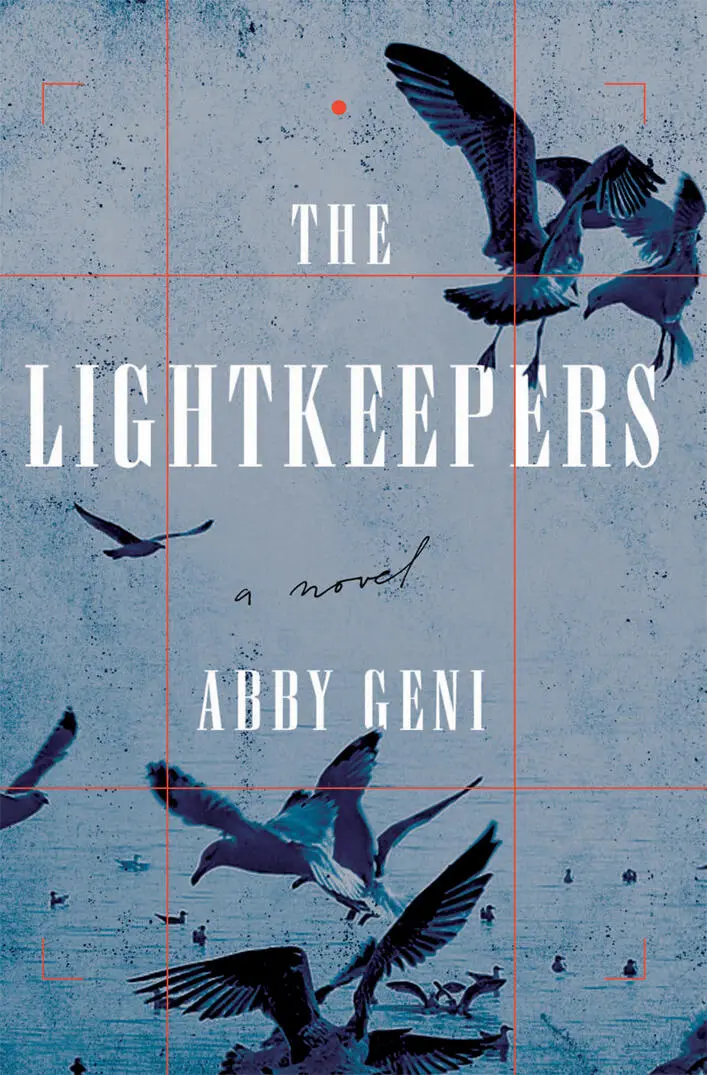
- Название:The Lightkeepers
- Автор:
- Издательство:Counterpoint
- Жанр:
- Год:2015
- ISBN:9781619027497
- Рейтинг книги:4 / 5. Голосов: 1
-
Избранное:Добавить в избранное
- Отзывы:
-
Ваша оценка:
The Lightkeepers: краткое содержание, описание и аннотация
Предлагаем к чтению аннотацию, описание, краткое содержание или предисловие (зависит от того, что написал сам автор книги «The Lightkeepers»). Если вы не нашли необходимую информацию о книге — напишите в комментариях, мы постараемся отыскать её.
, we follow Miranda, a nature photographer who travels to the Farallon Islands, an exotic and dangerous archipelago off the coast of California, for a one-year residency capturing the landscape. Her only companions are the scientists studying there, odd and quirky refugees from the mainland living in rustic conditions; they document the fish populations around the island, the bold trio of sharks called the Sisters that hunt the surrounding waters, and the overwhelming bird population who, at times, create the need to wear hard hats as protection from their attacks.
Shortly after her arrival, Miranda is assaulted by one of the inhabitants of the islands. A few days later, her assailant is found dead, perhaps the result of an accident. As the novel unfolds, Miranda gives witness to the natural wonders of this special place as she grapples with what has happened to her and deepens her connection (and her suspicions) to her companions, while falling under the thrall of the legends of the place nicknamed “the Islands of the Dead.” And when more violence occurs, each member of this strange community falls under suspicion.
The Lightkeepers
The Lightkeepers — читать онлайн бесплатно полную книгу (весь текст) целиком
Ниже представлен текст книги, разбитый по страницам. Система сохранения места последней прочитанной страницы, позволяет с удобством читать онлайн бесплатно книгу «The Lightkeepers», без необходимости каждый раз заново искать на чём Вы остановились. Поставьте закладку, и сможете в любой момент перейти на страницу, на которой закончили чтение.
Интервал:
Закладка:
Charlene, of course, has been deputized to help whoever needs her most, following obediently in Lucy’s wake with an armful of equipment or fact-checking all of Galen’s paperwork. That has left Mick and me. We have climbed Lighthouse Hill together, binoculars in hand, to observe the pattern of elephant seals strewn across the shore. We have visited Dead Sea Lion Beach. We have kept an eye out for the elusive fur seals. It is not always possible to travel by boat nowadays. The surf is wild, thundering against the shore. The Lunchbox cannot be safely lowered into such choppy water, and the Janus is little better. White spray bursts against the coastline and rises in ashy tufts. At times, it looks as though the ocean has lifted a hand clear of the water and is trying to pull Southeast Farallon down into the depths.
But every now and then, Mick and I have managed to find a convenient lull. Occasionally the wind has worn itself out. The sea has dozed for an hour or two, as flat and glistening as an ice rink. Mick has dragged me out in the Janus , despite my protestations. Having no weather sense, I am convinced that the climate might turn on a dime. No sooner would we leave the shore behind than a vicious gale would come screaming in out of nowhere — that has been my belief. Mick has laughed at me. One morning we trolled together past the Perfect Wave, a turquoise curl that scrolls perpetually along Shark Alley. It would have been a temptation to any surfer, except, of course, for the predators that lurk beneath the surface in warm weather. On another afternoon, we motored to the Lower Arch, where I snapped photos of the harbor seals: hides peppered with spots, flat flippers gripping rotund bellies.
More than once, I have dreamed about the lost elephant seal pup. I never found out what happened to it. I can only assume it died of starvation and neglect. Mick would not let me look for it, not even to find its body.
But in my dreams, I hear its aching cry once more. I find myself on the grounds again in the mist and rain. This time, I am determined to save the baby. I see its weary black shape in the distance, stumbling and shuffling. The pup is wailing for its mother. There is nothing more primal than that sound. In the dream, I can almost understand its language — a kind of underwater warbling, like speech filtered through fluid. Given enough time, I believe I could figure out what it is saying. It wants its mother, but I will be the one to answer. Bewildered by the fog, I hurry across the granite slope, following that echoing call. My hands outstretched. My heart in my throat. Despite all my efforts, I never succeed. Every time, I am left with empty arms.
OLIVER THE OCTOPUS has reemerged. Recently Lucy decided to effect a massive feng shui reorganization of her bedroom. It took her a while to arrange all her furniture. I did not, of course, venture in to see how the work was progressing. The dragon might have been slain, but I was leery at the thought of entering his former lair. From my room upstairs, I listened to the creaking, the scrape of wood on wood, the occasional burst of cursing. I did not ask Lucy what had motivated this spate of activity. She would not have confided in me, even if I had wanted her to.
She and I have achieved détente, of a kind. She has stopped dropping catty comments, and I have stopped bristling like a hedgehog in her company. We nod and smile at one another in passing. We are civilized. Since Andrew’s death, the others have demonstrated endless compassion for Lucy. They give her hugs. They rub her back. They ask her how she’s doing in honeyed voices. I do not. I am well aware that she does not like me — but her enmity is less focused now. Andrew’s passing has overshadowed such petty concerns. I get the feeling that I am a mild but persistent annoyance to her, like an ugly painting on the wall.
Recently I overheard her chatting with Forest. He and Lucy are close; I have noticed it before. That morning, he dropped by to see how the feng shui effort was coming along. I was in the kitchen at the time. It was my turn to make lunch, and I was staring gloomily into the cupboards, trying to dream up some creative way to turn stale pasta and potatoes that were sprouting roots into a palatable meal.
Forest’s reedy voice carried to me clearly.
“Nice,” he said. “Different curtains.”
“I cut up an old sheet, actually,” Lucy said. “You can see the pattern on the cloth when the light is right. It looks okay, doesn’t it?”
“Uh-huh.”
I banged around the kitchen a little, alerting them to my presence, but they went on talking just the same.
“I’m surprised that you changed things so much,” Forest said thoughtfully. “I barely recognize the place.”
I heard a sneeze, possibly a sob.
“I couldn’t bear it anymore,” Lucy said in a damp voice.
“Oh, honey.”
There was a rustling, and she blew her nose, a goose’s honk. More rustling. She might have been fumbling with a handkerchief.
“You know why I stayed, right?” she said. “I thought about leaving. Boarding the ferry. Going home. I even dreamed about it. But in the end, I just couldn’t. It’s for Andrew, you see. It’s all for him.”
Listening, I froze, one hand gripping a bag of potatoes.
“This is where I remember him,” Lucy said. “Where his spirit is. Not a ghost. I don’t mean a ghost. His essence is here.”
I swallowed hard. There was a scuffle, and I imagined that Forest had thrown an arm around Lucy’s shoulders, tugging her close.
“But lately it’s too hard,” she said. “Every morning I wake up. I look around, and everything is the same. Just the way it always was. Every morning I think it was all a dream. The whole terrible mess was some stupid nightmare. I still think that. I still turn over in bed and expect him to be there. The other day I jumped up and ran to make some coffee for him. I got all the way to the kitchen before I remembered.”
Forest’s reply was too low for me to parse. A soothing murmur.
“Anyway,” Lucy said, “now when I wake up, I’ll see right away that things have changed. The room won’t look the same. And I’ll know. Andrew’s gone.”
If I had been superstitious, I might have crossed my fingers or knocked on wood. As it was, I merely shut my eyes tight. My arms had wrapped themselves of their own accord around my midriff. For a moment, everything felt foreign to me. Even my own waist, my hips, seemed altered somehow. I might have been hugging a stranger’s body.
LATER THAT DAY, Oliver appeared in the living room. Lucy set his aquarium on the coffee table, right by my usual reading spot. I reacted to this change with a combination of revulsion and fascination. I was drawn to the octopus as though he were a car accident or a dead bird on the sidewalk: gross, scary, and spellbinding.
Since that day, my interest has overcome my fear. My initial distaste remains unabated — I would not, for example, ever touch the octopus or pick him up — but I often watch him at play. Oliver is always on the move. His goal is to escape or die trying. Before my eyes, he has explored every inch of his tank, coiling his tentacles upward to palpate the screen that fences him in from above. He has eyed me accusingly through the glass. I am intrigued by his skin. He can mimic the mottled brown of the pebbles at the bottom of the tank. When he is angry — and he is often angry — he turns a deep crimson. He is able to change more than his color, too. He can roughen his mantle until it looks like coral. He can make his flesh glisten like silk.
It has taken me a while to understand his shape. The eyes poke up on stalks, each pupil a black, horizontal bar. But the bulbous sac beneath these organs is not, as I originally suspected, his nose. It is, in fact, his body, a squishy balloon that comprises his lungs and stomach. The mouth is hidden at the center of a pinwheel of tentacles. There is a beak in there somewhere. There is venom in that beak. I have done a little reading on the subject, finding an old, battered copy of a Jacques Cousteau manifesto on one of the shelves. Leafing through the pages, I have learned that octopuses are clever. They are more intelligent than dogs. They possess extraordinary powers of disguise. A dead octopus, if moved from a dark surface to a lighter one, will gradually pale, attempting to camouflage itself from beyond the grave.
Читать дальшеИнтервал:
Закладка:
Похожие книги на «The Lightkeepers»
Представляем Вашему вниманию похожие книги на «The Lightkeepers» списком для выбора. Мы отобрали схожую по названию и смыслу литературу в надежде предоставить читателям больше вариантов отыскать новые, интересные, ещё непрочитанные произведения.











Обсуждение, отзывы о книге «The Lightkeepers» и просто собственные мнения читателей. Оставьте ваши комментарии, напишите, что Вы думаете о произведении, его смысле или главных героях. Укажите что конкретно понравилось, а что нет, и почему Вы так считаете.