Abby Geni - The Lightkeepers
Здесь есть возможность читать онлайн «Abby Geni - The Lightkeepers» весь текст электронной книги совершенно бесплатно (целиком полную версию без сокращений). В некоторых случаях можно слушать аудио, скачать через торрент в формате fb2 и присутствует краткое содержание. Год выпуска: 2015, ISBN: 2015, Издательство: Counterpoint, Жанр: Современная проза, на английском языке. Описание произведения, (предисловие) а так же отзывы посетителей доступны на портале библиотеки ЛибКат.
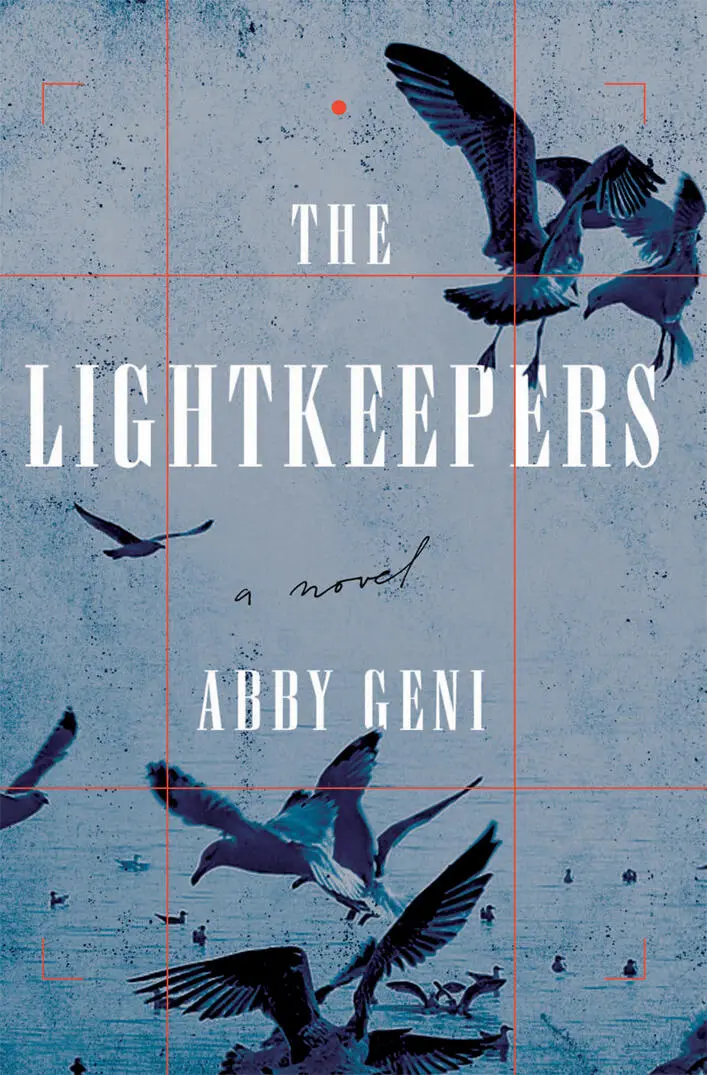
- Название:The Lightkeepers
- Автор:
- Издательство:Counterpoint
- Жанр:
- Год:2015
- ISBN:9781619027497
- Рейтинг книги:4 / 5. Голосов: 1
-
Избранное:Добавить в избранное
- Отзывы:
-
Ваша оценка:
The Lightkeepers: краткое содержание, описание и аннотация
Предлагаем к чтению аннотацию, описание, краткое содержание или предисловие (зависит от того, что написал сам автор книги «The Lightkeepers»). Если вы не нашли необходимую информацию о книге — напишите в комментариях, мы постараемся отыскать её.
, we follow Miranda, a nature photographer who travels to the Farallon Islands, an exotic and dangerous archipelago off the coast of California, for a one-year residency capturing the landscape. Her only companions are the scientists studying there, odd and quirky refugees from the mainland living in rustic conditions; they document the fish populations around the island, the bold trio of sharks called the Sisters that hunt the surrounding waters, and the overwhelming bird population who, at times, create the need to wear hard hats as protection from their attacks.
Shortly after her arrival, Miranda is assaulted by one of the inhabitants of the islands. A few days later, her assailant is found dead, perhaps the result of an accident. As the novel unfolds, Miranda gives witness to the natural wonders of this special place as she grapples with what has happened to her and deepens her connection (and her suspicions) to her companions, while falling under the thrall of the legends of the place nicknamed “the Islands of the Dead.” And when more violence occurs, each member of this strange community falls under suspicion.
The Lightkeepers
The Lightkeepers — читать онлайн бесплатно полную книгу (весь текст) целиком
Ниже представлен текст книги, разбитый по страницам. Система сохранения места последней прочитанной страницы, позволяет с удобством читать онлайн бесплатно книгу «The Lightkeepers», без необходимости каждый раз заново искать на чём Вы остановились. Поставьте закладку, и сможете в любой момент перейти на страницу, на которой закончили чтение.
Интервал:
Закладка:
I have been using my large-format camera to photograph them. Each morning, I set up my tripod and slip the dark cloak over my head. This gives me the illusion of safety, as though I have been rendered invisible, my physical person erased by the fall of fabric. (In reality, of course, a photographer using this kind of instrument is thoroughly conspicuous: a hooded figure framed against the slope, shrouded in black like the specter of death.) On the viewfinder, the animals come into focus. This camera flips the world upside down: a granite sky, the earth made of clouds, the elephant seals floating above the horizon. I love the unreality of it.
Jewel is my favorite instrument. No question. A large-format mechanism requires effort and time, but in the moments when I am hidden beneath the cloth, the whole universe is condensed into the bright image in front of me. My brain is awash with shadow and movement. I don’t see the islands as they really are. The truth is obscured by a wall of black. I can only see what I want to see — what I choose to observe through my lens — what I decide to record for posterity.
There is no darkroom on the islands. I cannot develop my photographs here. Instead, I must remove the film from the camera and place it in a light-tight box. I do this by feel, rather than sight, my hands inside the changing bag that keeps my equipment protected from the sun. I open Jewel up and detach its precious cargo. With my eyes closed, I palpate the film, transferring it into the container that will hold it for the next few months. Then I dust off my hands and walk away.
When using my other cameras — my digital instruments — I have a particular routine. Each evening, I look over all the images from the day, systematically erasing the ones that don’t satisfy me. On the weekends, I go through the whole memory card, doing the same thing on a grander scale, reviewing all the photographs I have taken during my entire time on the islands. This allows me to maintain an active dialogue with my catalog of pictures, to see what I have done and what I have yet to do. It also allows me to gain a bit of distance from myself. Sometimes an image will seem lovely the day it was taken, but after a week or two it will fade. It can be difficult, at first, to separate my mind from the camera. I know so well what I hoped to capture in each snapshot — the light, the energy, the atmosphere — that when I look at my own work, I will sometimes see what isn’t there. I will see what I wanted to make, rather than what I actually made. I need time and space to be able to perceive my images with an objective eye, as though they belong to someone else.
When it comes to my large-format camera, however, I do not have the option of viewing my photographs. Not yet. This kind of film requires a pool of chemicals and a darkroom to come into being. I can’t turn the camera over and peer at the back. I will have to return to the mainland, to civilization, before I can develop these images. For now, the film is stored beneath my bed in watertight tubs. Each week I add more treasure to the supply, like a dragon hoarding gold. Sometimes I cannot bear to wait. It seems impossible that months will pass before I can see my pictures.
But sometimes, instead, I relish the feeling of hope, of expectation. Like a fetus in the womb, my photographs are gestating in darkness. I am curious to see what will be born.
ON A DAMP December morning, I saw my first elephant seal pup. Only a few females have come ashore, so there have been no babies — until now.
Mick has been rising early in anticipation. He is the expert on these animals, as he is on so many things. Marine mammals of every sort are his province, cetaceans and pinnipeds in particular. Seal Season is his favorite time of year. He has been in a jubilant mood.
The females will continue to make landfall over the next few weeks. The males are frantically establishing their hierarchy. The alphas will mate over and over. The betas will assist and obey the alphas in hopes of being allowed to breed as well. The gammas — the ultimate losers — will spend the winter in a state of barren frustration. This is a fraught period on the islands. The males have whipped themselves into a fever of expectation. Their guttural cries fill the wind. Their immense gray bodies are always in motion, lurching up and down the coastline, coated in spray. I have to be careful where I go. I have to maintain my distance. An elephant seal could run me over like a steamroller. It could snap me in half with its teeth.
Mick has told me about the strange life of these creatures. The males do not eat while they’re on land — and they are on land for months, throughout the whole of Seal Season. They will drop half their body weight before the end of winter. They have spent the rest of the year fattening up in preparation.
When the females arrive, the entire world will change. They come to the islands to give birth, then get pregnant. They are single-minded and efficient. They gestate for eleven months, during which time they live an aquatic existence. Little is known about their experience at sea, since they are capable of holding their breath for hours and diving to depths of more than a mile. Human beings can’t follow them where they go. Maybe they eat octopuses. Maybe they eat small sharks. Maybe they stay near the islands. Maybe they travel into the deep ocean. Maybe they remain in family groupings. Maybe they voyage alone. No one can be sure. At last they come ashore, pregnant with a sixty-pound fetus. They deliver immediately.
I was on the grounds with Mick when we came across the seal pup. We were on our way to Dead Sea Lion Beach, where the first females had finally emerged on land. The air was thick with a combination of rain and mist. I had not brought my camera with me, unwilling to risk the damp. Mick and I were both draped in ponchos that rustled as we moved. My eyelids were beaded with wet. He had a hand on my arm, steadying me as we slipped and crunched across the granite.
I heard it before I saw it. The baby’s call was like nothing I’d ever encountered — at once tremulous and gravelly, somewhere between the whine of a kitten and the cough of a bear. Mick’s fingers tightened on my shoulder.
“Oh no,” he whispered.
We held still. Through the fog, a shape appeared. It was jet black. It moved hesitantly, shuffling and pausing. The fur was soft, the eyes brimming, the nose aquiver with whiskers. Though the pup was large, about half my size, it still managed to be cute in that distinctly mammalian way. It lifted its maw, keening.
Involuntarily I took a step forward, reaching for it.
“No,” Mick said.
“It’s lost,” I said. “It’s going the wrong way.”
“That happens.”
The baby wailed again. The sound tugged at my gut. Somewhere its mother was making an answering call, lost in the wind and the waves.
The pup lumbered toward us. There was a suggestion of exhaustion in its manner. I sucked in a breath. It would have been the work of a moment to pick the baby up and turn it around, pointing it back toward the sea, toward its family, toward safety. All it needed was a nudge in the right direction.
“Can’t we just—” I began.
“No.” Mick’s hand was a vise, keeping me in place. “If it dies, it dies.”
I moaned. The strength of my own impulse surprised me. I wanted the pup close to me, cradled in my arms. The loneliness of that little figure was unbearable. I could not tell if I was crying. It might have been the cold rain on my cheeks. Mick held on, unrelenting. We watched as the baby headed further inland, struggling through the mist, crying out to no one, until the gauzy air swallowed it up.
19
WHEN IT COMES to you, I am sometimes tempted to play the What If Game. This is a dangerous game, no question — but in low moments, I do find it appealing. What if you had lived? What if?
Читать дальшеИнтервал:
Закладка:
Похожие книги на «The Lightkeepers»
Представляем Вашему вниманию похожие книги на «The Lightkeepers» списком для выбора. Мы отобрали схожую по названию и смыслу литературу в надежде предоставить читателям больше вариантов отыскать новые, интересные, ещё непрочитанные произведения.












Обсуждение, отзывы о книге «The Lightkeepers» и просто собственные мнения читателей. Оставьте ваши комментарии, напишите, что Вы думаете о произведении, его смысле или главных героях. Укажите что конкретно понравилось, а что нет, и почему Вы так считаете.