Abby Geni - The Lightkeepers
Здесь есть возможность читать онлайн «Abby Geni - The Lightkeepers» весь текст электронной книги совершенно бесплатно (целиком полную версию без сокращений). В некоторых случаях можно слушать аудио, скачать через торрент в формате fb2 и присутствует краткое содержание. Год выпуска: 2015, ISBN: 2015, Издательство: Counterpoint, Жанр: Современная проза, на английском языке. Описание произведения, (предисловие) а так же отзывы посетителей доступны на портале библиотеки ЛибКат.
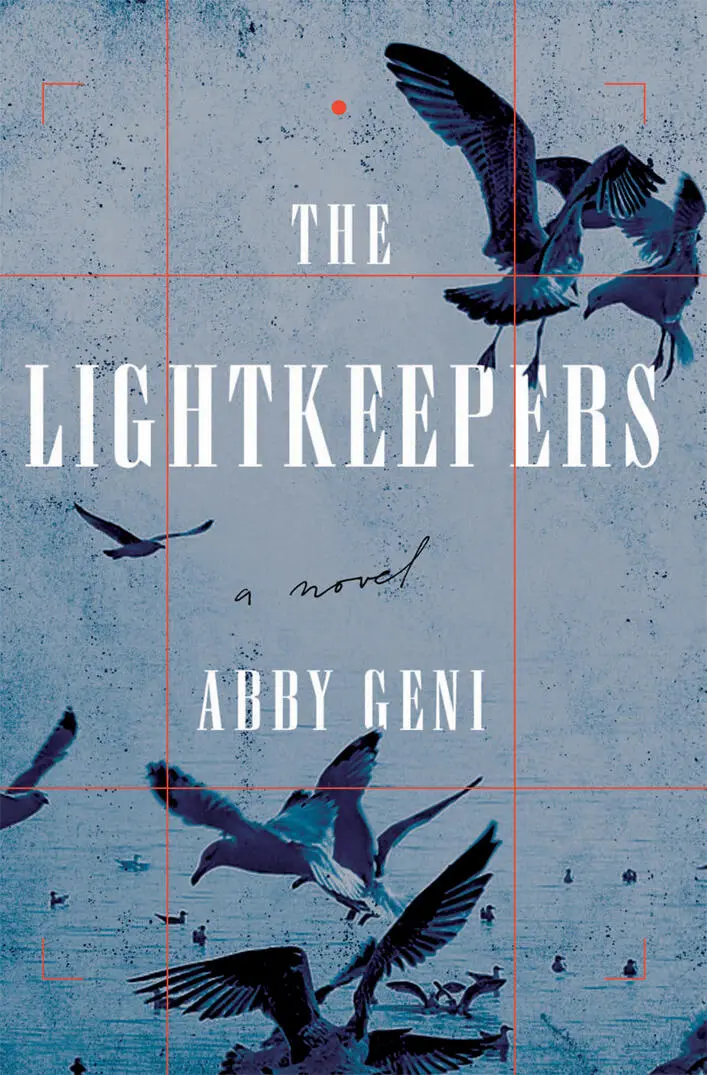
- Название:The Lightkeepers
- Автор:
- Издательство:Counterpoint
- Жанр:
- Год:2015
- ISBN:9781619027497
- Рейтинг книги:4 / 5. Голосов: 1
-
Избранное:Добавить в избранное
- Отзывы:
-
Ваша оценка:
The Lightkeepers: краткое содержание, описание и аннотация
Предлагаем к чтению аннотацию, описание, краткое содержание или предисловие (зависит от того, что написал сам автор книги «The Lightkeepers»). Если вы не нашли необходимую информацию о книге — напишите в комментариях, мы постараемся отыскать её.
, we follow Miranda, a nature photographer who travels to the Farallon Islands, an exotic and dangerous archipelago off the coast of California, for a one-year residency capturing the landscape. Her only companions are the scientists studying there, odd and quirky refugees from the mainland living in rustic conditions; they document the fish populations around the island, the bold trio of sharks called the Sisters that hunt the surrounding waters, and the overwhelming bird population who, at times, create the need to wear hard hats as protection from their attacks.
Shortly after her arrival, Miranda is assaulted by one of the inhabitants of the islands. A few days later, her assailant is found dead, perhaps the result of an accident. As the novel unfolds, Miranda gives witness to the natural wonders of this special place as she grapples with what has happened to her and deepens her connection (and her suspicions) to her companions, while falling under the thrall of the legends of the place nicknamed “the Islands of the Dead.” And when more violence occurs, each member of this strange community falls under suspicion.
The Lightkeepers
The Lightkeepers — читать онлайн бесплатно полную книгу (весь текст) целиком
Ниже представлен текст книги, разбитый по страницам. Система сохранения места последней прочитанной страницы, позволяет с удобством читать онлайн бесплатно книгу «The Lightkeepers», без необходимости каждый раз заново искать на чём Вы остановились. Поставьте закладку, и сможете в любой момент перейти на страницу, на которой закончили чтение.
Интервал:
Закладка:
The archipelago was the answer to a question I had not realized I was asking. It was the home I had not known I was looking for, all along.
Now I sighed, remembering how hard I had fought to come here. I had written dozens of letters detailing my love of nature, my résumé, my awareness of how to conduct myself in a marine sanctuary. The biologists who lived on the Farallon Islands had their room and board provided for, as well as their equipment. Nothing more. They took their payment in life experiences and earned no salary. But even their meager government stipend, which kept the cabin’s electricity on and paid Captain Joe’s fare, did not extend to me. As a photographer, I was not eligible to take part. The powers that be — which I now knew to be Galen — had looked askance at my desire to live among these scientists, interfering with their righteous labor.
So I had pleaded. I had cajoled. Into each envelope, I had stuffed dozens of my photographs — rainforest trees, rare animals, polar ice caps, anything that might help my case. I had explained that I was hoping to document, to observe — not to touch or interfere. Photography, like biology, was fundamentally passive. I had filled out so many forms that I could have papered the walls of my father’s house with them. I had done everything but fall to my knees and beg.
At last, after nearly six months, a letter had come in the mail, as lovely as a summer air. It was decorated with Galen’s signature . Your application for residency is approved. I look forward to meeting you in person.
“There’s a market for this kind of work right now,” I said. “Endangered species. Vanishing places.”
“Poof,” Mick said, waving a hand at the islands.
“Global warming,” I said. “Climate change. If the ocean rises by about half an inch, they’ll be gone.”
He nodded. “If it’s too late to save them, we might as well get a few photos of them. You’re a witness to the end of days.”
I leaned back against the railing.
“I showed you mine,” I said. “Now show me yours. Why did you come here?”
“Ask me no questions and I’ll tell you no lies.”
I opened my mouth and shut it again. His expression was a closed door.
There was a pause, the boat rising and dipping on the waves. Mick stroked his nose thoughtfully. I found myself admiring anew his thatch of bristling hair, the curved brow, the strong bones of his jaw. He was, without question, a fine specimen of humanity. I could see this now without feeling the smallest inkling of desire for him. The timeline of my life was divided into two distinct periods: Before Andrew and After Andrew. Before Andrew, I had nursed a crush on Mick. After Andrew, everything was different.
Without warning, Mick punched me in the shoulder.
“Ho!” he cried.
Rubbing my arm, I pivoted in my seat.
At first I thought it was not a whale at all. It was gray and slimy, the size of a dinghy. It was floating on the surface. We were far enough away that it did not seem to pose an immediate threat. Its hide was disfigured by scars and bulges, warty lumps of barnacles. For a minute or two, I thought it was dead — a dead elephant, drifting over from Asia on some strange current — but then it reared. The tail came out of the sea, a cleft fly swatter. A wash of droplets fell like rain. The beast exhaled. An orifice in its back opened, coughing steam. The wind carried the cloud toward us. I can honestly say that I have never smelled anything so foul. A row of Porta-Potties standing in the hot sun would not have come close. I clapped a hand over my nose.
Mick chuckled. “What did Queen Victoria say? ‘We are not amused’?”
And then the sea was filled with them. In every direction, gray bodies appeared, thrusting upward, burst after burst of spray. The entire pod seemed to come up for breath at the same time. They penetrated the surface any old way, upside down, sideways. Massive fins swiveled. Tails poked upward and sank into the ocean again. For an instant, I wondered if I was dreaming. I had been here before, lost at sea, surrounded by animals the size of houses. Their bellies were scored with deep grooves, ridged like the roof of a mouth. Unlike sharks, they had no dorsal fins, which made it hard to tell which end was up. Their faces were oddly expressionless. No nostrils. No ears. Tiny eyes. Some of the whales were an acceptable size — they might have been the juveniles — while others appeared too huge to be real.
As they rose and sank, they disarranged the organized flow of waves. The humpbacks rolled in the surf, and the boat sloshed back and forth. Everywhere I looked, there was a nose, a blowhole, a rim of tail. The animals had skin that was topographical — scarred, seamed, patched with rocky barnacles. The overall impression was one of a new archipelago in the process of forming.
Mick began to lecture me. This was not unexpected. Over the past months, I had been lectured by everyone; they couldn’t help themselves. Diet. Mating habits. Anatomy. Mick was nicer about it than Lucy usually was. He did not make me feel ignorant. I was ignorant, of course. But Mick had a way of explaining things as though he was just thinking out loud.
He told me that the humpbacks had the most complex and beautiful songs of all cetaceans. He told me that they named their children, addressing each calf with a specific chord progression. I was scarcely able to listen. So much was happening. A whale yawned — our entire boat could have fit inside that maw — and I saw the bony struts of baleen. It coughed a wet spume, which climbed against the sky. Ten feet high. Twelve feet. Mick told me that the pod navigated hundreds of miles of open sea. Yet the whales did not use sonar, and they did not use the position of the sun — not exclusively, anyway. The earth’s magnetic field might have had something to do with it. No one knew exactly how they managed to find their way without landmarks, without any visible oceanic bottom, just the wide, blank blue.
At this point, one of the beasts decided to jump completely out of the water. The snout, then the torso, then the tail rose into the air. It blocked the sun. I screamed. I could not help it. In that moment, I wanted my camera — partly so that I could get it on film, but mostly so that I would have a measure of distance against the fact of such raw wildness. Without that intermediate shield of glass, it was not safe for me to be so close to such things. I had been right on top of untamed animals before — the Sister, with her splintered rows of shimmering teeth, sprang to mind — but despite this physical proximity, I had always had a degree of intellectual remoteness, the keen observer’s eye overriding every other concern. I could not feel afraid when I was considering how best to frame the shot. Now there was nothing to insulate me.
The whale rotated in midair, thirty feet away, the fins flung balletically outward. It might have been alive since the world was new. The shadow dwarfed our boat. As I watched, the creature seemed to fall in slow motion. The crash came like thunder. I grabbed at the railing, too stunned to scream. A wall of spray climbed above the waves. The boat rocked perilously. I staggered backward, colliding with Mick.
“Relax,” he said, in my ear. “That’s just how they scratch an itch.”
THAT EVENING, WE came upon Sea Pigeon Gulch. We were strolling toward the cabin, each hefting a carton of gear. I had not been paying attention to where we were going. My mind was still packed with a throng of whales. Mick and I were arguing happily about whether cetaceans might be sentient. There was evidence on both sides of the question. Then he stopped dead. We had reached the edge of the water. Sea Pigeon Gulch was its usual, sinister self. A shadowy chasm, filled with restless ocean. I had not been near the place since the discovery of Andrew’s body.
Читать дальшеИнтервал:
Закладка:
Похожие книги на «The Lightkeepers»
Представляем Вашему вниманию похожие книги на «The Lightkeepers» списком для выбора. Мы отобрали схожую по названию и смыслу литературу в надежде предоставить читателям больше вариантов отыскать новые, интересные, ещё непрочитанные произведения.











Обсуждение, отзывы о книге «The Lightkeepers» и просто собственные мнения читателей. Оставьте ваши комментарии, напишите, что Вы думаете о произведении, его смысле или главных героях. Укажите что конкретно понравилось, а что нет, и почему Вы так считаете.