Abby Geni - The Lightkeepers
Здесь есть возможность читать онлайн «Abby Geni - The Lightkeepers» весь текст электронной книги совершенно бесплатно (целиком полную версию без сокращений). В некоторых случаях можно слушать аудио, скачать через торрент в формате fb2 и присутствует краткое содержание. Год выпуска: 2015, ISBN: 2015, Издательство: Counterpoint, Жанр: Современная проза, на английском языке. Описание произведения, (предисловие) а так же отзывы посетителей доступны на портале библиотеки ЛибКат.
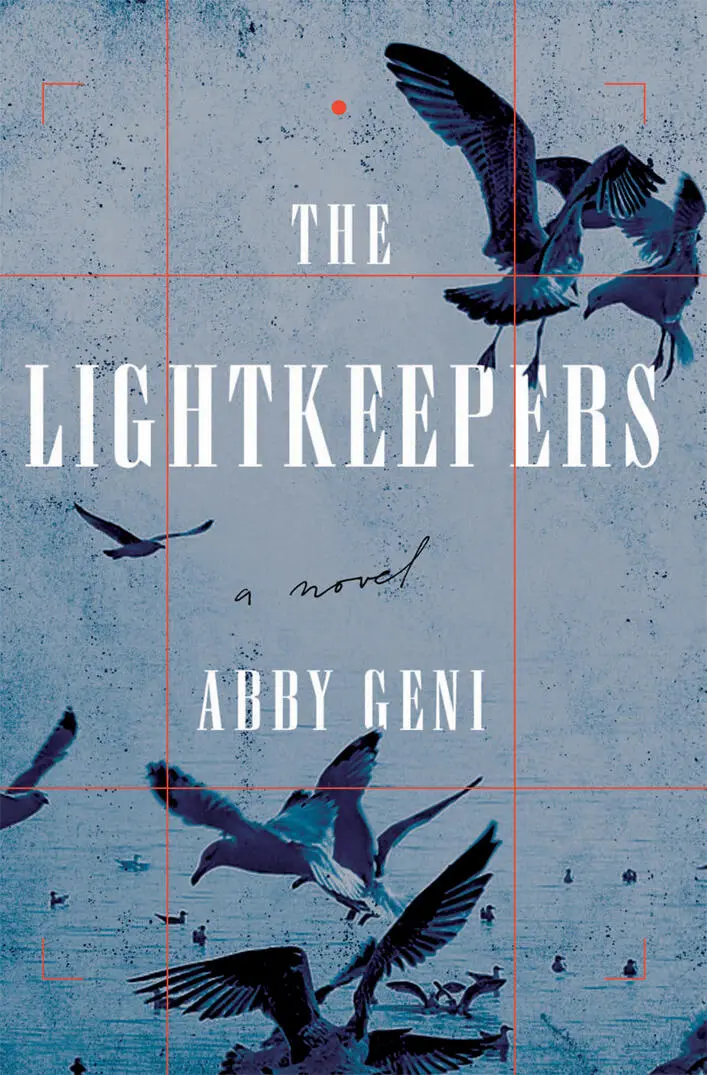
- Название:The Lightkeepers
- Автор:
- Издательство:Counterpoint
- Жанр:
- Год:2015
- ISBN:9781619027497
- Рейтинг книги:4 / 5. Голосов: 1
-
Избранное:Добавить в избранное
- Отзывы:
-
Ваша оценка:
The Lightkeepers: краткое содержание, описание и аннотация
Предлагаем к чтению аннотацию, описание, краткое содержание или предисловие (зависит от того, что написал сам автор книги «The Lightkeepers»). Если вы не нашли необходимую информацию о книге — напишите в комментариях, мы постараемся отыскать её.
, we follow Miranda, a nature photographer who travels to the Farallon Islands, an exotic and dangerous archipelago off the coast of California, for a one-year residency capturing the landscape. Her only companions are the scientists studying there, odd and quirky refugees from the mainland living in rustic conditions; they document the fish populations around the island, the bold trio of sharks called the Sisters that hunt the surrounding waters, and the overwhelming bird population who, at times, create the need to wear hard hats as protection from their attacks.
Shortly after her arrival, Miranda is assaulted by one of the inhabitants of the islands. A few days later, her assailant is found dead, perhaps the result of an accident. As the novel unfolds, Miranda gives witness to the natural wonders of this special place as she grapples with what has happened to her and deepens her connection (and her suspicions) to her companions, while falling under the thrall of the legends of the place nicknamed “the Islands of the Dead.” And when more violence occurs, each member of this strange community falls under suspicion.
The Lightkeepers
The Lightkeepers — читать онлайн бесплатно полную книгу (весь текст) целиком
Ниже представлен текст книги, разбитый по страницам. Система сохранения места последней прочитанной страницы, позволяет с удобством читать онлайн бесплатно книгу «The Lightkeepers», без необходимости каждый раз заново искать на чём Вы остановились. Поставьте закладку, и сможете в любой момент перейти на страницу, на которой закончили чтение.
Интервал:
Закладка:
The rest of the evening passed that way. One by one, we were summoned. The use of everyone’s last names lent a formality to the proceedings. Mick came down after a few minutes. He shot me a consoling wink, then he picked up a book and began to read. Forest was called up next — Mr. Cohen, I should say. A few moments afterward, Charlene was sent for — Ms. Westerman, that is.
I got to my feet and went to the window. Lighthouse Hill stood against a watercolor sky. A few boulders were silhouetted, spills of ink. Two seabirds were calling in harsh voices, back and forth, like a married couple engaging in a well-rehearsed spat. The sea roared. The clock ticked like thunder. The doctor was dozing, his chin sunk onto his chest. His glasses were sliding down his nose, millimeter by millimeter. I wondered whether it was worth it to wake him or whether I should let the inevitable happen and hope the fall didn’t break the fragile frame.
Soon Galen succumbed to habit. At the table, he got out a small green notebook. Murmuring to himself, he made some notes. Mick went up to bed. Forest went with him. I heard feet in the corridor. There was a whooshing in the pipes — teeth cleaned, toilet flushed. They shared a room at the end of the hallway, and for a while there was shuffling and banging in there. Then two bunks squealed audibly.
But I was wide awake. I lifted a hand and touched the window, as cold and slick as a sheet of ice. In the distance, a seabird gave one last cry, the final word in the argument. I barely noticed when Charlene came back downstairs, sniffling a bit, and disappeared into her bedroom beside the front door.
I was thinking about the whales. Mick had recently told me an interesting fact. Humpbacks are known for their family life. They play games with their calves, make lasting mates, follow one strong leader, and sing without cessation. They stick together. But over the years, whalers noticed something odd. (Mick can’t say the word whalers without grimacing. He knows a lot about them. Too much.) Whenever a humpback was harpooned, its pod would swim off and leave it. For a time, the sailors believed that humpbacks were incapable of affection. The animals smelled blood in the water, heard cries of pain, and did not stay to render aid or comfort.
Yet the truth was more complicated. Human beings are visual creatures. The whalers imagined that because they couldn’t see the pod anymore, the wounded animal had been abandoned for good. But Mick knows better. Whales are tactile, auditory, alive to sonar and magnetism. The harpooned creature would be pulled away, salting the sea with its blood. As it was dragged into shallow water, where the worst of fates awaited it, its pod would keep pace nearby — staying deep, out of sight of the sailors — and sing to it. They would sing until the very end.
“Excuse me,” someone said.
I spun around. The beta agent was standing behind me, hand outstretched, as though about to tap my shoulder. He had plainly been trying to get my attention for some time.
“We’re ready for you now,” he said. “Ms. — I’m sorry—”
He fumbled for the clipboard in his hand, running his finger down a list. I sighed. No one on the islands seemed able to keep track of my identity.
“Her name is Miranda,” Galen said.
His voice was quiet but firm, carrying from the table where he sat. I looked at him in consternation. It had been a while since I had heard my real name. I almost didn’t recognize it. At the expression on my face, Galen smiled.
“Wonderful,” he said. “Worthy of admiration.”
“What?” I said.
“Miranda,” he said. “That’s what it means.”
15
YOU MIGHT BE surprised to hear that I still find joy in the islands. In truth, I love this place as I have never loved anything else. (Except for you, of course.) Every morning, I climb out of bed and smile involuntarily at the view. The landscape is a charcoal drawing, varying from smudgy black to ash gray. The tumbled shoreline. The granite of the nearby islets. The flicker and dart of the mice. The clouds are gauzy. The sea lions are the hue of slate. Distant whales pass by like metallic submarines. It is a colorless world, yet I find it as beautiful as a rainbow. My affection for the islands has only deepened in the past few weeks. I have come to see the archipelago as more than eerie, more than wild. It is a nurturing, protective place.
I have felt this way since the night Andrew assaulted me. My alleged friends and companions were nowhere to be found then. No one defended me. Galen drank himself into a blackout state. Charlene put on headphones and stopped listening. Mick and Forest left the premises, abandoning me completely. And Lucy was asleep. Andrew used to joke about how she went down like a ton of bricks. It would happen suddenly, sometimes midsentence. Her normal whirl of energy used up so much juice that she would remain in a near coma until morning. (Apparently hummingbirds were the same way. During the daylight hours, their wings moved in a blur and their hearts beat several times each second. At night, however, they dropped into a temporary hibernation. Their hearts slowed to one beat per minute.) Lucy the hummingbird slept right through my ordeal.
But the islands were awake. The islands were listening.
I often imagine Andrew’s death. In fact, I like imagining it. The islands paid attention when no one else did. They protected me when no one else would. Andrew hurt me, so the islands took care of it. They took him away.
Lately I have been studying the others here. For once, I am the biologist, and they are the specimens. Everyone has reacted differently to Andrew’s passing. Mick has grown louder, more jovial. His bonhomie is almost painful in its intensity. Charlene, on the other hand, has withdrawn. She has always been quiet — cowed by the others — but now she has melted into the wallpaper. More than once, I have entered a room, found it empty, settled down with a book, and just about had a heart attack half an hour later when a cough or sigh behind me indicated that Charlene had been there all along. Watching me or lost in thought, I cannot tell.
For his part, Forest has become an automaton. His steely focus has increased by an order of magnitude. It is December, rainy and cold. There are only a few more weeks before the last of the sharks will depart for warmer climes. I have begun to hear Forest’s alarm clock going off at three in the morning. Mick, his roommate, will toss and turn, the squeal of bedsprings echoing down the hallway. Even before the sun is up, Forest wants to be in the lighthouse, on call.
And Galen — poor Galen — seems a little lost. For the first time, I can see that he is a man in his sixties, twice the age of anyone else here. He has become absent-minded. Sometimes he seems to be on the verge of asking me a question, but decides against it, averting his gaze. I have come across him wandering around the kitchen, looking everywhere for his reading glasses, unaware that they are perched on his brow. He trails off in the middle of telling stories, staring at me.
If I were a fanciful person, I would say that in those moments, he hears death speaking to him. More than ever before, death is with us on the Farallon Islands. In the past, it was like the sound of the sea caught in a shell’s curl — distant, vague, half-imagined. Now, however, death is front and center. It is there at the breakfast table. It appears amid the silences in an everyday conversation. It lingers outside the window in the evenings. Perhaps Galen is distracted by that cloaked figure, barely glimpsed out of the corner of the eye. Another ghost in an already-crowded cabin.
The days are growing shorter. The constellations have pivoted, the autumn shapes dipping beneath the horizon, the winter stars shining with greater urgency. The sea seems different too. The islands sit on the edge of the coastal plateau. To the west, the ocean floor plummets into black depths. Storms blow in now from the deeper water. They do not last long; they are brief, vicious squalls that have stripped our two little trees of leaves. Rain has battered the cabin and soaked the porch. We have all taken to wearing ponchos around even when the sky is clear, just in case.
Читать дальшеИнтервал:
Закладка:
Похожие книги на «The Lightkeepers»
Представляем Вашему вниманию похожие книги на «The Lightkeepers» списком для выбора. Мы отобрали схожую по названию и смыслу литературу в надежде предоставить читателям больше вариантов отыскать новые, интересные, ещё непрочитанные произведения.











Обсуждение, отзывы о книге «The Lightkeepers» и просто собственные мнения читателей. Оставьте ваши комментарии, напишите, что Вы думаете о произведении, его смысле или главных героях. Укажите что конкретно понравилось, а что нет, и почему Вы так считаете.