Abby Geni - The Lightkeepers
Здесь есть возможность читать онлайн «Abby Geni - The Lightkeepers» весь текст электронной книги совершенно бесплатно (целиком полную версию без сокращений). В некоторых случаях можно слушать аудио, скачать через торрент в формате fb2 и присутствует краткое содержание. Год выпуска: 2015, ISBN: 2015, Издательство: Counterpoint, Жанр: Современная проза, на английском языке. Описание произведения, (предисловие) а так же отзывы посетителей доступны на портале библиотеки ЛибКат.
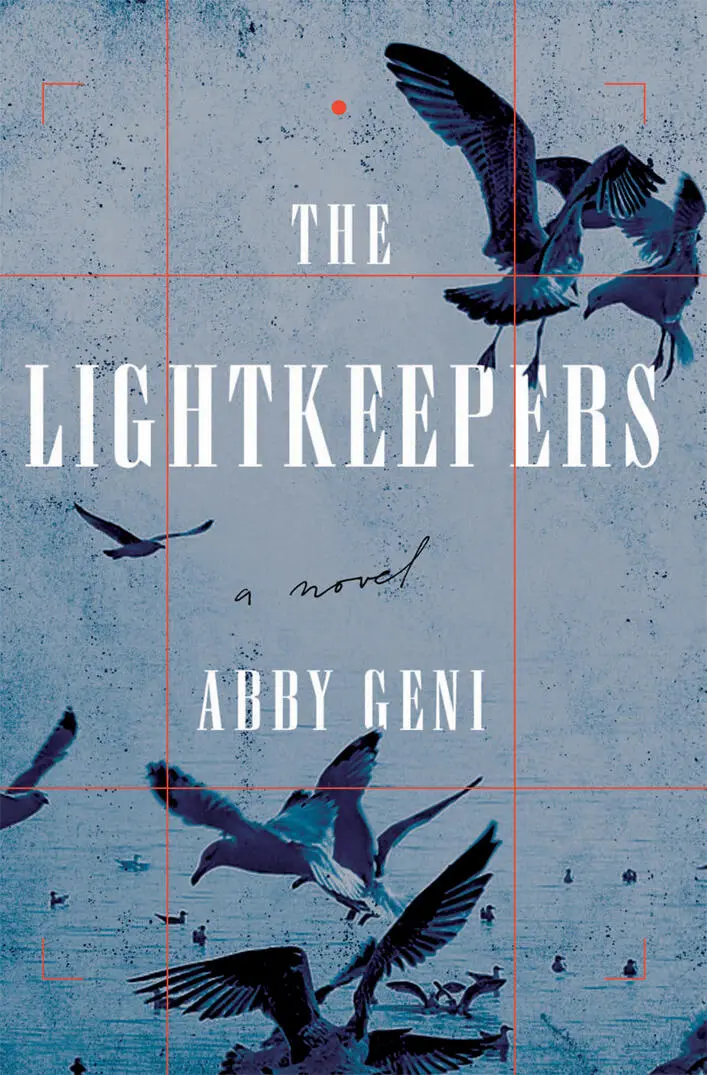
- Название:The Lightkeepers
- Автор:
- Издательство:Counterpoint
- Жанр:
- Год:2015
- ISBN:9781619027497
- Рейтинг книги:4 / 5. Голосов: 1
-
Избранное:Добавить в избранное
- Отзывы:
-
Ваша оценка:
The Lightkeepers: краткое содержание, описание и аннотация
Предлагаем к чтению аннотацию, описание, краткое содержание или предисловие (зависит от того, что написал сам автор книги «The Lightkeepers»). Если вы не нашли необходимую информацию о книге — напишите в комментариях, мы постараемся отыскать её.
, we follow Miranda, a nature photographer who travels to the Farallon Islands, an exotic and dangerous archipelago off the coast of California, for a one-year residency capturing the landscape. Her only companions are the scientists studying there, odd and quirky refugees from the mainland living in rustic conditions; they document the fish populations around the island, the bold trio of sharks called the Sisters that hunt the surrounding waters, and the overwhelming bird population who, at times, create the need to wear hard hats as protection from their attacks.
Shortly after her arrival, Miranda is assaulted by one of the inhabitants of the islands. A few days later, her assailant is found dead, perhaps the result of an accident. As the novel unfolds, Miranda gives witness to the natural wonders of this special place as she grapples with what has happened to her and deepens her connection (and her suspicions) to her companions, while falling under the thrall of the legends of the place nicknamed “the Islands of the Dead.” And when more violence occurs, each member of this strange community falls under suspicion.
The Lightkeepers
The Lightkeepers — читать онлайн бесплатно полную книгу (весь текст) целиком
Ниже представлен текст книги, разбитый по страницам. Система сохранения места последней прочитанной страницы, позволяет с удобством читать онлайн бесплатно книгу «The Lightkeepers», без необходимости каждый раз заново искать на чём Вы остановились. Поставьте закладку, и сможете в любой момент перейти на страницу, на которой закончили чтение.
Интервал:
Закладка:
Galen interrupted. “Do you have a cause of death?”
“Beg pardon?”
“Cause of death .”
It was Dr. Alfred who answered. He was settled on a chair in the corner, and he looked up from his clipboard. “Drowning. Foam in the lungs. Petechial hemorrhaging. No question.”
Lucy gave a barely visible shudder. I saw Forest reach toward her. Then he thought better of it and withdrew his hand.
“The wound on the head?” Galen asked. “The broken ankle? It was broken, wasn’t it?”
“A fall,” the doctor said. “That’s what it looks like now. I’ll find out more at the autopsy.”
“There will be an autopsy, then?”
“Oh, yes.”
Once again, Lucy shivered. It was a convulsive movement, like a dog shaking off water.
“And the time of death?” Galen asked.
Dr. Alfred glanced at the alpha agent, who gave a barely perceptible nod. The doctor pursed his lips and said, “Between midnight and two a.m. last night, based on the liver temperature. My best estimate.”
In that moment, something happened to me. Even before I’d had time to process his words, I felt the room beginning to pivot. The floorboards swung under my feet. I gasped a little. I could not help it.
Someone was speaking — Forest, asking a technical question. Something else about Andrew’s ankle. Mick had his hand raised like a child in school. They were biologists, after all, unfazed by blood and injury, interested only in the mechanisms and specificities of death. They had spent years practicing this habit of mind. Clinical distance. Emotional detachment. Facts, not feelings.
My brain was in a tumble. Andrew had been on the grounds at midnight. I had been on the grounds at eleven p.m. I had lingered in the coast guard house for at least half an hour. In my wildest dreams, I had never imagined that my late-night trek could have had anything to do with Andrew’s demise. The two events had seemed entirely unconnected. I had gone to the coast guard house. He had gone for a stroll. Naturally, I had imagined a morning stroll taking place well after dawn.
Now my breath came strangely, stifled in my chest. When I had departed the cabin last night, during the witching hour, I had been aware that I was putting myself in a certain amount of jeopardy. I had been willing to risk losing my way, exacerbating my flu, even wrenching my bad ankle. Evidently, however, it had been a greater gamble than I knew. In a million years, I would never have risked seeing Andrew alone. We had been ships in the night, missing one another by minutes. My nausea returned, and for a moment it seemed likely that I would vomit on the beta agent’s shoes. But I controlled myself. I took a deep breath and sat up straight again.
“—definitely broken,” Dr. Alfred was saying. “The right tibia. It happened antemortem, but just barely. I would say the bone was fractured a few minutes before death. That would be consistent with a fall.”
“He had some scratches,” Forest volunteered. “What does that mean?”
“Oh, drowning victims usually do,” the doctor said. “The body floats facedown, and the arms are dragged over the bottom. It’s common to see many kinds of wounds. Those would be inflicted after death.”
At this point, the alpha agent cleared his throat.
“As I said,” he announced, “we’ve got to head back to the mainland soon. No time to waste. This is a bit unorthodox, you understand. Normally we’d do things differently. But here, on the islands—” He sucked in a breath, looking around with a pained expression. “We’ll be asking each of you to come up in turn.” He indicated Lucy, who was sitting with a blanket clutched around her shoulders. “Ms. Crayle, I guess we’ll start with you.”
OUTSIDE, THE SKY darkened by degrees. The clock ticked in the corner. A breeze rattled the panes and set the front door to rocking in an arrhythmic rattle. Ordinarily, we would have been preparing for bed now. There would have been the usual squabble over who would have the first shower before the hot water ran out completely. Forest might accuse Mick of swiping his toothpaste. Galen might settle himself at the kitchen table, chin on fist, flipping through the tidal chart.
Tonight, however, we remained cloistered in the living room. The mood was both listless and tense. The rumor of voices filtered through the ceiling. Normally, I was sure, the federal agents would have had hours, even days, in which to collect information. Normally they would not dine with their witnesses, then take statements in somebody’s bedroom. But the islands, as usual, had made everything more difficult. Time was precious; space was limited. The agents could not urge us all to stop by their offices when we were feeling a bit calmer. They could not plan to return for a chat. Unless they felt like commandeering the helicopter again — unless we felt like spending twelve hours on board the ferry, there and back — this had to be done now.
The tension affected everyone differently. Any conversation that might have arisen between us was constrained by the presence of the doctor, who had remained in his corner, scribbling away on his clipboard. Mick was at the window, peering out at the sunset. Charlene was on the floor, slumped against the wall, as pale as I had ever seen her. Her freckles stood out like chips of sand caught in ice. She had not said a word since dinner. Forest, on the other hand, was frenzied. He was pacing like an expectant father. His movements were so rapid that I kept thinking he would barge straight into the wall. Instead, he pivoted on his heel. I had never been able to get a handle on Forest. Clearly he was in the grip of some strong emotion, but whether it was anxiety, or anger, or ghoulish enjoyment, I could not tell.
In the past, I had always assumed that there were only two mental states: waking and dreaming. The former was conscious, logical, and sane. The latter was chaotic and bizarre. I had never confused the two before. But in recent days, I seemed to have stumbled on a third state of being: a twilight haze, somewhere in between. In this half-lit realm, everything around me looked and felt like the reality I had always known. The ocean and sky still met in a precise line. Gravity functioned. The laws of daily life continued unabated. And yet monsters walked abroad. Rape, drowning, Andrew himself — these things belonged in the land of nightmares. Waking and dreaming were no longer distinct. Now the moon, the cabin, and Mick at the window were all happy reminders of the wide-awake world. But the federal agents, the helicopter, and Andrew’s dead body had sprung out of a bad dream.
After a while, Galen got to his feet. He shot me a searching glance, which I pretended not to notice. He wandered over to Dr. Alfred.
“Well,” he said. “You’re definitely doing an autopsy, then?”
“Oh yes,” the doctor said.
“I must say, I don’t see why. It seems like a clear-cut case of accidental death to me.”
Dr. Alfred set his pencil aside with an impatient gesture. “These things can be interpreted many different ways. We never want to rush to judgment.”
“There’s only one interpretation here, surely,” Galen said.
“In layman’s terms—” Dr. Alfred began.
At that moment, there was a clatter on the stairs. Lucy was descending. She had divested herself of her blanket, and without that sweeping cape, she looked smaller than usual. Normally there was a solidity about her hips, but now her frame seemed to have shrunk like a doll left in the wash. She kept her head bowed, her hair falling in her face, and slipped into her bedroom without speaking to any of us.
“Mr. Audino?” called a voice from upstairs.
“That’s me,” Mick said. “Jesus, this is awful.”
Читать дальшеИнтервал:
Закладка:
Похожие книги на «The Lightkeepers»
Представляем Вашему вниманию похожие книги на «The Lightkeepers» списком для выбора. Мы отобрали схожую по названию и смыслу литературу в надежде предоставить читателям больше вариантов отыскать новые, интересные, ещё непрочитанные произведения.











Обсуждение, отзывы о книге «The Lightkeepers» и просто собственные мнения читателей. Оставьте ваши комментарии, напишите, что Вы думаете о произведении, его смысле или главных героях. Укажите что конкретно понравилось, а что нет, и почему Вы так считаете.