Abby Geni - The Lightkeepers
Здесь есть возможность читать онлайн «Abby Geni - The Lightkeepers» весь текст электронной книги совершенно бесплатно (целиком полную версию без сокращений). В некоторых случаях можно слушать аудио, скачать через торрент в формате fb2 и присутствует краткое содержание. Год выпуска: 2015, ISBN: 2015, Издательство: Counterpoint, Жанр: Современная проза, на английском языке. Описание произведения, (предисловие) а так же отзывы посетителей доступны на портале библиотеки ЛибКат.
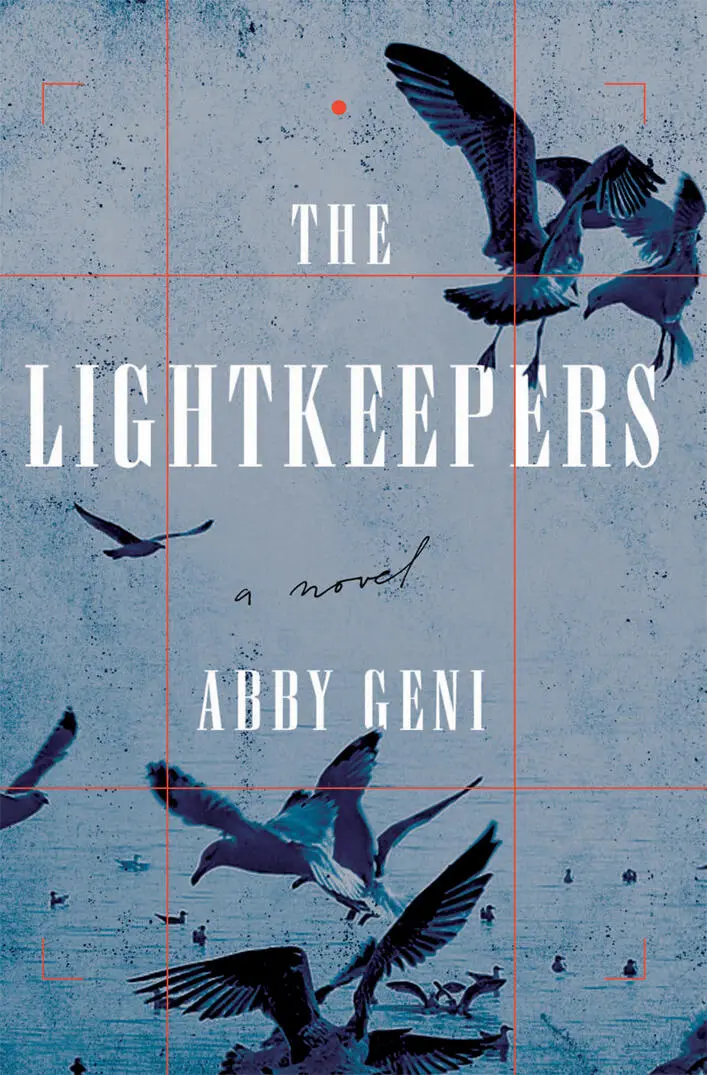
- Название:The Lightkeepers
- Автор:
- Издательство:Counterpoint
- Жанр:
- Год:2015
- ISBN:9781619027497
- Рейтинг книги:4 / 5. Голосов: 1
-
Избранное:Добавить в избранное
- Отзывы:
-
Ваша оценка:
The Lightkeepers: краткое содержание, описание и аннотация
Предлагаем к чтению аннотацию, описание, краткое содержание или предисловие (зависит от того, что написал сам автор книги «The Lightkeepers»). Если вы не нашли необходимую информацию о книге — напишите в комментариях, мы постараемся отыскать её.
, we follow Miranda, a nature photographer who travels to the Farallon Islands, an exotic and dangerous archipelago off the coast of California, for a one-year residency capturing the landscape. Her only companions are the scientists studying there, odd and quirky refugees from the mainland living in rustic conditions; they document the fish populations around the island, the bold trio of sharks called the Sisters that hunt the surrounding waters, and the overwhelming bird population who, at times, create the need to wear hard hats as protection from their attacks.
Shortly after her arrival, Miranda is assaulted by one of the inhabitants of the islands. A few days later, her assailant is found dead, perhaps the result of an accident. As the novel unfolds, Miranda gives witness to the natural wonders of this special place as she grapples with what has happened to her and deepens her connection (and her suspicions) to her companions, while falling under the thrall of the legends of the place nicknamed “the Islands of the Dead.” And when more violence occurs, each member of this strange community falls under suspicion.
The Lightkeepers
The Lightkeepers — читать онлайн бесплатно полную книгу (весь текст) целиком
Ниже представлен текст книги, разбитый по страницам. Система сохранения места последней прочитанной страницы, позволяет с удобством читать онлайн бесплатно книгу «The Lightkeepers», без необходимости каждый раз заново искать на чём Вы остановились. Поставьте закладку, и сможете в любой момент перейти на страницу, на которой закончили чтение.
Интервал:
Закладка:
13
I SOMETIMES WONDER HOW much about you I really remember. I have held on to what I can, of course, over the years. There was the day you and I had a picnic on the National Mall. I remember the heat of that golden afternoon, the glare on the dry grass, the drone of honeybees. There was the evening you and Dad got into such a terrible fight that it woke me up. I remember creeping down the hallway in my nightgown, trembling with cold and nerves, listening to your voices in the kitchen. You lost your temper to such an extent that you hurled a tomato across the room, leaving a splotch on the paint (scary at the time, hilarious in retrospect). There was the morning I found a rabbit in the backyard, its throat worried and bloody. For the next few hours, you and I worked in vain to save it, bent over its small form like doctors in the ER. I remember the day you spilled coffee down a brand-new skirt and cried. I remember the evening you and I made a mobile out of rainbow pipe cleaners. I remember events. I remember stories, since they can be told and retold, memorized like poetry for a recital.
And yet a great deal has been lost. Nowadays, I can’t call up the exact timbre of your voice. I am not sure whether your eyes were hazel or unmottled green. Was it you who liked to take the time to give yourself a full pedicure, separating each toe with a roll of cotton and applying several meticulous coats? Or was that a character from a TV show? Was it you who watched the presidential debates before each election with a beady eye, hunched in front of the television, hollering out your own questions and rebuttals? Or am I remembering the mother of a friend? I have lost so many details. Whether you wore earrings. Whether you were afraid of spiders. Whether you had inside jokes from childhood with your twin sisters. Many things are gone forever. If time is a river, these are the memories that have slipped to the bottom, too heavy to be carried on the current any longer — tumbled in the dirt, hidden in the silt.
I even wonder what parts of your personality I may have fabricated. It was all so long ago. Surely, some of what I recall must be my own creation. Maybe you didn’t spill coffee on an expensive new skirt and burst into tears in the middle of the street. That recollection might have come from a nightmare; it does have a lurid, dreamlike quality in my mind. Perhaps we never found an injured rabbit in our backyard. Come to think of it, that does sound like the plot of a short story I once read.
Each time we remember something, we change it. This is the nature of the brain. I imagine my recollections like rooms in a house. I can’t help but alter things when I step inside — tracking mud on the floor, moving furniture out of alignment, kicking up swirls of dust. Over time, these small alterations add up.
Photographs speed this undoing. My work is the enemy of memory. People often imagine that taking pictures will help them recall exactly what happened. In fact, the opposite is true. I have learned to leave my camera in the drawer at important events, since snapshots have a way of superseding my recollections. I can either have the impression in my brain or the image in my hand — not both.
To remember is to rewrite. To photograph is to replace. The only reliable memories, I suppose, are the ones that have been forgotten. They are the dark rooms of the mind. Unopened, untouched, and uncorrupted.
One thing I am sure of — one thing I do remember — is that you believed in God. I am as certain of that as I am of anything. You and Dad used to debate the matter, working yourselves up into a lather of erudite references and philosophical rhetoric. My father was (and is) a devout agnostic. He stands firm in the conviction that he doesn’t know everything and never will. You, on the other hand, went to church every Sunday. I remember the long, sleepy mornings I spent at your side, watching the light shift through the stained glass. I remember those uncomfortable patent leather shoes. The rise and fall of the minister’s voice. The pungent odor of floor wax. I remember the look on your face during services — elated, confident, as radiant as a bride. You would follow every word of the sermon, nodding in agreement like a student in class. You sang the hymns with gusto, your voice sweet but out of tune.
Church was coal for the furnace of your mind. You would spend the rest of every Sunday mulling over higher matters. All three of us would head home and settle in the living room. Dad reading the newspaper. Me perusing the comics section. You chewing on your pencil, thinking and thinking and thinking.
Back then, it bothered me that I did not share your conviction. I could not revel along with you. You prayed often, sitting with your face turned toward the sun, eyes closed. When Aunt Janine was having trouble at work, you gave her a gold cross on a necklace to support and sustain her. I remember hearing you on the phone with Aunt Kim, urging her to have faith. You offered me the same advice when things were not going well at school. It gave me a squirmy feeling.
Even then, I was in my father’s camp all the way. The Bible stories were silly. Sunday school was a bore. The sermons contradicted each other. Sitting in the quiet, sun-drenched church, I felt nothing, no power, no release. The hymns left my soul unmoved. In short, I have never believed in God.
That is, until Andrew.
NOW, LOOKING BACK, I can tell you what I felt that day. At the time, standing at the edge of Sea Pigeon Gulch, it was just a rush of emotion, like a bonfire on a frozen winter night, almost too much relief. I took one last glance at Andrew’s pale, swollen figure, and then I turned away. Every step on the packed ground felt like a revelation. Every gust of wind was a sweet caress. Galen and Mick were with me. Someone’s arm was linked through mine in a steadying manner. I remember seeing Forest’s silhouette on the landscape ahead, hurrying toward the cabin. The sun touched the high clouds with light. A seabird winged by, braying noisily. Somewhere in the background, Lucy was sobbing. Charlene was supporting her, murmuring to her.
In that moment, I may well have been converted. It was enough to make a person believe. There seemed to be no other explanation. Andrew had been a foul thing, a wicked creature, and so God had erased him, exactly as I myself might have removed a blot from a sheet of clean, white paper.
14
THE POLICE CAME. I suppose I shouldn’t have been surprised, and yet I was. After four months of isolation, I had come to think of the islands as an impenetrable fortress. Only Captain Joe was intrepid enough to find us on a map, let alone make the arduous journey to our shores. I had lost touch with the simple fact that California was only thirty miles away. All it took to attract the attention of the civilized world was a call on the radiophone. At once, a helicopter was dispatched to our location.
I was in my bedroom — Mick had deposited me there — when I saw a wisp of movement, a shadow on the glittering sea. The helicopter crossed the horizon. Downstairs, the biologists were coming and going, voices raised, doors slamming. I remained unconcerned. I perched there in a pleasant dream.
Andrew’s body was still in the water. None of us could have reached it, even if we had wanted to. The tide was coming in. From a police standpoint, this was fortunate. Andrew’s corpse would be pushed toward shore; he might bang himself up on the rocks, but at least he would not be carried out to sea before anyone could get to him. In truth, he had chosen an ideal time and place to drown. A few hours later — a different gorge — and the marine life would have made short work of him. His remains might never have been discovered.
Читать дальшеИнтервал:
Закладка:
Похожие книги на «The Lightkeepers»
Представляем Вашему вниманию похожие книги на «The Lightkeepers» списком для выбора. Мы отобрали схожую по названию и смыслу литературу в надежде предоставить читателям больше вариантов отыскать новые, интересные, ещё непрочитанные произведения.











Обсуждение, отзывы о книге «The Lightkeepers» и просто собственные мнения читателей. Оставьте ваши комментарии, напишите, что Вы думаете о произведении, его смысле или главных героях. Укажите что конкретно понравилось, а что нет, и почему Вы так считаете.