Abby Geni - The Lightkeepers
Здесь есть возможность читать онлайн «Abby Geni - The Lightkeepers» весь текст электронной книги совершенно бесплатно (целиком полную версию без сокращений). В некоторых случаях можно слушать аудио, скачать через торрент в формате fb2 и присутствует краткое содержание. Год выпуска: 2015, ISBN: 2015, Издательство: Counterpoint, Жанр: Современная проза, на английском языке. Описание произведения, (предисловие) а так же отзывы посетителей доступны на портале библиотеки ЛибКат.
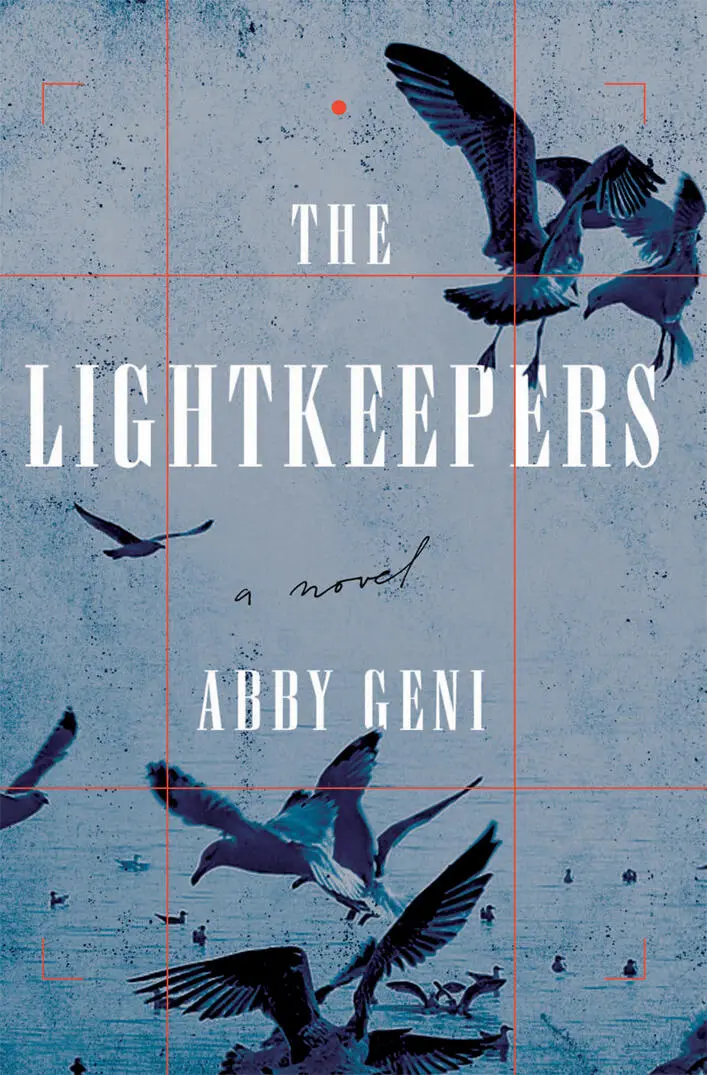
- Название:The Lightkeepers
- Автор:
- Издательство:Counterpoint
- Жанр:
- Год:2015
- ISBN:9781619027497
- Рейтинг книги:4 / 5. Голосов: 1
-
Избранное:Добавить в избранное
- Отзывы:
-
Ваша оценка:
The Lightkeepers: краткое содержание, описание и аннотация
Предлагаем к чтению аннотацию, описание, краткое содержание или предисловие (зависит от того, что написал сам автор книги «The Lightkeepers»). Если вы не нашли необходимую информацию о книге — напишите в комментариях, мы постараемся отыскать её.
, we follow Miranda, a nature photographer who travels to the Farallon Islands, an exotic and dangerous archipelago off the coast of California, for a one-year residency capturing the landscape. Her only companions are the scientists studying there, odd and quirky refugees from the mainland living in rustic conditions; they document the fish populations around the island, the bold trio of sharks called the Sisters that hunt the surrounding waters, and the overwhelming bird population who, at times, create the need to wear hard hats as protection from their attacks.
Shortly after her arrival, Miranda is assaulted by one of the inhabitants of the islands. A few days later, her assailant is found dead, perhaps the result of an accident. As the novel unfolds, Miranda gives witness to the natural wonders of this special place as she grapples with what has happened to her and deepens her connection (and her suspicions) to her companions, while falling under the thrall of the legends of the place nicknamed “the Islands of the Dead.” And when more violence occurs, each member of this strange community falls under suspicion.
The Lightkeepers
The Lightkeepers — читать онлайн бесплатно полную книгу (весь текст) целиком
Ниже представлен текст книги, разбитый по страницам. Система сохранения места последней прочитанной страницы, позволяет с удобством читать онлайн бесплатно книгу «The Lightkeepers», без необходимости каждый раз заново искать на чём Вы остановились. Поставьте закладку, и сможете в любой момент перейти на страницу, на которой закончили чтение.
Интервал:
Закладка:
I am still expecting Lucy to leave. Indeed, I am amazed that she is not gone already — that she did not board the helicopter with the federal agents and flee without a backward glance. But instead she is hard at work. She is on a mission to tag more birds than anyone else on the planet ever has. She does not eat; she barely sleeps. Her hummingbird energy seems perilous now. The mechanism that drives her is clearly working beyond its capacities. I can just about smell the smoke from the overheated gears. Lucy continues, each evening, to scrub and mop the house; I have woken in the night to hear the vacuum cleaner running. She polishes the knives and wipes the countertops as though the grime and dust are the physical manifestations of her own sorrow. By eradicating mold, by making each countertop shine, she might wash her soul clean of suffering, leaving herself burnished and bright.
A FEW DAYS ago, I lay in bed, awake. I had been dreaming about the whales again — their slippery weight, their unearthly song. The sun was rising. My room brimmed with light like a wood stove. I had grown accustomed to perching in the bedroom like a spider on a web, determining where the others might be by the shake of floorboards, the chime of voices. Today there was someone in the kitchen. I caught the scrape of a chair. Someone was making coffee; that earthy odor wafted up the stairs. Forest and Galen were out on the grounds. I could hear them calling to one another.
Getting to my feet, I saw that a slip of paper had been pushed under my door. On one side, my name was printed in block letters. MELISSA —my name here. On the other side was written, Lucy Crayle would appreciate your attendance at a memorial service for Andrew Metzger. It will be held at sunset on Friday .
I read it twice. I could imagine Lucy cutting up a sheet of paper; there was a faint pencil mark where she had measured it out. She had evidently made formal invitations for each of us. I was aware that she would not be attending Andrew’s real funeral. His family was in Maine, and the trip would be too long, too expensive. This, apparently, was her solution. I stood there for a long while, holding the square of paper, a lump in my throat.
THERE WAS SOME excitement that afternoon. Mick, Forest, and I walked to the Tit — a rotund promontory on the northern shore — to get a look at a pod of gray whales that were frolicking there. The day was chilly. I positioned myself on the plateau with my tripod. The granite seemed especially loose, sliding and crunching beneath my shoes like melting ice. I leaned forward, eye to the viewfinder, and I experienced the mental shift I always feel in those moments — the physical falling away, my sensory organs dimming, aware of nothing but color and exposure and light.
The gray whales were in an obliging mood. There were ten or twelve of them in the group, and they seemed to be playing. I captured a flash of baleen slats, glistening inside a wide mouth. I caught an image of several tails cresting together, flinging a tsunami of droplets upward. The animals lived up to their name, deep gray, patched with white like a cloudy sky. For the first time, I was able to get what I wanted from the whales on film. The size of them. Their breath climbing in columns of steam. Their enormous flippers. Their elegance. Their mystery.
Mick and Forest were standing by the water’s edge. From what I could tell, they were arguing. Mick had the daily log in his hands. Forest had been deputized as his assistant and note-taker. This was the way of things on the islands. No one ever had time off. All the biologists had seasons in which they could focus on their areas of expertise (when their animals ruled the roost) and seasons when they were required to help the others (when their animals were absent). During the summer, Forest, the shark specialist, had been in command. He and Galen had given orders, and everyone else had jumped to obey. But autumn had brought the whales, and winter would give way to Seal Season, which would be followed by Bird Season. Each biologist had a moment in the sun. This was Mick’s time to shine.
Just then, one of the gray whales decided to “spy-hop.” It was a behavior Mick had described to me, but one I hadn’t expected to see in person. The creature poked his monstrous head out of the water. He rose vertically, perhaps ten feet in the air. Then he began to rotate. He pivoted on the spot like a barber pole. Camera in hand, I clicked gleefully away. I knew what he was doing — scouting the surrounding area — but there was such beauty and strangeness in the action that for a moment I felt that he was dancing for me. He was performing for the camera.
I heard a shout. Mick was waving in my direction. Forest appeared to be injured; he was bent double, holding his calf and grimacing.
“What happened?” I cried.
“He lost his balance,” Mick said. “He wasn’t listening to me.”
“Don’t start,” Forest said.
I hurried over, my camera bouncing on my chest. Forest’s pant leg was stained crimson. He had left smudges on the rocks, marking his path in blood.
Mick and I organized ourselves into makeshift crutches, one on either side of him. With my arm around Forest’s waist, I could feel his thinness. He was a surfboard of a man. His ropy musculature flexed beneath my fingers. His ribs were iron bars. He limped and winced, and we steadied him all the way home.
Back at the cabin, Mick stitched him up. First a shot of anesthetic, then the needle and thread. I knew the drill now. It had been the same for me. Forest sat at the table, reading a book, leg extended, as Mick worked away with reading glasses perched on his nose. Forest turned a page. Mick sewed in silence. I could not tell if Forest was genuinely uninterested in the progress of his injury — so accustomed to wounds, to stitches and scars, that he could not be bothered to attend — or whether he was keeping his mind occupied out of a dislike of syringes and blood.
I myself felt oddly detached. The sight of that pulpy gash, the trickle of red — I found these things engaging, rather than upsetting. I was glad to see Forest injured. Hurt, not killed. Already beginning to heal. He’d been dinged — Mick’s phrase. The islands were dangerous, but they did not have to be deadly.
At last Mick leaned forward and severed the thread with his teeth.
“Done.”
“Thanks,” Forest said.
He glanced down at his wound. He flexed his ankle, teeth bared in discomfort.
This is how we know we’re alive, I guess: we continue to feel pain.
16
YOUR DEATH MADE me into a nature photographer.
I was always going to be an artist. There was never any question about that. I need to take pictures of the world around me the way a whale needs to come up for air. For as long as I can remember, I have been driven by beauty. I am talented; I don’t mind saying it. Photography was a given. Nature was the wild card.
If I were a different sort of person, I could have made my bones on babies and anniversaries. I could have been a wedding photographer or a portraitist. I would have been happy enough. Beauty is in the eye of the beholder, after all. The camera is nothing more than an eye that records what it sees. I could have found beauty in an ordinary life. I could have settled down. I could have had stillness and permanence. I could have mined art out of the raw ore of the visible realm.
But you died. That changed everything. Your death sent me skimming over the planet like a rock across a pond. A nomad. A lost soul.
For most of my life, I have been interested in the journey, rather than any particular destination. I never cared where I ended up as long as it was somewhere new. I like feeling rootless. I like airplanes and buses. I like waking up without being certain where I am. I like owning next to nothing. Six cameras (now five). A light meter. A tripod. A changing bag. A couple pairs of jeans. Nothing more.
Читать дальшеИнтервал:
Закладка:
Похожие книги на «The Lightkeepers»
Представляем Вашему вниманию похожие книги на «The Lightkeepers» списком для выбора. Мы отобрали схожую по названию и смыслу литературу в надежде предоставить читателям больше вариантов отыскать новые, интересные, ещё непрочитанные произведения.












Обсуждение, отзывы о книге «The Lightkeepers» и просто собственные мнения читателей. Оставьте ваши комментарии, напишите, что Вы думаете о произведении, его смысле или главных героях. Укажите что конкретно понравилось, а что нет, и почему Вы так считаете.