Abby Geni - The Lightkeepers
Здесь есть возможность читать онлайн «Abby Geni - The Lightkeepers» весь текст электронной книги совершенно бесплатно (целиком полную версию без сокращений). В некоторых случаях можно слушать аудио, скачать через торрент в формате fb2 и присутствует краткое содержание. Год выпуска: 2015, ISBN: 2015, Издательство: Counterpoint, Жанр: Современная проза, на английском языке. Описание произведения, (предисловие) а так же отзывы посетителей доступны на портале библиотеки ЛибКат.
- Название:The Lightkeepers
- Автор:
- Издательство:Counterpoint
- Жанр:
- Год:2015
- ISBN:9781619027497
- Рейтинг книги:4 / 5. Голосов: 1
-
Избранное:Добавить в избранное
- Отзывы:
-
Ваша оценка:
The Lightkeepers: краткое содержание, описание и аннотация
Предлагаем к чтению аннотацию, описание, краткое содержание или предисловие (зависит от того, что написал сам автор книги «The Lightkeepers»). Если вы не нашли необходимую информацию о книге — напишите в комментариях, мы постараемся отыскать её.
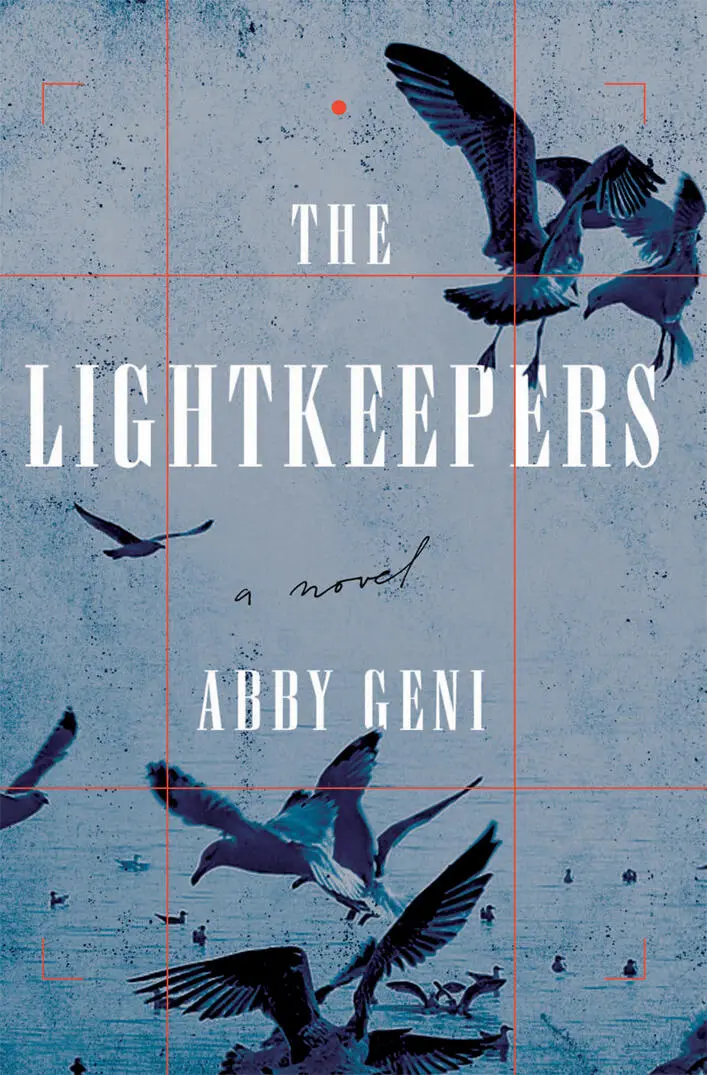
, we follow Miranda, a nature photographer who travels to the Farallon Islands, an exotic and dangerous archipelago off the coast of California, for a one-year residency capturing the landscape. Her only companions are the scientists studying there, odd and quirky refugees from the mainland living in rustic conditions; they document the fish populations around the island, the bold trio of sharks called the Sisters that hunt the surrounding waters, and the overwhelming bird population who, at times, create the need to wear hard hats as protection from their attacks.
Shortly after her arrival, Miranda is assaulted by one of the inhabitants of the islands. A few days later, her assailant is found dead, perhaps the result of an accident. As the novel unfolds, Miranda gives witness to the natural wonders of this special place as she grapples with what has happened to her and deepens her connection (and her suspicions) to her companions, while falling under the thrall of the legends of the place nicknamed “the Islands of the Dead.” And when more violence occurs, each member of this strange community falls under suspicion.
The Lightkeepers
The Lightkeepers — читать онлайн бесплатно полную книгу (весь текст) целиком
Ниже представлен текст книги, разбитый по страницам. Система сохранения места последней прочитанной страницы, позволяет с удобством читать онлайн бесплатно книгу «The Lightkeepers», без необходимости каждый раз заново искать на чём Вы остановились. Поставьте закладку, и сможете в любой момент перейти на страницу, на которой закончили чтение.
Интервал:
Закладка:
Galen had told me that he gathered and kept anything that spoke to the nature of life on the islands. He did not discriminate between the mundane and the vital, the human and the animal, the tragic and the wonderful. He had told me that the greatest illusion of the human experience was the idea that we were outside of nature — that we were not a part of the food chain — that we were not animals ourselves.
Soon I headed downstairs. The rain lashed the walls and splattered the windows. The air was heavy with the smell of wet birds. I stepped into the living room and paused. I had not been inside Lucy’s room — Andrew’s room, as I still thought of it — since my first days in the cabin. For a while I stood in the doorway, edgy and tense. The space looked different than I remembered. Lucy had reorganized it months before, switching the positions of the bed and dresser, hanging curtains, and removing the rug. It was a homey little area, shabby but warm. She had a lot of knickknacks scattered around — a ceramic paperweight, a snow globe, a tiny, bronze statue of a cat. I glanced through the papers on the desk: a bill, a half-completed letter. I tugged open the drawer of Lucy’s night table. There was something in there, swathed in cloth.
It was a picture of Andrew. I had unwrapped it and was holding it in my hands before I registered this fact. I stared down, mesmerized. I had forgotten what Andrew looked like. My memories of him were all tactile in nature: heavy calves, moist skin, breath. It was strange to see another human being looking back at me. A weak chin. A mischievous smile. He had not, after all, been a monster. That was the way he usually cropped up in my dreams: a ghoul with glaring red eyes, exhaling sulfur and steam. Instead, he had been a man. No more, no less.
I wrapped the picture in the cloth again and tucked it back where I had found it. My fingers were unsteady, but otherwise I was calm. I hurried into the hall. I sat down on the stairs. The rain was falling in torrents, splashing against the roof and hammering the porch. I could not see outside; the windows were as blind as stained glass, patterned with a mosaic of water. I don’t know how long I sat there. The downpour was unabated. It was amazing to me that there was this much rain in the world. Surely the sky would empty itself out eventually. A telltale drip was coming from somewhere in the house. The roof, or the walls, or the windows had been penetrated. After I was gone, the others would have to spend a few hours with the caulking gun and spackle, trying, yet again, to do the impossible — to contain the wildness here, to pretend they had control over nature, to mitigate what it might do to them.
At last I hefted myself upright. Gritting my teeth, I climbed the stairs once more. The rain was louder here, booming on the roof. In the distance, thunder growled. I could not hear the gulls or the murres, any of the usual suspects. The storm had wiped out all traces of animal life, for the moment, anyway.
It took all the courage I had to enter the bedroom that Forest and Mick had shared. Inside, I stood frozen, stunned at my own daring. I breathed in the combined musk of two athletic, unshowered bodies — Mick’s smell had not yet evaporated. I glanced around at the ceiling fan and the frayed, threadbare rug. Forest’s dresser was tidy. He evidently preferred not to use a pillow; his bed looked odd, empty at the top, like something that might have belonged to the Headless Horseman. His clothes were hung crisply in the closet. There was an echo of Galen’s neatness in the way the papers on the desk were all lined up at right angles, the thumbtacks and pencils stowed in specific little jars. I peeked into the trunk at the foot of the bed — more papers, a few years’ worth of documentation about sharks. There were sketches, photographs, and meticulous notes. Somehow, Forest had managed to take the greatest and most ferocious predator on earth and render it boring. I would not have been able to sit there and read through those files, not for love or money.
After some searching, I found my own camera, with the images of Mick and Forest’s rendezvous stowed on the memory card. It was hidden at the bottom of the closet now. I turned it over in my fingers. The pictures were not mine anymore — if they had ever been. I tucked the camera away again, out of sight.
Then I gazed across the room at Mick’s things. The bed was exactly as he had left it the morning he had died: a heap of pillows, the blanket trailing onto the floor. I was sure that if I opened his dresser, I would see shirts and socks crammed in there willy-nilly. His books had been shoved roughly onto the shelves — backward, upside down. Muddy boots under the bed. A closet with sweaters piled on the floor, hangers unused. Mick’s energy was captured there, the impression of a body in motion, a large, generous personality, too full of enthusiasm to bother with petty matters like tidying up. I got to my feet and headed across the neutral zone. I knew I did not have long. The others would be back soon, wet, weary, and hungry for lunch. There was something I wanted to do before they returned.
In Mick’s nightstand, I found a leather bracelet. He had owned a few, with varying degrees of masculinity (some braided, some chunky, some ringed with metal studs). He had alternated them according to his mood. This one was stiff with sweat, the mahogany hue weathered to a pale brown. I pocketed it. I was hunting for small items that Forest would not miss. I found a T-shirt in Mick’s drawer: my favorite, a bright orange thing that was emblematic of his luminescent temperament. I stole a postcard he had begun to write to someone but had never finished — a chatty note about the whales, ending in midsentence. The important thing was that it was in his own handwriting. I was moving fast now, a dervish, disarranging the books and upsetting the papers on the desk. I took Mick’s baseball cap. I found a tiny rubber chicken in the corner of a dresser drawer, a miniature bit of hilarity, and I swiped that too. I grabbed a book about sea lions, highlighted and marked with Mick’s script.
Right then, there was a sound from downstairs. A door slammed. Voices rang up the steps. I jumped in alarm, like the thief I was. I hurried down the hall to my bedroom with my stolen goods clutched under my arm.
I WILL TELL people that Mick was the father of my baby. When my twin aunts ask — when my own father asks — when my son himself is old enough to ask — I will lie. Mick gave me this gift, and I will grab it with both hands.
I will spin a beautiful story. I will begin, always, with the eggers and the lightkeepers. I will not, perhaps, relate this tale as well as Galen (and his book) did, but I will do well enough. I will describe the way lightkeepers inhabited the islands. They left the sharks, the whales, the seals, and the birds alone. They sought peace, an income, and a home. They built a strange little community on a godforsaken rock, where they protected one another, raised their children, and thrived.
Then there were the eggers, who came to the islands with a different agenda. They decimated the murre population with abandon. (Even now, the birds have not fully recovered.) Not content with causing an environmental catastrophe, the eggers brought weapons to the archipelago. They died in battles with other eggers. They died in caves, poisoned by the fumes rising from the guano. They died by tumbling into the sea, overburdened by the weight of too many eggs.
When I tell people about the father of my baby, I will say this: There are two kinds of people in the word. There are eggers and lightkeepers. The former are driven by acquisition and avarice. The latter are driven by curiosity and caution. Eggers take what they can, consequences be damned. Lightkeepers take what they need, nothing more. Eggers want to have. Lightkeepers want to be.
Читать дальшеИнтервал:
Закладка:
Похожие книги на «The Lightkeepers»
Представляем Вашему вниманию похожие книги на «The Lightkeepers» списком для выбора. Мы отобрали схожую по названию и смыслу литературу в надежде предоставить читателям больше вариантов отыскать новые, интересные, ещё непрочитанные произведения.












Обсуждение, отзывы о книге «The Lightkeepers» и просто собственные мнения читателей. Оставьте ваши комментарии, напишите, что Вы думаете о произведении, его смысле или главных героях. Укажите что конкретно понравилось, а что нет, и почему Вы так считаете.