Abby Geni - The Lightkeepers
Здесь есть возможность читать онлайн «Abby Geni - The Lightkeepers» весь текст электронной книги совершенно бесплатно (целиком полную версию без сокращений). В некоторых случаях можно слушать аудио, скачать через торрент в формате fb2 и присутствует краткое содержание. Год выпуска: 2015, ISBN: 2015, Издательство: Counterpoint, Жанр: Современная проза, на английском языке. Описание произведения, (предисловие) а так же отзывы посетителей доступны на портале библиотеки ЛибКат.
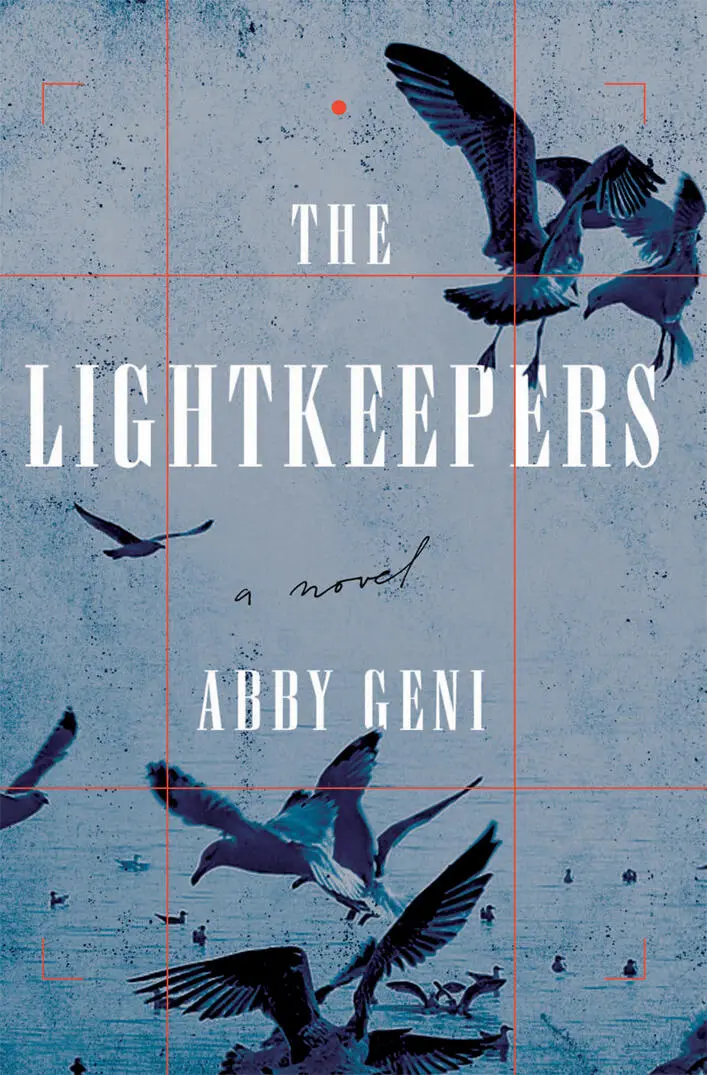
- Название:The Lightkeepers
- Автор:
- Издательство:Counterpoint
- Жанр:
- Год:2015
- ISBN:9781619027497
- Рейтинг книги:4 / 5. Голосов: 1
-
Избранное:Добавить в избранное
- Отзывы:
-
Ваша оценка:
The Lightkeepers: краткое содержание, описание и аннотация
Предлагаем к чтению аннотацию, описание, краткое содержание или предисловие (зависит от того, что написал сам автор книги «The Lightkeepers»). Если вы не нашли необходимую информацию о книге — напишите в комментариях, мы постараемся отыскать её.
, we follow Miranda, a nature photographer who travels to the Farallon Islands, an exotic and dangerous archipelago off the coast of California, for a one-year residency capturing the landscape. Her only companions are the scientists studying there, odd and quirky refugees from the mainland living in rustic conditions; they document the fish populations around the island, the bold trio of sharks called the Sisters that hunt the surrounding waters, and the overwhelming bird population who, at times, create the need to wear hard hats as protection from their attacks.
Shortly after her arrival, Miranda is assaulted by one of the inhabitants of the islands. A few days later, her assailant is found dead, perhaps the result of an accident. As the novel unfolds, Miranda gives witness to the natural wonders of this special place as she grapples with what has happened to her and deepens her connection (and her suspicions) to her companions, while falling under the thrall of the legends of the place nicknamed “the Islands of the Dead.” And when more violence occurs, each member of this strange community falls under suspicion.
The Lightkeepers
The Lightkeepers — читать онлайн бесплатно полную книгу (весь текст) целиком
Ниже представлен текст книги, разбитый по страницам. Система сохранения места последней прочитанной страницы, позволяет с удобством читать онлайн бесплатно книгу «The Lightkeepers», без необходимости каждый раз заново искать на чём Вы остановились. Поставьте закладку, и сможете в любой момент перейти на страницу, на которой закончили чтение.
Интервал:
Закладка:
I am thinking about my father. Dad at dawn in his sweat suit, gearing up for his morning run. Dad in the evening in front of the TV, bowl of popcorn in the lap. I have never given him a fair shake. In life you were a bright figure, so fiery and intense that you threw him into shadow. After you died, he stayed there, on the outskirts, in the half light. I have never confided in him. I have never really considered him; he has been furniture, as much a part of the house I return to as the kitchen cabinets and the mahogany bookshelves. I wonder how much of this he has understood.
Today I will return to the mainland.
Then, of course, my son will come. I may feel my water break without warning; I will be drinking tea at the kitchen table, perhaps, or taking a stroll through the old neighborhood, and suddenly I will become a human fountain, damp thighs and soaked shoes. During labor — Mick has told me — I will be more or less insane. The pain will be unbearable, yet I will bear it. I will enter an altered, exalted state, during which my mind will be shelved, pushed to one side, as my body takes over, fulfilling its deepest animal functions without my consciousness or consent. The baby will travel downward through the birth canal on a wave of blood. He will burst into the open air like a shark shattering the surface of the sea. The cord that joins us will be cut, and in that moment, the baby will be transformed. He will become a full-fledged human being — independent, breathing his own air, consuming his own food.
I will be transformed as well. A mother, like you but not like you. A single mother. I will reach out to my aunts. I will reconnect, tentatively, with my family. I will accept all the help I am given. I will need it. There is nothing more astonishing than a new baby. I will nurse that tiny animal and change his diapers. I will look up the words of half-remembered lullabies. I can picture my son — almost. Pink skin and tufted hair. Starfish hands reaching. Dark, smeary eyes, not quite adjusted to the light outside the womb. A belly as round and warm as fresh-baked bread. Months will pass, during which I will once again be lost to the world, but this time with purpose, inhabiting a private realm of blankets, booties, and downy skin.
Yet that is not the end of the story. The narrative goes on. Eventually, I will become a normal person. That is what the baby has done for me — grounded me, permanently and for the first time, to the rest of the human race. I will never again experience the kind of deprivation I have known on the islands. No matter what sort of life I am able to create for my son and me, it will be filled with comparative luxury. All the while, that boy will be growing. A toddler in diapers. A sturdy, tow-headed three-year-old, mounting a bicycle with training wheels. A child on the swings, head thrown back, hair flying, legs extended, printed against the sky like a gull in flight. The possibilities are endless. The time spins out in front me, a golden tunnel of years. A thousand choices. Time like sunlight. Time like wealth.
In the future, there will come a day when I will pick up my son from school. I can see a long way down the line now; I can see everything. He will barrel outside through the front door of a brick building, his backpack swinging off his shoulders. Maybe he will be the kind of child to plow into me, all arms and legs, an ecstatic hugger. Maybe he will be the kind who offers a little wave instead and falls into lockstep beside me, a miniature adult. I can see the rest of our day unfolding, an afternoon in spring, crisp and sweet. He and I will run errands together. We will visit the park. We will roam over the bridge. I imagine turning a corner, my son at my side. There, at the end of the block, will be our own house, the windows aglow, as inviting and warm as the beam of a lighthouse, calling the ships home.
In the end, I will be unrecognizable. I will have let you go.
IT IS TIME. The sea has flattened out, as smooth as paper, and the sky is sunny and clean. My knapsack is packed and ready to go. My mind, too, is packed and ready.
This will be the last letter I write to you.
I can hear Mick’s voice ringing in my head. The last time we ever spoke, he drew me aside in the kitchen and lectured me about my journey home. In that moment, I was impatient with him, but now it seems prescient — even vital. Mick warned me that the ferry ride would take several hours. He told me to stay inside the deckhouse, not to risk strolling along the railing. He made me promise to wear a hat. I remember him reaching out tenderly and fingering a lock of my hair. You’ll catch your death , he told me. Suddenly it seems imperative that I obey him. I have hidden all my stolen goods at the bottom of my bag. Beneath my collection of seashells, Mick’s T-shirt, my lucky puffin feather, and my four remaining cameras, I find what I’m searching for.
A crimson stocking cap. A phoenix insignia stitched in gold. I will wear it as I leave the islands for good. I am wearing it now to ward off the chill.
EPILOGUE
GALEN IS STANDING in the lighthouse. Through his binoculars, he watches the ferry cleaving a path through the fog. The mist is inconsistent, thickening and thinning. The boat seems illusory and ephemeral. Galen breathes in the salty air. He can see Miranda poised at the ferry’s stern. Her figure stands out clearly, at once diminutive and bulky, a tiny woman carrying a heavy burden at the midriff. She is wearing a red stocking cap. Galen knows that cap well. Crimson fabric. A gold phoenix embroidered on the side. Gradually the ferry fades into the mist, blurring against the ocean. Miranda’s shape is lost. But the cap is still visible. It remains after everything else is gone, a splotch of red in a bath of gray, burning like a warning light.
A cold wind picks up, circling the lighthouse. Galen is not bothered by the chill; like the line of lightkeepers before him, he has been on the islands too long to be affected. The breeze is such a constant force that he is more likely to notice its cessation than its presence. He adjusts the focus on his binoculars, gazing toward the sea.
The fog has swallowed up the ferry, Miranda, and even the afterglow of crimson. The sky is hung with low, damp clouds. The islands have a claustrophobic feel today, boxed in by shifting gray. Galen steps outside the lighthouse. The gulls are everywhere, dozing, heads beneath their wings. At his approach, a few beaks swivel. Galen adjusts his hard hat. He lifts the mask over his mouth and nose. He moves through a thicket of shifting feathers that rustle like a prairie in a breeze.
As he approaches the cabin, the wind swirls around him, bringing the scent of ammonia and mildew. He enters through the back door to avoid Kamikaze Pete. That poor bird is not long for this world. Like so many other living things on the islands, the gull has fought too much and fed too little. The coming migration will finish it off; it will never last the journey. Galen heads into the kitchen to make himself a soothing mug of tea. The house feels different now that Miranda has moved out. Her things are gone — her smell — her breath. He will never see her again. Galen has watched dozens of people come and go over the years. He has seen heartbreak and friendship and hilarity and pettiness. He has seen death, too, most of it violent. The steam from his tea rises against his face. The daily log is in its usual place on the tabletop — available and open for all to see. Galen glances through today’s entries. Four chicks hatched on Mirounga Beach. Cormorant found P.I.H. on Lighthouse Hill.
Then he reaches beneath the table. There is a special compartment hidden from view. Galen carved it himself. From inside, he withdraws his private notebook. The daily log is a public record, maintained by all the biologists, chronicling the lives of the animals. But Galen’s little green journal is another matter. It is a record of the human activity on the islands. He has been keeping it for years.
Читать дальшеИнтервал:
Закладка:
Похожие книги на «The Lightkeepers»
Представляем Вашему вниманию похожие книги на «The Lightkeepers» списком для выбора. Мы отобрали схожую по названию и смыслу литературу в надежде предоставить читателям больше вариантов отыскать новые, интересные, ещё непрочитанные произведения.











Обсуждение, отзывы о книге «The Lightkeepers» и просто собственные мнения читателей. Оставьте ваши комментарии, напишите, что Вы думаете о произведении, его смысле или главных героях. Укажите что конкретно понравилось, а что нет, и почему Вы так считаете.