Arturo Fontaine - La Vida Doble
Здесь есть возможность читать онлайн «Arturo Fontaine - La Vida Doble» весь текст электронной книги совершенно бесплатно (целиком полную версию без сокращений). В некоторых случаях можно слушать аудио, скачать через торрент в формате fb2 и присутствует краткое содержание. Год выпуска: 2013, Издательство: Yale University Press, Жанр: Современная проза, на английском языке. Описание произведения, (предисловие) а так же отзывы посетителей доступны на портале библиотеки ЛибКат.
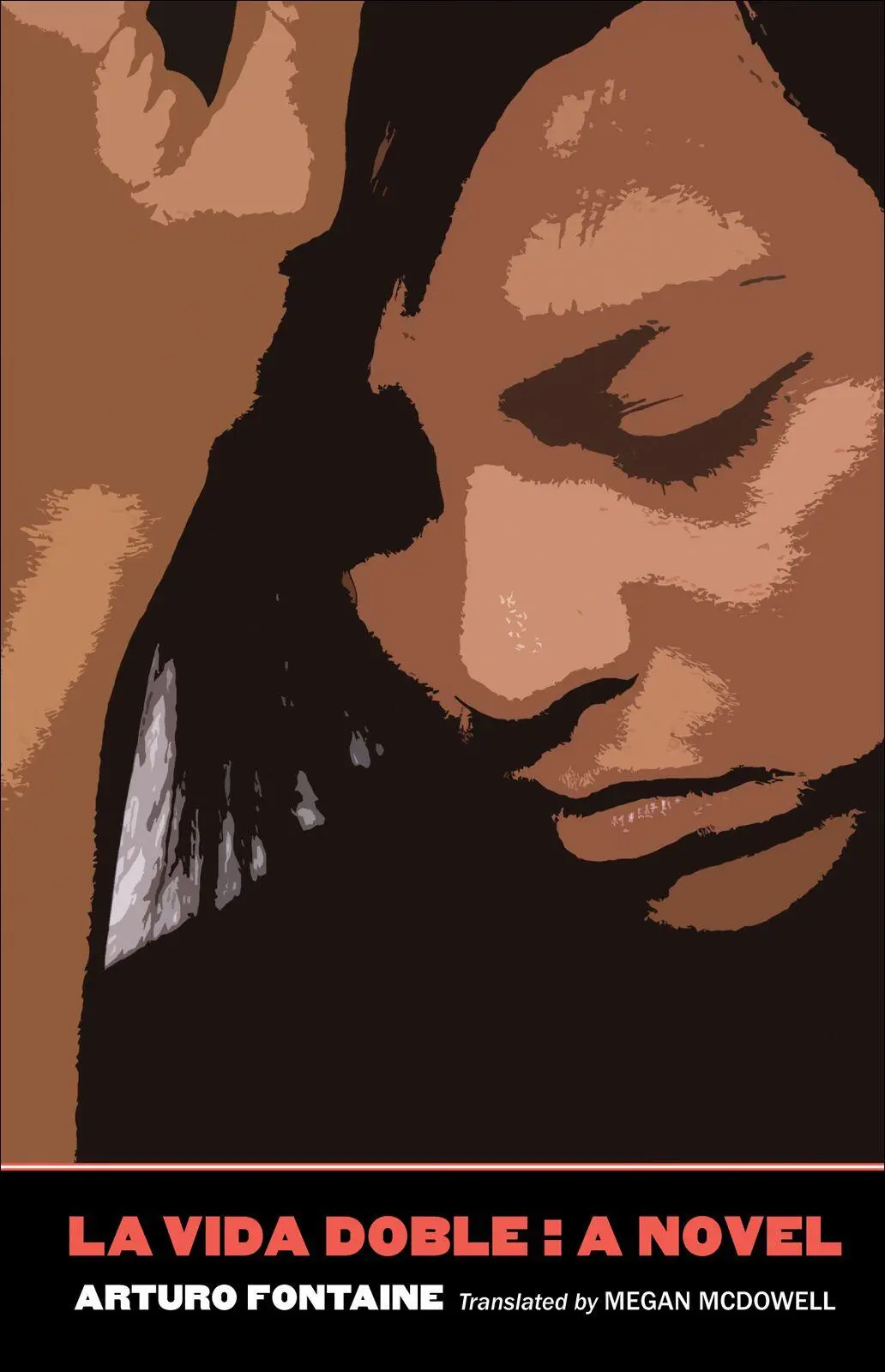
- Название:La Vida Doble
- Автор:
- Издательство:Yale University Press
- Жанр:
- Год:2013
- ISBN:нет данных
- Рейтинг книги:3 / 5. Голосов: 1
-
Избранное:Добавить в избранное
- Отзывы:
-
Ваша оценка:
La Vida Doble: краткое содержание, описание и аннотация
Предлагаем к чтению аннотацию, описание, краткое содержание или предисловие (зависит от того, что написал сам автор книги «La Vida Doble»). Если вы не нашли необходимую информацию о книге — напишите в комментариях, мы постараемся отыскать её.
is the story of Lorena, a leftist militant who arrives at a merciless turning point when every choice she confronts is impossible. Captured by agents of the Chilean repression, withstanding brutal torture to save her comrades, she must now either forsake the allegiances of motherhood or betray the political ideals to which she is deeply committed.
Arturo Fontaine’s Lorena is a study in contradictions — mother and combatant, intellectual and lover, idealist and traitor — and he places her within a historical context that confounds her dilemmas. Though she has few viable options, she is no mere victim, and Fontaine disallows any comfortable high moral ground. His novel is among the most subtle explorations of human violence ever written.
Ranking with Roberto Bolaño and Mario Vargas Llosa on Latin America’s roster of most accomplished authors, Fontaine is a fearless explorer of the most sordid and controversial aspects of Chile’s history and culture. He addresses a set of moral questions specific to Pinochet’s murderous reign but invites us, four decades later, to consider global conflicts today and question how far we’ve come.
La Vida Doble — читать онлайн бесплатно полную книгу (весь текст) целиком
Ниже представлен текст книги, разбитый по страницам. Система сохранения места последней прочитанной страницы, позволяет с удобством читать онлайн бесплатно книгу «La Vida Doble», без необходимости каждый раз заново искать на чём Вы остановились. Поставьте закладку, и сможете в любой момент перейти на страницу, на которой закончили чтение.
Интервал:
Закладка:
Flaco took me that day to eat oysters at Azócar. I arrived still trembling a bit from what I had just seen, but I didn’t want to mention it to him. We laughed, we had a good time in that old Chilean mansion illuminated by a skylight above us. The oysters were marvelous. When, after several glasses of sauvignon blanc, I dared to tell him what I had seen, how they’d taken Macha away in handcuffs, he wrinkled his forehead and assured me that he wasn’t up-to-date on counterintelligence matters, that his new job had to do with strictly military intelligence in neighboring countries; countries to the north, he added with a smile, to make it very clear to me. And he changed the subject.
We kissed in his Volvo, and he invited me on a trip, a short and intense trip, he said, just three or four days in the pure mountain air. He told me about a unique place in the mountains close to Torres del Paine, full of stalactites; a place no one has photographed yet, he told me, ice sculptures carved by the wind. I ached to go. Even so, I told him no. Looking at me with sad, languid eyes, he told me that I was very pretty, that we deserved a real good-bye. I told him that too much time had passed for me to care about being pretty, that when I was younger, sure, I would have been grateful for the flattery. Lies. I didn’t want to suffer, I told him, I begged him. That trip, when it ended, would leave me worse off than before. And that was true. He insisted, but I didn’t give in.
He went with me to my apartment. I didn’t invite him in. The slam of the door when it closed. I jumped. As if an enormous window had shattered. I closed my eyes. When I heard his footsteps moving away down the hall, I burst out crying. For months and months I waited for his call. It never came.
FIFTY
I’m feeling tired. . You know, during that time it never even crossed my mind that my life would end like this, alone in a Swedish home, or even abroad. . One of my students helped me out of pure kindness. There are good people out there, too. She got in touch with Teruca’s mother and gave her my message: I was being followed and had decided to go into exile for safety reasons. It wasn’t the bravest thing to do, but what the hell, the decision was made. She would pass along the information to her daughter Teruca, who would communicate it to my brothers and sisters, the ones who were left, and so a curtain of smoke would extend over me. And while that was happening in Chile, I was on a plane flying out of there.
As soon as I got to Stockholm, I got a job at Berlitz. Every morning I dropped my daughter off at school, took the subway, got off at the Gamla Stan stop, emerged onto Gamla Brogatan, and in a few steps I reached number 29. That was my routine for years. I taught French to advanced students and studied Swedish on a grant. They helped me a lot here. It’s not true that the Swedish are cold. I’m thinking of my friend Agda Lindstrom, who took us into her house for our entire first month here. She was a lawyer. She was killed. Car accident, a year and a half after I arrived. Horrible. She was a thin woman, not very tall, with very white skin, dark brown hair, and gray eyes. She was an older sister to me. Frank, direct, serious, at first she seemed a little distant to me, perhaps a bit hard. But after a few days, I discovered a person of exceptional generosity and gentleness. She knew only as much about me as I wanted her to. She introduced me to her friends, all of them professionals. I talked to them in French. After two years, I had learned Swedish. Of course, I’ll never have Anita’s accent.
I remember my first walk along the docks. Agda wanted to come with me, but I wanted to go alone: the calm of that ocean, the clearness of the air, the sharp colors, the rolling ships. I walked to the bridge that crosses to Skeppsholmen and the beauty stopped me short. My nose touched the uncertainty of my future, as if uncertainty were a wind carrying the scent of the sea and pushing me onward. I wanted to keep that island for later. I saw a mother running a brush through her daughter’s hair. With what care, with what sensitive slowness, what infinite love. And the little girl’s long, blond, almost white hair takes on life and brilliance. Did my mother ever brush my hair like that?
I arrived in September, and the weather was often good. At lunch-time I took my sandwich to Kungsträdgården Square, and the yellow leaves from the oaks softly grazed my hair or my shoulders as they fell. I picked them up from the grass and they were damp, and I sat looking at their veins, persisting still.
FIFTY-ONE
Roberto was six years younger than me. A tall, handsome Brazilian. We met in the Berlitz cafeteria. It turned out he was friends with Agda and that made things easier. You know, I actually can’t remember when we started dating. How odd. That says something. I remember his first gift to me: an amber perfume. Of course, I’d already told him about how that mysterious substance had fascinated me since I was a little girl and how it was linked in my imagination to the Vikings and the Baltic Sea. Later, he would give me a beautiful necklace with stones that shone with an internal light. Roberto. . with his Portuguese-accented Spanish, so full of tender eñes, such soft, kind sounds.
I brought him to the Kungsträdgården and talked to him about the yellow oak leaves that kept me company during the solitary lunches of my first weeks, and how they healed me when, as they fell, they brushed against me for a moment. Now those leaves were light, luminous green, and in the grass wild blue and white anemones were growing. His voice warmed and protected me. What more could I want than to love him and for him to love me? We liked to walk, to lose ourselves in the streets, talking and laughing. I like men with a sense of humor. I think it’s more important than looks, you know? When you have a man you can laugh with, the doors open by themselves.
And with Roberto I crossed over the Skeppsholmen Bridge for the first time, clattering over its wooden slats. That’s where we first kissed. We were walking along, our arms around each other, toward the Moderna Museet. Roberto was talking to me, and he would suddenly interrupt himself to kiss me. He was telling me about what we were going to see, about the brilliance of the Brillo Boxes by Warhol and about the incredible power of the color orange in his electric chair; no one, he said, before Warhol had ever seen an orange like that, because the chair’s mossy green made it into the orangest of all oranges; and about the feeling of movement in the face of Picasso’s La Femme à la collerette bleue, about his drawings of birds — a running ostrich, a truly chickenlike chicken, a hawkish hawk, an unforgettable dove in flight — and about Rauschenberg’s embalmed goat encircled by a tire, its look of primitive masculinity broken by civilization, the symbol of sexuality and tragedy, of Dionysus, god of abandon, transformed by the tire into a victim, the sense of unease conveyed by its suppressed instincts and the nostalgia of its paint-spattered head. We took a long time, because he would be in the middle of telling me about Picasso’s unforgettable dove in flight or the tragedy of Rauschenberg’s billy goat in modernity, and we would stop again and again to kiss with Dionysian passion. When we finally got to the museum it was already closed. We made do with more kisses, running and embracing and running again among the happy, colored sculptures, those round, restless, powerful women by Niki de Saint Phalle. I think they’ve removed them now. Someone told me that. I hope it’s not true.
For months, we devoted a weekend each to the archipelago’s islands. It was a wonderful period, that time with Roberto. He took me dancing, and I’ve never seen anyone dance like him. He danced to every rhythm with a spontaneous joy, graceful and contagious, that always made me want to dance with him. He danced standing up sometimes, almost without moving; he danced sitting down, moving only his head and shoulders. But the fact that he was younger than me made me nervous. Of course, he couldn’t understand my past. I couldn’t either, to tell the truth. He was a man with taut skin, mulatto. He loved me.
Читать дальшеИнтервал:
Закладка:
Похожие книги на «La Vida Doble»
Представляем Вашему вниманию похожие книги на «La Vida Doble» списком для выбора. Мы отобрали схожую по названию и смыслу литературу в надежде предоставить читателям больше вариантов отыскать новые, интересные, ещё непрочитанные произведения.







Обсуждение, отзывы о книге «La Vida Doble» и просто собственные мнения читателей. Оставьте ваши комментарии, напишите, что Вы думаете о произведении, его смысле или главных героях. Укажите что конкретно понравилось, а что нет, и почему Вы так считаете.