Arturo Fontaine - La Vida Doble
Здесь есть возможность читать онлайн «Arturo Fontaine - La Vida Doble» весь текст электронной книги совершенно бесплатно (целиком полную версию без сокращений). В некоторых случаях можно слушать аудио, скачать через торрент в формате fb2 и присутствует краткое содержание. Год выпуска: 2013, Издательство: Yale University Press, Жанр: Современная проза, на английском языке. Описание произведения, (предисловие) а так же отзывы посетителей доступны на портале библиотеки ЛибКат.
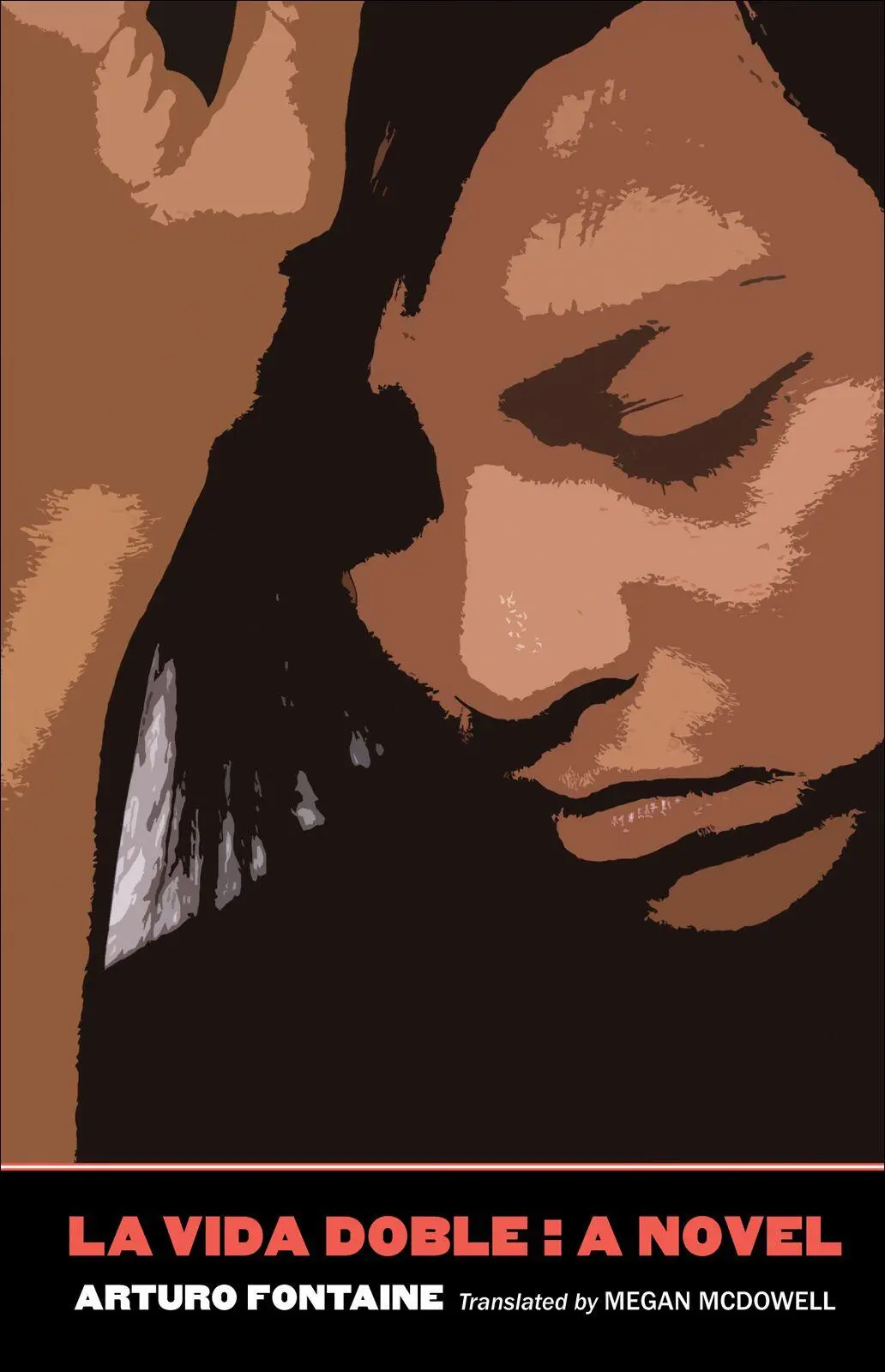
- Название:La Vida Doble
- Автор:
- Издательство:Yale University Press
- Жанр:
- Год:2013
- ISBN:нет данных
- Рейтинг книги:3 / 5. Голосов: 1
-
Избранное:Добавить в избранное
- Отзывы:
-
Ваша оценка:
La Vida Doble: краткое содержание, описание и аннотация
Предлагаем к чтению аннотацию, описание, краткое содержание или предисловие (зависит от того, что написал сам автор книги «La Vida Doble»). Если вы не нашли необходимую информацию о книге — напишите в комментариях, мы постараемся отыскать её.
is the story of Lorena, a leftist militant who arrives at a merciless turning point when every choice she confronts is impossible. Captured by agents of the Chilean repression, withstanding brutal torture to save her comrades, she must now either forsake the allegiances of motherhood or betray the political ideals to which she is deeply committed.
Arturo Fontaine’s Lorena is a study in contradictions — mother and combatant, intellectual and lover, idealist and traitor — and he places her within a historical context that confounds her dilemmas. Though she has few viable options, she is no mere victim, and Fontaine disallows any comfortable high moral ground. His novel is among the most subtle explorations of human violence ever written.
Ranking with Roberto Bolaño and Mario Vargas Llosa on Latin America’s roster of most accomplished authors, Fontaine is a fearless explorer of the most sordid and controversial aspects of Chile’s history and culture. He addresses a set of moral questions specific to Pinochet’s murderous reign but invites us, four decades later, to consider global conflicts today and question how far we’ve come.
La Vida Doble — читать онлайн бесплатно полную книгу (весь текст) целиком
Ниже представлен текст книги, разбитый по страницам. Система сохранения места последней прочитанной страницы, позволяет с удобством читать онлайн бесплатно книгу «La Vida Doble», без необходимости каждый раз заново искать на чём Вы остановились. Поставьте закладку, и сможете в любой момент перейти на страницу, на которой закончили чтение.
Интервал:
Закладка:
FIFTY-THREE
Out of pure nosiness I find an envelope in her desk and my heart skips a beat. Nosiness? No. The truth is that she’s been a different person for some time now. She is distant. I’d like to ask her: Why did you forget how to hug me? At what moment did my body become foreign to you? I want to put my arms around her, but I don’t dare. Not like before, at least. She seems so indifferent.
And I know that handwriting. How could I not! It’s Rodrigo’s. That’s how I find out that, after all these years, he’s found my daughter and now he exchanges letters with her. I don’t like it at all. Anita, under pressure from my questions, admits that she plans to go to Chile and live with her father. Just for a while, she tells me when she sees how my face falls in sorrow. I say a few silly things in an effort to dissuade her: education in Sweden is so much better, she’s better off graduating here. . She says she’s leaving the following week: “My dad sent me the ticket.” She says it so casually, as if her dad had always been her dad. I’m struck by her innocence. I hug her, barely holding back the flood of tears, and I tell her that I will always want the best for her and that she should live wherever she will be happiest. I pull her to me in a long, tight, terrible embrace, which I cut short suddenly to run to my room. I throw myself onto the bed, the feather pillow in my mouth. If only my rough sobs could suffocate me.
I break down. I have to learn how to live all over again. Without Anita. With this sadness. She calls me on the phone the day after she gets to Santiago. She’s delighted. Her father has a house with a giant yard, he works as a real estate agent, his wife is charming, so are her brothers and sisters. “Hello, hello. Hello! Hello, Mom, are you there?” I can’t talk. If I open my mouth I’ll burst into tears.
Nostalgia gnaws at me. In the morning as I make breakfast, I can almost see her sitting at the table, eating her muesli with honey and cold milk, her hair falling forward over her sleepy face. In the afternoon, after work, I find myself going through photo albums, postcards, notebooks, school report cards. When I used to come home from work, she would run to me and hang around my neck before I even got my coat off, and she would press her warm little face against mine, cold from the wind and snow outside. Like before, it’s hard for me to get out of bed. It’s too much. I try to go on sleeping, but I can’t do that either. Only silence awaits me, and in the evenings the same silence when I come home.
I think about my parents. All the times they must have been waiting for a letter from me. . I write them rarely, if ever, to tell the truth. I don’t want to. I’m not interested in reading their letters, either. There are envelopes I don’t open for weeks. I imagine Anita peering at an envelope from me, full of distrust. I think: Maybe she’d rather not open it. In fact, she doesn’t answer my letters. I think: How does she get along with Rodrigo? That sudden friendship that snatched her away from me fills me with rage. I don’t like it. She looks like her father, her nose, her slender figure, her slightly curved legs, her unsettling smile, her tranquil eyes. Incestuous images come into my mind. My therapist is interested in those. She turns them around: it’s me I’m imagining there with my own father. They are explanations. Understanding isn’t enough to exorcise the ghost. Anita, she’s the one who matters to me. And Anita isn’t with me. She left me, just as her father did when as she was beginning to grow in my belly. I never could have imagined this. I started to love her right from that moment. He didn’t. He never even wanted to meet her. Until now, until this sudden whim. It’s not fair. My soul is torn away along with her.
When I dream about her — and now that happens a lot — she’s always a little girl and we’re in Stockholm. She never appears in my dreams as the woman she is now, always as she used to be. I wake up: Could it be true? I look into her room. Everything just as it was: the same bedspread, the curtains, the books, the clothes in her closet, her CDs. Her photos, photos of her as a little girl, cause me pain. She’s the same little girl who visits me when I sleep. I try to convince myself that the little girl in those photos doesn’t exist anymore, she’s changed and it couldn’t be any other way, and she’ll never again be the person she was before. I have to resign myself to this new person. I put the photos away. I don’t want to suffer. I put them all away except for one. It shows us here in Stockholm with a ship in the background, and we look so happy. So much time ahead for the two of us. Like never before, like never again. I’m suffering a lot, I say to myself. I try to forget her and I can’t. Can a mother hate a daughter? I catch myself starting to hate her, and I’m horrified.
And if I dared to ask her: Are you still my daughter? What would happen if I asked her that over the phone? I have to accept her as she is. But it would be easier if she hadn’t changed so much. I can’t stop thinking that the real Anita is someone else, the one I lost, the one she let escape.
FIFTY-FOUR
And she’s not here. The one who is with me is Roberto. Without him, I don’t know what would have become of me. His accent caresses and numbs me. I don’t want to make love, I want his voice to pacify me, I want him to sing into my ear: Bésame, bésame mucho / como si fuera esta noche / la última vez . . And he smiles and starts to sing softly, almost in a whisper, and it lulls me to sleep. Que tengo miedo a perderte, / perderte después.
Could someone else accept me if I couldn’t accept myself? “You’re too suspicious, too susceptible,” Roberto tells me. It’s true. I know it. Thanks to therapy I understand it all. But understanding isn’t enough. My therapist asks me if I think of myself as the daughter of a good-looking and absent father and an intelligent professional who wanted me to be the beauty she wasn’t. My psychiatrist likes to ask questions. Too many. From his chair behind me, while I’m below, on the divan. Him above and me below. And he asks his questions in a neutral voice, as if it wasn’t him I’m answering but God. I’m just a case. It isn’t a conversation. He’s giving me his professional services. That’s what he’s paid for, obviously, to listen to me.
He asks me if I feel as though my mother has failed me, if I feel guilty for not having been able to keep my father from leaving home and marrying someone else, if I feel resentful toward my father, if that’s why I’m attracted to rough men and their guns. . I let him ask. Even here in Stockholm you have to put up with those banalities. In exchange for a prescription for sleeping pills and antidepressants that otherwise I couldn’t get in the pharmacy. My mind wanders somewhere else.
He tells me that “terrorists” suffer from “free-floating anxiety,” that they suffer from “personality disorders,” that in order to stabilize the “ego” they join the movement, that the collective cause becomes greater than the “ego.” Now I’m the one who asks: And?
And Roberto is there. He goes on being there, he goes on taking me to visit islands on the weekends. One day he takes me to Gotland. A forty-minute flight. From there we go to Faro. Roberto wants me to see the stones with etchings left by the Vikings in Bunge. “You always loved the Vikings, right?” But I’m more impressed by the beauty of some cows with clean and shining hides, an old windmill made of stone, and, of course, the rocks. We walk along a pebble beach, and there are those strange, dark, rock sculptures rising up, chiseled by millinery winds. The sea is dark gray or very white. I’m startled by a ship’s siren. They have the tonalities, I think, the spiritual atmosphere of Persona. It occurs to me that we should find out where Bergman’s house is and go past it. But I discard the idea before suggesting it to Roberto, which is for the best. He would have been capable of ringing the doorbell once we got there.
Читать дальшеИнтервал:
Закладка:
Похожие книги на «La Vida Doble»
Представляем Вашему вниманию похожие книги на «La Vida Doble» списком для выбора. Мы отобрали схожую по названию и смыслу литературу в надежде предоставить читателям больше вариантов отыскать новые, интересные, ещё непрочитанные произведения.








Обсуждение, отзывы о книге «La Vida Doble» и просто собственные мнения читателей. Оставьте ваши комментарии, напишите, что Вы думаете о произведении, его смысле или главных героях. Укажите что конкретно понравилось, а что нет, и почему Вы так считаете.