Arturo Fontaine - La Vida Doble
Здесь есть возможность читать онлайн «Arturo Fontaine - La Vida Doble» весь текст электронной книги совершенно бесплатно (целиком полную версию без сокращений). В некоторых случаях можно слушать аудио, скачать через торрент в формате fb2 и присутствует краткое содержание. Год выпуска: 2013, Издательство: Yale University Press, Жанр: Современная проза, на английском языке. Описание произведения, (предисловие) а так же отзывы посетителей доступны на портале библиотеки ЛибКат.
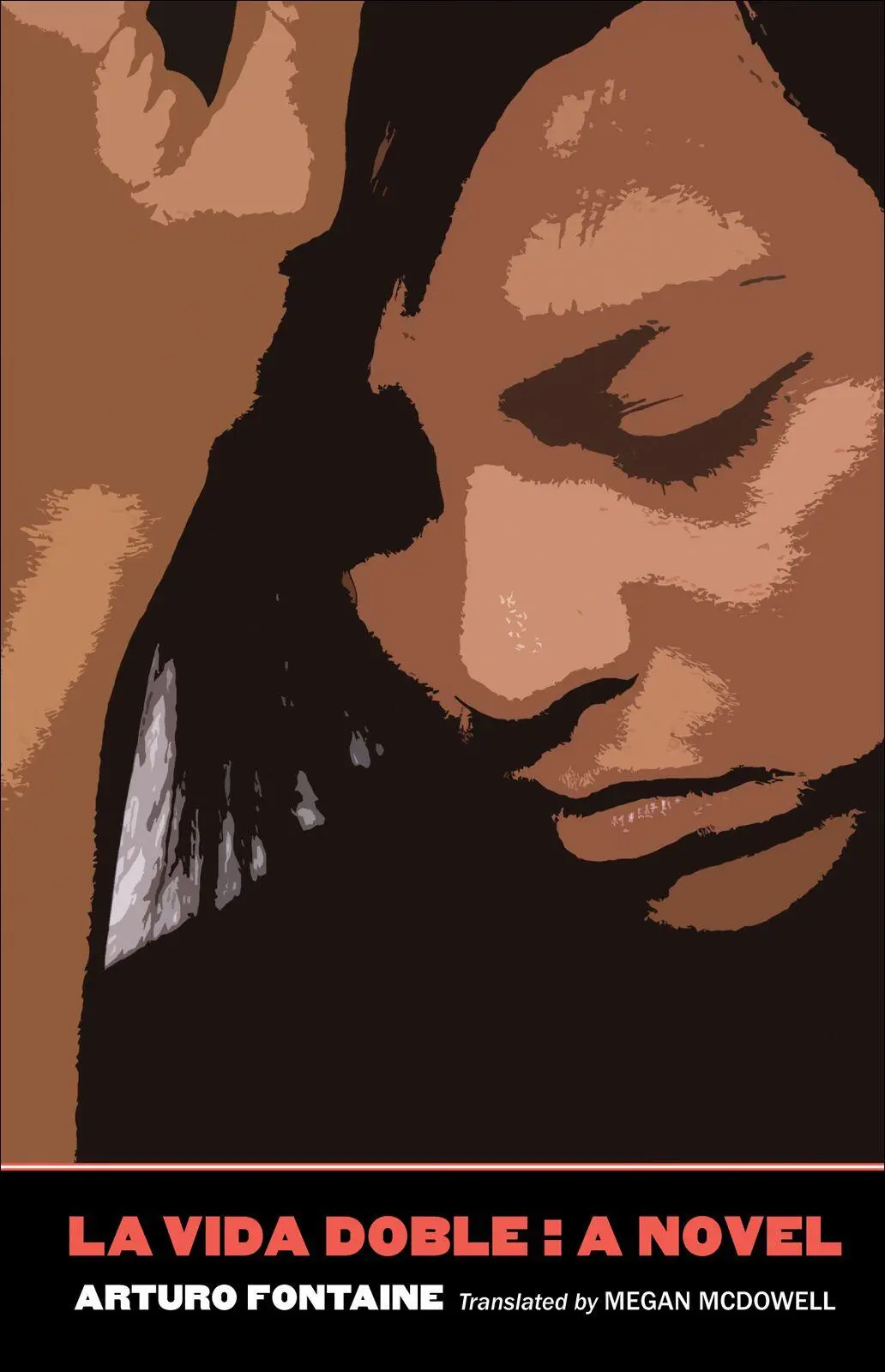
- Название:La Vida Doble
- Автор:
- Издательство:Yale University Press
- Жанр:
- Год:2013
- ISBN:нет данных
- Рейтинг книги:3 / 5. Голосов: 1
-
Избранное:Добавить в избранное
- Отзывы:
-
Ваша оценка:
La Vida Doble: краткое содержание, описание и аннотация
Предлагаем к чтению аннотацию, описание, краткое содержание или предисловие (зависит от того, что написал сам автор книги «La Vida Doble»). Если вы не нашли необходимую информацию о книге — напишите в комментариях, мы постараемся отыскать её.
is the story of Lorena, a leftist militant who arrives at a merciless turning point when every choice she confronts is impossible. Captured by agents of the Chilean repression, withstanding brutal torture to save her comrades, she must now either forsake the allegiances of motherhood or betray the political ideals to which she is deeply committed.
Arturo Fontaine’s Lorena is a study in contradictions — mother and combatant, intellectual and lover, idealist and traitor — and he places her within a historical context that confounds her dilemmas. Though she has few viable options, she is no mere victim, and Fontaine disallows any comfortable high moral ground. His novel is among the most subtle explorations of human violence ever written.
Ranking with Roberto Bolaño and Mario Vargas Llosa on Latin America’s roster of most accomplished authors, Fontaine is a fearless explorer of the most sordid and controversial aspects of Chile’s history and culture. He addresses a set of moral questions specific to Pinochet’s murderous reign but invites us, four decades later, to consider global conflicts today and question how far we’ve come.
La Vida Doble — читать онлайн бесплатно полную книгу (весь текст) целиком
Ниже представлен текст книги, разбитый по страницам. Система сохранения места последней прочитанной страницы, позволяет с удобством читать онлайн бесплатно книгу «La Vida Doble», без необходимости каждый раз заново искать на чём Вы остановились. Поставьте закладку, и сможете в любой момент перейти на страницу, на которой закончили чтение.
Интервал:
Закладка:
FIFTY-TWO
There were plenty of exiled Latin Americans in Stockholm, all victims of the horror. I made friends with some of them. Mireya, a survivor of the Tupas’s struggle in Uruguay; Claudia, whose husband had been taken prisoner and never heard from again; and María Verónica. All three of them had been taken prisoner and gone through hell. We gave a wide berth to that subject. Instead we talked about our children, our latest pap tests, and Mireya talked about her menopause, which had started recently. The rest of us listened to her and tried to mask our dread. And, of course, we discussed politics. One approach, we said, was to join in the ecumenism of the human rights movement. The battle of stamped papers, of lawyers and their endless court cases.
“What other weapon do we have besides moral denunciation?” María Verónica said. And, turning red from passion mixed with a half-ashamed laughter that was very particular to her: “We were going to start the revolution in the only way possible: with blood and firing squads. You all, military bastards, got ahead of us and screwed us over. Now you have to pay. Because the blood you spilled, your cruelty, there’s no pardon for that.”
And Claudia, interrupting her laughter and looking at her seriously: “But no, it’s not like that. We would never have done to them what they did to us. Anyway, for me it’s not just about a weapon, it’s about something higher: truth, justice.”
Mireya objected, folding her hands together: “The price is to break with Che’s example. His sacrifice doesn’t die. Neither does Santucho’s, Inti Peredo’s, Miguel Enríquez’s, so many others. .”
And Claudia, frowning: “I don’t think all that pain has made the poor any less poor. It hurts me, but the truth is I can’t believe it anymore.”
And Mireya: “For shit’s sake! His gesture lives on; it lives on because of its moral generosity.”
And Mario, a history professor who had been beaten to a pulp in ESMA: “Vos, Claudia, you want us to subscribe to the cause of universal and ahistorical human rights, no? And for real, not as a tactical position. Great! Who am I to argue. . The problem is, you see, they are situated beyond the class struggle, in a metaphysical beyond. It’s idealistic claptrap, my love. .” And he put his hand to his black beard sprinkled with white. “Look, the first case of interrogation under threat that’s recorded in literature is in Homer, in the Iliad itself. Don’t believe me? It’s a Trojan spy named Dolon. Ulysses and Diomedes capture him. Once Dolon has talked and is begging for mercy, Diomedes breaks his promise and thwack! Dolon’s head rolled in the dust as he was still speaking, says Homer. That mother-fucker, man, that’s how power is, it’s ruthless.”
Still, Mario’s wasn’t the tendency that prevailed among us, but rather Claudia’s more peaceful leanings. The truth is I listened to those conversations with very little interest. I was in love, and my love filled my days and nights.
News started to reach us about the demonstrations at Saint Nicholas Church in Leipzig, Mondays at five in the evening, processions of people with candles and banners: Ohne Gewalt, No Violence. Some of them dared to cross over from Germany into Hungary. No one shot at them. Then many more crossed over. Soon afterward, the Berlin Wall crumbled; I watched on TV as they pulled down a statue of Lenin. It collapsed like a big sandcastle — a grand castle that, like Kafka’s, we never managed to reach. The truth is, we knew little about it. The world I’d been born into and grown up in just disappeared, that Cold War that divided Berlin in two and the planet in two, that damned war of empires that reached all the way to the ass of the world, all the way to Chile, and infected us and wounded us to the core. For someone like me, that conflict and that war was the world, not just one among many possible worlds, not one that could eventually disappear and be replaced by another, with other conflicts and other wars. It’s hard to understand what that meant for people like me. It’s incomprehensible. Everything I’m telling you is incomprehensible. I’m telling you about a way of life that is gone. I’m talking to you from a junkyard of broken, illusory, lost ideals.
You know what? All of us, on both sides, lived inside a language that’s been forgotten now. The inscriptions are still there, but now no one knows how to read them. The truth is, those of us who remain from that time don’t know how to recognize ourselves anymore. Though we claim otherwise. . People like me don’t exist anymore. Do I believe that? Am I contradicting myself? There will always be young people like the ones we were. Maybe. There will always be those who fight for equality. Yes. And against the Great Whore. Certainly. There will always be lives that death will transform into symbols of hope for humankind.
But our rhetoric, the language that was home to our utopia, the place of our no-place: it has ended. Because that rhetoric and the liturgy of the mountain — with its walks, its bonfires and guitars — that addictive language, I’m telling you, was the forge for our brotherhood of clandestine strangers who only knew — or should know — each other’s aliases but who were prepared to die together the very next day. That’s what people today don’t believe in: the inner nobility that made our souls quiver as we felt ourselves to be among the vanguard, the chosen ones.
During that period, Claudia invited me to meet a boy, a Chilean college student who was coming from Cuba to study for a few months. (Who today could imagine the dream Cuba embodied for us back then?) “His name is Francisco,” she told me. “His mother belonged to Red Ax, and he was raised in a home with a group of children whose parents had entered Chile clandestinely to join in the struggle.” Claudia didn’t know anything about that practice.
“It was a safety measure,” I explain to her. “It helped to avoid moral extortion.” She opens her eyes wide. And suddenly my hands are trembling and I shout at her: “It was indispensable! How else could they do it?! Don’t you see? What world of little angels did you live in, you nitwit?” Claudia looks at me and falls silent.
“I’m sorry,” she says, “I’m sorry.” I say nothing, of course, about how I should have sent Anita to that home for combatants’ children in Havana and I never did. I say nothing, of course, about the price I paid for it.
“The kid,” says Claudia, hurt, “holds a grudge against his mother. He has these marvelous dark eyes, let me tell you. He understands her, he says, but he still doesn’t want to see her again. He understands perfectly, he says, but at the same time he can’t accept what she did. He’s tried and tried again, but he just can’t, he says. She wasn’t my mother, he says, and now she can never become my mother. That’s what she doesn’t understand; she thinks she can, now. She says she needs me now, that at least she could be a kind of aunt. But that’s impossible, too, he says, because she’s not my aunt, she’s the mother I never had, he says. For me, it’s better not to see her. That’s what he says.”
Claudia asks me, as a Chilean, to talk to the boy, she wants me to tell him about our struggle, try to explain it to him, try to reconcile him with his mother. Could this Francisco be Teruca’s son? I didn’t want to meet that boy, I looked for any excuse not to meet with him. I didn’t want to see his face. I was afraid. I wonder what ever became of him?
Claudia called me to cancel a lunch date. “Something came up last minute,” was her excuse. “Let’s get together next week,” she said. “I’ll call you to set a time.” She never called. I called her, and she never answered. The same happened a few weeks later with Mireya. I went out for coffee with Mario. He was very nice. He said he would call me and he never did. It must have been around then, I think, when the rumors started about me, and people started to edge me out. I could never find out how much they knew or what exactly the rumors were. It didn’t matter much to me. I was, finally, a free and happy woman. Roberto still loved with me and he got along well with Anita. That was enough for me.
Читать дальшеИнтервал:
Закладка:
Похожие книги на «La Vida Doble»
Представляем Вашему вниманию похожие книги на «La Vida Doble» списком для выбора. Мы отобрали схожую по названию и смыслу литературу в надежде предоставить читателям больше вариантов отыскать новые, интересные, ещё непрочитанные произведения.



Обсуждение, отзывы о книге «La Vida Doble» и просто собственные мнения читателей. Оставьте ваши комментарии, напишите, что Вы думаете о произведении, его смысле или главных героях. Укажите что конкретно понравилось, а что нет, и почему Вы так считаете.