Arturo Fontaine - La Vida Doble
Здесь есть возможность читать онлайн «Arturo Fontaine - La Vida Doble» весь текст электронной книги совершенно бесплатно (целиком полную версию без сокращений). В некоторых случаях можно слушать аудио, скачать через торрент в формате fb2 и присутствует краткое содержание. Год выпуска: 2013, Издательство: Yale University Press, Жанр: Современная проза, на английском языке. Описание произведения, (предисловие) а так же отзывы посетителей доступны на портале библиотеки ЛибКат.
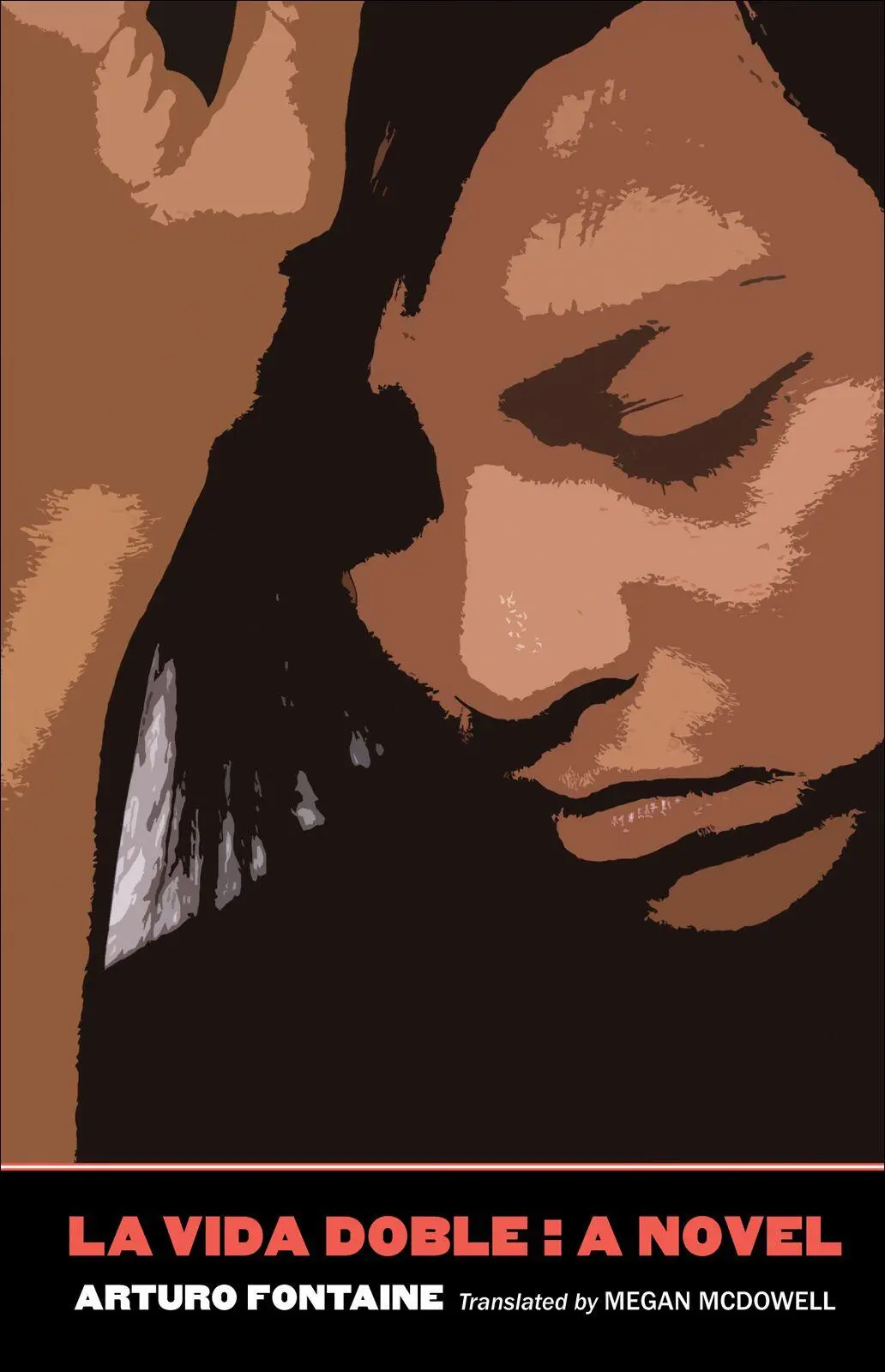
- Название:La Vida Doble
- Автор:
- Издательство:Yale University Press
- Жанр:
- Год:2013
- ISBN:нет данных
- Рейтинг книги:3 / 5. Голосов: 1
-
Избранное:Добавить в избранное
- Отзывы:
-
Ваша оценка:
La Vida Doble: краткое содержание, описание и аннотация
Предлагаем к чтению аннотацию, описание, краткое содержание или предисловие (зависит от того, что написал сам автор книги «La Vida Doble»). Если вы не нашли необходимую информацию о книге — напишите в комментариях, мы постараемся отыскать её.
is the story of Lorena, a leftist militant who arrives at a merciless turning point when every choice she confronts is impossible. Captured by agents of the Chilean repression, withstanding brutal torture to save her comrades, she must now either forsake the allegiances of motherhood or betray the political ideals to which she is deeply committed.
Arturo Fontaine’s Lorena is a study in contradictions — mother and combatant, intellectual and lover, idealist and traitor — and he places her within a historical context that confounds her dilemmas. Though she has few viable options, she is no mere victim, and Fontaine disallows any comfortable high moral ground. His novel is among the most subtle explorations of human violence ever written.
Ranking with Roberto Bolaño and Mario Vargas Llosa on Latin America’s roster of most accomplished authors, Fontaine is a fearless explorer of the most sordid and controversial aspects of Chile’s history and culture. He addresses a set of moral questions specific to Pinochet’s murderous reign but invites us, four decades later, to consider global conflicts today and question how far we’ve come.
La Vida Doble — читать онлайн бесплатно полную книгу (весь текст) целиком
Ниже представлен текст книги, разбитый по страницам. Система сохранения места последней прочитанной страницы, позволяет с удобством читать онлайн бесплатно книгу «La Vida Doble», без необходимости каждый раз заново искать на чём Вы остановились. Поставьте закладку, и сможете в любой момент перейти на страницу, на которой закончили чтение.
Интервал:
Закладка:
And me: Change penises.
And he: Ah, really?
And me: Sure, we’re living in the era of diversity. The same thing every day gets boring, even if it’s Iranian caviar.
And he: Have you tried Iranian caviar?
And me: Never. But I read in some magazine that it was the best caviar. Iranian beluga. And you know something else?
And he: What?
And me: I want them with money. I’m tired of these poverty-stricken guys; I’m past the stage of hot, handsome guys, boys who are strong but who are ultimately pretty poor, like you. Let’s see, what’s the most an intelligence official can make? That’s that! Now I want hard, big, thick penises and you know what else? I want them stuffed with money. That’s what I want.
And he: But who wants that? Do you, really? Or is it just that you want to get married and you’re thinking about your kids, so they’ll have a good life?
And me: Maybe yes, maybe no. But above all the one who wants that penis-house is the one you’re imagining and you keep quiet about. Above all, her.
And Flaco bursts out laughing and gives me a kiss that his own laughter interrupts. He pulls off my dress and kisses my nipples and I fall onto the bed and he penetrates me without even removing my underwear.
I’m not going to deny it: I loved Flaco Artaza. If I didn’t, I wouldn’t have been able to stand doing what I did, I think now. Can anyone understand that? He was a man who pleased me, I was a person to him, and he took care of me. He had problems with his wife, she suspected there was another woman. So many times he came home at dawn, or just he didn’t come home at all. Work, he said. She had her doubts. But divorce was unthinkable. Their two little girls came first. I knew that very well, and I had no illusions. Or at least, I had them but I denied it.
FORTY-SEVEN
Suddenly, Flaco is tormented by the future. He tells me: “We have to wipe out the terrorists. We’re in the process of exterminating the rats in this country.” That’s what Central’s director had told him that morning. He’d asked for an audience so he could “expound on” a few things, as he put it. Flaco did not agree with what was happening. It’s impossible for me to connect the person talking to me now with the one who goes with me to the Malloco house. Of course, the same happens with me and with everyone else who goes there. Images of Wild Cat cross my mind, and I wish I were there with him now. But he’s talking to me about his problems, sitting on the worn black leather sofa in the apartment at Tajamar Towers. The sky over San Cristóbal Hill is gradually losing its light.
It’s a conversation that he would never have with his faithful wife or with women like his faithful wife. Part of the attraction I have for him is that with me, he can talk about these things as if I wasn’t a woman and, at the same time, not as though I were a man. It’s a small hollow where a warm intimacy is born, one that is novel for him. Because he’s never encountered women like me before. Because for him — for all of them, really — a woman doesn’t participate in this open and cruel world, she is outside of “History” and completely absorbed in the petite histoire of the family. He goes on talking in a tired voice, and I think about my long, tedious Saturdays and Sundays spent alone and thinking about him, imagining him going to the supermarket and the cinema with his faithful wife. Does he still sleep with her? He showed me a photo once. I asked him to. I needed to have an image to anchor my imaginings. She wasn’t a bit ugly, the bitch. I was furious.
“Just to capture one single enemy combatant,” he is saying, his forehead wrinkled and his voice contrite, “too many people are martyred: people who are mere dissenters, lefty kids who are treated like full-blown terrorists. And they’re not, they’re just members of the opposition, they are not military enemies. Poor kids. They get treated like shit. We’re confusing the Opposing Front with the Subversive Front. . In the inspections, the assault teams swoop in at night on a house and grab everyone in sight. Well, I put my balls on the line, I told the director what was what, I called a spade a spade.”
Did he really put them on the line? I wonder. .
“The director didn’t like what he heard. What we’re sowing here, I told him, is terror, of course, and then hate and more hate. In the end no one will believe us about anything. Not even that there ever were groups of trained terrorists. . Because they kill in cold blood, they kill people who were never terrorists. . I don’t deny that fear brings about a military ‘victory,’ but it’s a pyrrhic victory. It’s achieved at the price of political failure and moral shame.
“I don’t know what the director answered. Chain of Command, Chain of Command. . ‘But what does Command want?’ I asked him. There was nothing concrete in his answer. Our job isn’t to conquer a territory but rather the people in it. In this conflict, the main thing is to win the war of images. You know?” Flaco goes on saying to me. “We live in a world of pure interpretation.” And he opens his long arms, inviting me to understand him. Because that’s what he wants from me, he wants me to think he’s good. In the midst of the filth and disgust, here is a just man who loves me. I take advantage of the situation to ask him why he fights. It’s something that intrigues me in him, in all of them. What really drives them? Are the sacred rites of “order” and “Command” enough?
My question irritates him. I’ve taken him out of his noble deliberations. His answer is rote, fast, machinelike, he launches his entire demonology at me: that they are fighting so our country won’t be taken over by people who defend a system that builds a wall in Berlin so the populace can’t get out; the same people who in ’39 supported the pact between Hitler and Stalin, the same ones who wrote panegyrics for Stalin and later for Brezhnev, who in ’56 supported the Soviet Union’s invasion of Hungary, who in ’68 supported the Soviet Union’s invasion of Prague and — incredibly — here in Santiago came to defend the Soviet embassy against the people who went there to protest the invasion; the ones who trained in Cuba, in Vietnam, in Bulgaria, and who received and were still receiving AK-47 rifles, and M-16s and FALs and RPG 7 rocket launchers. . Didn’t they catch MIR, at the very start, with something like two hundred AKs hidden in gas cylinders? Meanwhile, in Europe, they think these people are social democratic doves. . Idiots! They’ll never understand the double dealing these con artists are capable of. They just sit there sucking their thumbs! Castro fooled them already, but they didn’t learn. Idiots! Because this irregular war is against Fidel Castro’s Cuba. Because it’s Cuba that wants to destabilize Chile and it’s Cuba that sends trained men and the weapons we find in arsenals and hideouts. From Cuba and the USSR. He tells me: “Behind it all, the big Russian bear is always lying in wait. . No, not here,” he boasts, “here they’re not going to do what they did in Nicaragua; in Iran, in Vietnam. No, no. Here, we’re going to tear them a new asshole. . Our freedom is at stake. And democracy?” he asks himself. “It will come, not yet, but it will come.”
I tell him that such an attitude, so reactionary, is lacking in poetry. He smiles with the simplicity of the simple and literal man that he is, a smile that inspires in me a certain disdain and, at the same time, an uncertain tenderness. Then he talks to me again about the purity and freedom of the mountaintop. “If you only knew the beauty of Alto de Los Leones. A true obelisk that’s 18,570 feet high. Huge walls of smooth rock, vertical cliffs of over 3,000 feet. One of them is 7,200 feet! The famous German alpinist Federico Reichert, who explored the Alps, the Caucasus, and the Andes, said in his book in 1929 that the Alto de Los Leones ‘will never lose its virginity, since its inaccessible summit seems beyond the limit of all possibility.’ Can you imagine? Even so, after the Italians Gabriele Boccalatte and Piero Zanetti went up in 1934, there are several of us who have reached the summit. Believe me: that’s what poetry is,” he tells me. “Unadulterated poetry.”
Читать дальшеИнтервал:
Закладка:
Похожие книги на «La Vida Doble»
Представляем Вашему вниманию похожие книги на «La Vida Doble» списком для выбора. Мы отобрали схожую по названию и смыслу литературу в надежде предоставить читателям больше вариантов отыскать новые, интересные, ещё непрочитанные произведения.




Обсуждение, отзывы о книге «La Vida Doble» и просто собственные мнения читателей. Оставьте ваши комментарии, напишите, что Вы думаете о произведении, его смысле или главных героях. Укажите что конкретно понравилось, а что нет, и почему Вы так считаете.