Arturo Fontaine - La Vida Doble
Здесь есть возможность читать онлайн «Arturo Fontaine - La Vida Doble» весь текст электронной книги совершенно бесплатно (целиком полную версию без сокращений). В некоторых случаях можно слушать аудио, скачать через торрент в формате fb2 и присутствует краткое содержание. Год выпуска: 2013, Издательство: Yale University Press, Жанр: Современная проза, на английском языке. Описание произведения, (предисловие) а так же отзывы посетителей доступны на портале библиотеки ЛибКат.
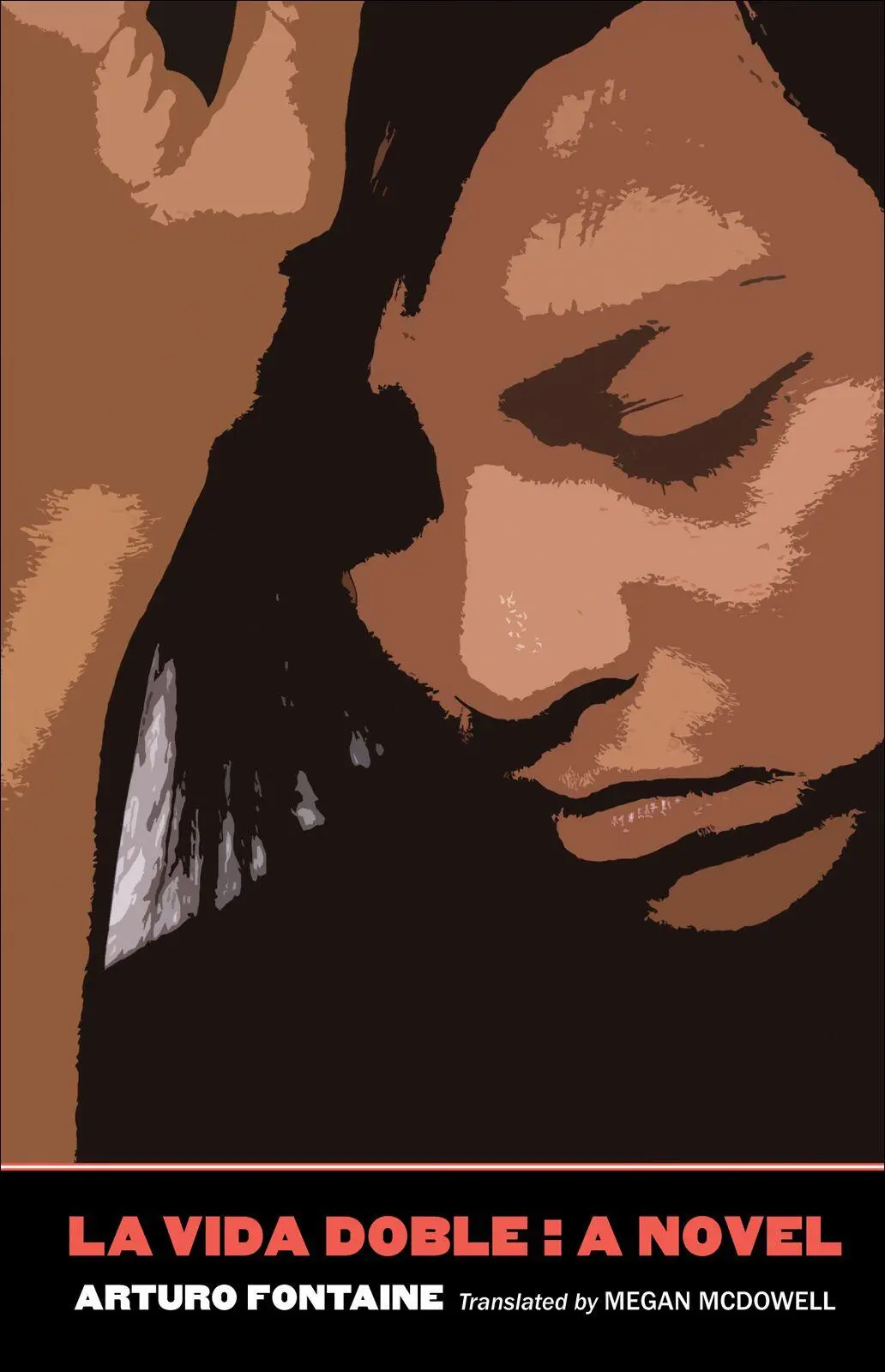
- Название:La Vida Doble
- Автор:
- Издательство:Yale University Press
- Жанр:
- Год:2013
- ISBN:нет данных
- Рейтинг книги:3 / 5. Голосов: 1
-
Избранное:Добавить в избранное
- Отзывы:
-
Ваша оценка:
La Vida Doble: краткое содержание, описание и аннотация
Предлагаем к чтению аннотацию, описание, краткое содержание или предисловие (зависит от того, что написал сам автор книги «La Vida Doble»). Если вы не нашли необходимую информацию о книге — напишите в комментариях, мы постараемся отыскать её.
is the story of Lorena, a leftist militant who arrives at a merciless turning point when every choice she confronts is impossible. Captured by agents of the Chilean repression, withstanding brutal torture to save her comrades, she must now either forsake the allegiances of motherhood or betray the political ideals to which she is deeply committed.
Arturo Fontaine’s Lorena is a study in contradictions — mother and combatant, intellectual and lover, idealist and traitor — and he places her within a historical context that confounds her dilemmas. Though she has few viable options, she is no mere victim, and Fontaine disallows any comfortable high moral ground. His novel is among the most subtle explorations of human violence ever written.
Ranking with Roberto Bolaño and Mario Vargas Llosa on Latin America’s roster of most accomplished authors, Fontaine is a fearless explorer of the most sordid and controversial aspects of Chile’s history and culture. He addresses a set of moral questions specific to Pinochet’s murderous reign but invites us, four decades later, to consider global conflicts today and question how far we’ve come.
La Vida Doble — читать онлайн бесплатно полную книгу (весь текст) целиком
Ниже представлен текст книги, разбитый по страницам. Система сохранения места последней прочитанной страницы, позволяет с удобством читать онлайн бесплатно книгу «La Vida Doble», без необходимости каждый раз заново искать на чём Вы остановились. Поставьте закладку, и сможете в любой момент перейти на страницу, на которой закончили чтение.
Интервал:
Закладка:
He told me about his trips three times a week to the sauna, about the massages he got from a woman there, she was skinny but her hands and fingers were strong enough for all the different maneuvers — the pinching, drumming, the sweeping — and how the smell of camphor in the paraffin cream relaxed him, of the osmotic film they wrapped his belly in to dissolve the accumulated fat under the heat of the electric blanket, the massage for his always-tired feet, of the cranial draining, which always put him to sleep. . Or he would talk about some show on TV. Or about his darling mother who loved him so, so much, about his father and the tangos he used to sing in the shower, about the highway accident on a curve close to San Fernando in which the two had died together, about the few friends he’d had as a child and whom he had stopped seeing and now could never see again, about a tall girlfriend, almost a head taller than him, thin and blond, of Polish parents, whom he’d loved and lost. “Because of the schedule of this damned job,” he said, “because of this shitty schedule.” And then he would yawn, and the mouthful of garlic breath would wash over me. And putting one elbow on the table, he’d rest his head on his hand. He was nostalgic, that damned Gato.
He told me once about an infection he’d had not long before. I don’t know what it was, some kind of venereal disease, obviously. He didn’t say which one. The nurse had led him to a bathroom and explained how to give himself the test. He couldn’t believe it. She left him alone with two rods in his hand. He lowered his pants and underwear. He looked at the cotton-covered end of the metal rod. “The whole cotton part has to go in,” she had told him. “It’s only an inch,” she said, and she closed the door. His eyes found his face in the mirror. He looked very pale. He thought about asking for a cot. He looked at his member and it had shrunk to almost nothing. He was ashamed, then. He imagined the nurse’s disdainful gesture if she were to help him. He took hold of his little-boy member and started to force the rod into it. It bent completely, poor thing, to escape that penetration that went against nature; it hurt terribly and the little devil slipped away like a worm feeling the hook. He panted desperately. It was impossible to get it in; it was a basic problem of circumference and diameter.
“Do you need help?” it was the nurse.
“No,” he answered, trying to seem calm. “No, thanks very much.”
And she, coldly: “I’m only asking because you’re taking so long. There are people waiting.” He managed to get the rod in a quarter of an inch. A howl escaped him. “Remember you have to get the whole cotton part in. Otherwise you’ll have to repeat the test,” she told him. Now his little turkey waddle was hanging there pierced through by an arrow. But it wasn’t in far enough, if it didn’t go in farther he would have to repeat the whole torture all over again. That’s the word he used. So he pushed it in and he heard an animal-like whine, he told me. He was feeling unwell. He sat on the lid of the toilet, grabbed his slippery little creature with his left hand, took a deep breath and closed his eyes, and, with his right hand, pushed that cruel arrow farther in. He thought he could feel his innermost, most sensitive fibers being shredded. His heart gave a leap that surely saved him from fainting. There was knocking at the door: “Don’t forget there are two, we need two samples.” When he came out he was so white that the nurse made him lie down on a cot.
That atmosphere of closeness with him made me laugh, it disgusted me and it intrigued me. But once I emerged from that basement of damp odors and into the wind of the street, it weighed on me like a poncho soaked in dirty water.
THIRTY-EIGHT
I found out that a detainee from Red Ax, one I hadn’t seen, had given up an address. By this time I was completely recovered from my injury. They sent a team to check out the information. They went through the garbage and found cigar ash and the end of a smoked cigar. The tobacco was still fresh. It’s hard for me to believe that someone of the Spartan’s caliber could make such a big mistake. It’s enough to make you think he wanted them to catch him.
Once, an urgent mission had come down to our cell: clear out a safe house that had been marked. Two cells met at the house. Ours was in charge of collecting all compromising objects. The other cell was security. They came with small weapons and one large one. Agents of the repression were en route. It could be necessary to shoot. And this very Lorena was there. So you’ll see.
It was a two-story house with a high fence, white, I remember, with a gated driveway and a garage. An old married couple lived there, acting as cover to normalize the house. There was a storage shed in the backyard. I don’t know where the house was because they brought us there on the floor of a car, but from something I heard in passing I think we were in Quinta Normal. We had just a few minutes. If you’d only seen the Spartan’s attention to detail, his precision and speed. The Spartan took care of us. To start with, he made us wear plastic gloves he had brought for us. We went around throwing things into big black plastic trash bags: clocks, rolls of insulating tape, nails and screws and steel bolts, cables, pliers, screwdrivers, a hammer, and some sticks of dynamite. And of course, the ammunition. Then we went over everything with a cloth to erase fingerprints. The agents could arrive at any second. Oh right, I forgot, the first thing we took out was the TNT being stored at the house. It was rare for us to have military-grade explosives at our disposal. I don’t remember an order to use it. All this went away immediately in a car with Canelo at the wheel. Then the Spartan looked over everything again with a flashlight to be sure there was no trace left behind. Then he had Teruca and me go over it again. So how he could forget that incriminating cigar butt is something I just can’t understand.
Macha asked me to go with them. I went in disguise, and carrying my service weapon, my 9mm CZ. He asked me, when we were already in the truck, to identify the “Prince of Wales”; the photo was blurry, he said, he didn’t want to make a mistake. It had happened before, more than once. When we were leaving, while we waited for the heavy door that led to Central’s lot to open, I saw Gato — his slow walk, tired and downcast, his hands in his coat pockets — on his way home.
I went with Macha, feeling a fascination that I reproached myself for; there was something in him that attracted and frightened me, moved and terrified me. His brusque sentences. His guttural voice. The innate authority with which he imposed his will. His lonely animal silence. His black eyes in which I saw death.
It was close to midnight when the white Toyota double cab 4×4 parked in Calle Juan Moya, behind a run-down Ford truck with no one in it. Iris was next to Macha. I was in the back seat with the binoculars. I saw them check their cartridges and stuff bits of cloth into their ears. I was pleased to feel my heart pounding again in anticipation of action. I was alive. It was an intense moment. I was consumed by a thirst for enemies and opposition and triumph.
The Spartan lived there as a lodger. The problem was that there were other lodgers, two students, and, of course, the widow who owned the house and who knew nothing about the clandestine activities of the “Prince of Wales.” That’s all they had managed to find out. We had to avoid innocent deaths, and we had to take him alive.
He came serenely around the corner. He was three blocks away from us and he was coming closer, wearing the same blue jacket, common and worn, as he had in the restaurant at the market. I recognized him right away: his physical solidity, the poise of a man who walks with confidence through the world. “That’s him!” I exclaimed. I passed the binoculars to Macha and he sat watching the Spartan as he walked closer to us. Then he gave them to Iris, and she watched him for a while, too. The Spartan stopped in the doorway of the house, inapprehensive, and took a key from his pants pocket; he looked mechanically to the right and left, and went in. He did not act like the professional I expected. He didn’t check his surroundings the way he should have. He did not attentively note the presence of the old Ford truck and the Toyota parked behind it. That carelessness kept him from sensing the threat.
Читать дальшеИнтервал:
Закладка:
Похожие книги на «La Vida Doble»
Представляем Вашему вниманию похожие книги на «La Vida Doble» списком для выбора. Мы отобрали схожую по названию и смыслу литературу в надежде предоставить читателям больше вариантов отыскать новые, интересные, ещё непрочитанные произведения.









Обсуждение, отзывы о книге «La Vida Doble» и просто собственные мнения читателей. Оставьте ваши комментарии, напишите, что Вы думаете о произведении, его смысле или главных героях. Укажите что конкретно понравилось, а что нет, и почему Вы так считаете.