Arturo Fontaine - La Vida Doble
Здесь есть возможность читать онлайн «Arturo Fontaine - La Vida Doble» весь текст электронной книги совершенно бесплатно (целиком полную версию без сокращений). В некоторых случаях можно слушать аудио, скачать через торрент в формате fb2 и присутствует краткое содержание. Год выпуска: 2013, Издательство: Yale University Press, Жанр: Современная проза, на английском языке. Описание произведения, (предисловие) а так же отзывы посетителей доступны на портале библиотеки ЛибКат.
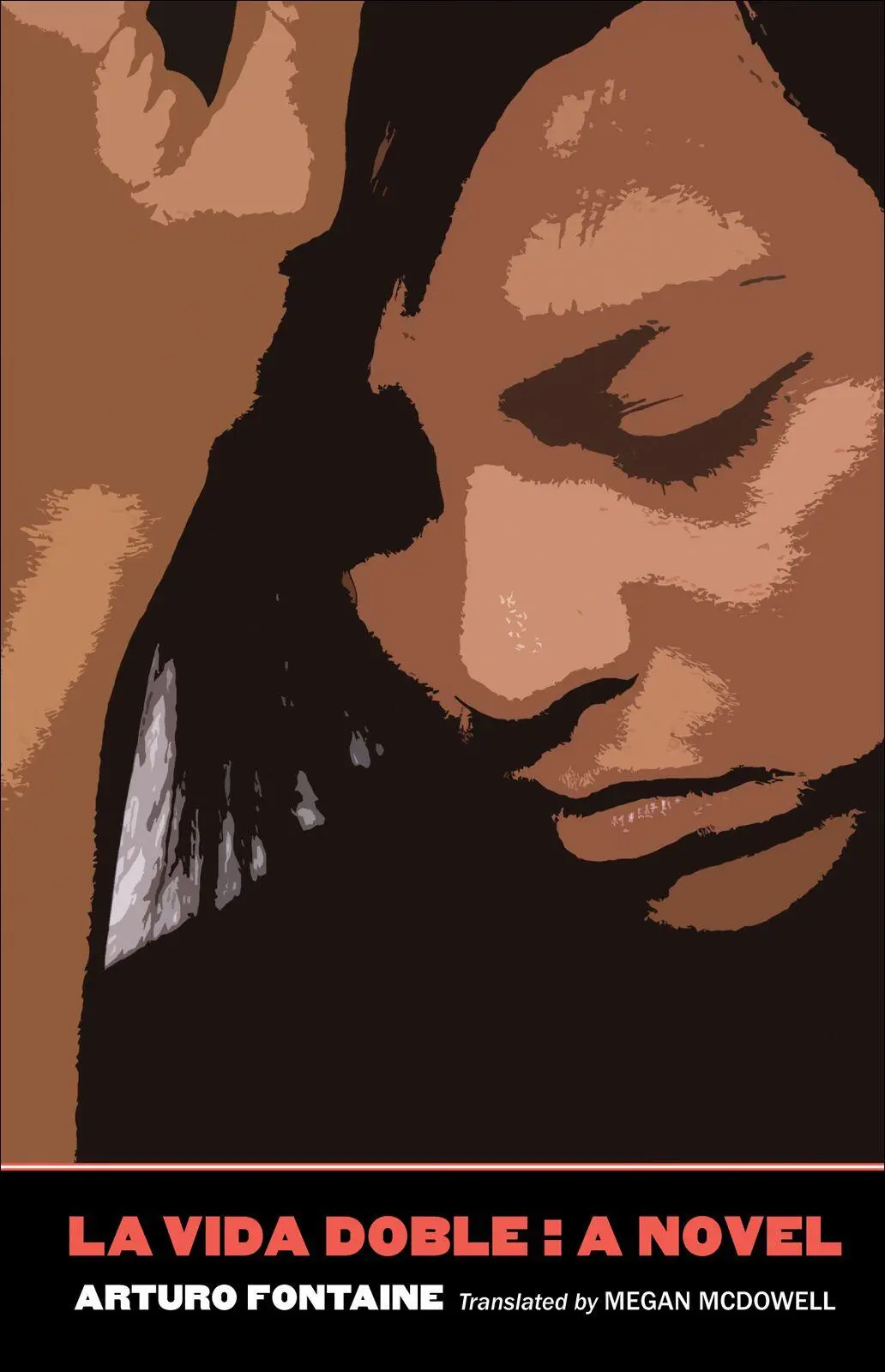
- Название:La Vida Doble
- Автор:
- Издательство:Yale University Press
- Жанр:
- Год:2013
- ISBN:нет данных
- Рейтинг книги:3 / 5. Голосов: 1
-
Избранное:Добавить в избранное
- Отзывы:
-
Ваша оценка:
La Vida Doble: краткое содержание, описание и аннотация
Предлагаем к чтению аннотацию, описание, краткое содержание или предисловие (зависит от того, что написал сам автор книги «La Vida Doble»). Если вы не нашли необходимую информацию о книге — напишите в комментариях, мы постараемся отыскать её.
is the story of Lorena, a leftist militant who arrives at a merciless turning point when every choice she confronts is impossible. Captured by agents of the Chilean repression, withstanding brutal torture to save her comrades, she must now either forsake the allegiances of motherhood or betray the political ideals to which she is deeply committed.
Arturo Fontaine’s Lorena is a study in contradictions — mother and combatant, intellectual and lover, idealist and traitor — and he places her within a historical context that confounds her dilemmas. Though she has few viable options, she is no mere victim, and Fontaine disallows any comfortable high moral ground. His novel is among the most subtle explorations of human violence ever written.
Ranking with Roberto Bolaño and Mario Vargas Llosa on Latin America’s roster of most accomplished authors, Fontaine is a fearless explorer of the most sordid and controversial aspects of Chile’s history and culture. He addresses a set of moral questions specific to Pinochet’s murderous reign but invites us, four decades later, to consider global conflicts today and question how far we’ve come.
La Vida Doble — читать онлайн бесплатно полную книгу (весь текст) целиком
Ниже представлен текст книги, разбитый по страницам. Система сохранения места последней прочитанной страницы, позволяет с удобством читать онлайн бесплатно книгу «La Vida Doble», без необходимости каждый раз заново искать на чём Вы остановились. Поставьте закладку, и сможете в любой момент перейти на страницу, на которой закончили чтение.
Интервал:
Закладка:
I offered to go buy a bottle of champagne, and in the end all of us went to the liquor store. I insisted on paying. Back at the house, when the champagne had run out and we had started in on pisco and Coke, I steered the conversation to mention that I was finding more and more frequent red chalk marks on the edge of the sidewalk on the corner. I was lying. “So you’re being reincorporated,” said Teruca.
“It’s about time,” Rafa stated roundly, his tongue loosened from the pisco. And he added with no prompting from me: “Two red lines, parallel?”
“Exactly,” I said.
“Unmistakable.” He gulped down a big swallow and laughed: “My cell, on the other hand, uses gum.” He laughed again, a laugh that was strange in him. He threw back another swallow. It’s fear, I thought to myself, fear. “They leave a piece of gum on the leg of a bench in Plaza Manuel Rodríguez. The Spartan’s idea, I’m sure,” he laughed, looking at me with glassy eyes. Teruca furrowed her brow and stayed quiet. Then she told me that Cuyano had fallen, that since Canelo’s death Rafa had been in charge of his cell, the one that used to be mine, too, and that this had left her shocked and very sad; frightened, too. I covered my face with my hands.
“I worry about serial arrests like that,” she said to me. Teruca had been disconnected as a precaution. A thick silence fell over us.
“An angel went by,” joked Rafael.
The doorbell rang and a tall, thin, very blond man came in wearing jeans and cowboy boots. “The Gringo!” exclaimed Rafa. He and Teruca got up to welcome him. He handed Teruca her gift and hugged me. “It’s been so many moons!” he told me. “So long since Nahuelbuta! Right?. . you haven’t changed a bit.” We toasted. He and Rafa seemed to be good friends. I liked the way his gray eyes turned toward me, left, and came back. He clinked his glass against mine and laughed for no reason, with something of the child who laughs from pure joy. Then he started talking to Rafa. Teruca asked me about my French classes, the latest art openings. The bottle of pisco went quickly, and Teruca and I went to get another from the pantry.
“Handsome, isn’t he?” she said as soon as we were alone.
“Mm,” I said.
“Mm,” she replied, smiling. “He remembered you from Nahuelbuta, at the camp. .”
“Mm.”
When I was ready to go, the Gringo looked at his watch and exclaimed in surprise over how late it was. We left together, walking toward Irarrázaval. I don’t remember what we talked about. When we got to the bus stop I felt his gaze holding mine again. “I want to see you again,” he told me. “Give me that chance. The last time we saw each other was years ago and there was a fire between us. .” My mouth filled with laughter and I trembled a little. My bus pulled up and from the landing I said: “All right, let’s talk soon.” I gave him a wave and the bus pulled away.
THIRTY-FIVE
Plaza Manuel Rodríguez was empty and all the shops had closed. It was eleven thirty at night. Plenty afraid, I circled around checking the plaza’s benches, in search of a piece of gum. I kept thinking I heard Rafa’s steps behind me, and the sweat was rolling down my back. When I had only two left to check, on the bench under a big, bluish cedar tree I saw a little white-tinged spot on the green-painted iron leg. I didn’t touch it.
Plaza Manuel Rodríguez is small and secluded. It’s bordered by four streets: Calle Plaza Manuel Rodríguez to the north, Grajales to the south, Almirante Latorre to the east, and Abdón Cifuentes to the west. And I have to mention a fifth, Teresa Clark, a short alleyway that runs north to south between Almirante Latorre and Abdón Cifuentes and ends at the plaza. Before dawn, twelve men and six vehicles distributed themselves on those streets, blocking off the plaza. Only the old Peugeot taxi parked on Teresa Clark had a direct view of the benches. We were in that taxi: Indio driving, Iris as copilot, and me, wearing a mask. The day passed in vain. “Gladiolo” didn’t show. Macha ordered sandwiches and drinks, but he didn’t change the stakeout team.
At a quarter past one in the morning, the silence was broken by the motor of a car stopping, the slam of a door, and then footsteps coming closer. I ducked down in the back seat as Indio and Iris embraced like lovers. The man was walking on Calle Grajales. On the southeast corner of the plaza, he stopped and observed the solitude of the place and the calm of the adjacent streets. From that corner, close to the palm tree, he had the best view of the scene. But because of the curve of the street that bordered the plaza, the Daihatsu on Abdón Cifuentes was out of his visual field. The same was true of a Toyota parked south of the plaza on Almirante Latorre. None of them could see him, either. As I said: only we, in the old Peugeot taxi in the alleyway Teresa Clark, were in a position to observe the “illicit activity” that the man in the plaza was about to initiate. Did he notice our Peugeot?
Iris said to me: “If that’s really him, he’s having trouble making up his mind.” And a second later: “OK, he’s walking through the plaza, make sure it’s him.” I sat up just enough to see, and I recognized him. I didn’t need binoculars. That way of walking, of leaning back and dragging his feet a little, was Rafa’s and no one else’s. He walked along the gravel walkway toward the cedar tree, which must have been no more than fifty yards from us. He sat down on the bench with the gum, looked at the stars for a while, turned to scan the plaza, and then languidly let a hand fall, feeling his way along the iron leg. From that position he could have noticed our Peugeot. He would have had to turn his head to his left. He didn’t. He looked at the stars again, pensive; he got up slowly and headed back at a relaxed pace toward the southeast corner.
Iris communicated over the radio that the Subject was headed toward his car parked on Calle Grajales. A motor started up, and a white Chevy moved at a normal speed eastward along Grajales, along the south edge of the plaza. The Toyota on Almirante Latorre started up, turned right on Grajales, eastward, and casually began to tail the Chevy. At night, the small amount of traffic made it difficult to tail without being noticed. The Toyota, which Pancha was driving with Great Dane beside her, let Rafa get ahead. Great Dane communicated that the Toyota had the Subject under control. Was that when Rafa noticed the headlights of the Toyota behind him and the Nissan parked to the right, close to the corner of Almirante Latorre? Who knows. Rafa’s Chevy continued eastward on Calle Grajales, and three blocks past Almirante Latorre, when he reached Ejército, he turned suddenly and sped southward. Great Dane reported that they had lost the control, and they kept going straight to avoid raising suspicion. Mono Lepe’s Nissan, which was farther back on Grajales, took Ejército southward and became the control car. Rafa’s Chevy sped some five blocks farther, crossed Blanco Encalada, and turned, wheels skidding, onto Tupper. He went straight along O’Higgins Park, crossed the highway, and catapulted onto Avenida Matta, heading east. Mono Lepe informed us of these movements and assured us that the Subject remained under control, that his Nissan was keeping up though the Subject was performing countersurveillance maneuvers. Then Macha gave the order for the blue Daihatsu to take the lead as the control car. But Rafa had already turned right again onto San Ignacio, and then he wrenched the car eastward to double back on Rondizzoni, where it dovetailed with the highway going southward, and he floored it. The Daihatsu was left behind, and it lost the control. Macha gave the order to disperse. Rafa had detected the tail. Nothing could be done. .
Читать дальшеИнтервал:
Закладка:
Похожие книги на «La Vida Doble»
Представляем Вашему вниманию похожие книги на «La Vida Doble» списком для выбора. Мы отобрали схожую по названию и смыслу литературу в надежде предоставить читателям больше вариантов отыскать новые, интересные, ещё непрочитанные произведения.




Обсуждение, отзывы о книге «La Vida Doble» и просто собственные мнения читателей. Оставьте ваши комментарии, напишите, что Вы думаете о произведении, его смысле или главных героях. Укажите что конкретно понравилось, а что нет, и почему Вы так считаете.