Arturo Fontaine - La Vida Doble
Здесь есть возможность читать онлайн «Arturo Fontaine - La Vida Doble» весь текст электронной книги совершенно бесплатно (целиком полную версию без сокращений). В некоторых случаях можно слушать аудио, скачать через торрент в формате fb2 и присутствует краткое содержание. Год выпуска: 2013, Издательство: Yale University Press, Жанр: Современная проза, на английском языке. Описание произведения, (предисловие) а так же отзывы посетителей доступны на портале библиотеки ЛибКат.
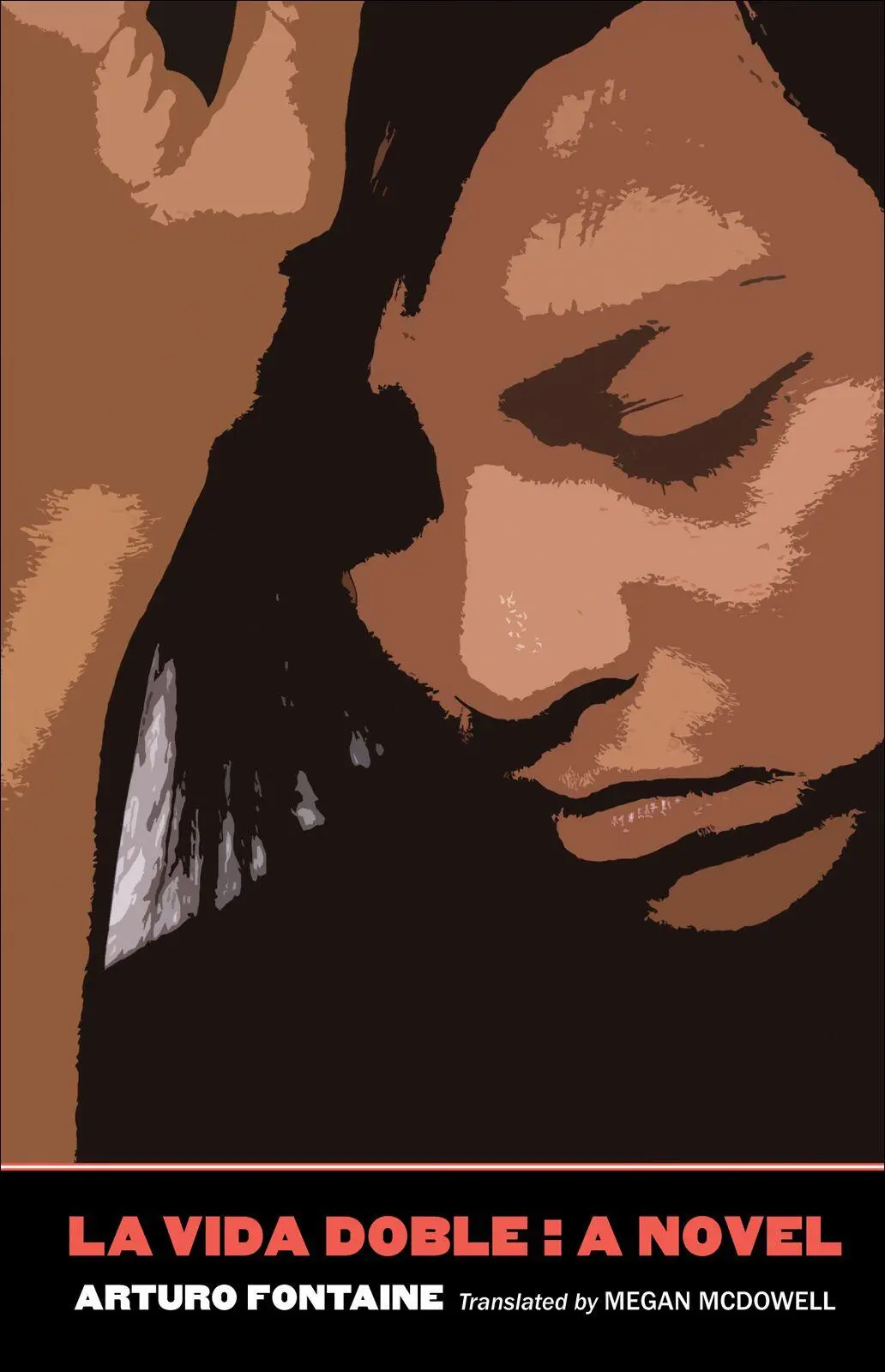
- Название:La Vida Doble
- Автор:
- Издательство:Yale University Press
- Жанр:
- Год:2013
- ISBN:нет данных
- Рейтинг книги:3 / 5. Голосов: 1
-
Избранное:Добавить в избранное
- Отзывы:
-
Ваша оценка:
La Vida Doble: краткое содержание, описание и аннотация
Предлагаем к чтению аннотацию, описание, краткое содержание или предисловие (зависит от того, что написал сам автор книги «La Vida Doble»). Если вы не нашли необходимую информацию о книге — напишите в комментариях, мы постараемся отыскать её.
is the story of Lorena, a leftist militant who arrives at a merciless turning point when every choice she confronts is impossible. Captured by agents of the Chilean repression, withstanding brutal torture to save her comrades, she must now either forsake the allegiances of motherhood or betray the political ideals to which she is deeply committed.
Arturo Fontaine’s Lorena is a study in contradictions — mother and combatant, intellectual and lover, idealist and traitor — and he places her within a historical context that confounds her dilemmas. Though she has few viable options, she is no mere victim, and Fontaine disallows any comfortable high moral ground. His novel is among the most subtle explorations of human violence ever written.
Ranking with Roberto Bolaño and Mario Vargas Llosa on Latin America’s roster of most accomplished authors, Fontaine is a fearless explorer of the most sordid and controversial aspects of Chile’s history and culture. He addresses a set of moral questions specific to Pinochet’s murderous reign but invites us, four decades later, to consider global conflicts today and question how far we’ve come.
La Vida Doble — читать онлайн бесплатно полную книгу (весь текст) целиком
Ниже представлен текст книги, разбитый по страницам. Система сохранения места последней прочитанной страницы, позволяет с удобством читать онлайн бесплатно книгу «La Vida Doble», без необходимости каждый раз заново искать на чём Вы остановились. Поставьте закладку, и сможете в любой момент перейти на страницу, на которой закончили чтение.
Интервал:
Закладка:
“You never feel as free as in the mountains,” he told me, and it seemed incredibly profound and true to me. Then he asked if I would dare go climbing with him up a peak that wasn’t very difficult. I loved the idea. “The air,” he said, “what I like most is to feel on my face that cold air, biting and pure, which at that height has touched nothing but the ice.” At that moment, the only thing I wanted was to feel the freedom of that cold air, biting and pure; I wanted to leave with Flaco right away and go there. When the check came we were in front of San Cristóbal Hill again. I leaned over the table and kissed him. Flaco gave me another kiss as we got into his silver Volvo, then he got onto the Costanera highway. We drove fast.
I was picturing myself standing in the wind of a glacier. Then I thought of the house in Malloco. I saw myself in my mind’s eye disfigured in the little mirror, anxiously inhaling what was left of a line he’d shaped with his MasterCard Gold, the same one that just paid for lunch, and I felt my body swept up by the loud guitars and the powerful, tireless motor of the electric bass. I told him we should go that very night. He smiled. We shared that powerful secret. The complicity was exquisite. I believe in that: the attraction you feel when you share a dangerous secret. Don’t you? I always loved that exclusion that separates those who are in on the secret from those who aren’t. It’s the drug of co-conspirators, and without it there wouldn’t be secret societies or networks in clandestine life, or loyalties among secret agents like the one who was beside me in the driver’s seat then. He turned suddenly and parked in front of the Tajamar Towers. “Where are we going?” I asked.
“You’ll see, my dear,” he smiled mischievously.
We went into an eleventh-floor apartment, with big windows looking out over the river and San Cristóbal Hill. It had a light beige carpet, almost white, wall-to-wall. A bedroom and a living-dining room. The walls were white. There wasn’t a stick of furniture. “Do you like it?” he asked me. Everything was luminous. “Would you like to live here?” And in a voice that was too serious to be serious: “For security purposes, the time has come for you to change your residence, don’t you think?”
In that moment I loved him with a furious, urgent passion. That silent, empty apartment, those windows high over the San Cristóbal Hill, I don’t know, I was flooded by an acute sense of helplessness just at the moment when Flaco was protecting me. I pulled off my clothes and we made love frantically, standing up, and then again on that recently carpeted floor. I’m seeing him lying there on his back with me astride him, his clear eyes and his bald, youthful head, the dark hair on his chest, the almost white beige of the rug. Me? Could this be happening to me?
To rest my head on his chest brings me a perfect peace. The cedar scent of Flaco’s soap brings me back to my father’s workshop. He’s a big man, Flaco. The muscles of his chest are my pillow. I’m protected there, almost merging into him. I press closer. I’m happy like that.
When he left, I was still naked. I kissed his bald head. I always did that when I said good-bye to him. He left a ring of keys in my hand and a folded paper between my breasts. When I straightened up it slid to the floor: it was a fat check. Enough to pay my move from the little apartment with thin walls I rented on Carlos Antúnez and to furnish the new one. I installed a little safe in the closet, built into the wall. I hid my documents and the CZ in there when Anita or my mother or the cleaning lady came.
And it was that apartment where he would drop in without warning, where I waited for him always just in case, in case he could get away from his wife, from his two small daughters whom he adored, I knew, and we could lose ourselves for the night in the disco music and among the rooms of the house in Malloco. I’d been holding back for such a long time. One of those nights, I let myself be carried away by the voluptuousness of the forbidden. I shouldn’t have. But the secret was burning my lips. I shouldn’t have. But I loved Flaco, I wanted to keep him with me, I wanted his complete intimacy; I longed for that communion, to open the door for him to a secret he didn’t know. It was vertiginous. So I told him something I shouldn’t have.
I told him tremblingly that the “Prince of Wales” smoked Havana cigars. He looked at me with widened eyes, surprised. “I want to punish,” I told him, “the irresponsible people who’ve gotten us into this imaginary fight that has very real deaths.” I said it firmly, and I believed it; I needed to believe it, just as Rodrigo, when he left me, had needed to convince me that I was the one to blame. The Spartan shouldn’t have smoked. It was forbidden. And yet, he did. The perfect combatant had that one defect, that trace of rebellion against an absolute and unequivocal order of the organization. He let the ashes fall onto a saucer using the utmost caution, and then he flushed them down the toilet. I knew it was a valuable clue. Some of the ashes must fly off and be left behind.
That detail would be important for Flaco, for his career. And of course, the information was duly processed. From then on, as soon as a safe house came up, they headed over there with magnifying lenses to look for cigar ash. The Spartan (“Prince of Wales,” to Central) would fall because of that, he would fall because of me.
THIRTY-FOUR
Gato wanted “Gladiolo” and he wanted him alive. That’s it. In Flaco’s flow chart, “Gladiolo” appeared now as the leader of one of the cells under “Prince of Wales.” Where had that information come from? They had watched the house on Calle Los Gladiolos, but the man never turned up there. The tone of that terrible order was peremptory. I understood very well. What could I do? Those were the rules of the game. I asked for time. How much? They gave me a month. There were three weeks until Teruca’s birthday, and I’d heard she was going to celebrate at her mother’s house in Ñuñoa, a few blocks from Irarrázaval. Through Teruca, maybe I could get close to poor Rafa.
I dropped in that day with a tray of Chilean pastries that I knew she loved and a light blue blouse that would look good on her. Her mother let me in very solicitously, but said she wasn’t sure if her daughter was coming. At around 6:30, Teruca arrived. “You’ve let your braid grow again,” I said. “I love it like that.” She was surprised to see me. I’d even say she hugged me with a trace of distrust. Her mother came in with a mil hojas cake, and after singing, blowing out the candles, and eating our slices, the two of us went out onto the terrace. Then she loosened up. She told me, enraptured, that she was engaged to Rafa now. Her mother knew. Not Francisco, no, it wasn’t worth telling him. Because, how do you explain something like that to your son in a letter? Francisco was still living in a group home in Cuba. In spite of her efforts, Teruca couldn’t keep in regular contact with him. Of course it didn’t make any sense to tell him. So why was she telling me she just didn’t know how to break the news to him? I knew Teruca bore that pain every day: having abandoned her son to avoid putting him in danger, so she could have more freedom and fight without being tied down. And I knew, too, that the few times they had met, in Mexico City, it hadn’t turned out well: “I try to understand you, Mom, I try because I love you and that’s exactly why I can’t understand. Why can’t you stay here with me?” That’s what Francisco said to her.
That’s where we were when Rafa came in carrying a gift. He let out a great bellow of laughter when he saw me, and he hugged me with the frank affection of earlier days. “What’s up, sweetie?” he said. He kissed Teruca effusively on the mouth and he sat down next to her on the sofa, holding her thick black braid in one hand. “This way I can control who she looks at,” he laughed. “I guess you already know, right? This little gossip must have told you, I’m sure.” The three of us hugged.
Читать дальшеИнтервал:
Закладка:
Похожие книги на «La Vida Doble»
Представляем Вашему вниманию похожие книги на «La Vida Doble» списком для выбора. Мы отобрали схожую по названию и смыслу литературу в надежде предоставить читателям больше вариантов отыскать новые, интересные, ещё непрочитанные произведения.






Обсуждение, отзывы о книге «La Vida Doble» и просто собственные мнения читателей. Оставьте ваши комментарии, напишите, что Вы думаете о произведении, его смысле или главных героях. Укажите что конкретно понравилось, а что нет, и почему Вы так считаете.