Arturo Fontaine - La Vida Doble
Здесь есть возможность читать онлайн «Arturo Fontaine - La Vida Doble» весь текст электронной книги совершенно бесплатно (целиком полную версию без сокращений). В некоторых случаях можно слушать аудио, скачать через торрент в формате fb2 и присутствует краткое содержание. Год выпуска: 2013, Издательство: Yale University Press, Жанр: Современная проза, на английском языке. Описание произведения, (предисловие) а так же отзывы посетителей доступны на портале библиотеки ЛибКат.
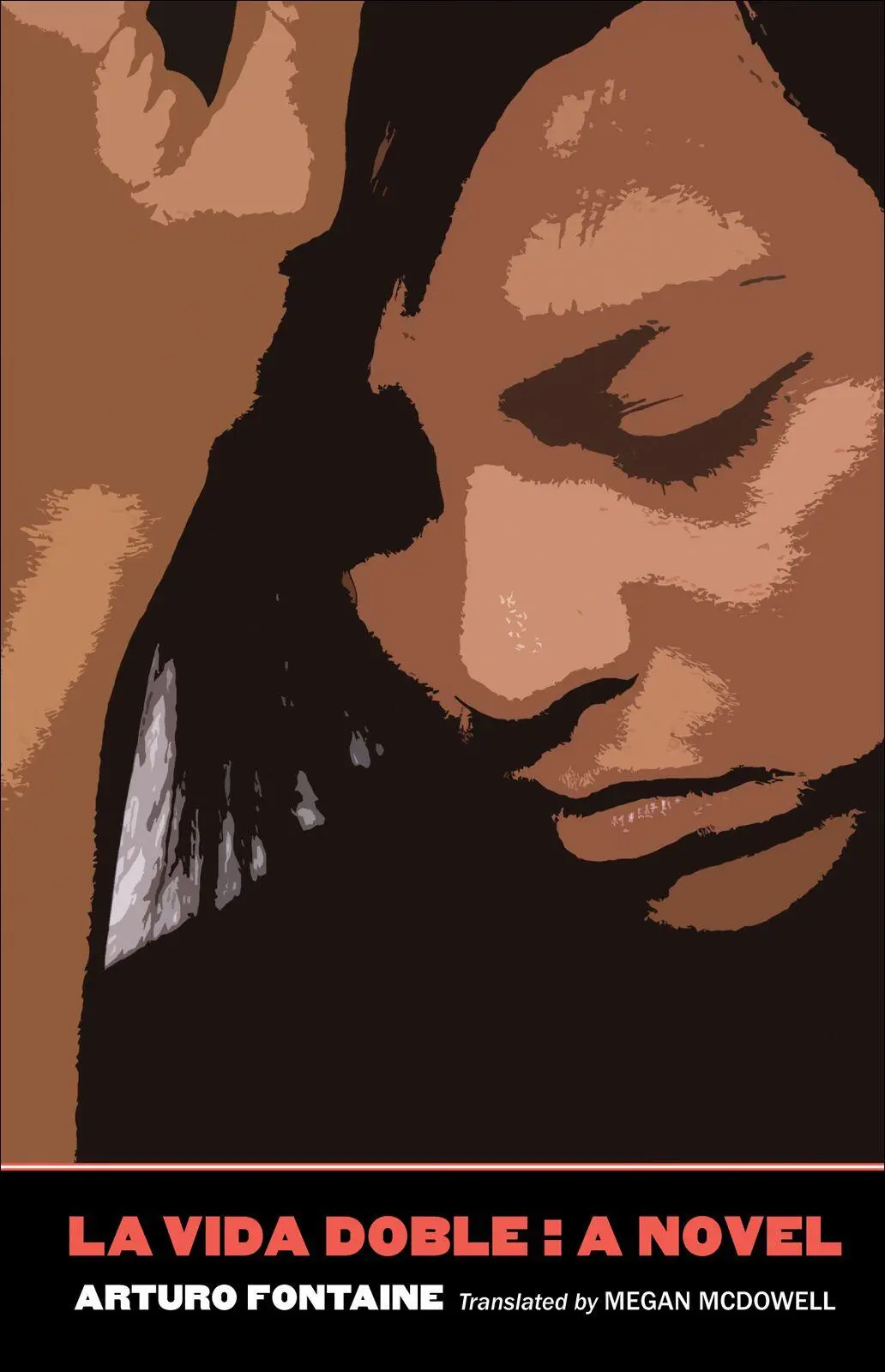
- Название:La Vida Doble
- Автор:
- Издательство:Yale University Press
- Жанр:
- Год:2013
- ISBN:нет данных
- Рейтинг книги:3 / 5. Голосов: 1
-
Избранное:Добавить в избранное
- Отзывы:
-
Ваша оценка:
La Vida Doble: краткое содержание, описание и аннотация
Предлагаем к чтению аннотацию, описание, краткое содержание или предисловие (зависит от того, что написал сам автор книги «La Vida Doble»). Если вы не нашли необходимую информацию о книге — напишите в комментариях, мы постараемся отыскать её.
is the story of Lorena, a leftist militant who arrives at a merciless turning point when every choice she confronts is impossible. Captured by agents of the Chilean repression, withstanding brutal torture to save her comrades, she must now either forsake the allegiances of motherhood or betray the political ideals to which she is deeply committed.
Arturo Fontaine’s Lorena is a study in contradictions — mother and combatant, intellectual and lover, idealist and traitor — and he places her within a historical context that confounds her dilemmas. Though she has few viable options, she is no mere victim, and Fontaine disallows any comfortable high moral ground. His novel is among the most subtle explorations of human violence ever written.
Ranking with Roberto Bolaño and Mario Vargas Llosa on Latin America’s roster of most accomplished authors, Fontaine is a fearless explorer of the most sordid and controversial aspects of Chile’s history and culture. He addresses a set of moral questions specific to Pinochet’s murderous reign but invites us, four decades later, to consider global conflicts today and question how far we’ve come.
La Vida Doble — читать онлайн бесплатно полную книгу (весь текст) целиком
Ниже представлен текст книги, разбитый по страницам. Система сохранения места последней прочитанной страницы, позволяет с удобством читать онлайн бесплатно книгу «La Vida Doble», без необходимости каждый раз заново искать на чём Вы остановились. Поставьте закладку, и сможете в любой момент перейти на страницу, на которой закончили чтение.
Интервал:
Закладка:
Then the figure of Gato came into my mind, downcast, his hands in his coat pockets, dragging his feet while we waited for the heavy door to open.
FORTY
The Volvo left and the operation was considered terminated. Macha took out the first aid kit, cut a piece of gauze with his Swiss army knife, opened the bottle of peroxide, and, looking at himself in the Toyota’s mirror, cleaned his wound. It was a superficial cut, but there were little shards of glass in it. Iris helped him get them out with the tweezers on the same pocketknife. One splinter had gone in sideways and when it was forced out, it tore the flesh with its irregular rhombus shape. Iris, who was shining a flashlight on it, had trouble getting it out. Macha put a few drops of iodine on it, applied a bandage, straightened his clothes, combed his hair, and happily invited us for beers at a nearby dive that he knew would be open at that hour. It was on the same avenue to the south, near stop number 20 at Calle Santa Amalia, he told us, right across from a phone booth. He would have to go back to Central later on to file a report on what had happened. Then, Lisandro Pérez Olmedo would have to appear, like so many times before, in the appropriate police station, number 18, and make the required declaration: “In circumstances that the individual XX, identity number such-and-such, ignoring the order to freeze, fled through the back yard shooting an AKM, it was necessary to neutralize him, for which I used my service weapon. .” He started to laugh.
Lisandro Pérez Olmedo still had time for a beer. He didn’t seem worried about the declaration he would later stamp with his signature and that would then be archived in the case files in the Tenth Third Criminal Court of Santiago. Iris offered to go herself, since any ballistic study would show that the shot came from the roof and not the ground. Lisandro Pérez Olmedo rejected the argument with another laugh. “Who says I didn’t go up on the roof? You, off to bed after this,” he told her. “That’s an order,” he told her.
We were drinking a few beers, as I said, in a diner on Calle Santa Amalia. Through the window I could see a forsaken phone booth next to a broken streetlight that offered no light. When Iris asked him: why the order from above, and what had happened with Flaco? Macha made a disdainful gesture, wrinkling his brow, and took a long swallow of beer. “They’re going to put a citation on your service record,” Iris told him. “It’s really bad for your career.” Macha twisted his mouth in the same disdainful scowl. A drop of beer shone in his black moustache. The first round of beers was gone in no time, and I was in the middle of my second when Iris stood up to go to the bathroom. I got up to let her pass. In that exact second I recognized the Spartan. He was approaching the phone booth, his hair disheveled and his jacket dirty. Coincidences happen. Not always, of course, but sometimes, and they are decisive.
Could I keep quiet? My heart was in my throat. I realized that no one was paying any particular attention to me. Why did I do what I did? Squeezing my glass hard with both hands and looking at the table with its flowered plastic tablecloth, I said it in a voice that I remember as sounding terrified. “There’s the ‘Prince of Wales,”’ I said. “There, in the phone booth.” I expected Macha to go running out with guns blazing, but he didn’t. He didn’t bat an eye. We went right on drinking beer as if nothing was happening, until Iris came back. Then he handed her the keys to the Toyota and gave her the order to follow the Spartan.
“Don’t use the radio,” he told her. “Got it? Do not use Central’s radio. Call me from a public phone when you can. I’ll send you another car for support.” As soon as the Spartan hung up, she went out to follow him. Macha and I calmly finished our beers.
Only then did I dare to ask him if he had really thought he’d be able to take down the “Prince of Wales” alone at the pension and bring him out in cuffs. He nodded.
“But he wasn’t sleeping. He wasn’t even in bed,” Macha said. And looking at a distant, indefinite point: “The man was dressed, pacing in the dark with his gun in his hand. The others were dressed too, in their rooms, each one with his AKM at the ready. Strange, right?”
The tail stayed on him day and night for more than two months. They put him “to bed” at night and “woke him” in the morning. They used three cars and nine agents in rotation. He never left their sight. This allowed them to sketch a complete web of contacts. They followed a person who once, at a “meet,” arrived last and placed himself in the most protected spot, revealing his superiority to the “Prince of Wales”; he went into an apartment on Calle Viollier. In the photo of “Viollier” I recognized Max: his small eyes, his dark, wiry hair. Twice, the “Prince of Wales” lost them, both times in the Vega market on the way to a “meet.” He got away from them among so many people and fruit and vegetable stands. But they found him again in the same market. It was a tail Macha organized behind Flaco Artaza’s back.
FORTY-ONE
In the meantime, Clementina had a book published that compiled her reviews and catalog copy. She was invited to Paris to give a series of lectures. I thought of Giuseppe. I bought him a gift — a book of photographs of Patagonia — and I wrote him a card. Clementina happily agreed to deliver it. When I went to say good-bye to her, I brought the gift in my bag. At the last minute I thought better of it, and I didn’t want to give it to her. I chickened out. Clementina’s lectures were a roaring success. One publisher was interested in putting out a book of her articles. When she got back, we got together with three other girlfriends to celebrate and talk about her trip, her triumph. I felt uncomfortable having lunch with them. I was used to pretending, but that day, as I raised my glass with them, it was difficult, it hurt, I felt sorry for myself. I was sad when I left them.
That night — another of the many nights in Malloco when I lost sight of Flaco — I felt sad again, and I found myself dancing, pretty drunk, with two women I’d never seen and who I thought were pretty. My “mixed race,” you know — my “hybridity,” as Clementina would say — was born of the original sin of violence. And they moved gracefully, and we laughed together and embraced and I think we kissed a little. My memory is cloudy. Then we went up to a private room — the novelty of the house — and laughing and touching each other tenderly, we fell onto a waterbed. “I’m Josefina,” one told me; “I’m Josefa,” the other said. “I’m María José,” I said. We were all lying.
One of us closed the door, and we floated there in the sweetness and the thickness, and in the darkness we were touching each other the way you palpate a chirimoya or a pear to see if it’s ripe. Our movements were slow and persistent; we were enveloped in a net of tenderness and silence. A high-heeled shoe or a stocking that had captivated me while we were dancing now became a barrier, a wall to climb over. Each bit of bared skin was a discovery, as if that profile, those breasts, that waist were the silent starting point of a piece of music being played for the first time. It was the hour of my beauty, my very own, and I was proud of having taken it for myself.
It’s easy to kiss a woman; the hand can imagine with such ease a shoulder or a thigh that turns into her shoulder or thigh, and the hand protects it, as if the permanence of her skin depended on my hands moving over it, as if, without the soft and insistent touch of another’s skin, she would wither and fall to pieces. And it was as if the constant caress of those hands were reconstituting an invisible shell, an egg that incubated a metamorphosing body. We felt each other, letting ourselves go without hurry, purpose, or fear. The next moment trembled like the flame of a candle in darkness, and all was anticipation and surprise.
Читать дальшеИнтервал:
Закладка:
Похожие книги на «La Vida Doble»
Представляем Вашему вниманию похожие книги на «La Vida Doble» списком для выбора. Мы отобрали схожую по названию и смыслу литературу в надежде предоставить читателям больше вариантов отыскать новые, интересные, ещё непрочитанные произведения.










Обсуждение, отзывы о книге «La Vida Doble» и просто собственные мнения читателей. Оставьте ваши комментарии, напишите, что Вы думаете о произведении, его смысле или главных героях. Укажите что конкретно понравилось, а что нет, и почему Вы так считаете.