Olja Savicevic - Adios, Cowboy
Здесь есть возможность читать онлайн «Olja Savicevic - Adios, Cowboy» весь текст электронной книги совершенно бесплатно (целиком полную версию без сокращений). В некоторых случаях можно слушать аудио, скачать через торрент в формате fb2 и присутствует краткое содержание. Год выпуска: 2016, Издательство: McSweeney's, Жанр: Современная проза, на английском языке. Описание произведения, (предисловие) а так же отзывы посетителей доступны на портале библиотеки ЛибКат.
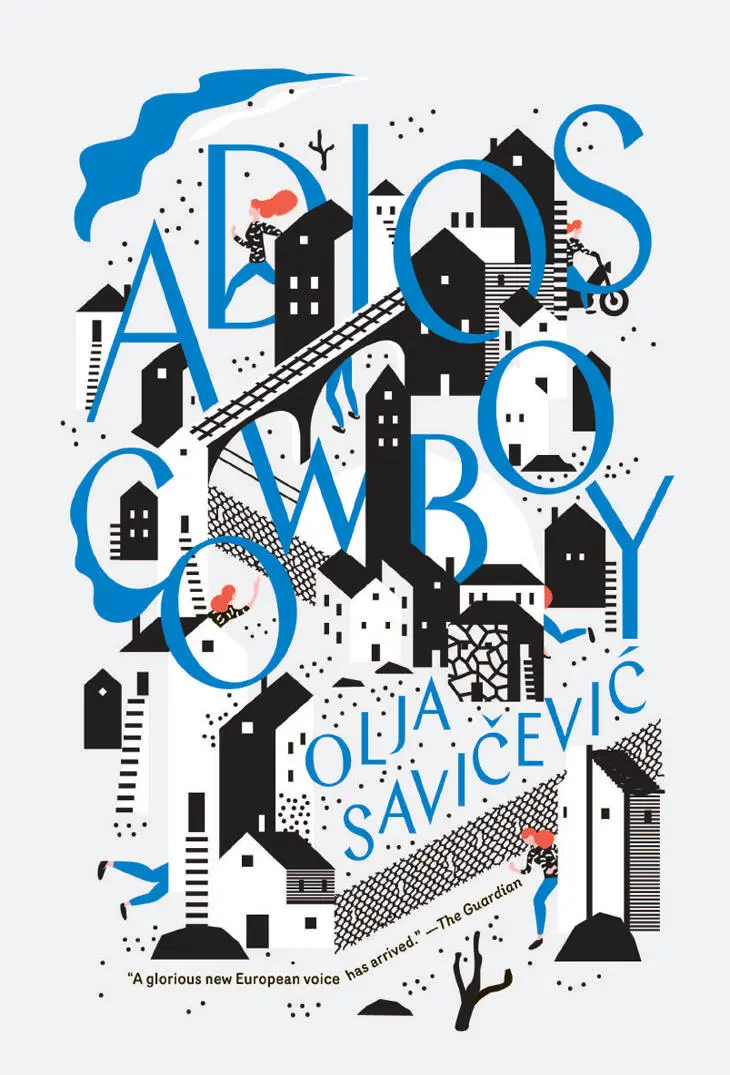
- Название:Adios, Cowboy
- Автор:
- Издательство:McSweeney's
- Жанр:
- Год:2016
- ISBN:нет данных
- Рейтинг книги:4 / 5. Голосов: 1
-
Избранное:Добавить в избранное
- Отзывы:
-
Ваша оценка:
Adios, Cowboy: краткое содержание, описание и аннотация
Предлагаем к чтению аннотацию, описание, краткое содержание или предисловие (зависит от того, что написал сам автор книги «Adios, Cowboy»). Если вы не нашли необходимую информацию о книге — напишите в комментариях, мы постараемся отыскать её.
Hoping to free her family from the grip of the past, Dada vows to unravel the mystery of Daniel’s final days. This American debut by a poet from Croatia’s “lost generation” explores a beautiful Mediterranean town’s darkest alleys: the bars where secrets can be bought, the rooms where bodies can be sold, the plains and streets and houses where blood is shed. By the end of the long summer, the lies, lust, feuds, and frustration will come to a violent and hallucinatory head.
Adios, Cowboy — читать онлайн бесплатно полную книгу (весь текст) целиком
Ниже представлен текст книги, разбитый по страницам. Система сохранения места последней прочитанной страницы, позволяет с удобством читать онлайн бесплатно книгу «Adios, Cowboy», без необходимости каждый раз заново искать на чём Вы остановились. Поставьте закладку, и сможете в любой момент перейти на страницу, на которой закончили чтение.
Интервал:
Закладка:
On this little piece of the coast everything is in any case crumbling from disease, with the dignity of an aging alcoholic who remembers more glorious summers, just as Mother remembers Split festivals with Vice Vukov and Claudia Villa.
Some ruins can definitely be beautiful even when they stink, but as far as the Illyria is concerned, it was always ugly, like all buildings built in the fifties.
“It was a lot uglier when it was new,” said Ma.
It didn’t help that it was a hotel. I’d been inside it more than once and I’d not found anything that would justify the idea of a hotel: a pool with turquoise tiles or afternoon silence at Reception, even the towels weren’t white and rough with a logo and the inscription HOTEL, but brightly colored, ordinary, thin with washing. But still, the most important element was there: the smell of chlorine on the starched sheets, the smell of Indian tea and pâté, the stench of other people’s summer holidays.
People from the Settlement and tourists gathered outside the Illyria every day, looking at the Super Mario clones and commenting.
“What’s this?”
“What’s this?”
“What the hell is this?”
“Vrdovđek has bought the Illyria.”
“ Quesque c’est? ”
“ Che cosa è questo? ”
“ Das ist eine Baustelle. ”
“ Nein, das ist ein Freudenhaus! ”
“ C’est un hôtel. ”
“ Wrdovjack?! Was ist Wrdovjack? ”
“ Vítejte v mé zahrade! ”
“ Shtooo? ”
“ Üdvözlöm! Üdvözlöm! ”
“Delighted to meet you!”
Harum-farum-larum — hedervarum.
The very next day, someone had written, behind the Table of Lies, on the wall beside the former Illyria:
WOTS DIS DOIN ON OUR PATCH?
* * *
In our kitchen, Mariana Mateljan tells us that Ned Montgomery is coming to Croatia: it’s in all the newspapers, and all the portals are also screaming. This is the second time, they report. The first time Ned was young and unknown in Yugoslavia and he died in one of the opening scenes of the film Winnetou , they report. Newer generations know him better as one of the first 3-D heroes of computer games, they report.
That’s a game with a lot of dead cyber cowboys in which the good guys, the player and Ned, if they’re quick on the draw and have a bit of luck, win shiny sheriff’s stars. The aim is always the same: not to allow the sons of bitches to defeat you.
“Ned Montgomery isn’t the kind of guy who bakes himself on a yacht on the Hvar waterfront, he doesn’t sip cappuccinos on the Dubrovnik Stradun with bodyguards at his backside, and he doesn’t wave from a transparent capsule at us ordinary mortals, Balkanjeros, like other so-called stars,” said my sister, blessing the famous actor. Ned Montgomery is not overly talkative; in interviews he replies to questions: Yes. No. Naturally. Thanks.
He doesn’t put on airs, they’d say in the Old Settlement.
Once a TV journalist said: “Okay, Ned, I thought you were a bit of a lad.”
“Hmm?”
“But how can you be a bit of a lad, if you’ve been with one and the same woman for twenty years now?”
“Well, I’m a cowboy,” explained Montgomery, lighting a cigarette in the studio as though it was nothing to do with him.
“Somehow everyone realized that being a lad is bad news for a cowboy,” said Daniel.
That one and the same woman was the fabulous Chiara Buffa, an announcer and singer on Radio Italia who later died tragically and to whom he had been introduced on a set by Sergio Leone, the newspapers wrote. There was once a whole supplement about them.
And Daniel said it didn’t seem at all impossible that someone would be able to get it up for twenty years for Chiara Buffa.
Mariana Mateljan brought me the paper and showed me the article.
“Why look, dear God in ’eaven, that cowboy from your room ’as come!” she said, shoving the paper under my nose.
The producer was the famous Ned Montgomery — it said in the Spectacle column. The popular actor and director of spaghetti westerns, who embodied many of the legends of the Wild West — it said. Some scenes in the new film, which we discover is also some sort of western, will be shot on location in our neighborhood.
Ned Montgomery, otherwise from these parts through his grandfather on his mother’s side, had been a star as early as the nineteen-sixties and seventies, and his best-known creations were in the films Gold Dust, More Gold Dust in the Eyes, The Return of Virgil C. and Virgil C’s Last Bullet , blah, blah — wrote the journalist.
Daniel would’ve been delighted, I thought delightedly. This would’ve been news for him, even though years had passed.
“Good morning, cowboy!” my brother used to greet himself when he was in a particularly good mood.
“Good night, cowboys and Indians! Make it snappy,” our father would say, chivying us to bed.
“I’m not a cowboy,” my sister would say.
“Nor an Indian.”
I moved the poster of Ned Montgomery into my room the day my sister and mother decided to rent out Daniel’s room, with its own entrance, to workers and tourists. “You can’t just crumple up that cowboy with his six gold Colts and chuck him in the trash,” said my sister.
What had that legendary Ned from the poster been? Marksman, poker player, lonely rider, sheriff of Yumo district, protector of women, keen on kerchiefs and hats, a devoted and sincere friend of men and dogs, quick on the draw and dropping his drawers. He was kept company on one part of the wall by the true champions Eastwood, Wayne, and Django.
I knew that Daniel would be okay with that.
The only role of Montgomery’s that I remember well, really very well, is in Virgil C’s Last Bullet when he’s killed by Lee Van Cleef in the final showdown. It’s unusual for the hero in a western to die. That film was rescreened numerous times on Sundays at 5 p.m. and we must have seen it every time. Virgil, the character played by Montgomery, had returned to his native Quentin, a small town he had abandoned in his eighteenth year, as I had mine, but on his return “he had not found a single one of his tears,” whereas that was all I’d found in the Old Settlement.
* * *
One of the things I enjoy most as I roam through the streets is finding old graffiti on top of and underneath the peeling rind of facades.
On the south-facing wall of the post office, where the half-blind tails of the alleys divide because our streets don’t start or finish, someone had written: CANTON OF CAPITULATION.
That wall is warm in winter and pleasant in summer, so widows lean their lower backs and narrow hunched shoulders and, under their dark clothes, their still-firm little bums against the graffiti.
In my early childhood our old great-grandmother protected that canton. The insatiable one , the oldest woman in the world. She was antique all our lives and old for almost half of hers. That day, when she capitulated, the old lady ate a whole plateful of little bitter fish and sweet white cabbage, I recall; the fish were bitter because of their innards, the cabbage was sweet because of the salt in the soil or because of the sun. Then — trying to control the trembling of her chin — out of which coiled several white hairs — she dragged a stool to the end of the road where the widows with dry mouths sat under the yellow neon sign of the new post office, chewing the cud. Some of them spent their last forty years at that corner, some spent forty days, but in the end, sooner or later, they all came, those with black headscarves and those with red pearls. They sat on little benches and spent the whole afternoon saying nothing in their brilliant dialect.
Читать дальшеИнтервал:
Закладка:
Похожие книги на «Adios, Cowboy»
Представляем Вашему вниманию похожие книги на «Adios, Cowboy» списком для выбора. Мы отобрали схожую по названию и смыслу литературу в надежде предоставить читателям больше вариантов отыскать новые, интересные, ещё непрочитанные произведения.








Обсуждение, отзывы о книге «Adios, Cowboy» и просто собственные мнения читателей. Оставьте ваши комментарии, напишите, что Вы думаете о произведении, его смысле или главных героях. Укажите что конкретно понравилось, а что нет, и почему Вы так считаете.