Andrea Barrett - The Air We Breathe
Здесь есть возможность читать онлайн «Andrea Barrett - The Air We Breathe» весь текст электронной книги совершенно бесплатно (целиком полную версию без сокращений). В некоторых случаях можно слушать аудио, скачать через торрент в формате fb2 и присутствует краткое содержание. Год выпуска: 2007, Издательство: W. W. Norton & Company, Жанр: Современная проза, на английском языке. Описание произведения, (предисловие) а так же отзывы посетителей доступны на портале библиотеки ЛибКат.
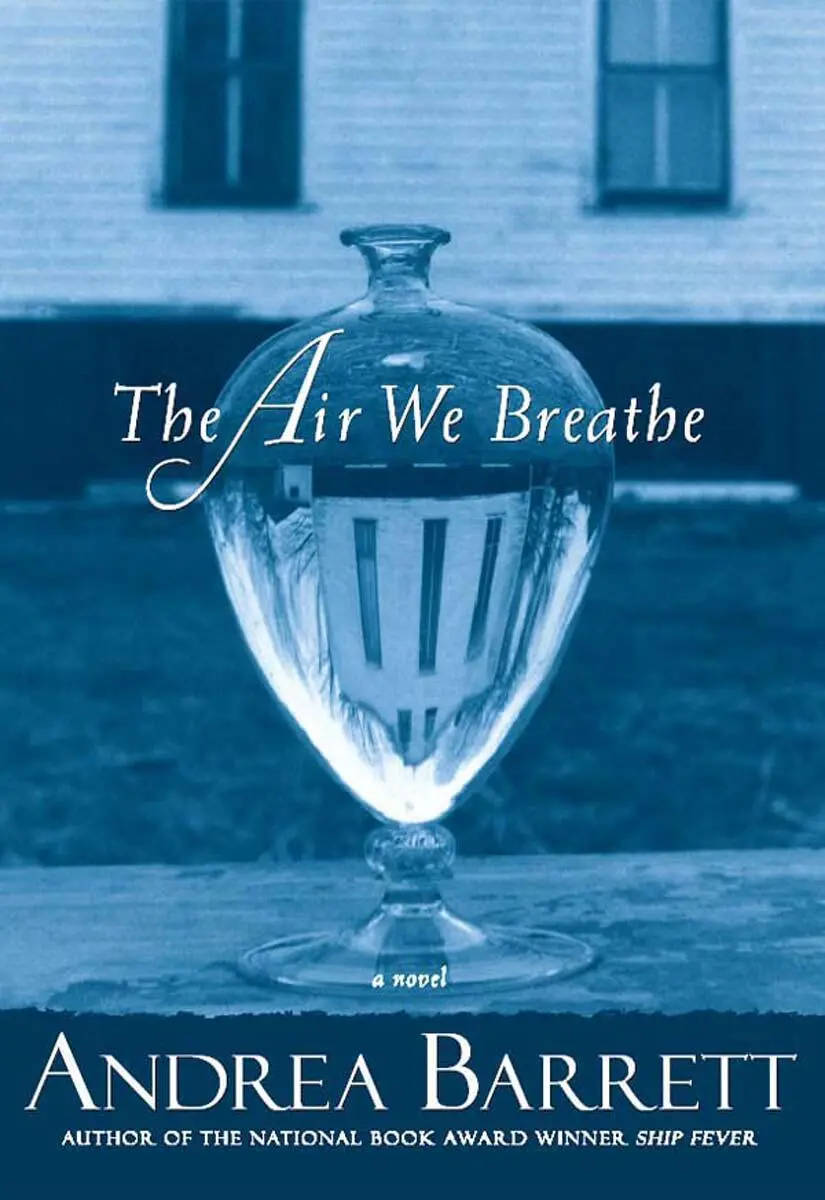
- Название:The Air We Breathe
- Автор:
- Издательство:W. W. Norton & Company
- Жанр:
- Год:2007
- ISBN:нет данных
- Рейтинг книги:3 / 5. Голосов: 1
-
Избранное:Добавить в избранное
- Отзывы:
-
Ваша оценка:
The Air We Breathe: краткое содержание, описание и аннотация
Предлагаем к чтению аннотацию, описание, краткое содержание или предисловие (зависит от того, что написал сам автор книги «The Air We Breathe»). Если вы не нашли необходимую информацию о книге — напишите в комментариях, мы постараемся отыскать её.
) by the National Book Award-winning author of
. In the fall of 1916, America prepares for war — but in the community of Tamarack Lake, the focus is on the sick. Wealthy tubercular patients live in private cure cottages; charity patients, mainly immigrants, fill the large public sanatorium. Prisoners of routine, they take solace in gossip, rumor, and — sometimes — secret attachments. But when the well-meaning efforts of one enterprising patient lead to a tragic accident and a terrible betrayal, the war comes home, bringing with it a surge of anti-immigrant prejudice and vigilante sentiment.
The Air We Breathe — читать онлайн бесплатно полную книгу (весь текст) целиком
Ниже представлен текст книги, разбитый по страницам. Система сохранения места последней прочитанной страницы, позволяет с удобством читать онлайн бесплатно книгу «The Air We Breathe», без необходимости каждый раз заново искать на чём Вы остановились. Поставьте закладку, и сможете в любой момент перейти на страницу, на которой закончили чтение.
Интервал:
Закладка:
“Really,” Dr. Petrie said, his hand smoothing a piece of paper that already lay perfectly flat. “I hadn’t realized that was part of your volunteer work.”
And it was true that most of us had hardly noticed the events of June 5, coming so soon after the fire. We were already wards of the state, sent here by our local Boards of Health, and our backgrounds and identities had been documented to perfection. We couldn’t have altered our birth dates or lied about our naturalization status if we’d wanted; anyway our illness exempted us from serving. But in Tamarack Lake the situation had been different. In the high school auditorium, every man in the village between the ages of twenty-one and thirty-one had been required to appear and fill out a form. Later, we heard that the high school band had played at intervals all day. That the Boy Scouts formed an escort for the truck that carried the registration forms from the post office to the high school. That the Mountain-aires — now led by Mr. Harries, hastily recruited after Mr. Baum’s dismissal — sang at 7 A.M., when the polling place opened, and again at 7 P.M., when it closed, in between passing out miniature American flags for the young men to wear on their chests.
“We had agents at the main doors, and out back, and at both ends of town,” Miles admitted, wanting someone to know how carefully he’d arranged things. “One man at the train station, in case someone got the idea to leave that way, and one parked on each of the main roads. We could have used you — I still feel uneasy about the population here.”
“There’s nothing here for me to help with,” Dr. Petrie said. “The male patients aren’t eligible to serve. And I’m sure the men who work here registered. Though what we’ll do if the army starts to take them…”
As he spoke, he tried not to scratch at the crusty red bubbles erupting on his left forearm. Not poison ivy, not shingles; some sort of reaction, perhaps, to the fumes: but then why did only he have them? He forced himself to look away from his arm and at Miles, whose face was unpleasantly pale. “Aren’t you concerned about your own health? You shouldn’t be working such hours — you shouldn’t be working at all.”
Miles rose and began to pace in front of the desk. “You’ve been here so long that you don’t see, anymore, what’s happening out in the world.”
“Yet I was the one who went to France, I notice,” Dr. Petrie said. “Not you.”
“Thank you,” Miles said bitterly, “for reminding me of my failures with Lawrence. As if I ever forget.”
Dr. Petrie murmured an apology, considering at the same time the truth of Miles’s accusation. Twenty years ago, when he’d arrived with patched socks and single suitcase, his mind whirling with a thousand ideas gained in the clinics of Baltimore, he was sure he could turn Tamarack State into a model institution. Since then he’d worked so hard that he seldom traveled or read anything not directly related to his work. His visit to France had been the one great exception.
“If I had gone,” Miles said, “I would have come back with some new ideas. Didn’t what you saw make you curious? Didn’t it make you wonder about how we’d handle raising an army here? All you seem to think about are the patients right in front of you, but what’s going on is so much larger — Socialists are preaching draft resistance. Pro-German elements are spreading rumors everywhere. Young men are going to Mexico and Canada, and lying about their ages, and producing forged birth certificates and claiming to be married when they’re not. And that’s just the tip of what’s happening. I don’t have time to worry about myself.”
“I read the same newspapers you do,” Dr. Petrie said. “I’m perfectly well aware of what’s going on.”
“You don’t see the league reports from the other districts, though. Which you might have, had you joined when I asked you — why don’t you want to help?”
“Here’s a story I heard,” Dr. Petrie said, abruptly pushing aside a huge stack of files. “I heard that in Boston, a member of the American Protective League brought in a white carrier pigeon that he suspected of being used in German spy work because it had spots inside its wings. Tiny black lines and spots that to him looked like dots and dashes. Since he didn’t know how to read Morse code, he called in someone from the Signal Corps, who called someone from military intelligence. Everyone got excited until a boy figured out that the specks were clumps of bird lice.”
“Anyone can suffer from an excess of zeal,” Miles said. As if to tease him, a pigeon flew past the window, wings mottled in shades of gray. “It doesn’t mean the other cases aren’t important.”
“I’m not criticizing your work,” Dr. Petrie said. “I just don’t feel that I can be of much help. I’ve been as busy as you these past weeks, and anyway it sounds as if you have plenty of men to train and supervise already. Maybe you should be giving them your Wednesday afternoons.”
“The two have nothing in common,” Miles said angrily. “The men I’m working with now are different, they’re men like me. I simply coordinate their activities.” He opened the door, turning back to ask, “Why are you being so thickheaded? You have a huge problem staring you in the face. That fire…”
“If you read the report,” Dr. Petrie said, “then you saw my explanation. The fumes came from the racks of stored films. A simple chemical reaction, which could have been predicted.”
“All well and good — but you explained nothing about how the fire started in the first place,” Miles said. “Do you think I didn’t notice that? The state investigators can say ‘accident’ as many times as they want, but something still seems wrong to me. Why aren’t you taking this more seriously?”
ABE AND ARKADY AND OTTO, crowded together in Leo’s old room as Leo struggled in the new infirmary, were trying as hard as they could not to take their situation seriously. If they had, they would have given up, or fought so bitterly that their friendship would have shattered. After rooming together for more than a year, Abe and Arkady had grown used to each other’s snores and squeaks, Abe’s way of paring his nails with a knife, Arkady’s habit of snorting through each nostril twice, once gently and once more firmly, each time he blew his nose: the thousand little irritations of sharing close quarters. But Otto, who before the fire had roomed with Sean, cleared his throat every two or three minutes, spoke with food trapped in his overlapping teeth, and read sentences from the newspaper out loud. It took everything Abe and Arkady had learned in their time at Tamarack State not to band together and turn against him for what were, really, only their new roommate’s natural ways. Otto, in turn, missed Sean, who whispered when he read but at night fell into a sleep like death, never rolling or stirring a limb until dawn. In the early morning hours, lying awake miserably while Abe and Arkady snored in concert and Abe flopped from side to side like a seal, he sometimes imagined mashing pillows over their faces.
But they’d been through this before — we all had, though never to this extent — and during their first weeks together they learned to joke about their resentments. In Leo’s absence, they used his bed as a couch and tried to enjoy that scrap of extra space. All three of them liked Leo, but as a way of deflecting their own discomforts, they took turns making fun of him.
Abe did a perfect imitation of Leo’s most common gesture, right hand raised to push a wing of his hair behind his ear; Otto and Arkady both found that hilarious. Otto mocked the hours Leo spent in the library, poring so earnestly over books and papers. Arkady popped his eyes and made moony glances that were, he claimed, exactly how Leo had looked at Eudora during our Wednesday sessions, and Abe said, “Did you see the way he was with her, the night of the fire?” Then Otto, who was stretched out on Leo’s bed, picked up the two green volumes Leo had left lying on the white-topped table.
Читать дальшеИнтервал:
Закладка:
Похожие книги на «The Air We Breathe»
Представляем Вашему вниманию похожие книги на «The Air We Breathe» списком для выбора. Мы отобрали схожую по названию и смыслу литературу в надежде предоставить читателям больше вариантов отыскать новые, интересные, ещё непрочитанные произведения.










Обсуждение, отзывы о книге «The Air We Breathe» и просто собственные мнения читателей. Оставьте ваши комментарии, напишите, что Вы думаете о произведении, его смысле или главных героях. Укажите что конкретно понравилось, а что нет, и почему Вы так считаете.