Andrea Barrett - The Air We Breathe
Здесь есть возможность читать онлайн «Andrea Barrett - The Air We Breathe» весь текст электронной книги совершенно бесплатно (целиком полную версию без сокращений). В некоторых случаях можно слушать аудио, скачать через торрент в формате fb2 и присутствует краткое содержание. Год выпуска: 2007, Издательство: W. W. Norton & Company, Жанр: Современная проза, на английском языке. Описание произведения, (предисловие) а так же отзывы посетителей доступны на портале библиотеки ЛибКат.
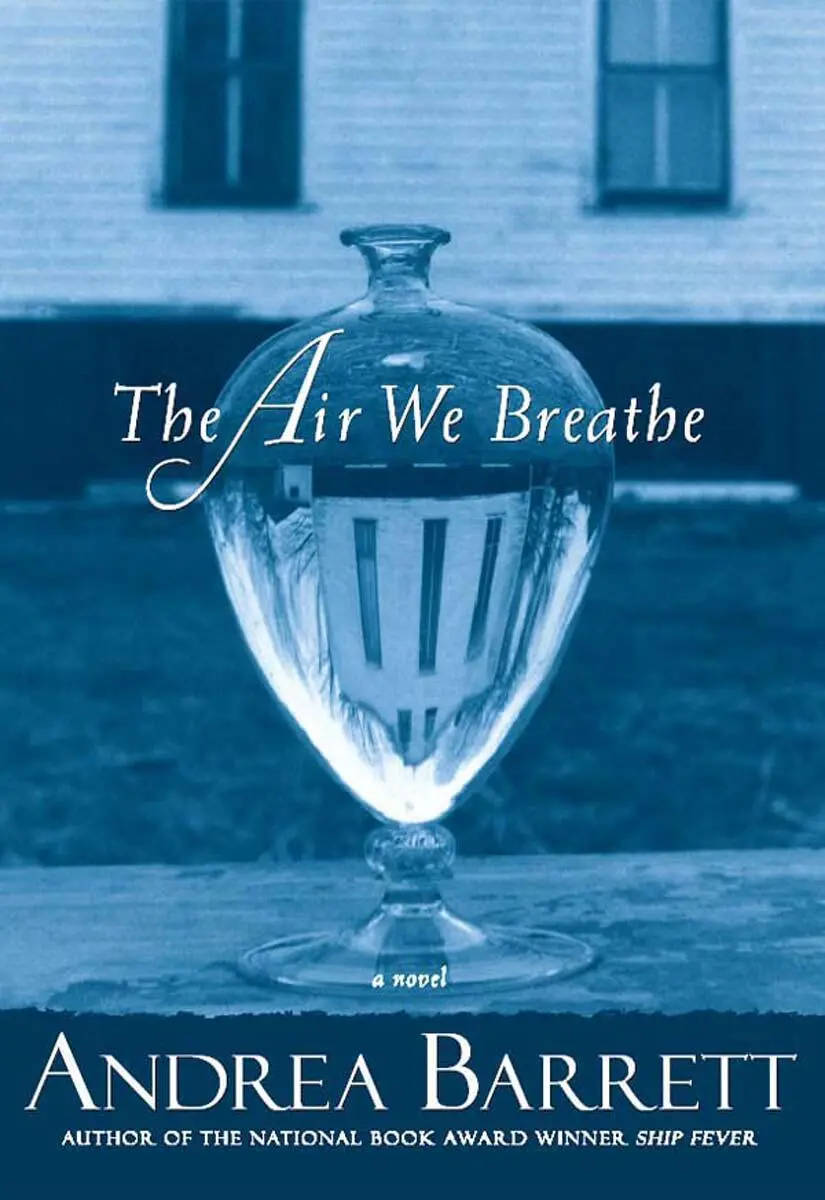
- Название:The Air We Breathe
- Автор:
- Издательство:W. W. Norton & Company
- Жанр:
- Год:2007
- ISBN:нет данных
- Рейтинг книги:3 / 5. Голосов: 1
-
Избранное:Добавить в избранное
- Отзывы:
-
Ваша оценка:
The Air We Breathe: краткое содержание, описание и аннотация
Предлагаем к чтению аннотацию, описание, краткое содержание или предисловие (зависит от того, что написал сам автор книги «The Air We Breathe»). Если вы не нашли необходимую информацию о книге — напишите в комментариях, мы постараемся отыскать её.
) by the National Book Award-winning author of
. In the fall of 1916, America prepares for war — but in the community of Tamarack Lake, the focus is on the sick. Wealthy tubercular patients live in private cure cottages; charity patients, mainly immigrants, fill the large public sanatorium. Prisoners of routine, they take solace in gossip, rumor, and — sometimes — secret attachments. But when the well-meaning efforts of one enterprising patient lead to a tragic accident and a terrible betrayal, the war comes home, bringing with it a surge of anti-immigrant prejudice and vigilante sentiment.
The Air We Breathe — читать онлайн бесплатно полную книгу (весь текст) целиком
Ниже представлен текст книги, разбитый по страницам. Система сохранения места последней прочитанной страницы, позволяет с удобством читать онлайн бесплатно книгу «The Air We Breathe», без необходимости каждый раз заново искать на чём Вы остановились. Поставьте закладку, и сможете в любой момент перейти на страницу, на которой закончили чтение.
Интервал:
Закладка:
Afterwards, she took off her mask and crossed the hall to the women’s section where Kathleen, Janet, and Irene were laid out in identical beds. Kathleen and Janet remained very weak while Irene, whose face was heavily bandaged, still couldn’t talk. The fumes pouring through the basement had swollen her windpipe shut and she’d already stopped breathing by the time the firemen brought her up the basement stairs. Dr. Petrie had saved her life — a few of us had seen his arm swoop down, the scalpel glittering in the moonlight before it pierced her neck — but in the process damaged her larynx. No one knew how long she’d lain there before the firemen fetched her, and Eudora worried that her brain might be damaged as well. She might speak again, or she might not; might work again, or not. All Eudora could do was visit each day, deliver the news and gossip in a cheerful tone, and then — she knew that Irene didn’t want anyone else to touch her hand — change the cotton inside her violet glove. The glove itself was clean and fresh, replaced from the box in Irene’s room.
When she finished her visits, she went back to work with a sense of relief. For fifteen hours a day she worked without a pause, falling asleep at home as soon as she reached her bed. In between those states, the bicycle ride that should have relaxed her became a kind of torture. Pedaling up the hill at dawn, or flying down in the last bit of twilight, she couldn’t help thinking selfishly of all she’d lost. Who, if not Irene, would sympathize with her complicated feelings for Leo? Who but Leo could understand her uneasiness over not telling Miles that she’d seen Naomi the night of the fire? Who but Naomi could understand how lonely she felt with all of them absent — but her loneliness wasn’t all of it. She’d lied, she’d betrayed her friend, she’d made a mess of everything, and still she was selfish enough to grieve over what she’d lost in the basement.
Both the new X-ray apparatus and the old one she’d restored had been destroyed. The gas tubes, the darkroom, the lead-shielded stand were gone; also the notebooks in which she’d kept the record of her experiments, the films she’d taken of Irene’s chest and of Leo’s, and her father’s old specimens. Gone too were the images from her first clumsy experiments with bits of leather and wood, buttons of bone and vulcanite and glass. The data she’d collected, at first only out of a sense of duty, had revealed a great delight: simple rules were useless. The best images required a subtler tinkering, which she realized, now that she was separated from any hope of doing more, she had loved.
LEO, DELIRIOUS WITH fever, confused the X-ray laboratory with his old classroom, his old life and his new; well into June, nothing made sense to him. He missed the rearrangement of his room — Otto tucked into Ephraim’s old spot, next to Leo’s empty bed; Arkady and Abe wedged in as well — and he missed the arguments the rest of us had as we were shifted similarly. When his fever spiked he relived the fire, batting the gas from his face while he tried frantically to parse the rules of this combustion. When his fever dipped, he wandered through his past.
While he floated outside Grodno, watching a sleigh move down one hill and up another, rain washed the residue of the fumes from the walls of our ruined central building, turning it into acid that singed the surrounding lawn. Leo saw, not that burned brown oval, but the dark and beautiful forest where he’d spent summers with his mother’s relatives; he was with his mother, crossing a field of sugar beets as they walked home from the creek. In an office he stood, his head no higher than the desks, listening with wonder as his father spoke Russian to the tax collector, Polish to a foreman, German to a friend. Then he was older, thirteen or fourteen, wandering the streets like a wolf and later trying to please the Odessa merchant who’d rescued him and paid his fees at the polytechnic institute. In the closet off the pantry where the merchant had let him sleep, two mice visited him each night and ate sunflower seeds from his hand. At the institute, an Armenian friend gave him a soft felt hat while another diagrammed the reaction of sodium chloride and sulfuric acid to yield hydrochloric acid, which could in turn yield chlorine gas. In New York, not long after he arrived, he fell in love with the fourth of his landlord’s six daughters, whose father promptly married her to a Jew from their old village. After her there’d been other girls but no one, until Eudora, who had the power to change his life.
Days passed in a dream for him, while those of us who’d recovered watched the burned grass melt into the dirt and the building walls, once a soft brick red, streak and darken. Blackflies plagued us on the porches as we continued to trade hypotheses about the fire and then to share them with the men from Albany and New York who came to question us. They treated us like immigrants just off the boat. Miles we saw hardly at all, glimpsing him only as he flicked past to talk to some of the staff or — this was new — to Dr. Richards. Rumors zigzagged down the porches. We thought we’d known him, his tidy suits and excellent shoes, his boring talks; at the Wednesday session now marked forever as our last, his comments about sabotage and spies had sounded like someone else speaking and we’d assumed the Miles we knew would soon return. If we’d had more evidence, we might have guessed how much he worried about Naomi, or how, thinking she’d left the village directly after their quarrel, he blamed himself. But Miles never gathered us together, as he would have in the old days; he never spoke to us as a group, and he never asked what we thought about Naomi’s disappearance. We didn’t learn how deeply he’d changed until he appeared unexpectedly in Dr. Petrie’s new office.
They hadn’t spoken easily together since Dr. Petrie had declined to join his league, and Dr. Petrie was surprised to see him. More surprised when Miles dropped into the wooden chair substituting for the one in which, before the fire, he’d sat while pouring out his passion for Naomi. His hair was too long, his nails were chipped, his shoes lacked their usual polish; in the aftermath of the fire, even he was still disheveled. What had brought him back? Perhaps, Dr. Petrie thought, simply the fact that he’d been Miles’s earliest confidant.
Without introduction, Miles said, “I got your report.”
“I’m sorry?” Dr. Petrie said. He looked around at the papers littering his desk. “If I was supposed to send you something—”
“Your report on the fire,” Miles said. “Dr. Richards sent it to me. As you might have expected.”
“Ah,” Dr. Petrie said, struggling to control his voice. Of course Miles had asked Dr. Richards to join his league; of course Dr. Richards had accepted. Of course nothing he submitted to Dr. Richards was confidential anymore. How had he mistaken Miles for someone ineffectual?
“I would have come to talk to you sooner,” Miles said, “but I had to put aside everything for Registration Day.”
“You were involved with that?”
“In the background,” said Miles. He’d organized all the volunteers and donations necessary to restore something like order to Tamarack State, while at the same time keeping an eye on every aspect of the draft registration, but in both cases he’d acted somewhere between anonymously and secretly. Now his reward was Dr. Petrie’s surprised, suspicious glance. Either one of those tasks would have been plenty for a healthy young man. But for him, middle-aged and sick, worried about a girl who’d run away and who might be hurt, or worse — only by the most rigid discipline could he hold himself together. He straightened his back. He smoothed down a wisp of hair. He pressed his eyeteeth against his bottom teeth, a trick he’d learned to keep his face from trembling. He added, coolly, “In case men had questions, or had some thought of failing to register, or were in danger of being swayed by someone with Socialist or anticonscription tendencies.”
Читать дальшеИнтервал:
Закладка:
Похожие книги на «The Air We Breathe»
Представляем Вашему вниманию похожие книги на «The Air We Breathe» списком для выбора. Мы отобрали схожую по названию и смыслу литературу в надежде предоставить читателям больше вариантов отыскать новые, интересные, ещё непрочитанные произведения.











Обсуждение, отзывы о книге «The Air We Breathe» и просто собственные мнения читателей. Оставьте ваши комментарии, напишите, что Вы думаете о произведении, его смысле или главных героях. Укажите что конкретно понравилось, а что нет, и почему Вы так считаете.