Andrea Barrett - The Air We Breathe
Здесь есть возможность читать онлайн «Andrea Barrett - The Air We Breathe» весь текст электронной книги совершенно бесплатно (целиком полную версию без сокращений). В некоторых случаях можно слушать аудио, скачать через торрент в формате fb2 и присутствует краткое содержание. Год выпуска: 2007, Издательство: W. W. Norton & Company, Жанр: Современная проза, на английском языке. Описание произведения, (предисловие) а так же отзывы посетителей доступны на портале библиотеки ЛибКат.
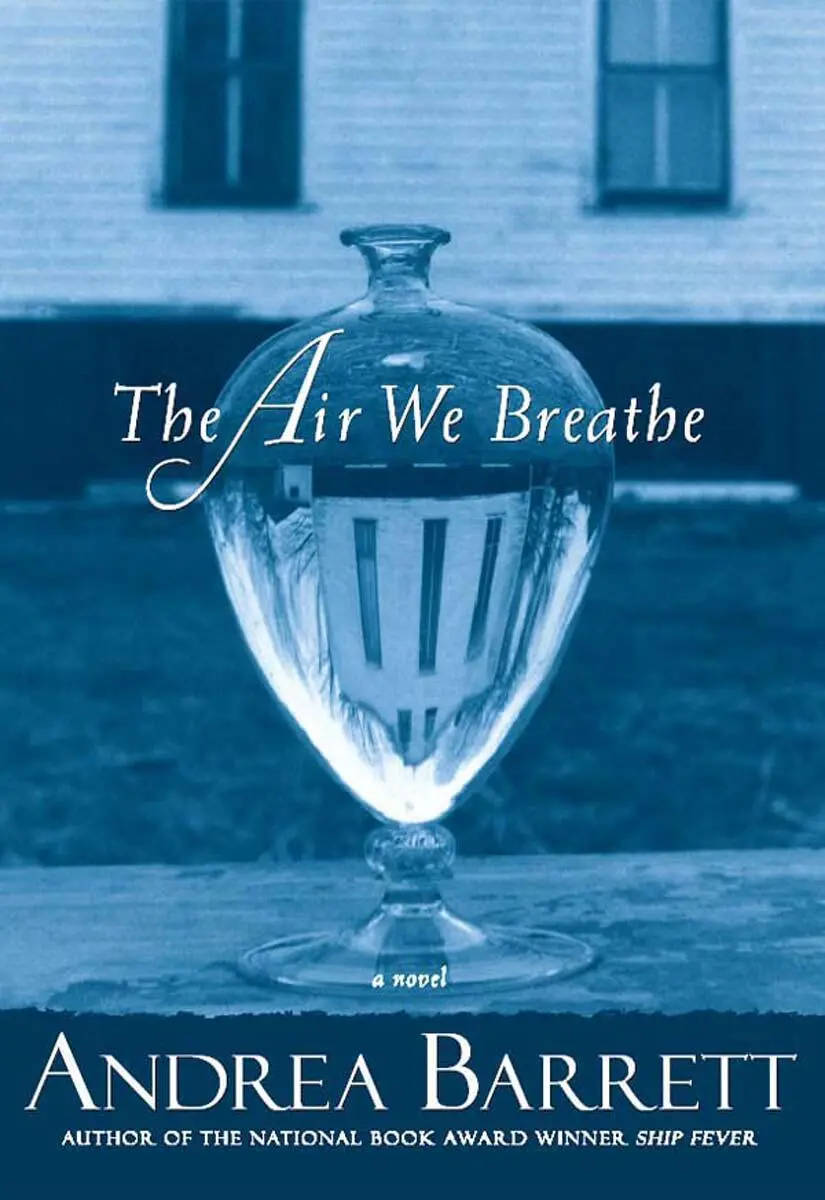
- Название:The Air We Breathe
- Автор:
- Издательство:W. W. Norton & Company
- Жанр:
- Год:2007
- ISBN:нет данных
- Рейтинг книги:3 / 5. Голосов: 1
-
Избранное:Добавить в избранное
- Отзывы:
-
Ваша оценка:
The Air We Breathe: краткое содержание, описание и аннотация
Предлагаем к чтению аннотацию, описание, краткое содержание или предисловие (зависит от того, что написал сам автор книги «The Air We Breathe»). Если вы не нашли необходимую информацию о книге — напишите в комментариях, мы постараемся отыскать её.
) by the National Book Award-winning author of
. In the fall of 1916, America prepares for war — but in the community of Tamarack Lake, the focus is on the sick. Wealthy tubercular patients live in private cure cottages; charity patients, mainly immigrants, fill the large public sanatorium. Prisoners of routine, they take solace in gossip, rumor, and — sometimes — secret attachments. But when the well-meaning efforts of one enterprising patient lead to a tragic accident and a terrible betrayal, the war comes home, bringing with it a surge of anti-immigrant prejudice and vigilante sentiment.
The Air We Breathe — читать онлайн бесплатно полную книгу (весь текст) целиком
Ниже представлен текст книги, разбитый по страницам. Система сохранения места последней прочитанной страницы, позволяет с удобством читать онлайн бесплатно книгу «The Air We Breathe», без необходимости каждый раз заново искать на чём Вы остановились. Поставьте закладку, и сможете в любой момент перейти на страницу, на которой закончили чтение.
Интервал:
Закладка:
“Any word?” He tried not to wolf the scalloped potatoes.
“Not yet,” she said, her voice as flat as Naomi’s had been the previous night. “I think she’s run away.”
“Why would you think that?” Even as he spoke, he remembered Naomi’s words— What would you do if I just stopped doing this? — and saw again her red dress with the crisp white collar, which now seemed too nice for an evening’s duty driving. The baked ham he’d been enjoying suddenly seemed both dry and salty.
Looking down at a dish on which birds carrying bows of ribbon chased each other around the embossed rim, Mrs. Martin explained, never meeting his eyes, that some money, which at first she thought she’d lost, was missing from her purse.
UP ON OUR own hill, it didn’t seem possible that we’d survive. The administration building was ruined, not destroyed exactly — it stands where it always stood — but blackened with soot and so saturated with toxic fumes that no one could enter without a mask. Lost with it were our X-ray facility, our kitchen, dining hall, and reception room, our library, the infirmary, the clinical laboratories, most of the staff offices, and the solarium where our little group had met on Wednesdays. Before the night of the fire, we’d already lost to the suddenly ravenous military a number of young doctors and orderlies and maintenance staff. Now there were fewer people to take care of us just when we needed more, and no place else to send us; every place was like Tamarack State, suddenly overcrowded and understaffed. And everyone was short of money, too; funds that might have been used for rebuilding went, instead, to construct hospitals for the war wounded who would soon enough return from overseas. We were on our own.
The officials who arrived to advise Dr. Richards pointed at the undamaged wings of the men’s and women’s annexes, separated from the ruined central building by the covered walkways. Combine the patients in a single wing, they said. Men on the top floor of the former men’s annex, women on the ground floor, the middle floor split half-and-half. Four of us rather than two in each room; on the porches the dividing panels removed and the chairs crowded into long rows. All the functions of the central building could then be transferred into the former women’s annex.
Doctors and nurses crowded in to help from other sanatoria in the village; housewives ferried in meals; grocers and druggists brought bread and bandages and medicines while our own maids and orderlies, Eudora included, worked double shifts moving us into our new quarters, making up beds, and carrying meals. A new infirmary was improvised on the second floor of the women’s annex, a dining room wedged into what had been the women’s lounge, offices and laboratories scattered here and there. Floors were reinforced to support the heavy stoves, new plumbing was installed and equipment moved for a new kitchen. Until that work was finished, our meals were cooked on the back lawn, in a sort of field kitchen.
We were lucky this had happened at the beginning of the summer. Tents, wooden platforms, canvas awnings; military cookers on wheels donated by the army training camp at Plattsburg; wood and coal stoves carted over from merchants in the village; finally we were grateful for Miles’s managerial skills. Scrubbing and soaking restored the utensils and the big pots and pans, but our old familiar tables and chairs, which were made of wood, seemed to have sucked the fumes into their pores and couldn’t be used without being sanded and repainted. Until then we ate our meals from trays in bed or on our cure chairs. Before, this wouldn’t have been much of a hardship, but it made those early days, when many of us were still sick and all of us were getting used to our new, forced intimacy, more difficult. Rooms and porches that had been snug for two were crammed with four; we quarreled — we still quarrel — over lockers and sinks and toilets and our positions on the porches.
Both Dr. Richards and Dr. Petrie, healthy to begin with, recovered more quickly than the rest of us; on Dr. Richards’ orders, Dr. Petrie began assembling notes and writing a preliminary report on the fire as soon as he was out of bed. Who was injured and how badly. Who had died so far: Morris, after his botched jump, and Edith and Denis, who’d been trapped in their beds. Who might yet die: Kathleen, who’d been exposed the longest; Janet, who’d been in the back row and who had only one functioning lung; Leo, who’d received a very large dose when he’d tried to help Kathleen. Naomi didn’t appear on any of his lists; Eudora had seen what looked like Mrs. Martin’s Model T spiraling down the hill long before the fire trucks arrived. He was far more worried about Irene, who was struggling to breathe and whose throat was still so swollen that she couldn’t talk.
Piecing together where the fire had started and what had burned, he determined the nature of the brownish yellow clouds that had made us so sick. He wrote:
A fire of undetermined origin began in the X-ray facility at approximately 9 p.m. Concrete walls and floors retarded the spread of the flames and only moderate damage might have been done had not the fire heated the metal shelves along the walls of the facility, in which were stored several thousand radiographs. While the shelves did not catch fire they conducted heat, causing the sheets of film to melt and smolder.
The film stock, made of highly flammable nitrocellulose, gives off carbon monoxide and nitrous fumes as it decomposes. Ductwork extending from the basement area to the dining hall directly above it spread the toxic gases rapidly.
Within the respiratory tract, moisture converts nitrous fumes to nitric acid, with subsequent damage to the trachea, bronchi, and lungs. Alveolar rupture, pulmonary congestion, and pulmonary edema may result. The effects are not dissimilar to those I observed in France among soldiers exposed to poison gas. Worst affected are the radiographer, who apparently tried to rescue some of the films (she remains unable to speak, so we have no clear account of why she was in the vicinity), and those who were closest to the ductwork from which the gases poured into the dining hall.
As he wrote, stopping occasionally to rub a cramp from his hand, he was thinking about Edith and Denis and Morris, and about all his other failures. He might have recognized the first whiff of the fumes and rushed us out before anything worse could happen; if he were taller and stronger he might have pushed and carried from the hall more people than he had; if he hadn’t succumbed to the fumes himself he might have taken better care of the sick in the first crucial days instead of lying in bed, wheezing and vomiting. And how had he failed to pry Irene away from her work that night? They often urged each other to take a break, and it had been his job to convince her. If he had, she might be back at her desk already, like him. Instead — she too might die, he thought. His pen paused at another repetition of the word “pulmonary”—suddenly the spelling looked very odd — and then stopped altogether. For the first time since his return from France, his job seemed like too much.
He stood, stretching his aching arm over his head and flexing his fingers until the soreness eased. How had the fire started? He could imagine Irene bent over her apparatus, so caught up in her work that she failed to notice the first signs until she was enveloped. Either she’d rushed from the room too late, her arms heaped with films, or, an even more upsetting thought, she’d fled promptly but then steeled herself to return and rescue what films she could. She’d been found on the back stairs leading to the service door, clutching to her chest an enormous stack of images of our lungs. The first investigators, masked and goggled, had followed a shining trail of radiographs from the spot where she’d collapsed all the way back to her desk.
Читать дальшеИнтервал:
Закладка:
Похожие книги на «The Air We Breathe»
Представляем Вашему вниманию похожие книги на «The Air We Breathe» списком для выбора. Мы отобрали схожую по названию и смыслу литературу в надежде предоставить читателям больше вариантов отыскать новые, интересные, ещё непрочитанные произведения.








Обсуждение, отзывы о книге «The Air We Breathe» и просто собственные мнения читателей. Оставьте ваши комментарии, напишите, что Вы думаете о произведении, его смысле или главных героях. Укажите что конкретно понравилось, а что нет, и почему Вы так считаете.